SAN DIEGO--(BUSINESS WIRE)--Nov 9, 2026--
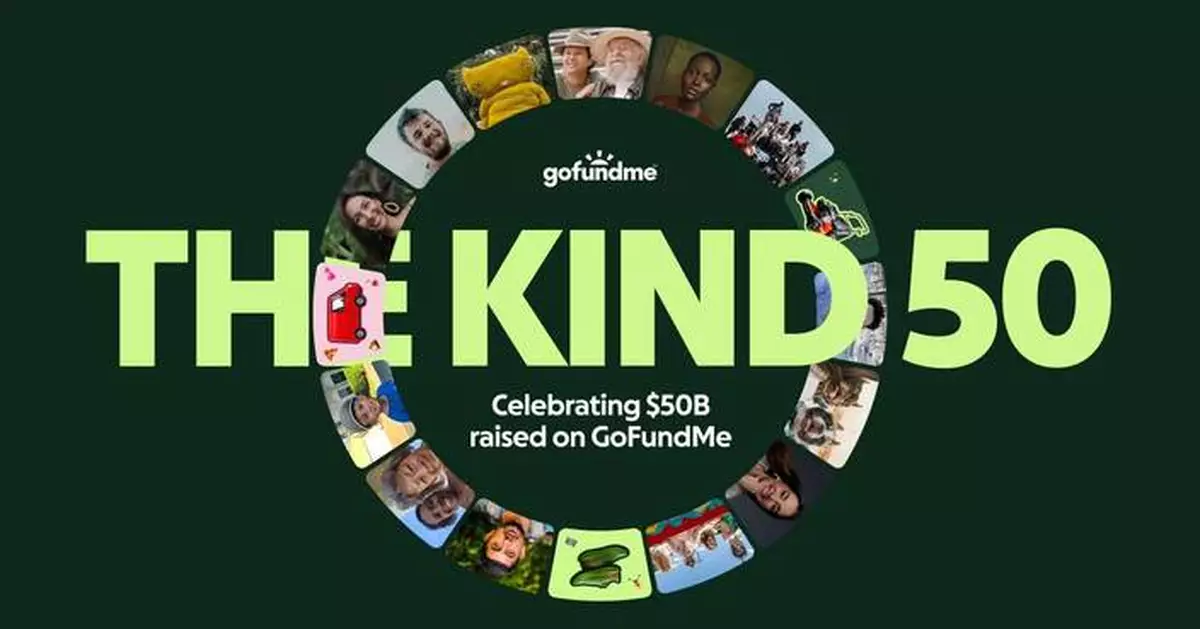
GoFundMe today announced that its global community has surpassed $50 billion raised to help individuals and nonprofits around the world. More than 200 million people have donated through GoFundMe, and nearly 40% have given more than once, reflecting the extraordinary scale of people showing up for one another – and continuing to come back to help.
This press release features multimedia. View the full release here: https://www.businesswire.com/news/home/20261109255455/en/
To mark the milestone, GoFundMe is introducing The Kind 50, a celebration of the internet’s kindest people. The inaugural list features 50 stories of individuals and nonprofits who saw a need, showed up, and brought others together to help. The list includes a fourth grader named Declan who biked 300 miles in one month in support of cancer research; Candace and Diana, best friends of 50 years who inspired the country with their support for one another; Lupita Nyong'o who led a fundraising challenge and awareness campaign for fibroids research; Swifties for their repeated acts of generosity online; and the Music Man Project which brought performers with disabilities from the United Kingdom to the Broadway stage in New York this fall.
"$50 billion is an incredible milestone. What inspires me most are the millions of people behind it," said Tim Cadogan, CEO of GoFundMe. "People have always been generous. Technology has made it easier to express their love and care in real time – to support a loved one through a difficult time, help a community rebuild after a disaster, or contribute to a nonprofit’s mission. During this time of rapid change, we’re innovating with tools like our smart fundraising coach to transform how people ask for help and reach others who care. As we look ahead, we are focused on harnessing new technology to help even more people help each other around the world.”
Help that reaches people – and brings communities closer together
New research commissioned by GoFundMe and conducted by YouGov highlights how widely help reaches and the happiness and connection people associate with giving:
Meet The Kind 50
From showing up for a friend in need to mobilizing entire communities, The Kind 50 celebrates people and organizations whose acts of kindness – on and off GoFundMe – made an impact over the past year and inspired others to help.
Among them is fourth-grader Declan Levy, who cycled 300 miles in one month to raise funds for the American Cancer Society in honor of his grandmother. Reflecting on the experience, he said, "At first, I wasn’t sure I could ride 300 miles, but I had a community cheering me on and helping me keep going. I wanted to help people with cancer because of my grandma. I’m proud I finished, and I hope other kids see that they can help too.”
Also recognized is British ultramarathoner William Goodge, who ran 50 marathons across all 50 U.S. states in 24 days to support Stand Up To Cancer in memory of his mother. “I can’t bring my mum back, but I can use her memory to do something good by raising funds and awareness to help others facing cancer,” said Goodge. “I hope to show people facing loss or any struggle that they can turn those emotions into something that helps others.”
Together, these stories show the internet at its best: a place where people come together for one another. By sharing them, GoFundMe hopes to inspire more people to turn kindness into action in their own communities.
Making it easier to ask for help – and to help others
The future of helping is being built today. Through innovations like the smart fundraising coach and AI-powered fundraising tools used more than 100 million times, to the launch of Giving Funds, nonprofit fundraising tools, and new ways to discover and support causes, GoFundMe is making it easier than ever for people to ask for help, inspire generosity, and strengthen their communities.
About the Research
U.S. survey findings are from YouGov Plc. Total sample size was 4,141 adults, of whom 2,706 were donors (having ever made a financial donation to an individual, nonprofit or charitable cause, or organization). Fieldwork was undertaken between 16th – 21st September 2026. The survey was carried out online. The figures have been weighted and are representative of all US adults (aged 18+).
Platform statistics, including total funds raised, number of donors, repeat-donor rate, and AI tool usage, are based on GoFundMe internal data and were not part of the YouGov survey.
About GoFundMe
GoFundMe is a community-powered fundraising platform dedicated to helping people help each other. GoFundMe combines storytelling and fundraising to make it easy for people and nonprofits to share their stories, connect with supporters, and reach their fundraising goals. GoFundMe empowers individuals and organizations to make a meaningful difference for the causes and communities that matter most to them. GoFundMe has enabled $50 billion of help for communities across the globe.
Celebrating $50B raised on GoFundMe with The Kind 50. From showing up for a friend in need to mobilizing entire communities, The Kind 50 celebrates people and organizations whose acts of kindness – on and off GoFundMe – made an impact over the past year and inspired others to help.
NEW YORK (AP) — The National Urban League will open a museum this weekend in Harlem dedicated to the civil rights struggles in the North, the first of its kind in New York City.
Located in the Urban League’s Manhattan headquarters, the Urban Civil Rights Museum in Harlem explores the region's lesser-known histories of the Civil Rights Movement and the local changemakers and artists whose contributions helped shape politics and culture worldwide. With nearly 12,000 square feet (1,100 square meters) of permanent and rotating exhibits and galleries, organizers say they hope to remind visitors of their “collective power” in the present.
“We want people to know that they are key participants,” Jennifer Scott, the museum’s founding executive director and chief curator, told The Associated Press during an exclusive preview of the space.
“History is living, it’s unfinished, and we can impact it,” she said.
Scott is a national public history scholar with experience preserving Black history in museums and research centers across the country. She led the design of a permanent interactive installation and an inaugural set of rotating exhibitions.
Marc Morial, the Urban League’s president and CEO, underscored the importance of establishing the museum just blocks from such key historic and cultural landmarks as the Apollo Theater and The Schomburg Center for Research in Black Culture. He attributed the same intentionality to the naming of the museum, and its specific mention of “this iconic American place called Harlem.”
“Designating this the Urban Civil Rights Museum in Harlem anchors it to a place, and this place tells the story,” Morial told the AP before the museum’s opening. “From this place, we’re telling the story of this place.”
Dozens of museums devoted to civil rights are scattered across the U.S., most of them in Southern states. While others explore themes of arts and culture or review specific moments in African American history, the organizers contend that there has never been a premier civil rights museum located in the northern United States.
The museum’s multimedia installations cover centuries of social justice history and culture. The inaugural exhibits recount the trans-Atlantic Slave Trade, the first and second waves of the Great Migration of Black families from the Deep South, and the story of the Civil Rights Movement and its modern impacts.
In several exhibits, audio recordings relay speeches of civil rights leaders and oral histories of people interviewed about their experiences. Feedback walls invite guests to share if they’ve participated in a protest or read a banned book.
Throughout the museum’s curation process, Scott prioritized immersion not only through mediums but through the stories that the Urban League chose to represent. “We wanted people to see themselves,” she said. “It’s a very diasporic representation and storytelling approach.”
As a self-described proponent of intersectional solidarity, Morial echoed the importance of celebrating a diverse range of perspectives from people who rallied alongside African Americans in the northern fight for civil rights.
“We don’t want this great concept, equal opportunity and diversity, to be suppressed,” he said.
Some of the narratives displayed have been targeted in recent years as part of a push to sanitize the way American history is told. Last year, the Trump administration ordered a review of U.S. museums under federal guidance for narratives it deemed “divisive, race-centered ideology,” urging them to “instead focus on the greatness of the achievements and progress of the American people.”
Martha Biondi, a professor of history and Black studies at Northwestern University whose work has advanced the awareness of New York's civil rights struggles, underscored the importance of preserving that history today.
“If America’s going to become a true multiracial democracy, we have to stop sanitizing our past and we have to tell the true stories,” Biondi said.
The importance of preserving the urban Civil Rights Movement was compounded by the current political climate, said Morial, adding that the museum retells history “with all of its beauty, and with all of its warts.”
“This history is not going to be minimalized or suppressed in any way,” he said.
Morial and Scott lamented how the history of institutionalized racism in the North has often been overshadowed or even lost, while stories of the struggles in the Deep South are far more widely recognized.
For Scott, preserving forgotten accounts as part of the historical record is a personal passion and a priority. From reliving the prime of nightlife in the Harlem Renaissance, to reading through legacy ethnic media like the New York Amsterdam News alongside Jet and Essence magazines, she said, the museum is “just scratching the surface” in uncovering local stories.
“It’s important to me and to all of us here who work at the museum, because we don’t want those stories to be erased ever again,” Scott said. “It started long before us, and we want it to continue after, so people are always feeling empowered to create the change that they desire.”
The Urban Civil Rights Museum in Harlem will celebrate its grand opening with invited elected officials and other guests on Saturday. With plans to educate and involve the community in the museum’s programming, Morial was optimistic about both the future of the museum and of the movement it showcases.
“This museum is not static, and we’re going to continue to evolve the exhibitions,” he said. “We are just getting started.”
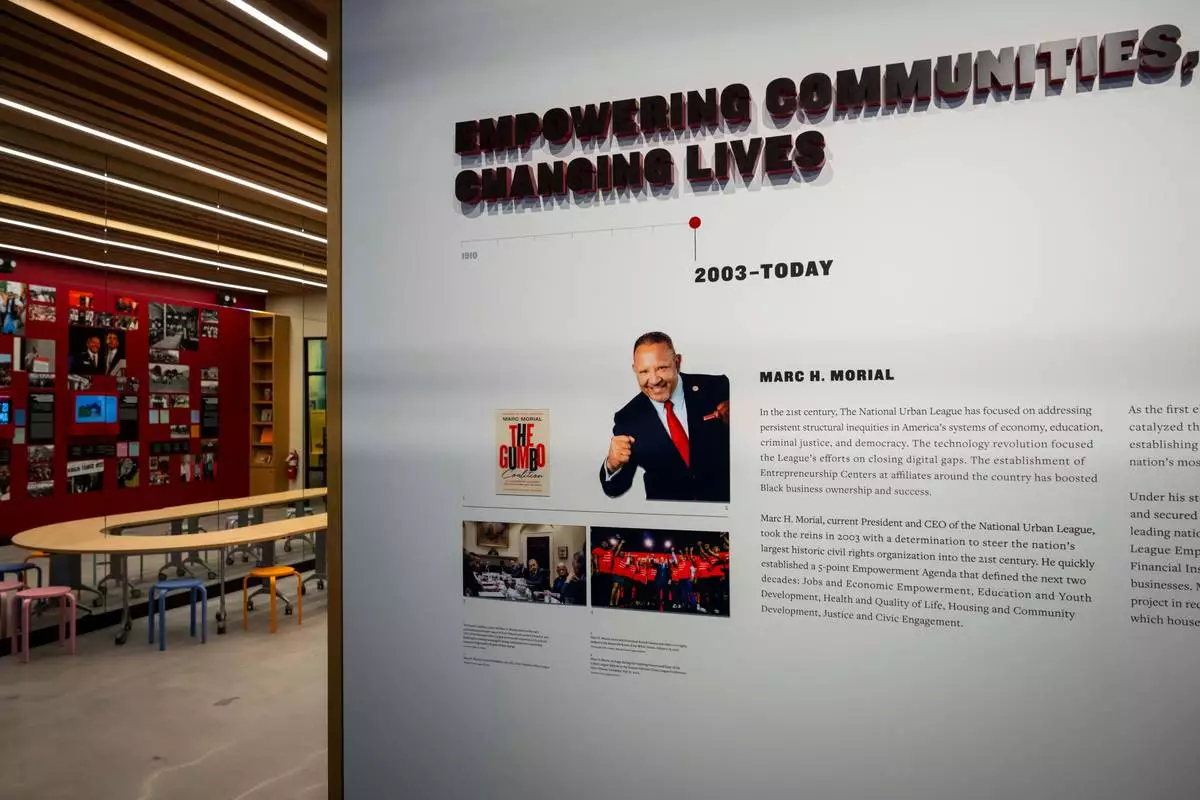
A photo of Marc H. Morial, president and CEO of the National Urban League, is on display at the Urban Civil Rights Museum, Friday, Nov. 6, 2026, in the Harlem neighborhood of New York. (AP Photo/Yuki Iwamura)
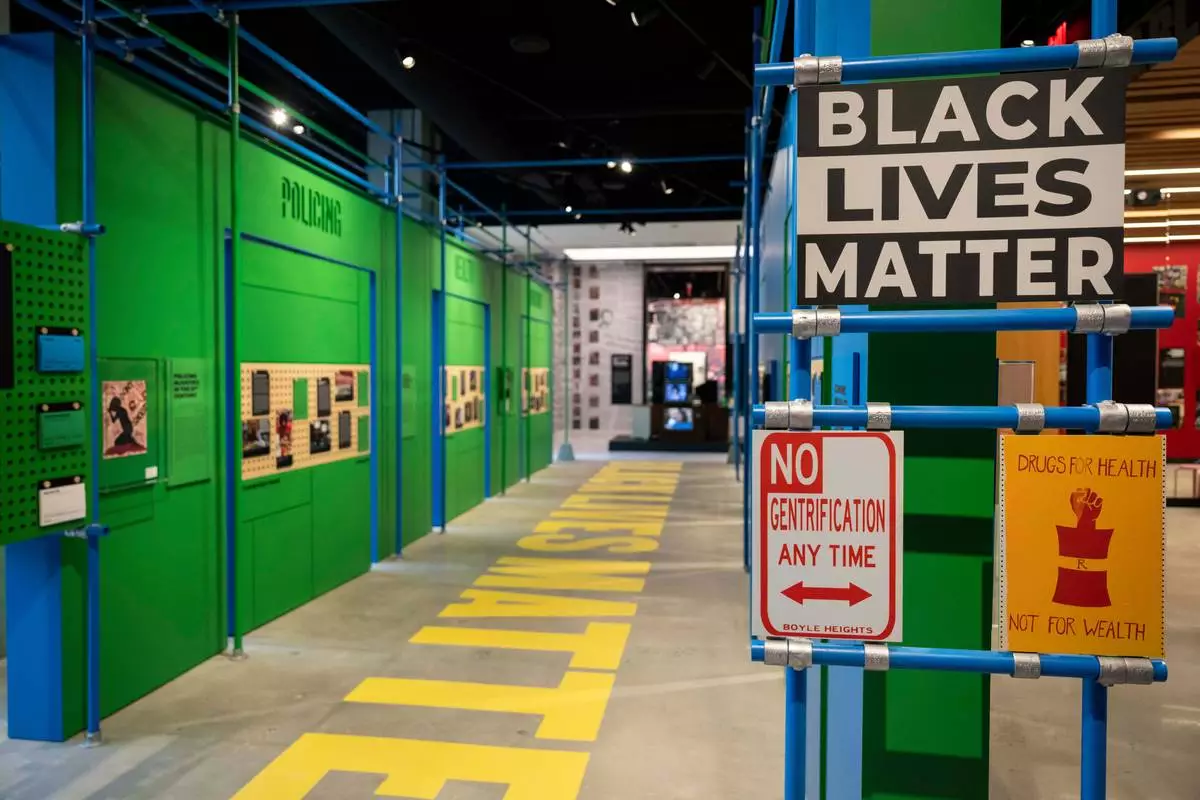
A Black Lives Matter sign is on display at the Urban Civil Rights Museum, Friday, Nov. 6, 2026, in the Harlem neighborhood of New York. (AP Photo/Yuki Iwamura)
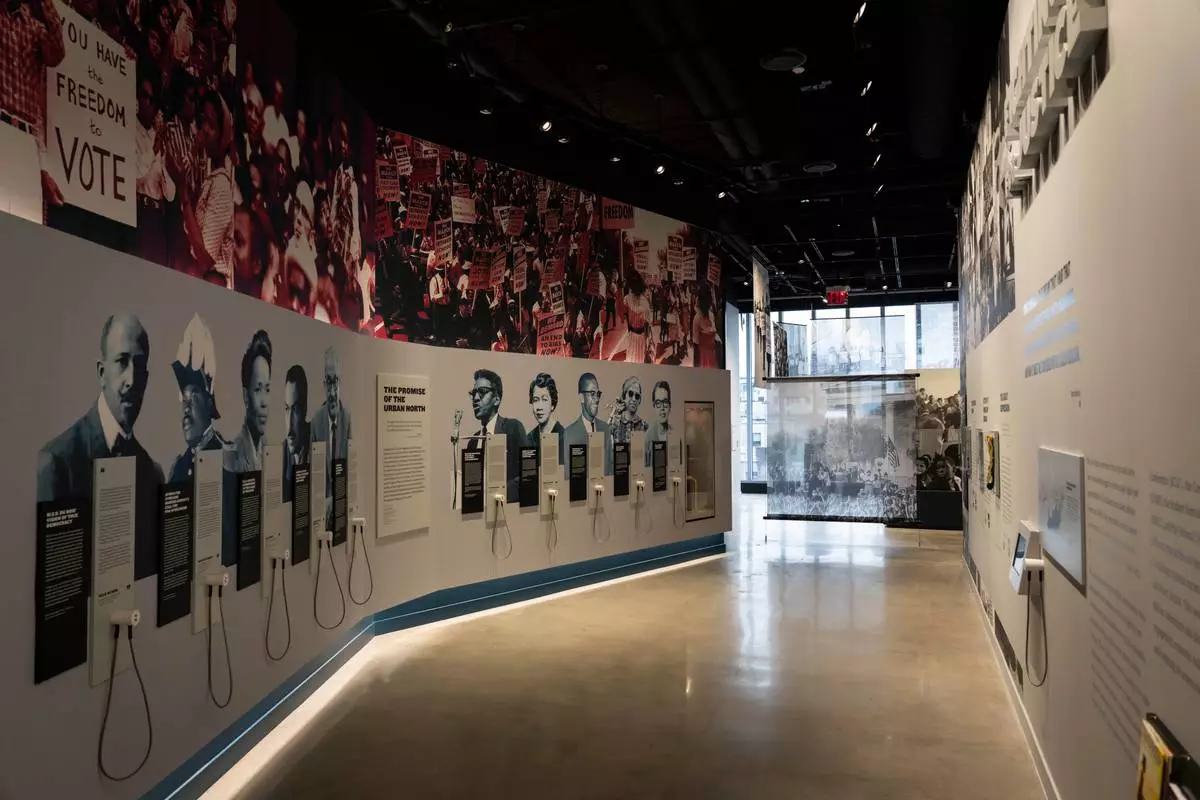
The Urban Civil Rights Museum is seen on Friday, Nov. 6, 2026, in the Harlem neighborhood of New York. (AP Photo/Yuki Iwamura)
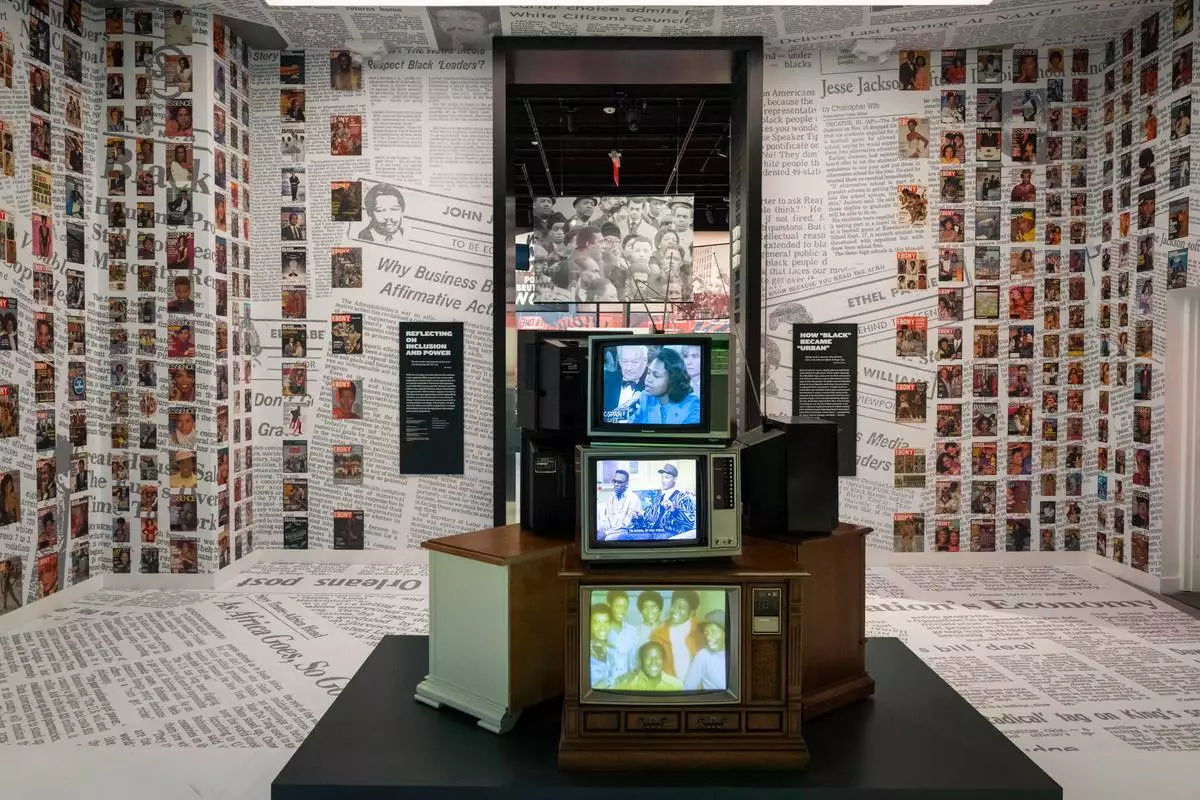
The Urban Civil Rights Museum is seen on Friday, Nov. 6, 2026, in the Harlem neighborhood of New York. (AP Photo/Yuki Iwamura)
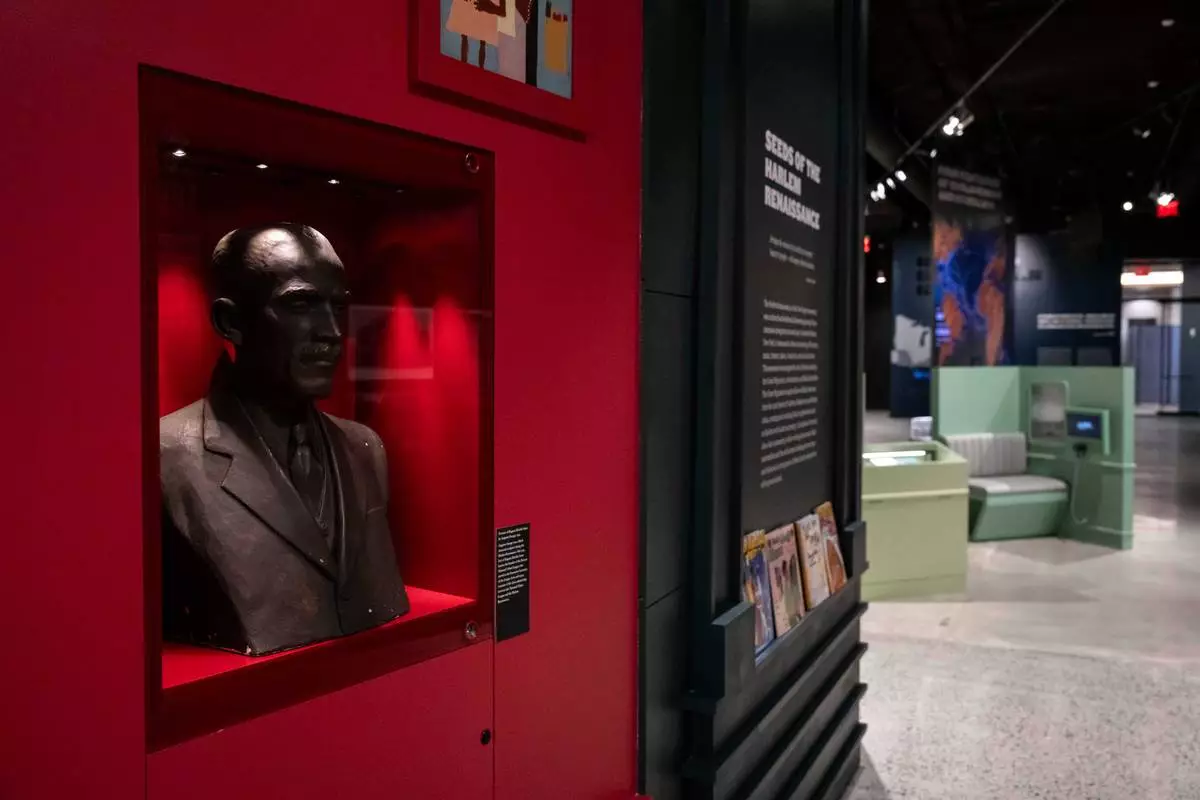
A bust of Eugene Kinckle Jones, a leader of the National Urban League, is seen at the Urban Civil Rights Museum, Friday, Nov. 6, 2026, in the Harlem neighborhood of New York. (AP Photo/Yuki Iwamura)
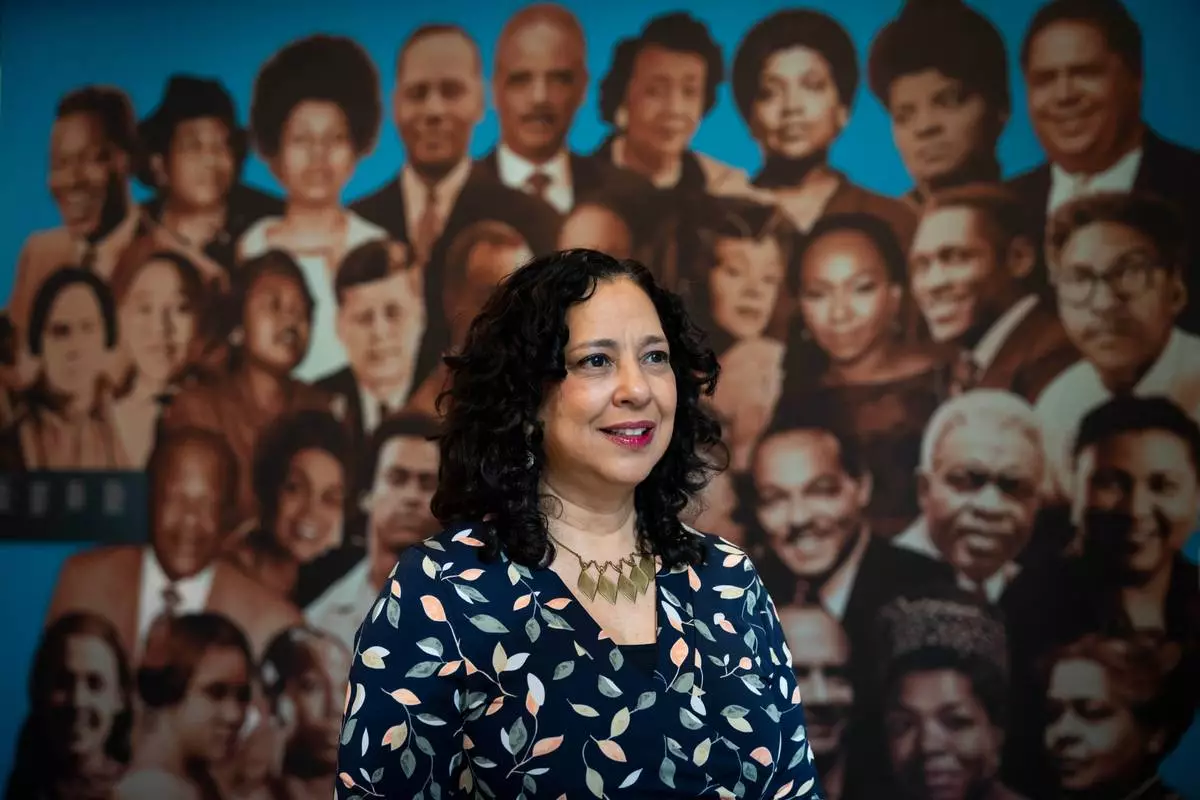
Jennifer Scott, executive director and chief curator of the Urban Civil Rights Museum, poses for a photo Friday, Nov. 6, 2026, in the Harlem neighborhood of New York. (AP Photo/Yuki Iwamura)
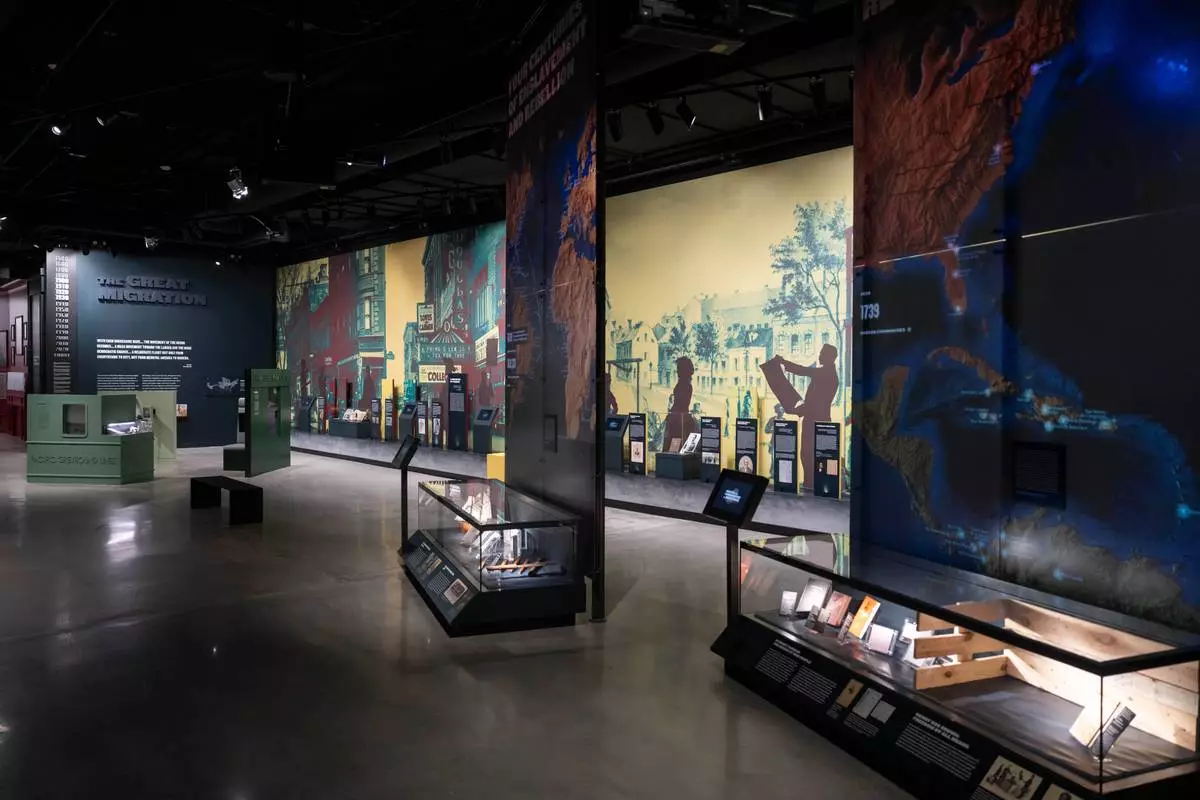
The Urban Civil Rights Museum is seen on Friday, Nov. 6, 2026, in the Harlem neighborhood of New York. (AP Photo/Yuki Iwamura)
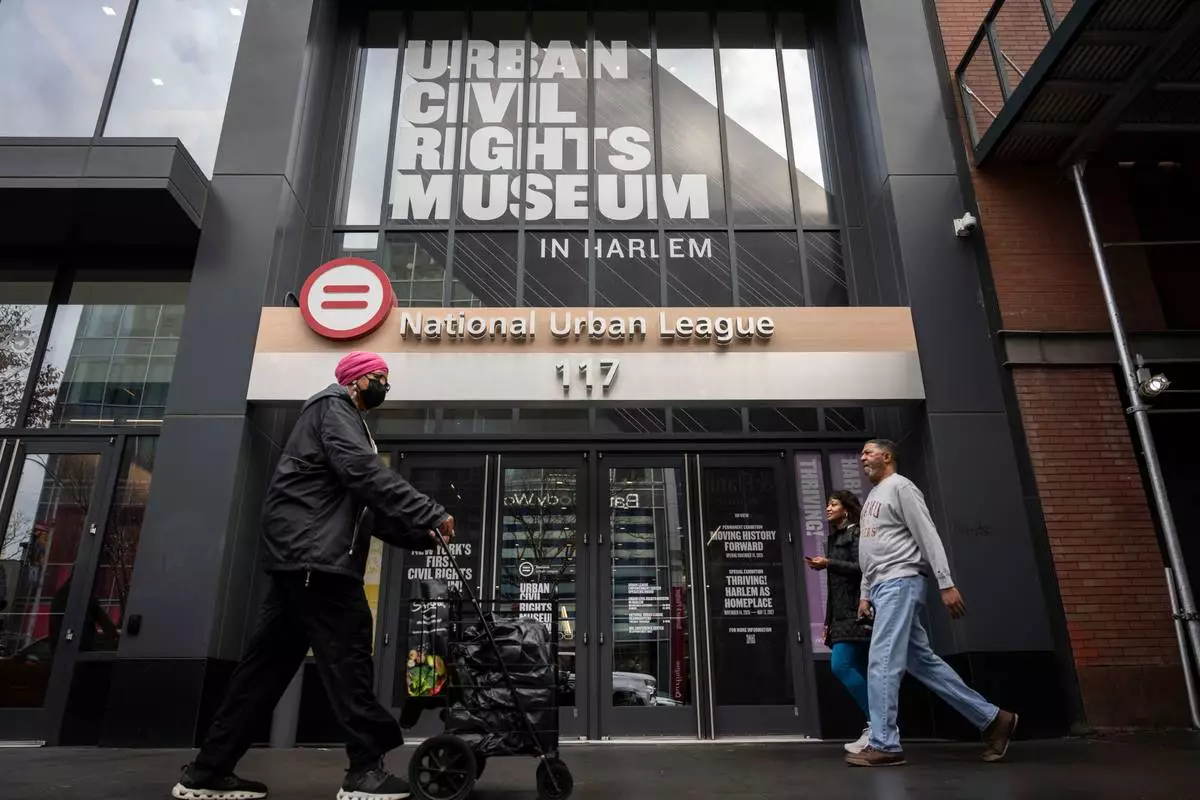
People walk past the Urban Civil Rights Museum on Friday, Nov. 6, 2026, in the Harlem neighborhood of New York. (AP Photo/Yuki Iwamura)