COLORADO SPRINGS, Colo.--(BUSINESS WIRE)--Nov 9, 2026--
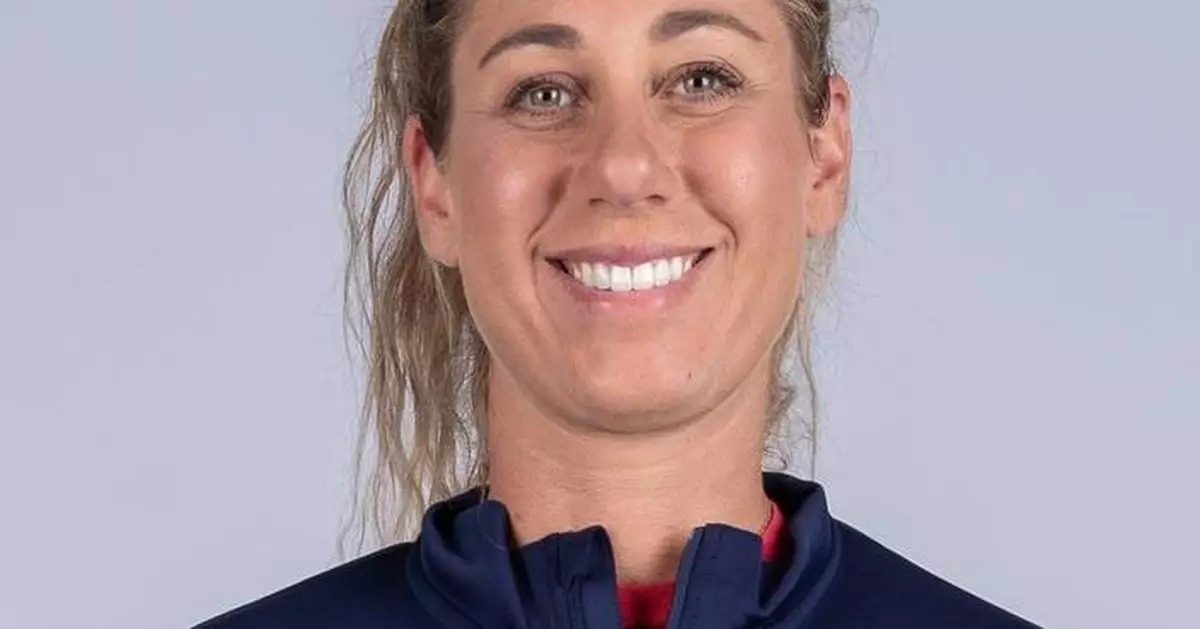
USA Volleyball announced today the appointment of three-time Olympic medalist and International Volleyball Hall of Famer April Ross as Head Coach, Women’s Beach National Teams, making her the first female head coach in the program's history. Effective immediately and reporting directly to General Manager, USA Beach Volleyball, Carolina “Gabi” Garbato, Ross will oversee high-performance leadership, strategy, and technical alignment for the Women’s Beach Senior National Team as Team USA prepares for the Volleyball World Beach Pro Tour, FIVB Beach World Championships, and the 2028 Summer Olympics in Los Angeles.
This press release features multimedia. View the full release here: https://www.businesswire.com/news/home/20261109695110/en/
“Stepping into this role for the Women’s Beach National Teams is an absolute honor,” said April Ross, Head Coach, Women’s Beach National Teams. “Having competed at the highest international level, I know firsthand the dedication and strategic precision required to stand on top of the Olympic podium. My focus is on cultivating an athlete-centered environment where our players and coaches have everything they need to perform at their best and win on the world stage leading up to LA28.”
Since joining USA Volleyball as Head of Coaching for Beach National Teams in May 2025, Ross has played a key role in developing national team coaches and athletes. As Head Coach, she will partner directly with Senior National Team athletes and Independent Contractor (IC) coaches as a collaborative support system, integrating USA Volleyball and USOPC sports science and performance resources to build a world-class program capable of winning Olympic and World Championship medals.
“Appointing April Ross as Head Coach of the Women’s Beach National Teams is a monumental step forward as we work to continuously elevate our beach program building toward the 2028 Olympic Games in Los Angeles,” said John Speraw, President & CEO of USA Volleyball. “April brings an unrivaled athletic, coaching, and academic background to this leadership role. Paired with Gabi Garbato’s strategic vision, her unparalleled championship experience gives our women’s national team program extraordinary momentum and the high-performance standard needed to keep Team USA at the pinnacle of international competition.”
In addition to leading the Senior National Team, Ross will work closely with Matt Fuerbringer, Men’s Beach National Team Head Coach to guide pipeline coaching staff, aligning core technical standards and performance expectations across their respective pathways throughout the USA Volleyball Beach National Team Development Program (NTDP).
“April Ross represents the gold standard of beach volleyball, both in competitive achievement and leadership,” said Carolina “Gabi” Garbato, General Manager, USA Beach Volleyball. “Her deep understanding of high-performance athlete development, paired with her proven ability to mentor coaches and structure data-driven training environments, makes her uniquely qualified to lead our Women’s Senior National Team. April’s vision directly aligns with our goal of expanding the depth of U.S. women’s teams capable of winning medals on the global stage.”
About USA Volleyball
Founded in 1928, USA Volleyball is a nonprofit organization and recognized by the United States Olympic and Paralympic Committee (USOPC), the International Volleyball Federation (FIVB), and World ParaVolley as the National Governing Body (NGB) for the sport of volleyball in the United States. USA Volleyball is dedicated to building, creating, and supporting a safe, inclusive, and positive volleyball experience and a lifetime of opportunity for all. With more than 520,000 registered members, USA Volleyball conducts national championship events, coaching and official certification programs, and grassroots development across the disciplines of beach, indoor, sitting, and beach ParaVolley. For more information, visit usavolleyball.org and follow USA Volleyball on Instagram, Facebook, X, and TikTok.
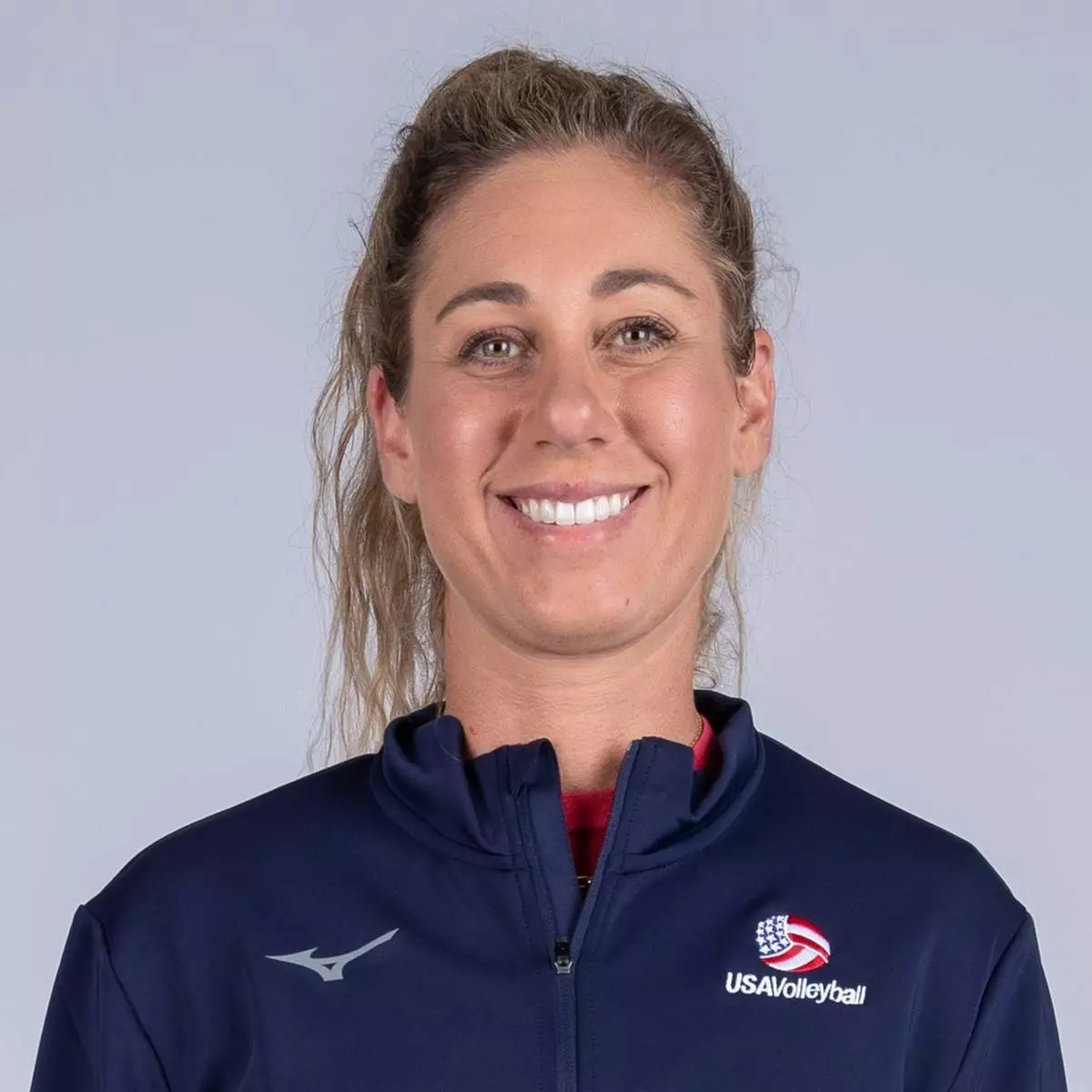
USA Volleyball Names Three-Time Olympic Medalist April Ross First Female Head Coach of Women’s Beach National Teams
The College Football Playoff will double in size to 24 teams beginning next year, bringing an end to a three-decade era of conference title games that used to be among the marquee events of the season.
College leaders announced the new format Monday, after ESPN agreed to rework its contract to add the 11 new games. Terms were not announced, though ESPN said it was a deal for five years and additional $1.7 billion, on top of the $7.8 billion contract that runs through the 2031 season.
The revenue generated from the new games will presumably make up for the estimated $345 million the Power Four conference title games were worth. ESPN would then not be on the hook for $140 million of the extra money due to cancellation of the title games, the network reported.
The new format will have five automatic qualifiers — the champions of the Power Four leagues and the best-ranked team in the smaller Group of Six conferences — with the other 19 teams being chosen by a selection panel. Notre Dame does not receive any guarantees, the way it does this year if it's ranked in the top 12 for what will be the last year of the 12-team postseason.
The top eight seeds will receive first-round byes in the new format and the playoff will start on the second weekend in December, with the first two rounds of games on campus. The traditional Army-Navy game will be played on the first weekend in December, which used to be reserved for conference title games.
Both the Southeastern and Big Ten conferences, whose approval was needed to adopt this change, and their Power Four brethren — the Big 12 and Atlantic Coast Conference — are banking that most of the additional spots will go to their members so some of the second-tier teams have new motivation to keep spending big in an era of NIL and $50 million football rosters.
“Opening the playoff to more programs, more student-athletes and more fan bases across the country is great for college football,” said Mississippi State president Mark Keenum, who is chair of the CFP board. "We look forward to seeing this expanded format come to life next season.”
The first final for the 24-team playoff remains set for Jan. 24, 2028, in New Orleans. Traditional bowl games will still host the quarterfinal and semifinal rounds.
As part of the expansion, the CFP is requiring Power Four teams to play at least 10 “qualifying” regular-season games against conference foes, other Power Four opponents and Notre Dame. Group of Six teams will have to play 10 games against conference opponents and a mix of G6 teams, Notre Dame and other independents.
The agreement guarantees two off weeks during a regular season that will begin the week before Labor Day.
The move to 24 teams marks the second expansion of the playoff since it began in 2014 as a modest four-team affair. Right after it moved to 12 in 2024, most thought it would eventually max out at 16, which was the SEC’s preference.
But the Big Ten wanted to go bigger, while the SEC balked at that, concerned about the league title game — a property it invented in 1992 and made billions from over the decades — along with the marketability of games featuring third- and fourth-place finishers in power conferences.
ESPN took care of the money problem. Now, the question is whether fans will embrace an NFL-style free-for-all that could include about one-third of the Power Four’s 68 teams, depending on what happens with the Group of Six schools, whose role in these big-money power grabs seems to diminish with every move.
It's the latest seismic change for a sport that, for decades, built its distinct character and generated controversy by leaning on media and coaching polls to hand out national titles.
The new system won’t be a completely clean break. Critics see a risk in giving more power to a selection committee that hasn’t really mastered the four- or 12-team brackets. The exclusion of Florida State in 2023 and Notre Dame last season stand out as the best examples -- and the first rankings release of this season left people scratching their heads again.
Skeptics also view the expanded playoff as another watering-down of what’s largely seen as one of the most important regular seasons in sports, replacing potential matchups between, say, Alabama and Georgia in an SEC title game with a 13 seed vs. 20 seed game that would pit, say, Kentucky and South Carolina.
But, as Big Ten commissioner Tony Petitti argued from the beginning, a postseason that gives bubble teams hope and keeps others vying for home-field advantage or byes will bring more eyes — not fewer — to the end of a regular season that sometimes boils down to only three or four traditional rivalry games with meaning. (One of those traditional games, Ohio State-Michigan, is shaping up to have zero impact on this year’s playoffs this year.)
More at-large berths also help the conferences cash in on the decision to expand their league schedules (the SEC didn’t really want to) and demand more non-league games be played among Power Four teams — all in an effort to beef up strength-of-schedule ratings that will carry weight with a selection committee.
Sign up for Top 25 poll alerts here, visit the Top 25 here and see AP’s full college football coverage here
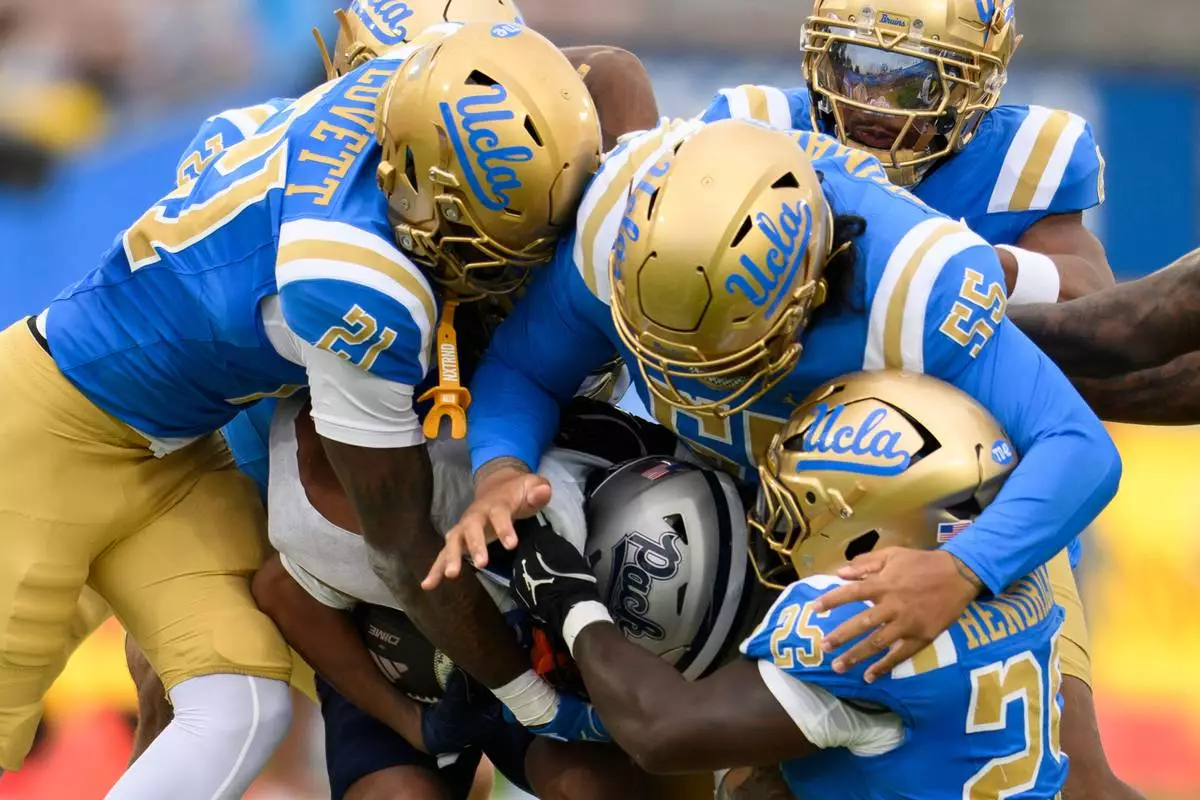
UCLA defenders tackle Nevada wide receiver Perrion Williams, center bottom, during the second half of an NCAA college football game Saturday, Oct. 31, 2026, in Pasadena, Calif. (AP Photo/Kyusung Gong)

Georgia linebacker Chris Cole (9) scores a touchdown during the first half of an NCAA college football game against Florida, Saturday, Oct. 31, 2026, in Atlanta. (AP Photo/Colin Hubbard)
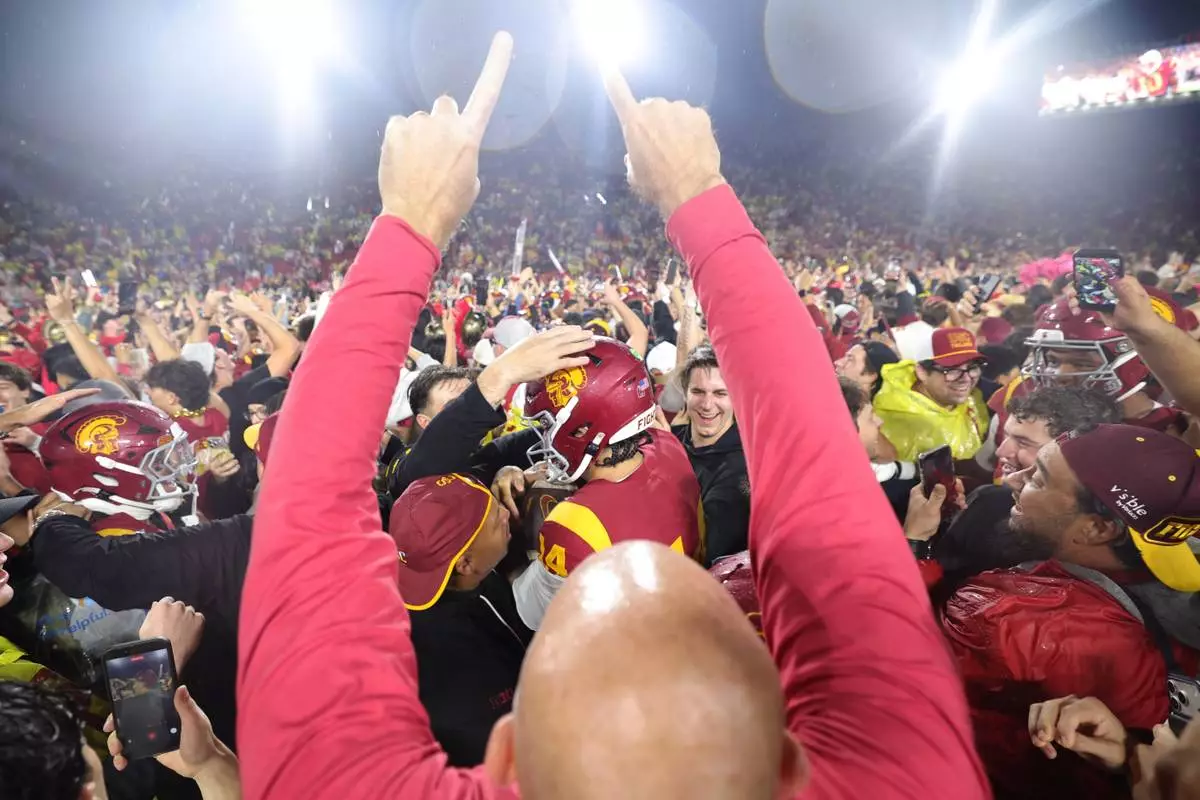
Fans storm the field after an NCAA college football game between Southern California and Ohio State, Saturday, Oct. 31, 2026, in Los Angeles. (AP Photo/Ryan Sun)