MUNICH--(BUSINESS WIRE)--Nov 10, 2026--
TASKING, a global leader in high-performance embedded software development tools, today announced support across the entire development lifecycle for the new Infineon AURIX RC1 family of microcontrollers. Engineers can now compile ( VX-toolset ), debug ( winIDEA and BlueBox ), and verify (LDRA) AURIX RC1-based systems from one unified toolchain with Agentic AI built-in to accelerate development and the path to certification of complex, multicore automotive systems.
This press release features multimedia. View the full release here: https://www.businesswire.com/news/home/20261110215415/en/
Unveiled by Infineon at electronica 2026, the AURIX RC1 microcontroller family is redefining real-time compute and control for next-generation SDV, SDX, and Physical AI applications. Built on Infineon’s future-ready RISC-V multicore real-time cluster architecture, AURIX RC1 brings the next level of performance, scalability, safety and security, power efficiency, connectivity and edge AI to electronic designs.
Engineers migrating from TriCore and Arm to RISC-V can use the TASKING toolchain to change architectures without changing their toolchain. Teams moving from TriCore can keep their existing tool investments, CI/CD pipelines and know-how – with no retraining or rebuilding of workflows. Teams coming from Arm get one toolchain across Arm and RISC-V, for a faster start on AURIX RC1-based system development and easy code reuse across projects.
“We consider the introduction of our new AURIX RC1 family much beyond the new microcontroller architecture itself,” said Thomas Schneid, Vice President Software and Ecosystem Management at Infineon. “Our new open architecture based on RISC-V comes with a growing holistic ecosystem. Together with partners like TASKING, we are creating an open and scalable software, tools and services environment that enables customers to build on their existing investments, simplify migration and accelerate innovation on AURIX RC1.”
Compliant Software, Faster
With the TASKING unified toolchain, engineers can rely on one partner for AURIX RC1 software development. This simplifies tool integration and supplier management rather than working with multiple vendors since license management is centralized, tools are already integrated, and one field application engineer (FAE) team supports the entire development workflow. A unified toolchain also lowers total cost of ownership and reduces overhead for engineering, safety and procurement teams.
By combining compile, debug, and verification in one unified development environment, the TASKING toolchain helps teams deliver software that meets ISO 26262, and ISO/SAE 21434 requirements more efficiently. Because the TASKING toolchain supports the AURIX RC1 Virtual Prototypes, development teams can start evaluation, design, analysis, testing, and verification of software before silicon is even available. This enables earlier detection of system issues and supports faster resolution of issues with less cost and risk, as well as shortens the path to certification evidence.
OEMs and Tier-1s can also benefit from faster build-fix-debug cycles with less manual effort through agentic AI across the toolchain. New AI skills for the VX-toolset, available with the December release, bring TASKING toolchain expertise – build, diagnostics, map-file and LSL analysis, startup code – into a VS Code-based environment via MCP, while the qualified tools remain unchanged. For debugging, the TASKING winIDEA AI Kit has already shown at least 50% effort reduction in three use cases. Throughout, TASKING follows one principle: AI assists, engineers decide - critical actions require human approval.
For example, engineers can use Agentic AI to evaluate Worst-Case Execution Time (WCET) for functional safety by assisting in creating test scripts, compiling with different configuration options, running different combinations of tasks to assess multicore timing coupling, and identifying then mitigating potential timing issues to help ensure deterministic, real-time system behavior.
“As a trusted partner with Infineon for more than 40 years, TASKING has worked directly with Infineon to design tools for AURIX from the inside out,” said Christoph Herzog, Co-CEO & CTO, TASKING. “OEMs can be confident their toolchain is optimized for the silicon, aligned with Infineon's software ecosystem, and designed to accelerate and simplify even the most complex automotive designs. In addition, our guiding principle, ‘AI assists, engineers decide,’ enables us to support Agentic AI across the toolchain while maintaining functional safety and simplifying certification.”
Four Decades of Partnership
TASKING’s support for AURIX RC1 builds on more than 40 years of partnership with Infineon. TASKING provided the first toolsets on the market for C166 and TriCore, has been part of five Infineon DRIVECORE™ bundles, including the most downloaded DRIVECORE TC4 VT1 bundle (TASKING / Vector), and received Infineon’s "Open Standard Advocate" award for its RISC-V compiler work. TASKING was also among the first ecosystem partners working with Infineon’s RISC-V SDK and virtual prototype.
Availability
The new TASKING VX-toolset for RISC-V supporting the AURIX RC1 family will be available in December 2026. Qualification of TASKING’s RISC-V toolchain is planned for 2027. With its support for TriCore, Arm, and RH850, TASKING has a strong track record of independently certifying its compilers to reduce the time, cost, and risk associated with software tool qualification in safety-critical projects.
Infineon plans to include TASKING compiler technology in its DRIVECORE software portfolio for AURIX RC1. Having a pre-integrated, tested combination of Infineon software and TASKING tools jumpstarts development as developers have an integrated, ready-to-use development path from day one.
See TASKING Live at electronica 2026
Visit the TASKING demo at the Infineon booth (hall C3, booth 502) at electronica 2026 to see the AI-assisted workflow along the V-cycle with the unified TASKING toolchain. Request an evaluation license or book a migration workshop at https://www.tasking.com/contact
About TASKING
TASKING is a leading provider of embedded software development tools that compile, debug and test. These tools enable embedded software engineers to develop reliable, high-performance applications for a safer future. Founded in 1977, TASKING is committed to expanding its portfolio to deliver a single-supplier, certifiable tool chain. As a trusted partner focused on customer need, expertise and a commitment to sustainability, TASKING and its integrated tool chain accelerate the software development lifecycle for safety and security critical applications in industries such as automotive, aerospace and defense, industrial, medical, robotics and others.
For more information, visit our website or follow us on LinkedIn.
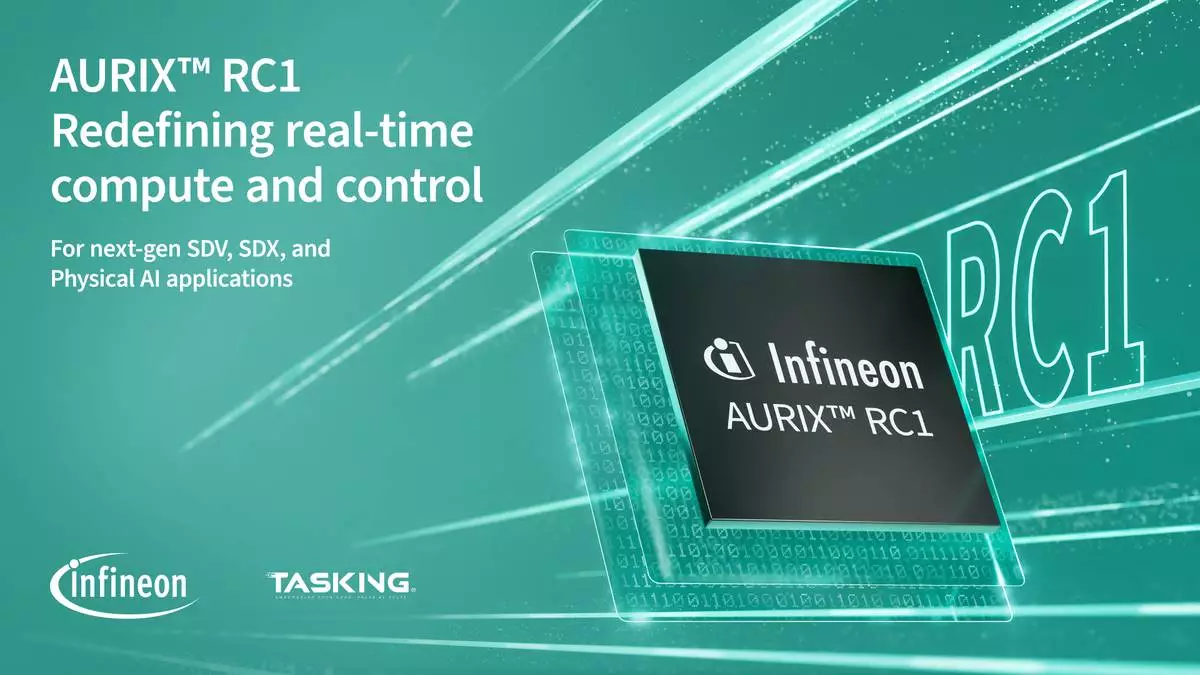
TASKING’s unified toolchain helps OEMs and Tier-1s starting new designs or migrating from TriCore and Arm win back time, reduce costs and deliver functional safety-compliant software faster.