A China-built water treatment plant taking shape in southeastern Bangladesh is set to secure a steady supply of clean water for the country's fast-growing industries, showing how joint development projects are translating into tangible benefits on the ground.
Mirsharai, a coastal district some 200 kilometers southeast of the crowded capital, Dhaka, has for generations been defined by the rhythms of rural life.
Today the area stands at the threshold of industrial transformation, having been chosen as the site of the National Special Economic Zone, Bangladesh's newest magnet for foreign investment.
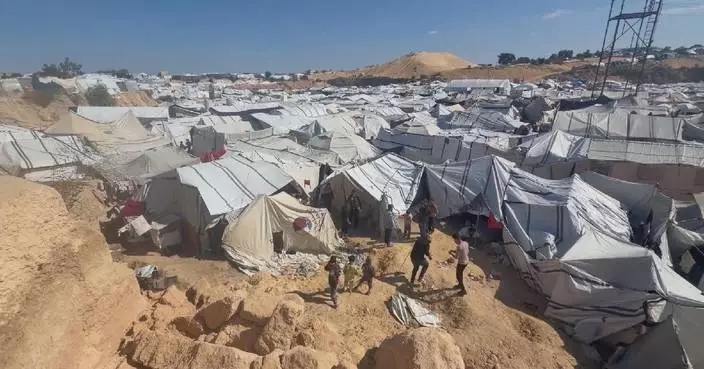
Yet as factories promise jobs and better incomes for local families, they are also placing unprecedented strain on a region where clean water has never been easy to come by.
"But 90 percent of people do not have a deep well for drinking water," said a villager.
An answer to that strain is now taking shape in the form of the Mirsharai Water Treatment Plant, a project built by a Chinese consortium and designed to let industrial development go hand in hand with the protection of water resources.
Once completed, the plant is expected to produce 50 million liters of treated water every day, with a roughly 10-kilometer pipeline carrying water from a nearby river to form the industrial lifeline of the region.
"This water will help support industrial development. This will attract more investment, more industries, and as a result, it will eventually contribute to the country's economy,” said Abdullah Al-Maruf, a staff member of China Harbor Engineering.
The project's backers also stress that it has been designed around the zone's unusual geography, where abundant seawater surrounds an area chronically short of freshwater fit for industrial use.
"The zone you visited is surrounded by the sea. What we actually need is clean water. So we are setting up — with the help of a Chinese constructor — a water treatment plant that brings in clean water. And also an ETP, an effluent treatment plant, so that post-utilization water goes back into the environment in a sustainable way," said Ashik Chowdhury, executive chairman of Bangladesh Economic Zones Authority (BEZA).
Few sectors feel that shortage more acutely than Bangladesh's garment industry, one of the world's largest, which employs over 4 million people and accounts for more than 80 percent of the country's export earnings, and which now stands to benefit significantly from the new water treatment project.
"When we have a deep-water treatment plant, the benefit of this will be less clean water crisis. Water will be more usable after it's treated, so a new treat plant will be good for us," said a representative of a textile factory.
Once the plant is finished, it will power the economic zone's expansion while easing pressure on the region's over-extracted groundwater, a benefit that will extend to nearby communities as well.
The project also carries significance on a broader regional scale, as Bangladesh forms part of the extended Asia-Pacific region, an economic corridor to which members of the Asia-Pacific Economic Cooperation (APEC) are looking for future growth. "I think Bangladesh and China's relationship has ever deepened and it's probably the closest we've felt in terms of the bilateral relationship between China and Bangladesh is now. This concept of a shared future that President Xi Jinping pulled out, we are part of that family now. We have been heavily in touch with APEC, ASEAN and many of the regional partnerships," said Chowdhury.
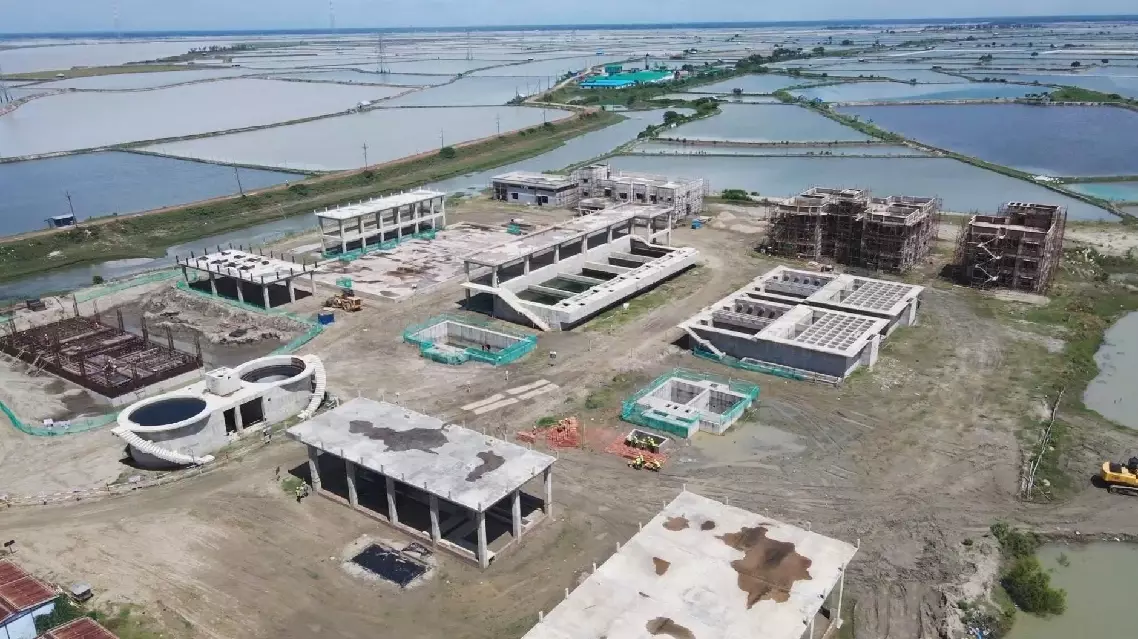
China-built water treatment plant aims to secure clean water supply for Bangladesh industries