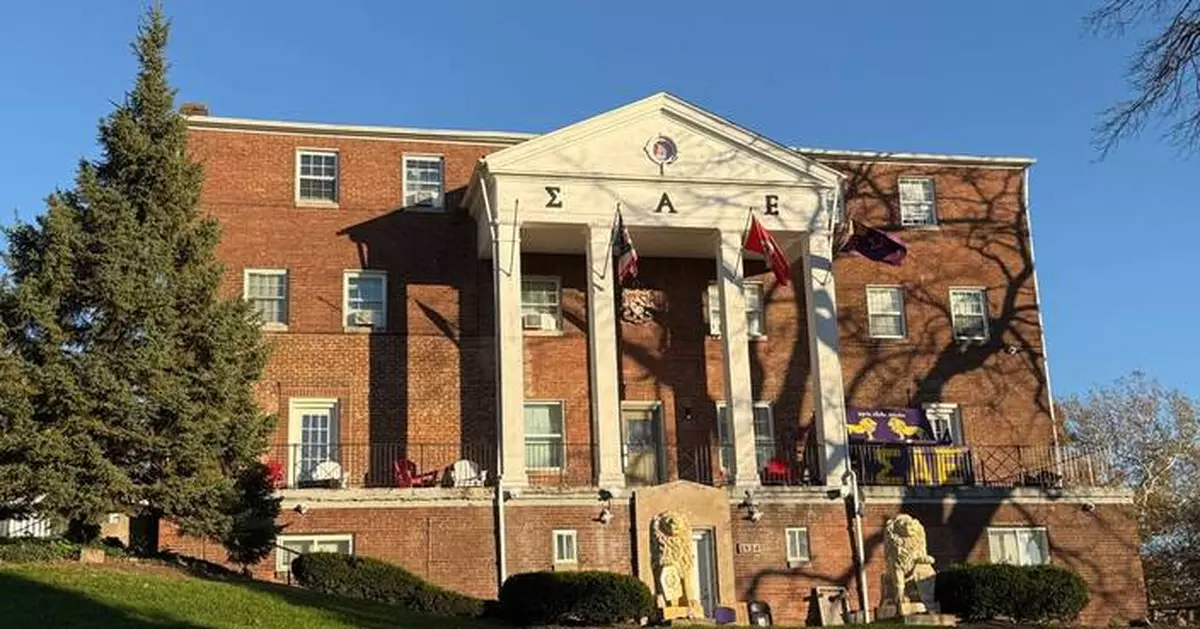
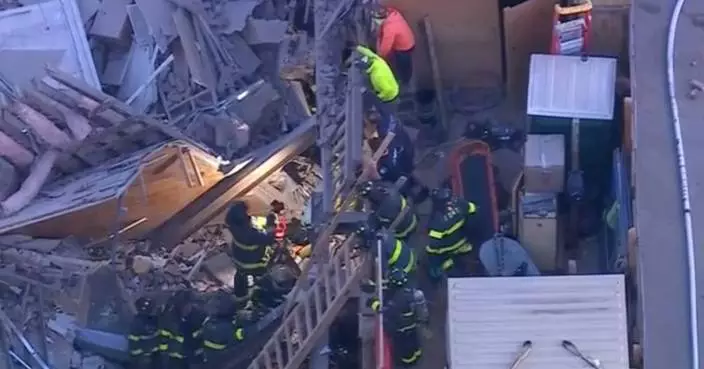
COLUMBUS, Ohio (AP) — Police are investigating whether two Ohio State University students who were treated for deep burns after being engulfed in flames at an outdoor fraternity party were victims of hazing.
The university placed the Sigma Alpha Epsilon fraternity on interim suspension after a video circulated on social media showing a large group surrounding two young men on fire Saturday. A student who watched the video called police the next day to report a possible hazing incident, according to an audio recording of the call.
“They stood around watching while this kid just burned," said the student, who was sent the video in a group chat with her sorority members.
The video shows a ring of people standing outside, many wearing the school’s red and white colors, laughing and shouting at two men on the ground with their pants on fire. One lunges at the other, and they both roll on the ground. The shouting takes on a more panicked tone as they struggle to remove their clothing. One onlooker holds a small fire extinguisher but doesn't successfully deploy it.
According to the Columbus Police report, the victims were both students who were treated for “moderate” second- and third-degree burns. The university has not said how the fraternity is linked to the event, but the report lists the president of the fraternity as part of the investigation.
The report also lists hazing as the charge being investigated and notes that university authorities also are looking into whether hazing occurred.
Ohio Gov. Mike DeWine signed “Collin’s Law” in 2021 toughening penalties for hazing in the wake of a student’s death at a fraternity house at Ohio University. The law's definition of hazing includes participating in or coercing anyone into behavior that creates a substantial risk of mental or physical harm and is tied to initiation into an organization or continued membership.
Under that law and the federal Stop Campus Hazing Act, signed by President Joe Biden in 2024, Ohio State maintains a public list of hazing violations and penalties. It shows that so far this year, four fraternities, one sorority and one co-ed group have been sanctioned for hazing. Sigma Alpha Epsilon does not appear on the list for the last five years, though the student newspaper The Lantern said it has been sanctioned at least seven times since 2001.
According to the newspaper’s archives, the chapter over the years has been found to have violated policies related to alcohol, hazing and endangering behavior, and at one point had its disciplinary probation extended for failing to comply with sanctions.
Sigma Alpha Epsilon eliminated its “pledging” process for all its chapters nationwide in 2014 in part due to injuries and deaths.
In 2022, 46 members of the SAE chapter at the University of New Hampshire were charged with hazing. Most agreed to perform community service and avoided conviction; the three who went to trial were acquitted because the judge said the state didn’t prove the acts were a “condition of initiation into, continued membership in or association with” the fraternity.
Ramer reported from Concord, New Hampshire. Julie Carr-Smyth also contributed from Columbus.

FILE - This photo shows a sign for Ohio State University in Columbus, Ohio, on May 8, 2019. (AP Photo/Angie Wang, File)
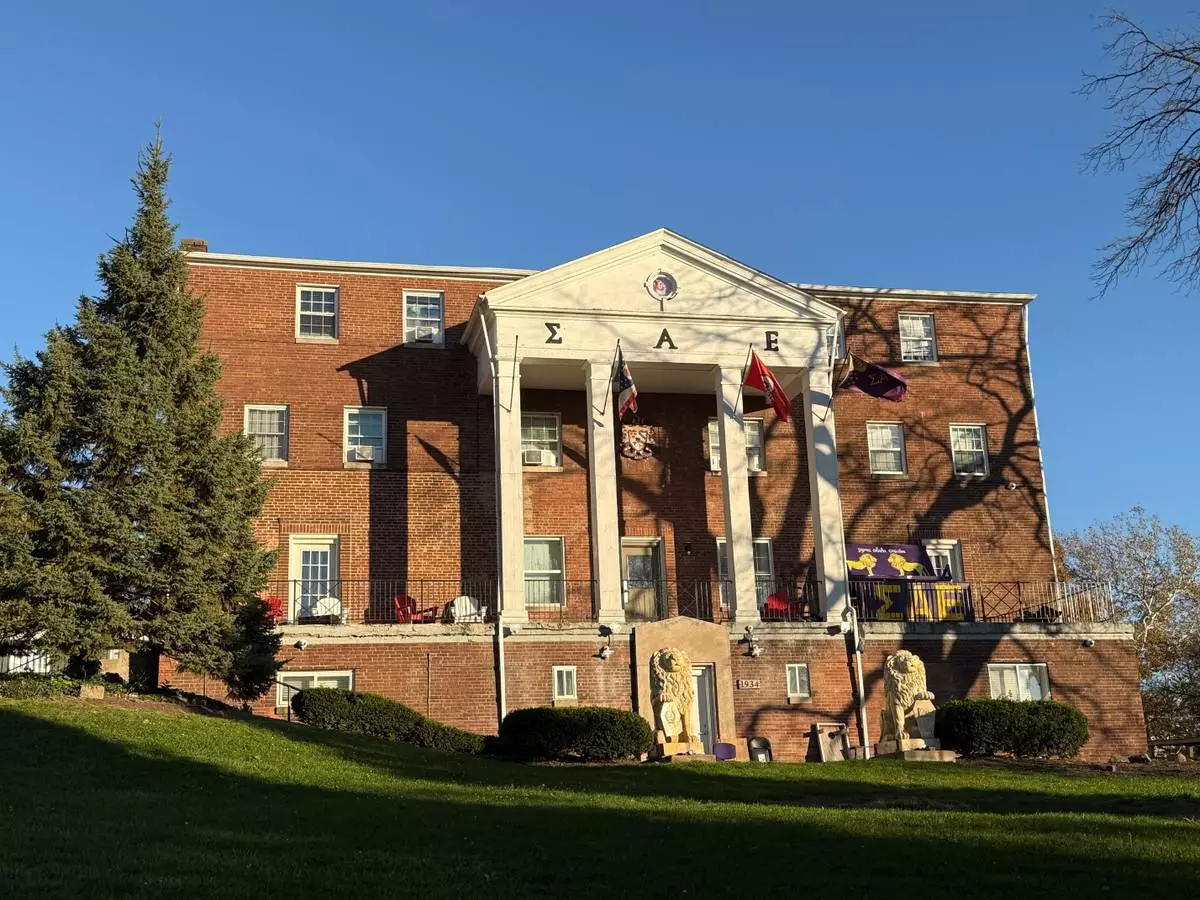
The Sigma Alpha Epsilon fraternity house in Columbus, Ohio, on Monday, Nov. 9, 2026. (AP Photo)
Turkish President Recep Tayyip Erdogan on Wednesday called for the world to recognize the environmental impacts of the Israel-Hamas war in Gaza and asked the Israeli government to grant more aid access to the Palestinian territory.
Erdogan was speaking at the U.N. climate summit, known as COP31, in Antalya, Turkey.
“What has taken place in Gaza is not only a genocide, but it is also an ecocide,” Erdogan said to applause by world leaders and other climate envoys.
A U.N.-backed panel of independent experts concluded last year that Israel had committed genocide in Gaza. Israel vehemently denies the allegations and has accused the panel of antisemitism.
“Centuries old olive trees have been cut down. The soil and water have been polluted in Gaza, and cities in Gaza have been turned into enormous piles of rubble,” Erdogan said. “With Gaza’s destroyed infrastructure, compounded by torrential rain and by flooding, tens of thousands of tents and shelters have been inundated.”
Israel's Foreign Ministry responded in a post on X, accusing Erdogan of “using an international forum to push his anti-Israel campaign of lies” and of supporting Hamas. Israel launched its campaign in Gaza following attacks by Hamas-led militants in southern Israel on Oct. 7, 2023. Militants killed around 1,200 people and took 251 hostages.
“Those who truly care about Gaza should demand that Hamas disarm so reconstruction can begin,” the statement read. Israel wasn't invited to COP31.
Israel’s retaliatory offensive has killed more than 74,000 people, according to local health authorities, and destroyed much of Gaza. The Health Ministry, part of Gaza’s Hamas-run government, doesn’t distinguish between civilians and combatants, but says women and children make up nearly half of the dead.
Erdogan has been an outspoken critic of Israel, while Israeli Prime Minister Benjamin Netanyahu has called Erdogan an antisemitic “tyrant.”
“The latest country to become a superspreader of antisemitic lies is Turkey," Netanyahu said in September while speaking at the U.N. General Assembly.
In recent days, heavy rainfall and subsequent flooding destroyed many of the tents and makeshift shelters that Palestinian residents now live in. At least four people were killed earlier this week when a sand embankment collapsed on their shelter. The rain also left many displaced people without food, drinking water or a dry place to sleep.
Humanitarian aid enters the territory, but imports remain far below levels before the start of the Israel-Hamas war — and many items remain blocked by Israel.
A 2025 report by the U.N. Environment Program also outlined the devastating reality of Gaza’s environment since the war began.
Remote sensing assessments showed that by May 2025, more than 97% of the tree crops, 82% of annual crops, 95% of shrubland and 89% of grass and fallow land had been damaged, according to the UNEP report.
“As of now, our families only have 3% of cropland to use, and that is assuming it’s distributed across 2 million Palestinians" in the Gaza Strip, said Mohammed Usrof, co-founder and executive director of the Palestinian Institute for Climate Strategy.
“Not talking about these losses undermines Palestinians’ food supply, livelihoods and ability to remain on their land,” Usrof said.
The territory’s ability to dispose of garbage, treat sewage and deliver clean water has been virtually decimated by three years of war. This has made grim living conditions worse and raised health risks for hundreds of thousands of people deprived of adequate shelter, food and medicine, aid groups say.
The conflict has “all but eliminated” Gazan fishing livelihoods, the report said, highlighting how marine ecosystems have been contaminated with munitions, sewage and solid waste.
“For people in Gaza, this translates into severely limited access to safe drinking water, greater exposure to waterborne diseases and toxic substances, deepening food insecurity and the loss of livelihoods dependent on agriculture and fishing,” Ghiwa Nakat, executive director at Greenpeace MENA, told The Associated Press.
Nakat also warned that Gaza's environment could take years to recover.
“The environmental damage will not end when the war ends,” Nakat said. “Contaminated soil and groundwater, destroyed ecosystems and the collapse of essential environmental infrastructure could undermine public health, food security and livelihoods for generations, threatening communities’ resilience and their ability to recover.”
World leaders began formal talks at COP31 this week, seeking agreement on concrete steps to curb global warming after a year of deadly floods, heat waves and other climate-related disasters.
More than 70 world leaders and senior government officials are speaking at the summit, though some key leaders are absent, including heads of state from the United States, China and India.
Victoria Milko reported from Islamabad.
The Associated Press’ climate and environmental coverage receives financial support from multiple private foundations. AP is solely responsible for all content. Find AP’s standards for working with philanthropies, a list of supporters and funded coverage areas at AP.org.
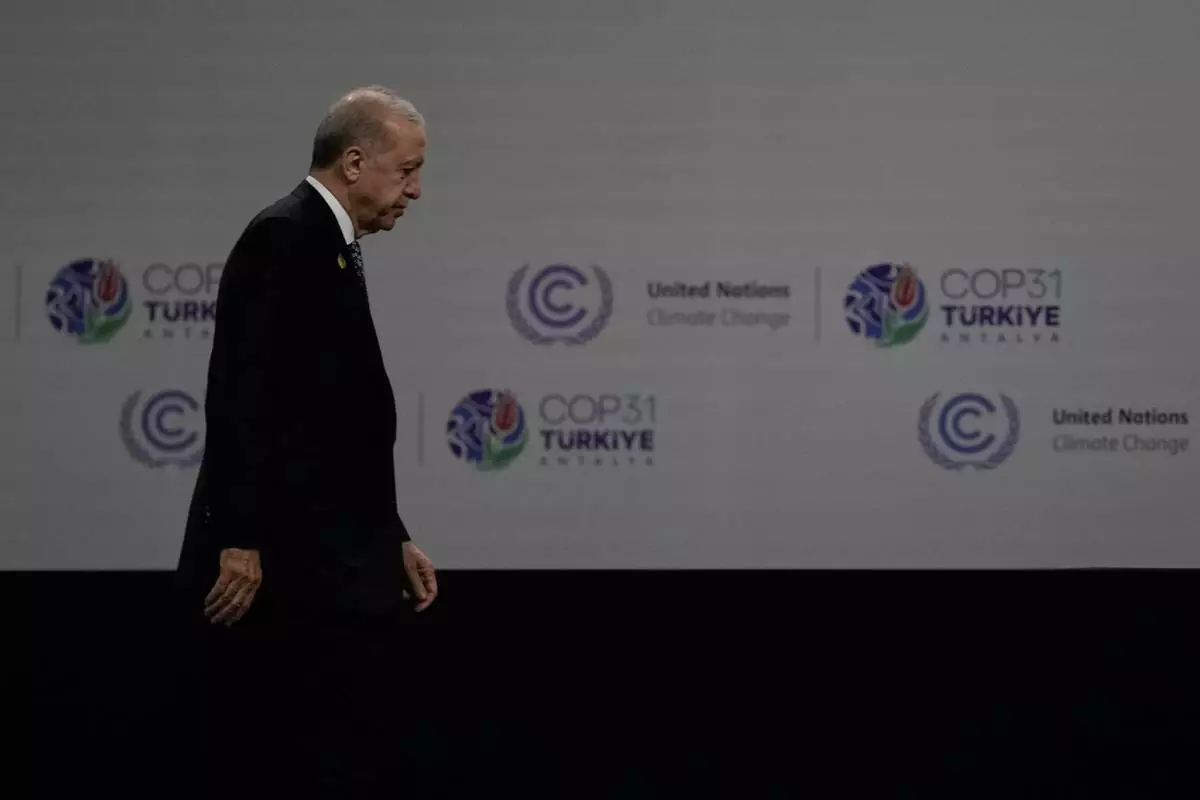
Turkey President Recep Tayyip Erdogan leaves after speaking at the COP31 U.N. Climate Summit, Wednesday, Nov. 11, 2026, in Antalya, Turkey. (AP Photo/Khalil Hamra)
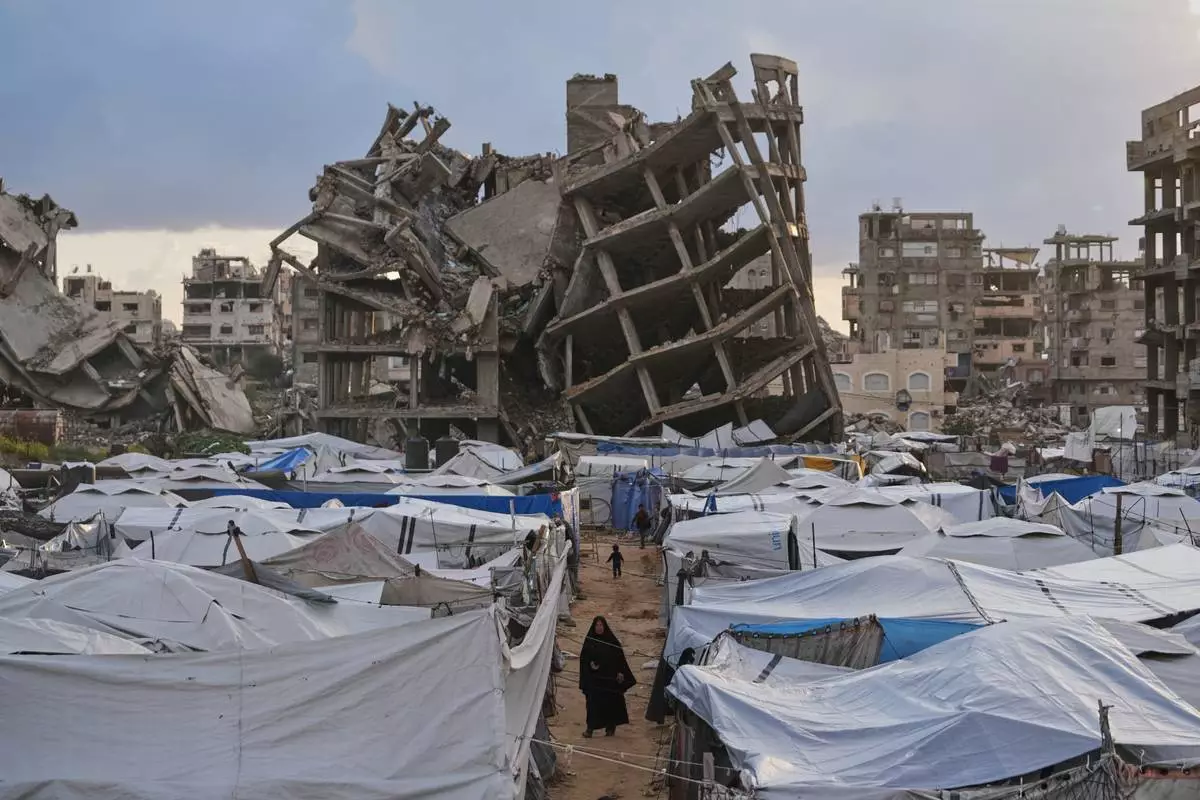
Palestinians walk through a tent camp housing displaced people amid buildings destroyed by Israeli strikes during the Israel-Hamas war in Gaza City, Sunday, Nov. 8, 2026. (AP Photo/Jehad Alshrafi)
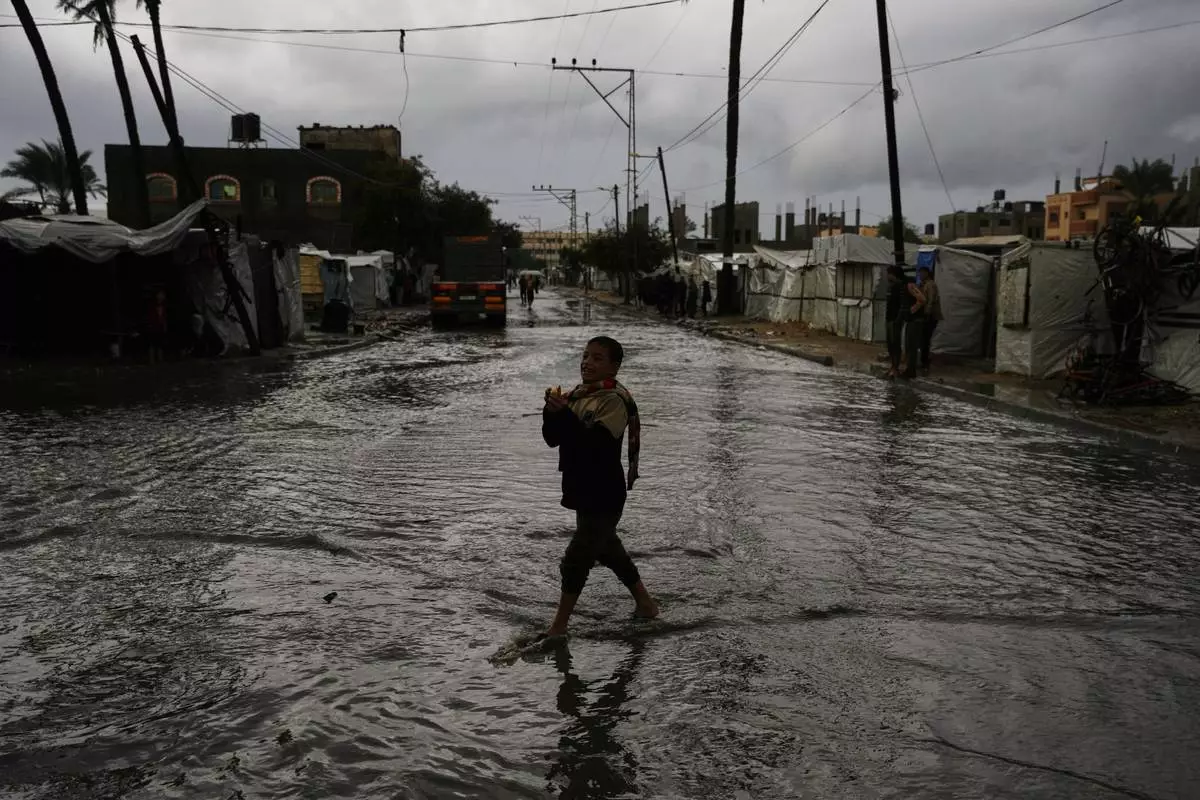
Displaced Palestinians walk through a rain-soaked tent camp following heavy rainfall in Deir al-Balah, central Gaza Strip, Saturday, Nov. 7, 2026. (AP Photo/Abdel Kareem Hana)
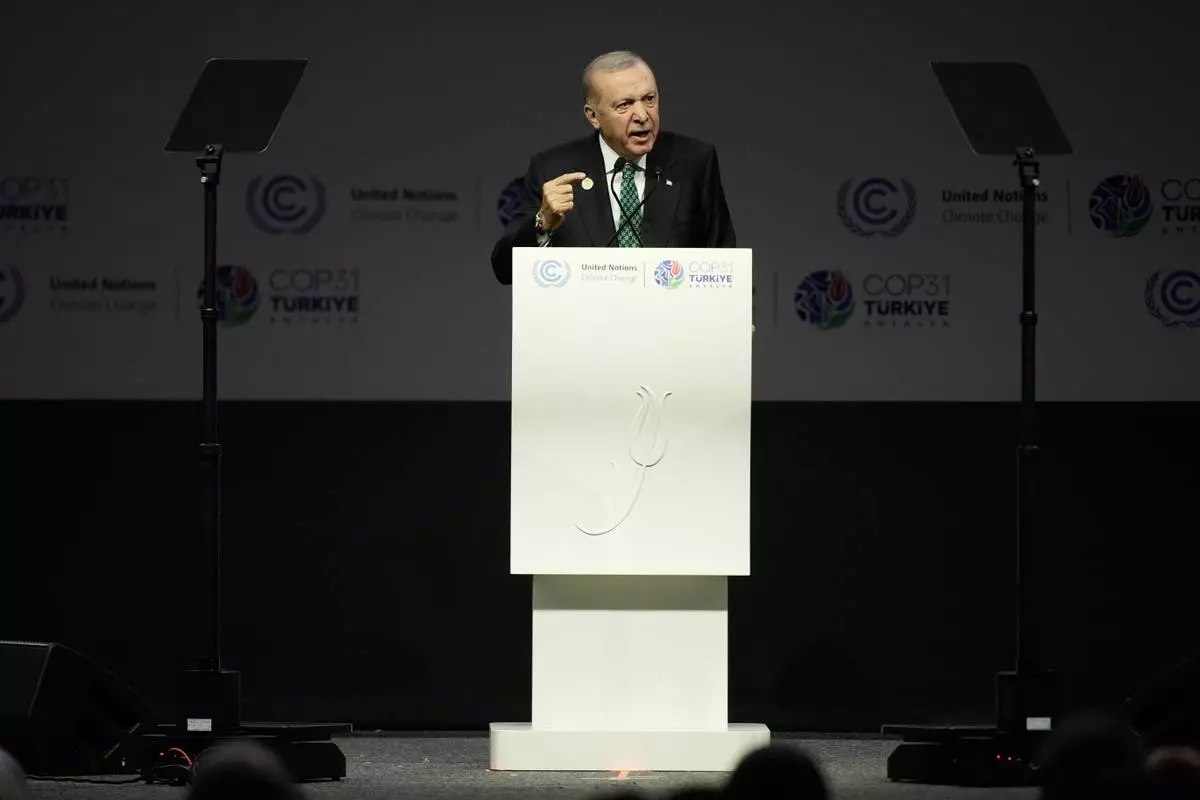
Turkey President Recep Tayyip Erdogan speaks at the COP31 U.N. Climate Summit, Wednesday, Nov. 11, 2026, in Antalya, Turkey. (AP Photo/Khalil Hamra)
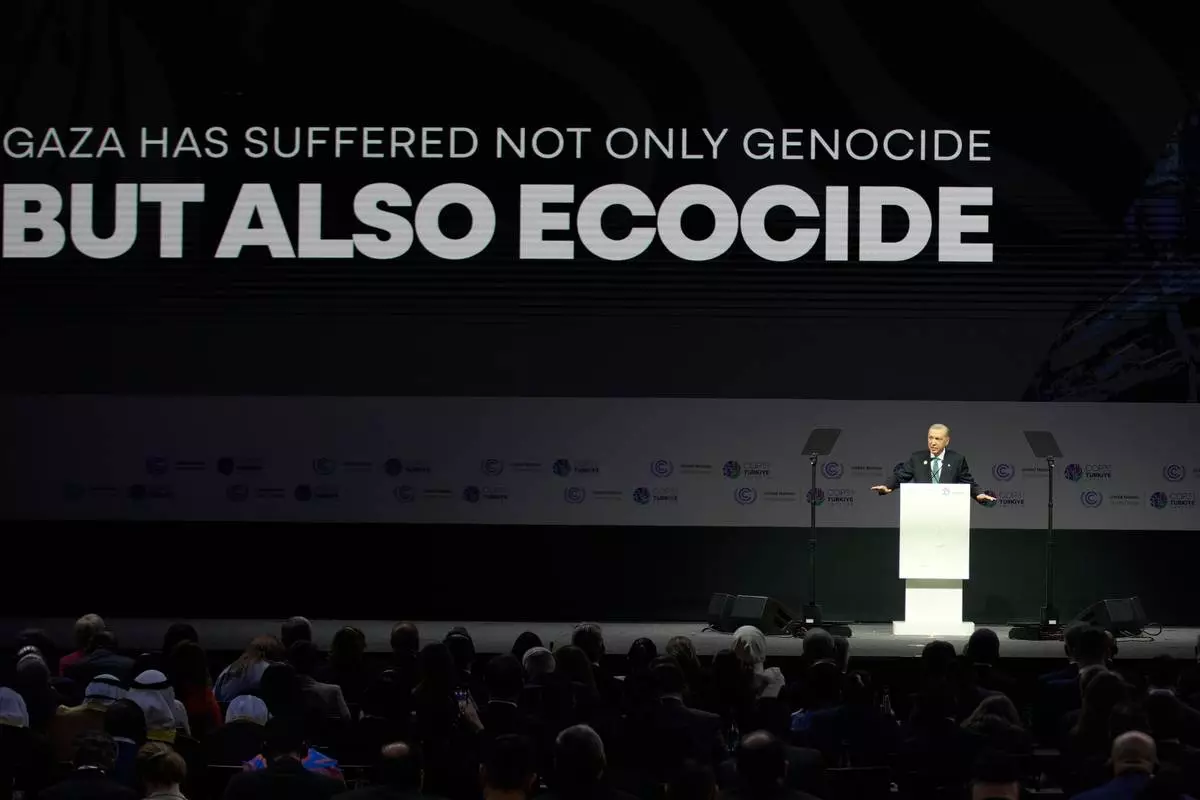
Turkey President Recep Tayyip Erdogan speaks at the COP31 U.N. Climate Summit, Wednesday, Nov. 11, 2026, in Antalya, Turkey. (AP Photo/Khalil Hamra)