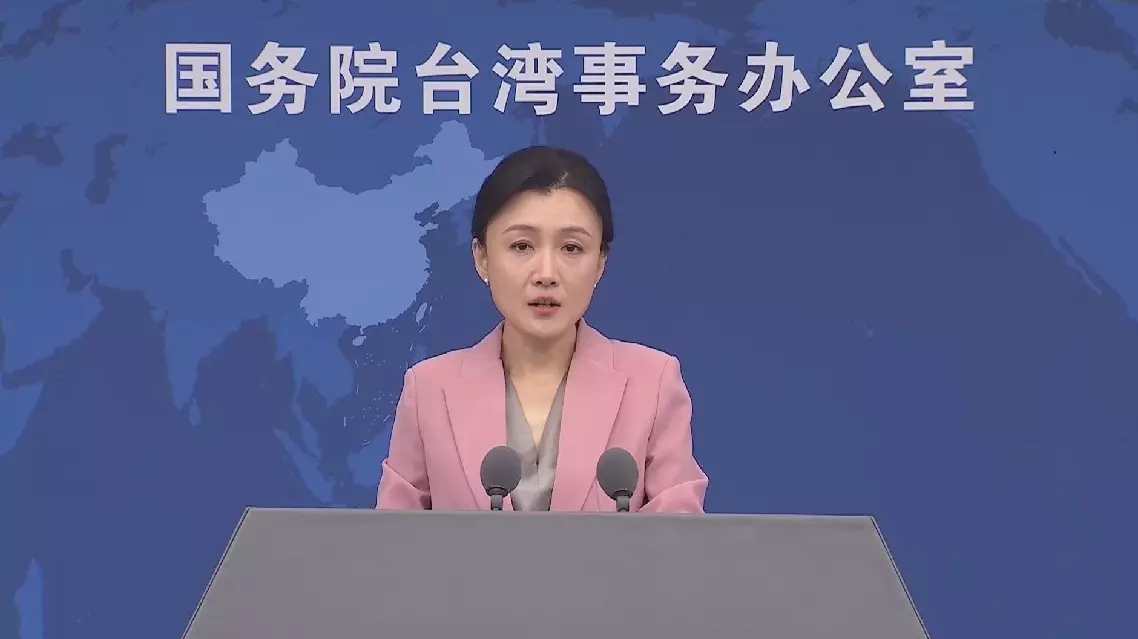
The Chinese mainland on Wednesday criticized Taiwan's Democratic Progressive Party (DPP) authorities over their push to revise the island's so-called anti-infiltration act, saying the move is designed to silence dissent and restrict cross-Strait exchanges.
Slamming the act as "evil", Zhang Han, a spokeswoman for the Taiwan Affairs Office of the State Council, said the act has been widely opposed in Taiwan.
"The so-called 'Anti-infiltration Act' is a tool concocted by the DPP authorities to suppress political dissent, intimidate the people of Taiwan, restrict cross-Strait exchanges, and pursue their own political interests. It is an out-and-out evil law that has been widely questioned and opposed in Taiwan since the very beginning," she said.
The DPP authorities said they have begun procedures to amend the so-called act in response to what they call "transnational repression".
In response, Zhang firmly rejected the justification.
"The so-called 'transnational repression' is a lie fabricated by the DPP authorities to embolden Taiwan separatist forces and peddle the 'two states' theory, once again exposing their sinister intentions. Their deliberate move at this time is merely a dirty trick to further impose 'green terror,' amplify a chilling effect, stoke confrontation across the Taiwan Strait, and deceive the public. It will not win public support," Zhang said.
Chinese mainland criticizes DPP over so-called anti-infiltration act
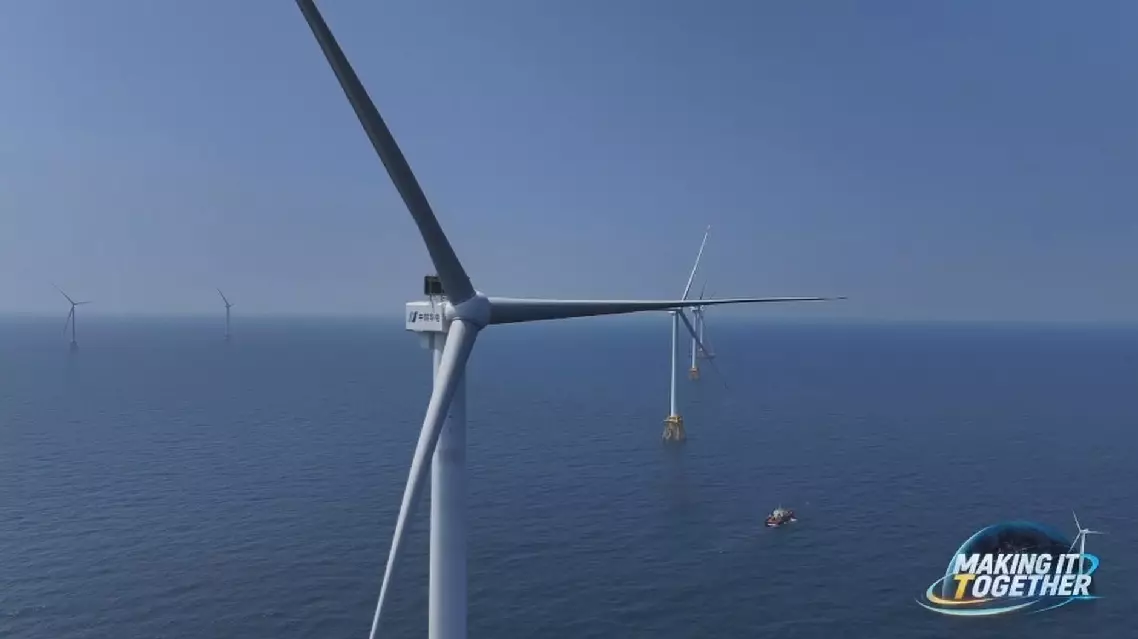
Offshore wind power is helping south China's Guangdong Province build an ever-wider green energy industry, a transformation that is reshaping the province's own economy while supporting the clean energy ambitions of the wider Asia-Pacific.
Guangdong has been expanding its offshore wind capacity at a rapid pace, with installed capacity exceeding 13 gigawatts by the end of 2025, the largest total of any Chinese province.
Much of that growth is concentrated in Yangjiang, a coastal city that has grown into one of the country's major offshore wind power hubs, where a single project counts 233 turbines, as one worker at a local wind farm noted.
The city is also home to China's only national offshore wind turbine testing platform, the China General Certification (CGC) Guangdong Wind Power Test Center, which was established in 2018 and ranks among the world's largest facilities for full-scale blade testing, assessing the quality and reliability of the equipment used across the industry.
"The longest blade we have tested so far is 147 meters. China is taking the lead in most large blade tests at present. China is participating in formulating new testing methods and standards," said Lin Xianshen, deputy director of laboratory of CGC Guangdong Wind Power Test Center Limited.
For the companies operating the turbines off its coast, Yangjiang's rise has been written into a steady multiplication of projects dotting the sea.
"By the end of 2025, Yangjiang's total installed capacity reached 24 million kilowatts. It is the prefecture-level city with the largest installed wind power capacity in Guangdong Province," said Li Xiang, chairperson of Guangdong Huadian Fuxin Yangjiang Offshore Wind Power Company.
Along Guangdong's coastline, wind farms, equipment makers, component suppliers and testing facilities are increasingly coming together, weaving an integrated supply chain for green energy.
Chinese manufacturers now account for more than two-thirds of global wind turbine production, and by the end of 2024, half of the country's cumulative wind turbine exports had gone to the Asia-Pacific region.
As demand for green electricity grows across Asia-Pacific Economic Cooperation (APEC) economies, a service center in Shenzhen City in Guangdong is helping export-oriented companies obtain internationally recognized green electricity certification.
The center is China's first government-authorized service center for green electricity and green certificates, designed to connect Chinese businesses with new energy markets across the wider region.
"Export-oriented businesses need to engage in international supply chain and industrial chain cooperation. They make up 40 percent of the customer base," said Tan Kun, deputy general manager of the marketing and customer service of Shenzhen Power Supply Bureau under China Southern Power Grid.
From offshore wind farms and advanced manufacturing to green electricity services, Guangdong's expanding green industry cluster is lending its weight to a cleaner industrial future in the Asia-Pacific.
South China’s offshore wind industry powers Asia-Pacific's green future