Credit card balances in the United States rose by 22 billion U.S. dollars in the third quarter of this year to a record 1.29 trillion dollars, according to the latest household debt report released by the Federal Reserve Bank of New York on Tuesday.
The figure represents an increase of 4.2 percent compared with the same period a year earlier, the report showed.
Researchers at the Federal Reserve Bank of New York said that as inflation remains high and borrowing costs climb, consumers are facing mounting financial pressure, with low-income borrowers and those with lower credit scores struggling in particular to repay their debts.
The average interest rate on newly issued credit cards in the United States stands at about 24 percent, leaving credit cards among the most expensive ways to borrow.

U.S. credit card debt climbs to 1.29 trln USD
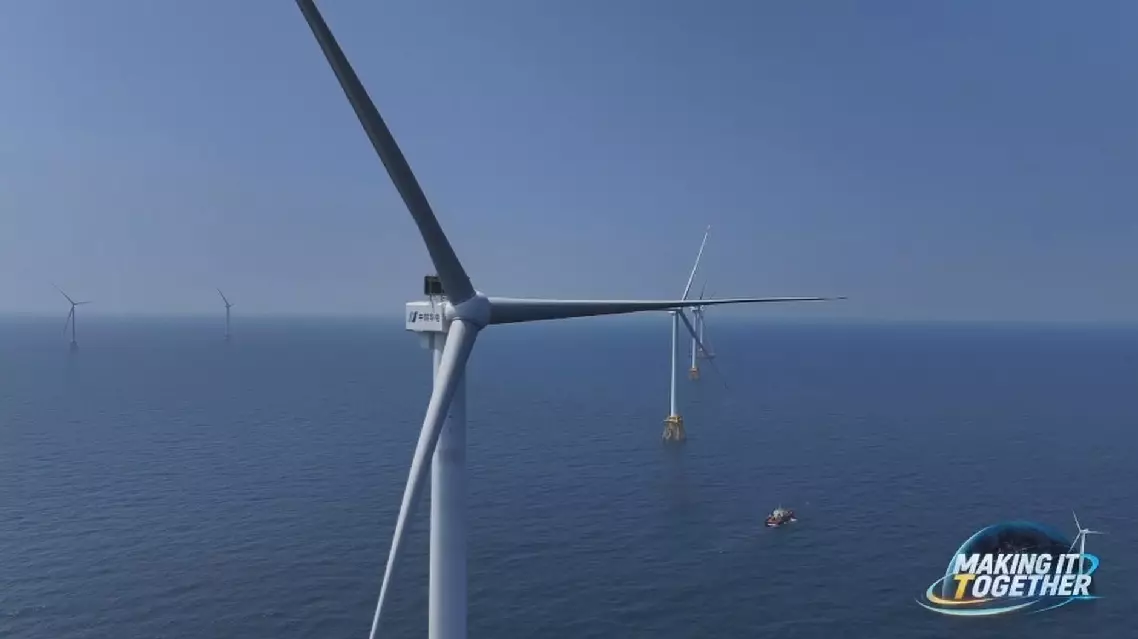
Offshore wind power is helping south China's Guangdong Province build an ever-wider green energy industry, a transformation that is reshaping the province's own economy while supporting the clean energy ambitions of the wider Asia-Pacific.
Guangdong has been expanding its offshore wind capacity at a rapid pace, with installed capacity exceeding 13 gigawatts by the end of 2025, the largest total of any Chinese province.
Much of that growth is concentrated in Yangjiang, a coastal city that has grown into one of the country's major offshore wind power hubs, where a single project counts 233 turbines, as one worker at a local wind farm noted.
The city is also home to China's only national offshore wind turbine testing platform, the China General Certification (CGC) Guangdong Wind Power Test Center, which was established in 2018 and ranks among the world's largest facilities for full-scale blade testing, assessing the quality and reliability of the equipment used across the industry.
"The longest blade we have tested so far is 147 meters. China is taking the lead in most large blade tests at present. China is participating in formulating new testing methods and standards," said Lin Xianshen, deputy director of laboratory of CGC Guangdong Wind Power Test Center Limited.
For the companies operating the turbines off its coast, Yangjiang's rise has been written into a steady multiplication of projects dotting the sea.
"By the end of 2025, Yangjiang's total installed capacity reached 24 million kilowatts. It is the prefecture-level city with the largest installed wind power capacity in Guangdong Province," said Li Xiang, chairperson of Guangdong Huadian Fuxin Yangjiang Offshore Wind Power Company.
Along Guangdong's coastline, wind farms, equipment makers, component suppliers and testing facilities are increasingly coming together, weaving an integrated supply chain for green energy.
Chinese manufacturers now account for more than two-thirds of global wind turbine production, and by the end of 2024, half of the country's cumulative wind turbine exports had gone to the Asia-Pacific region.
As demand for green electricity grows across Asia-Pacific Economic Cooperation (APEC) economies, a service center in Shenzhen City in Guangdong is helping export-oriented companies obtain internationally recognized green electricity certification.
The center is China's first government-authorized service center for green electricity and green certificates, designed to connect Chinese businesses with new energy markets across the wider region.
"Export-oriented businesses need to engage in international supply chain and industrial chain cooperation. They make up 40 percent of the customer base," said Tan Kun, deputy general manager of the marketing and customer service of Shenzhen Power Supply Bureau under China Southern Power Grid.
From offshore wind farms and advanced manufacturing to green electricity services, Guangdong's expanding green industry cluster is lending its weight to a cleaner industrial future in the Asia-Pacific.
South China’s offshore wind industry powers Asia-Pacific's green future