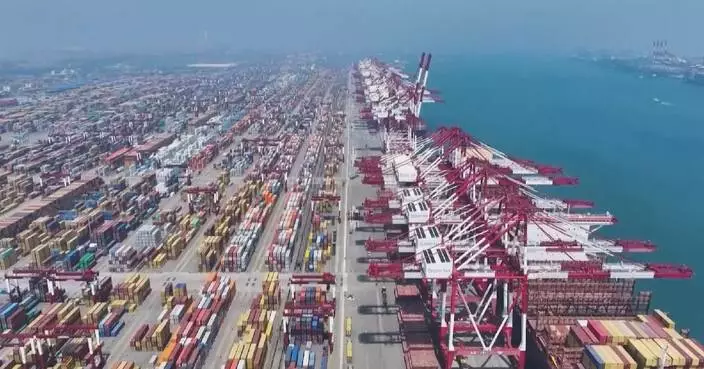
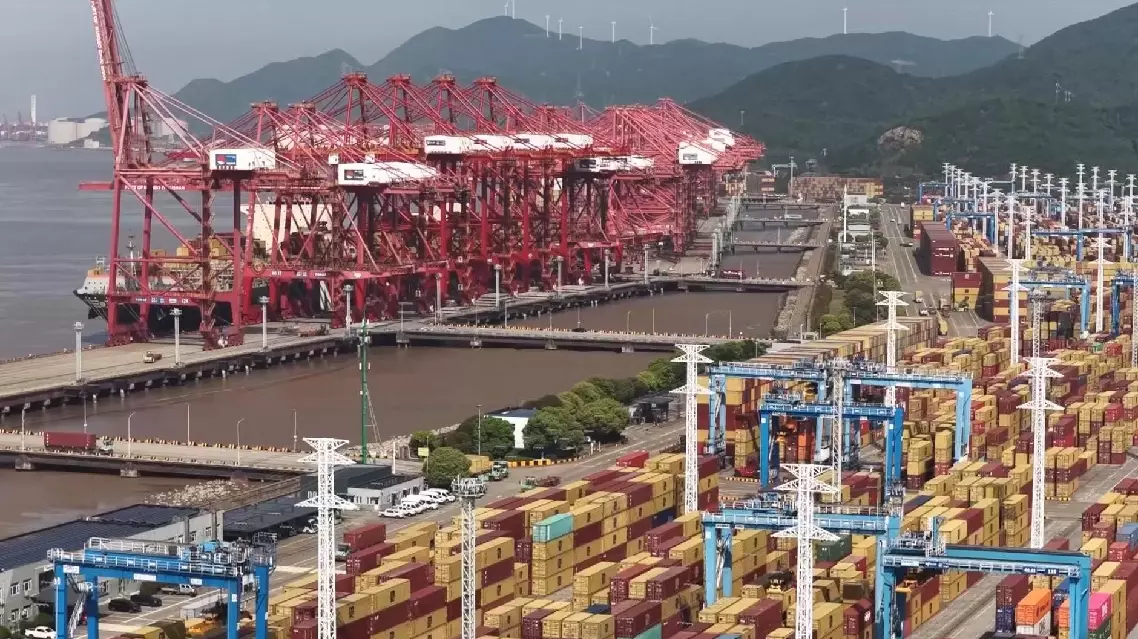
Ningbo-Zhoushan Port in east China's Zhejiang Province has handled more than 40 million twenty-foot equivalent units (TEUs) so far this year, marking the second consecutive year it has surpassed the milestone, port officials said Tuesday.
The port, the world's busiest by cargo throughput, reached the threshold 22 days earlier than last year, according to Ningbo-Zhoushan Port Co., Ltd.
China's foreign trade in goods totaled 39.94 trillion yuan (about 5.95 trillion U.S. dollars) in the first three quarters of 2026, up 18.8 percent year on year. Expanding trade and a shift toward higher-value exports have brought more cargo to the port while increasing demand for faster, more reliable transport links, a company official said.
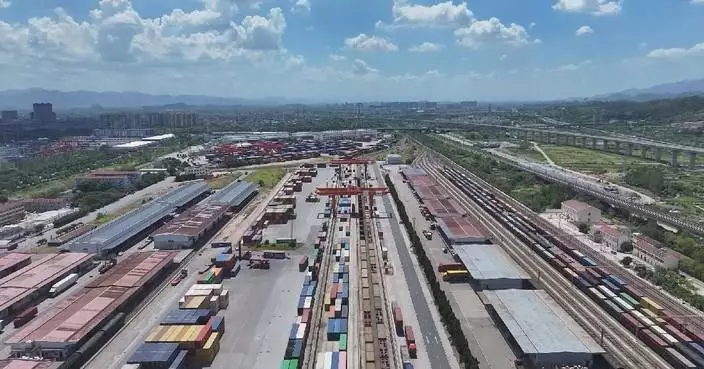
Ningbo-Zhoushan Port has expanded its inland service network, with 115 sea-rail intermodal routes reaching 71 cities in 16 provincial-level regions. The port's sea-rail freight volume has exceeded 1.8 million TEUs so far this year.
It operates more than 310 container shipping routes, connecting with over 700 ports in more than 200 countries and regions, the official said.
The China-Europe Arctic container express route entered regular operation this year and completed eight voyages during the navigation season. The route connects Ningbo-Zhoushan Port with major European ports via the Northeast Passage and takes about 20 days, nearly half the time required by the traditional Suez Canal route.
To handle growing volumes, the port has upgraded infrastructure, including deep-water shorelines, specialized berths and cargo collection and distribution facilities, the official said.
In September, the port's average daily container handling volume exceeded 140,000 TEUs, while monthly throughput reached a record 4.27 million TEUs.
Through coordination with customs, maritime authorities, border inspection agencies and shipping companies, the port has continued to reduce container ships' non-operating time, the official added.
In 2025, Ningbo-Zhoushan Port handled more than 1.4 billion tonnes of cargo, ranking first globally for the 17th consecutive year.
Ningbo-Zhoushan Port handles over 40 mln TEUs for second year
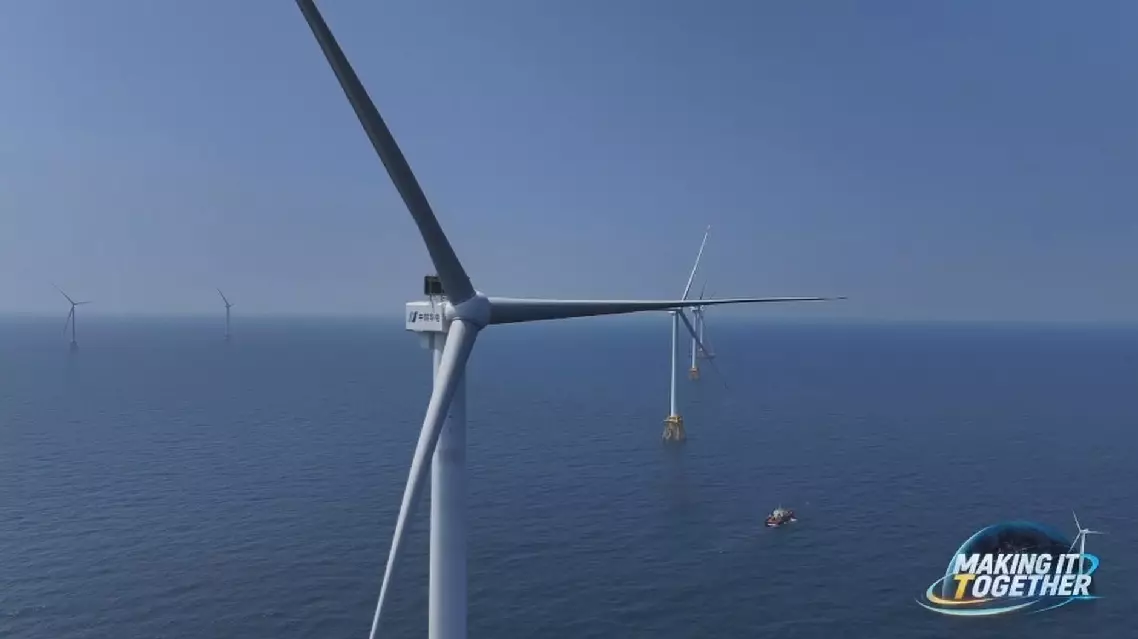
Offshore wind power is helping south China's Guangdong Province build an ever-wider green energy industry, a transformation that is reshaping the province's own economy while supporting the clean energy ambitions of the wider Asia-Pacific.
Guangdong has been expanding its offshore wind capacity at a rapid pace, with installed capacity exceeding 13 gigawatts by the end of 2025, the largest total of any Chinese province.
Much of that growth is concentrated in Yangjiang, a coastal city that has grown into one of the country's major offshore wind power hubs, where a single project counts 233 turbines, as one worker at a local wind farm noted.
The city is also home to China's only national offshore wind turbine testing platform, the China General Certification (CGC) Guangdong Wind Power Test Center, which was established in 2018 and ranks among the world's largest facilities for full-scale blade testing, assessing the quality and reliability of the equipment used across the industry.
"The longest blade we have tested so far is 147 meters. China is taking the lead in most large blade tests at present. China is participating in formulating new testing methods and standards," said Lin Xianshen, deputy director of laboratory of CGC Guangdong Wind Power Test Center Limited.
For the companies operating the turbines off its coast, Yangjiang's rise has been written into a steady multiplication of projects dotting the sea.
"By the end of 2025, Yangjiang's total installed capacity reached 24 million kilowatts. It is the prefecture-level city with the largest installed wind power capacity in Guangdong Province," said Li Xiang, chairperson of Guangdong Huadian Fuxin Yangjiang Offshore Wind Power Company.
Along Guangdong's coastline, wind farms, equipment makers, component suppliers and testing facilities are increasingly coming together, weaving an integrated supply chain for green energy.
Chinese manufacturers now account for more than two-thirds of global wind turbine production, and by the end of 2024, half of the country's cumulative wind turbine exports had gone to the Asia-Pacific region.
As demand for green electricity grows across Asia-Pacific Economic Cooperation (APEC) economies, a service center in Shenzhen City in Guangdong is helping export-oriented companies obtain internationally recognized green electricity certification.
The center is China's first government-authorized service center for green electricity and green certificates, designed to connect Chinese businesses with new energy markets across the wider region.
"Export-oriented businesses need to engage in international supply chain and industrial chain cooperation. They make up 40 percent of the customer base," said Tan Kun, deputy general manager of the marketing and customer service of Shenzhen Power Supply Bureau under China Southern Power Grid.
From offshore wind farms and advanced manufacturing to green electricity services, Guangdong's expanding green industry cluster is lending its weight to a cleaner industrial future in the Asia-Pacific.
South China’s offshore wind industry powers Asia-Pacific's green future