Tokens, the basic units AI tools use to process information, are appearing in shoppers' carts as China's "Double 11" shopping festival peaks on Wednesday, reflecting the rapid mainstreaming of AI.
The shopping festival is when shoppers typically stock up on everything from electronics and cosmetics to everyday essentials, often at discounted prices.
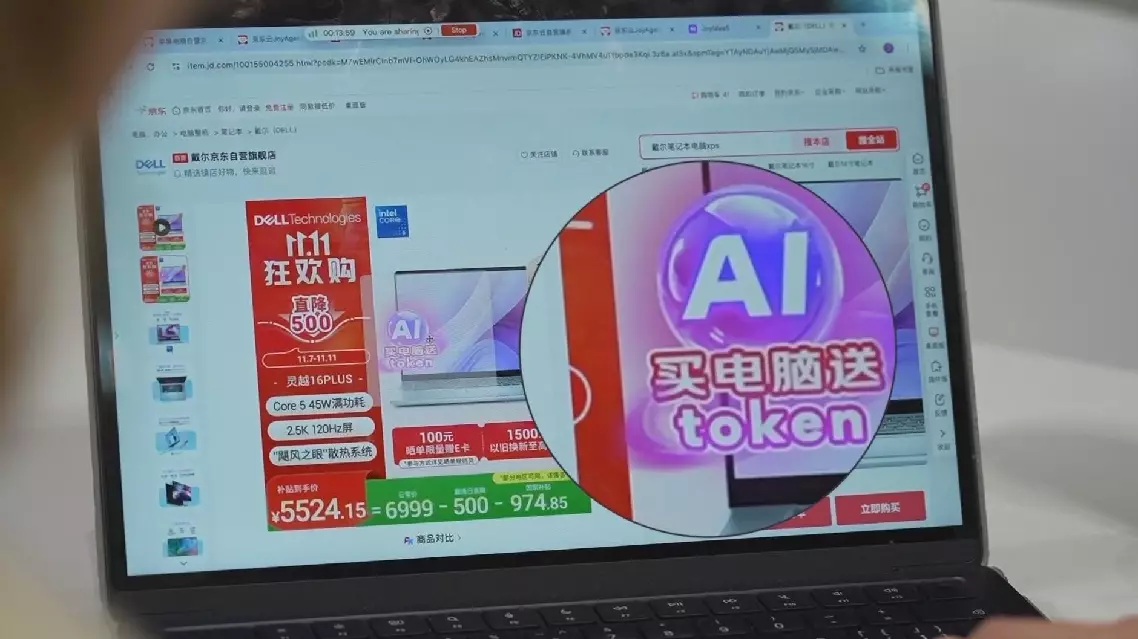
This year, tokens, the computational fuel for AI models, have joined the list of popular items and are being promoted in e-commerce livestreams.
Once confined to the technical backend, tokens are now packaged, priced and sold as consumer products.
Once purchased, the tokens can be used for a range of AI tasks, from writing copies and creating presentations to generating images and videos.
"Overall, searches for 'token' on JD.com have jumped sevenfold since the promotion began, while token sales across the category are up 167 percent," said Zhao Jia, head of growth of the Mobility as a Service (MaaS) division of JD Cloud Technology, a major e-commerce platform of China.
Targeting students, independent AI developers, and tech enthusiasts, JD is bundling tokens with physical goods. Zhao said tokens are making their way into increasingly more aspects of daily life.
"Looking ahead, we hope to bring tokens into more everyday scenarios, from public services and finance to airlines, using physical products and offline experiences to help more people understand what tokens are," she said.
China Telecom said it is shifting from selling data to selling tokens, with 10 million tokens priced at 1.5 U.S. dollars, enough for 500 short articles or 200 hours of audio transcription a month.
"Individual consumers have grown rapidly this year. As AI evolves, the barrier to using it has dropped significantly. Now people can simply describe what they need in natural language, and AI can do the rest," said Yu Haiyan, a commentator with China Telecom Zhejiang Company.
Consumers, including regular token buyers, remain price-conscious.
"Model providers face ongoing costs for research, maintenance and computing power, so free access cannot be sustained indefinitely," said a resident in Beijing.
Industry estimates put global consumer spending on AI products at 40 billion U.S. dollars in 2026, more than triple the previous year's figure.
Tokens enter Chinese consumers' shopping carts as shopping festival hits
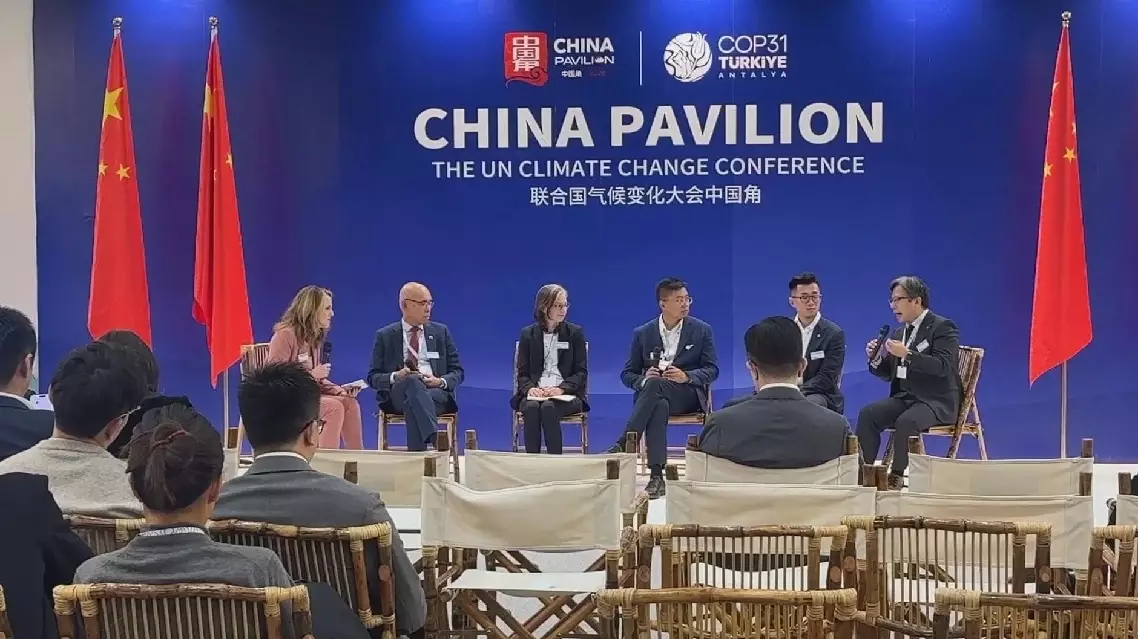
The United Nations Institute for Training and Research (UNITAR) and China Global Television Network (CGTN) have hosted a side event on green transition at the 31st meeting of the Conference of the Parties (COP31) to the UN Framework Convention on Climate Change in Antalya, Türkiye.
Titled "Global Open Class: Green Transition in Action" and held at the China Pavilion, the event brought together experts for a roundtable discussion on global climate action.
The roundtable explored how technology, leadership and communication can accelerate the green transition, and how China's experience can be adapted to the needs of different countries.
The event featured the release of four practical guides drawing on Chinese sustainable development cases and the launch of two global capacity-development initiatives. The guides addressed smart mobility, rural circular economies, climate adaptation and disaster risk reduction, among other areas.
Participants also watched the trailer for CGTN's new documentary film Path to Zero, which explores how China is changing the way it powers daily life, how its industries operate and how communities care for the places they call home.
He Guojun, director of the Jockey Club Enterprise Sustainability Global Research Institute at the University of Hong Kong (HKU), said that reliable data are essential for effective environmental action.
"First, how to address the information problem, where you need basically a monitoring network that covers almost everything, so that you have air quality monitoring, water quality monitoring, soil quality monitoring, and they have to cover all the sectors. Having that information is fundamental," said He.
Michael Adalla, senior program officer of UNITAR's Division for Prosperity, said the "Global Open Class: Green Transition in Action" side event created a space to share expertise and insights.
"The open classroom that we have done today (Nov 9), the global open classroom, has been very well received as part of sharing of ideas, sharing of expertise, sharing insights. And this is a basis of what we could provide with the developing countries," said Adalla.
Adalla also stressed that a key focus must be human capital.
"It's important to build skills at the individual level, build skills at the capacity level. The most sustainable investment is to empower people to bring knowledge into action," said Adalla.
Special event on green transition held at COP31