Skip to Content Facebook Feature Image

China's tech-driven development experience exactly what world needs: UN official

China

China

China

China's tech-driven development experience exactly what world needs: UN official

2026-11-11 20:30 Last Updated At:21:47

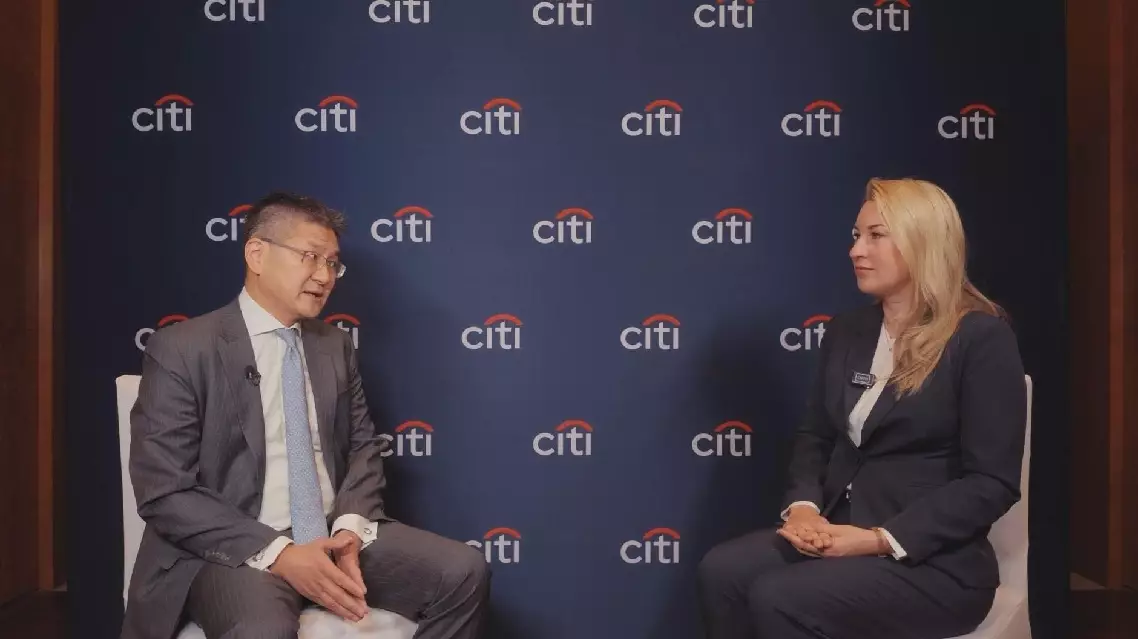
China's experience in leveraging technology to drive an energy revolution for artificial intelligence (AI) development and in balancing innovation with security is greatly needed for regional cooperation in Asia and globally, said Stephen Jackson, United Nations (UN) Resident Coordinator in China.

In an interview with China Global Television Network (CGTN), Jackson underscored the importance of regional cooperation for common development, noting that China's experience in renewable energy can provide fundamental impetus for this goal.

"Regional cooperation as a driver for common development is really key. I come from Western Europe. Perhaps we're having some bumps in the road now, but over the longue durée, as we say, over the long term, regional cooperation within the continent of Western Europe, trading within, has been the engine of our growth. That has very much been the case in recent years in this part of the world. It was less so earlier in other parts of the world -- in Africa, trading within Africa is still radically underdeveloped, and that's something that we need to assist. So the first point is that trade within a region as well as trade from a region is vitally important to economic growth," he said.

"Large language models already consume a very large amount of electricity. Each time they double, they consume more. So if we're seeing this kind of exponential growth, it follows that we are going to need a revolution in energy. And if we are reliant on fossil energy to drive the AI revolution, then the planet is in a great deal of difficulty. That's where China's leadership in renewables comes in," Jackson said.

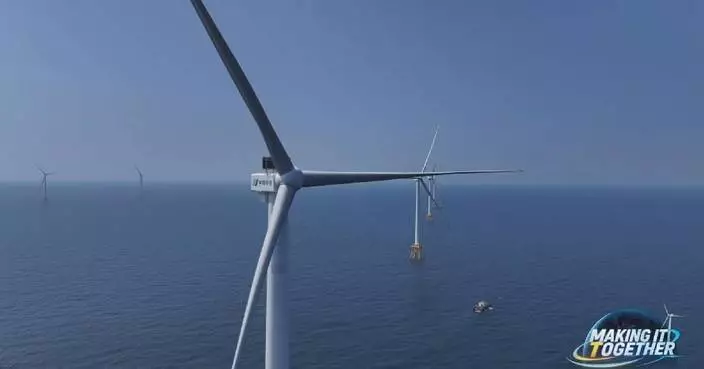
"China's investment in its own capacity to produce electricity from renewables -- solar, hydro, wind -- is just astonishing. Every graph just basically shows China taking off like this over the last decade in terms of investment in renewables. That's what we need around the rest of the region. It's what we need around the rest of the world," he added.

Asked about the prospects for regional and global technological cooperation, he admitted he is not particularly confident at present, given geopolitical and other unfavorable factors. But in the long run, he believes humanity will overcome the crisis of confidence in multilateralism.

"I'm not sure how confident I am globally, if one just looks at the present moment, where many countries that had been the cheerleaders for global cooperation, multilateralism and global trade over the last, let's say, five decades have suddenly seemed to pull back from that. And that is very concerning at a moment when the most pressing problems of the day -- climate change, pandemics, global conflict, economic crisis -- all require collective solutions; they don't respect borders. So I'm concerned at the global level, and yes, of course, therefore at the regional level. Any time we get an intrusion of geopolitics into the otherwise, I think, very successful business of enhancing cooperation, I'm worried," he noted.

"Am I worried long term? No, because I think human beings usually come to their senses -- perhaps we come to our senses a little late and often at great cost, but we come to our senses. And my gut feeling is that this crisis of confidence in global cooperation, in global trade and in multilateralism will prove to be a passing thing," he said.

China's tech-driven development experience exactly what world needs: UN official

China's tech-driven development experience exactly what world needs: UN official
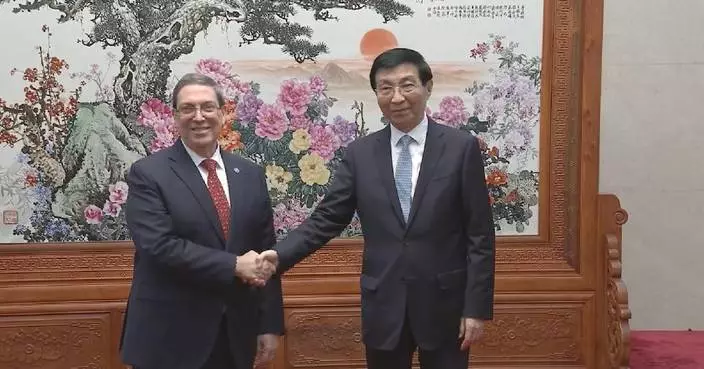
Citi is making a major push in China with the launch of a wholly-owned securities unit to expand its onshore business, a step Simon Yuan, the bank's head of China investment banking, described as a milestone while pointing to the key sectors and elements that will shape China's pull on international investment.

In October, the China Securities Regulatory Commission approved Citigroup's plan to establish a wholly-owned securities company in the country.

The firm, Citigroup Securities (China) Company Limited, will be registered in Shanghai with registered capital of 1.2 billion yuan (about 180 million U.S. dollars).

"This is a very important milestone to complete a very important part, piece of our overall platform for Citi in China. This is the first time allowing us to combine our global capital markets and investment banking expertise with local underwriting, research, brokerage, and trading capabilities under one wholly-owned securities platform, which again is very, very exciting. Near term opportunities, I think it's domestic securities and the underwriting, be it, equity capital markets, debt capital markets and et cetera, as well as complemented by the trading research, brokerage capabilities," Yuan said, "adding that Citi will also play a role in mergers and acquisitions advisory.

Yuan said Citi brings a very strong foundation to the new onshore business, noting that the bank serves 70 percent of the Fortune 500 companies operating in China along with hundreds of leading Chinese corporates, and has been serving Chinese companies from its offshore presence for a very long time.

Speaking of the biggest growth drivers in A-share issuance and what will attract the most capital, Yuan highlighted emerging sectors such as AI and advanced manufacturing. "I think it will continue to be China's drive to further build its technology, self-sustainability, AI adoption, those strategic industries that are in line with the Chinese national development priorities. So that will include everything around AI technology, semiconductors, chips, optical connectivity, providers, printed circuit board manufacturers, large language models, maybe even some of the data center companies. In addition to that, advanced manufacturing is also important. In the medium term, China has built some highly competitive, innovative technology companies in biotech space with very strong out-licensing capabilities to global major pharmas. So they will play a role as well," he said.

Turning to what it will take to keep foreign institutional investors engaged for the long term, Yuan pointed to considerations he said weigh on every allocation decision.

"I think China has come a very long way to build some great, innovative companies. And those have already attracted the very strong foreign investor following. I think a long-term sustained capital markets require a broader and very long-term confidence coming from global, institutional investors. And to achieve that, a few very key elements are important. So that is a market transparency, market accessibility, liquidity, and more predictable regulatory framework. These are all very important considerations to international institutional investors," he said.

Wholly-owned securities company in China a milestone: Citi executive

Wholly-owned securities company in China a milestone: Citi executive

Recommended Articles