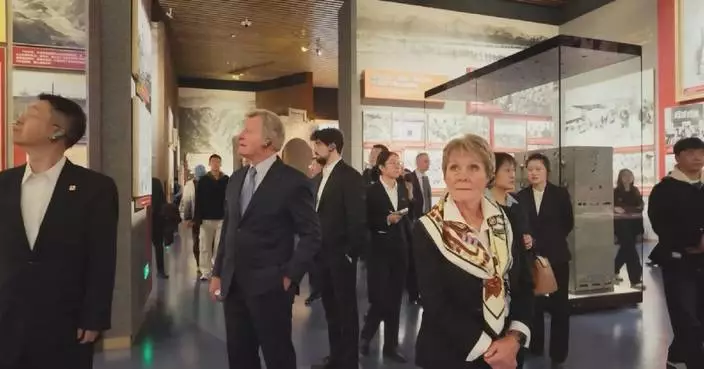
The U.S.-China Political Dialogue 2026 was held in Beijing on Thursday, where representatives from both countries exchanged candid, in-depth and constructive views under the theme, "U.S.-China Relations in the New Era: Exploring the Right Approach in a Changing Asia-Pacific and the World."
The event was attended by representatives from U.S. political parties, the strategic and business community, and from relevant Chinese government departments, local governments, think tanks, universities and civil society organizations.
The U.S. representatives noted that U.S.-China relations are at an important juncture. They called for strengthening dialogue and exchanges, expanding mutually beneficial cooperation, and working for the long-term, stable and sound development of U.S.-China relations. According to the guests, these goals aim to inject stability and development momentum into the Asia-Pacific and the world.
"First, I'm very happy that our two presidents have already twice met this year. The more our presidents meet, the better, because they want to have good outcomes. We are two different countries, but it's important, I think, that we maintain a balance, balance and strength, balance in economies, balance in geopolitical influence. There's a problem of mistrust here, too, and we have to keep working at that, chipping away. More trust takes time. Relationships. The more our presidents meet, more Americans coming over to China to understand China, feel it, taste it, get around, not just check the box, but go around the country and vice versa -- Chinese to America as well," said Max Baucus, former U.S. ambassador to China from 2014 to 2017.
The representatives also expressed anticipation for the upcoming 33rd APEC Economic Leaders' Meeting, which is scheduled to take place in south China's Shenzhen City on Nov 18-19.
"I came here this time to participate in this U.S.-China Dialogue because I continue to believe that despite the complex nature of U.S.-China relations, despite that I think the intensifying competition between the two sides, it's important we keep dialogue channels open, it's important that we continue to communicate with one another and it's important that we continue to take a long-term view," said Daniel Kritenbrink, former U.S. Assistant Secretary of State for East Asian and Pacific Affairs.
"If the two leaders meet at APEC, I think that's very significant. In terms of business, business leaders generally plan long term and so business leaders do need stability and longer-term plans. And so it's really important that the two countries clarify what will be, for example, the tariff situation, the export situation with rare earths, etcetera. So we're really looking forward hopefully in early 2027 for the two countries to agree to a longer extension so companies have a clear platform for what trade will like longer term," said Michael Hart, president of the American Chamber of Commerce in China.
Also at the event, an area for table tennis allowed Chinese and U.S. representatives foster friendship through the sport, while paying tribute to Ping-Pong Diplomacy.
Over the tables, the representatives reflected on how "a small ball moved the globe" in 1971, when the U.S. table tennis team visited Beijing. Their visit served as a breakthrough that thawed more than two decades of estrangement, and helped pave the way for then U.S. President Richard Nixon's landmark visit to China in 1972, and later the establishment of diplomatic ties between the two countries in 1979.
"And so my hope is that Ping-Pong Diplomacy can be an example for cultural diplomacy, for diplomacy across education, across the sciences. So this is something, again, that governments can create the conditions so that scientists, researchers, artists, sports, people like Yao Ming can go across borders and build friendships, not just build relationships based on trade, but also build a fundamental kind of comprehensive relationship between the peoples," said Chad Futrell, Assistant Dean of Schwarzman College at Tsinghua University.
"A big believer in people-to-people exchanges, I think that that's really the key to building a solid foundation for U.S.-China relations. There's a lot more enthusiasm and familiarity among younger generations between the U.S. and China. And now Chinese culture is also becoming very influential for younger generations of Americans who want to know more and explore, and they are doing that through social media, and I think that's extremely healthy," said Susan Thornton, former U.S. Acting Assistant Secretary of State for East Asian and Pacific Affairs.
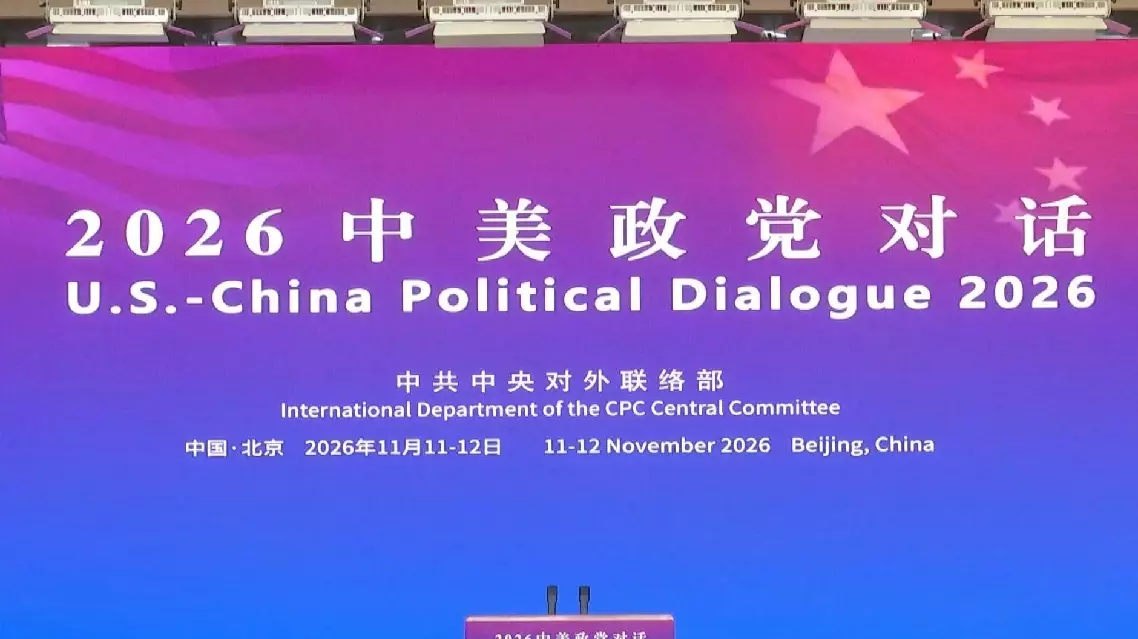
China, U.S. hold political dialogue in Beijing