China's independently developed 10-tonne-class electric commercial aircraft, the CE-25A, on Saturday completed its first crewed flight in Binzhou City, east China's Shandong Province, with all indicators meeting expectations.
During flight, electric motors on the CE-25A drive the fans that power the aircraft. Arrayed along the wings, this electric ducted fan propulsion system gives the plane an appearance markedly different from that of conventional commercial aircraft.
With two pilots and a flight-test engineer aboard, the aircraft stayed aloft for 16 minutes and 38 seconds, covering 60.4 kilometers and completing its test mission.
Before the crewed flight, the CE-25A had completed 19 unmanned smart flights designated to verify the aircraft's performance and ensure reliability before proceeding to crewed flights.
The CE-25A is the first electric commercial aircraft developed by Commercial Aircraft Corporation of China Ltd. (COMAC). Intended mainly for intercity commercial flights, it can carry as much as 19 passengers, with a maximum takeoff weight of 10 tonnes. It has a cruising speed of 300 kilometers per hour, a cruising altitude of 2,400 meters and a range of 400 kilometers.
In the designation CE-25A, "C" and "E" stand for the initial letters of "China" and "electric," while "25" indicates compliance with Civil Aviation Regulations of China, Part 25: Airworthiness Standards for Transport Aircraft -- the same safety requirements as large commercial aircraft. Letter "A" denotes the first product in the series.
The CE-25A was developed by COMAC in collaboration with partners including Chinese battery giant CATL and Shanghai Jiao Tong University. The Civil Aviation Administration of China has accepted COMAC's application for the CE-25A type certificate.

China's 10-tonne electric commercial aircraft completes first crewed flight
The fourth meeting of the APEC Business Advisory Council (ABAC) opened on Saturday in Shenzhen City in south China's Guangdong Province, drawing members who underscored China's expanding leadership in driving trade integration, green energy and multilateral cooperation across the Asia-Pacific.
The three-day meeting has gathered more than 60 representatives from 21 APEC economies, along with nearly 200 experts and accompanying staff, according to the organizer, the China Council for the Promotion of International Trade (CCPIT).
As global trade faces mounting economic headwinds and shifts toward sustainability, international business leaders pointed to China's technological advancements as a crucial catalyst for regional development.
Kasemsit Pathomsak, a Thai representative on ABAC, APEC's private-sector advisory body, highlighted China's contributions to green technology.
"China has played a very important role all along, especially when it comes to the renewable and green initiatives, with solar production, green technology, EVs. China has been very forefront in innovating and bringing this technology to the masses. I think it's very important to try help the world to try and become more green and affordable, to try transition to this green technology," said Pathomsak.
Members also highlighted APEC's vital platform for bilateral and multilateral engagement, fostering commercial bridges across diverse markets.
"As one of the economies that's in APEC, China, as we all acknowledge, is a very important trade partner in this region in both bilateral and multilateral opportunities. For Canada, we see that it is very important for us to establish a proper conduit of opportunities where we can grow together and understand the risks where we have to be clear about where we can and cannot go together. So, we think that APEC is an excellent opportunity where the public sector and the private sector, which I represent, would be able to engage in a deeper conversation on this," said Joseph Fung, an ABAC member from Canada.
Meanwhile, Francisco Suarez Hernandez, an ABAC member from Mexico, praised China's logistical and organizational leadership in hosting the meeting.
"It's really important and China hosting this event is the best example of leading. I think creating a bridge between Mexico, next year Vietnam, and this year China is going to be a great example. We actually hosted ABAC II (Second meeting of APEC Business Advisory Council) this year in Mexico. So, I know the effort," he said.
Founded in November 1995, ABAC is the only non-governmental body with an official advisory role in the APEC Economic Leaders' Meeting, engaging in a formal dialogue and submitting annual policy recommendation reports to APEC leaders.
After the ABAC meeting, Shenzhen will host the 2026 APEC CEO Summit on Nov 17 to 18, drawing the region's top business and government leaders to chart a course for Asia-Pacific prosperity.
This is the third time China has hosted APEC meetings, and the first in 12 years.
Working with other member economies under the theme of "Building an Asia-Pacific Community to Prosper Together," China has focused on three priorities, namely openness, innovation and cooperation, and has hosted more than 300 meetings and events across the country during the year.
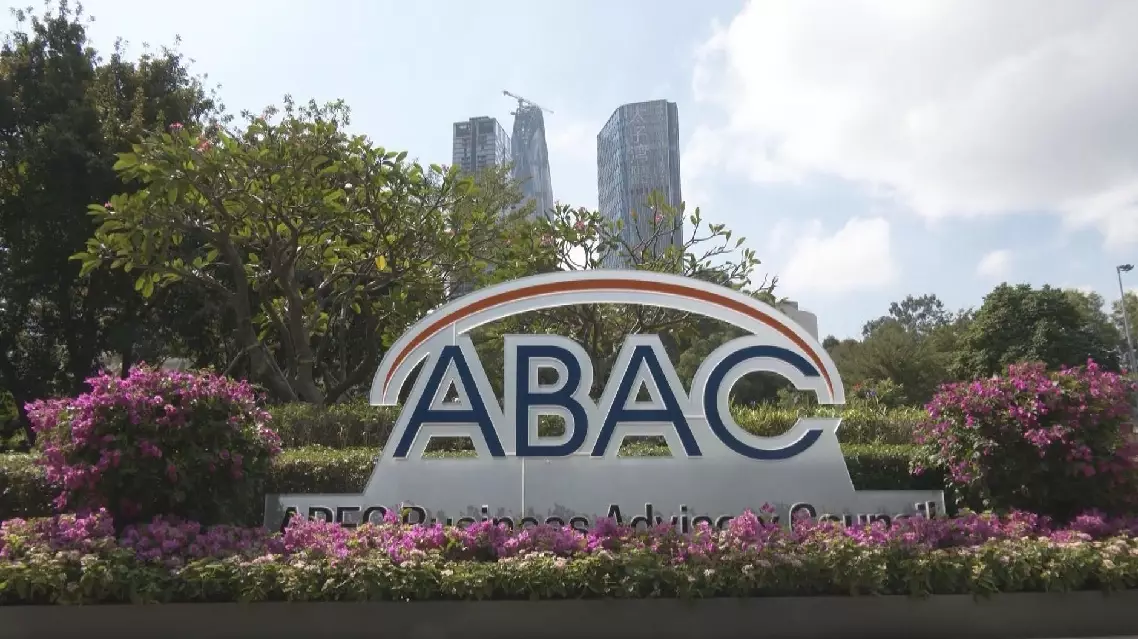
ABAC members laud China's role in Asia-Pacific economic integration