BRUSSELS (AP) — NATO is scaling back its high-level meetings and will not hold a leaders’ summit in Albania next year as previously planned amid tension within the alliance over defense spending, Iran and the war in Ukraine.
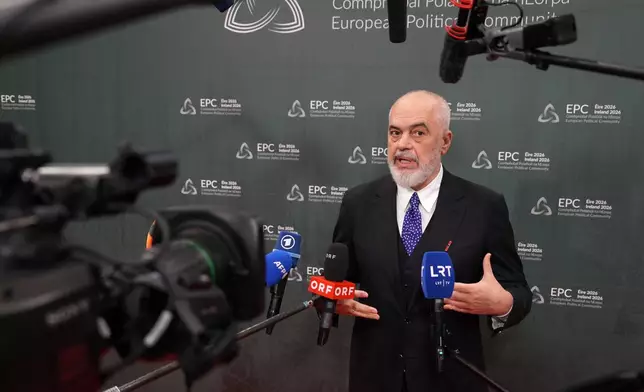
Albanian Prime Minister Edi Rama said Thursday that “there is not yet a common position on when the summit will happen, for sure not in 2027.” He said that “in 2028, if it will be a summit, it will be in Tirana,” Albania’s capital.
Click to Gallery
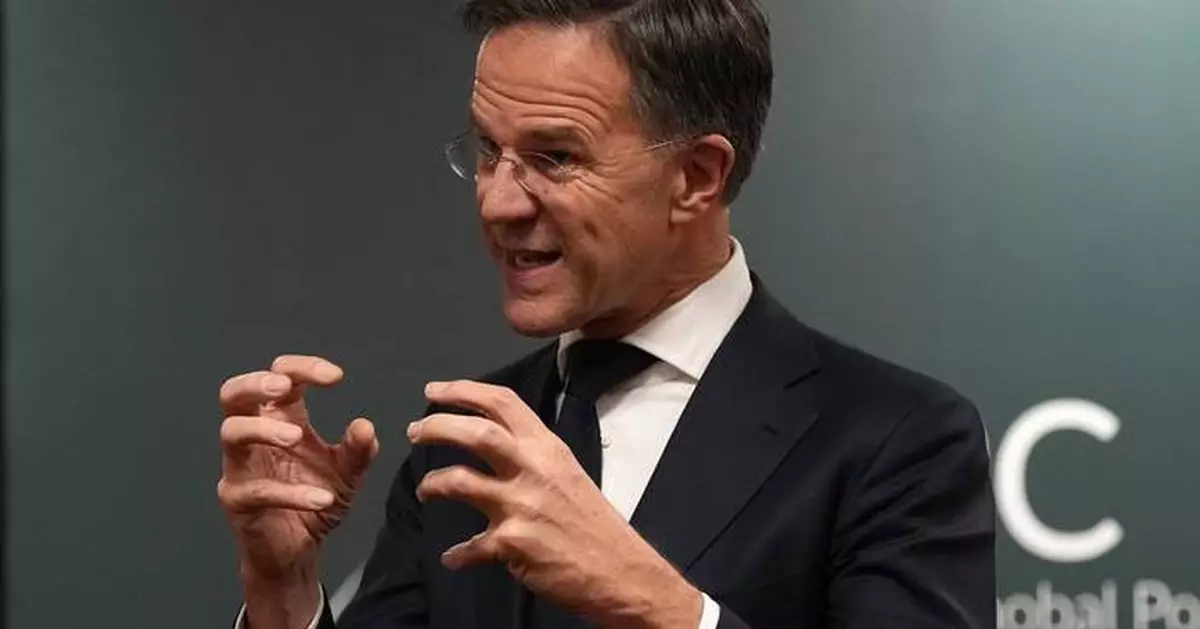
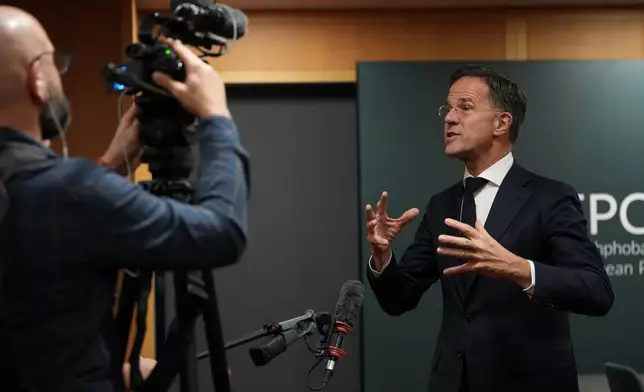
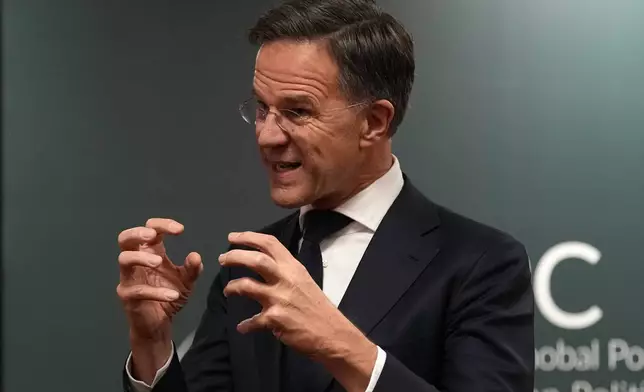
NATO Secretary General Mark Rutte speaks during an interview with Associated Press at the European Political Community (EPC) Summit in Dublin, Thursday, Nov. 12, 2026.(AP Photo/Virginia Mayo)
NATO Secretary General Mark Rutte speaks during an interview with Associated Press at the European Political Community (EPC) Summit in Dublin, Thursday, Nov. 12, 2026.(AP Photo/Virginia Mayo)
Albania's Prime Minister Edi Rama speaks to the media during the European Political Community (EPC) Summit in Dublin, Thursday, Nov. 12, 2026.(AP Photo/Virginia Mayo)
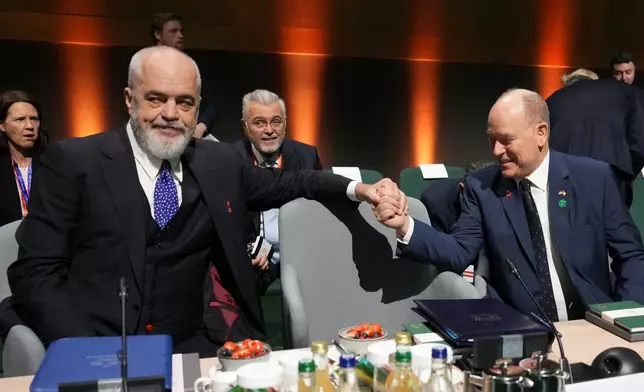
Albania's Prime Minister Edi Rama, left, shakes hands with Monaco's Prince Albert II during a round table meeting of the European Political Community (EPC), in Dublin, Thursday, Nov. 12, 2026. (AP Photo/Virginia Mayo)
NATO Secretary General Mark Rutte speaks during an interview with Associated Press at the European Political Community (EPC) Summit in Dublin, Thursday, Nov. 12, 2026.(AP Photo/Virginia Mayo)
NATO Secretary-General Mark Rutte played down the issue. “We are flexible with NATO summits,” he told The Associated Press in an interview. “We have summits when we need them,” he said, and will hold the next one “when a necessity is there.”
Until about a decade ago, NATO held summits every two years.
It’s not just about gatherings between U.S. President Donald Trump and his counterparts.
NATO defense ministers usually meet in October, but no talks took place last month, and none are planned for October 2027. Foreign ministers only have one scheduled meeting next year, instead of two, under what NATO describes as a “reorganization package.”
U.S. Defense Secretary Pete Hegseth and Secretary of State Marco Rubio have each skipped a NATO meeting or left before talks ended since they came to office. Hegseth has used defense ministerial gatherings to berate or cajole European allies and Canada.
The planned summit in Albania highlights the alliance’s challenges. Albania was appointed next year’s host in 2025, but its name was removed from a July summit declaration.
Some allies believe that Albania is not spending enough on defense and they were reluctant to reward the country with NATO’s big event. The government in Tirana is projected to spend 2.15% of its gross domestic product on defense this year.
NATO’s target is for the 32 allies to spend 3.5% of GDP on core defense by 2035, and 1.5% on defense-related infrastructure. Albania is not the worst offender among the 32 member countries. Spain, Belgium and Slovenia are faring much worse.
But hosting a summit itself has tremendous financial and political costs. The Netherlands required a year of preparation ahead of the 2025 meeting in The Hague, and a roughly $100 million investment.
Officials said NATO would have needed to decide on Albania by October for it to have enough time to organize a summit next year.
Turkish President Recep Tayyip Erdogan, who hosted this year’s gala in his sprawling palace complex in Ankara, refurbished a military airport for leaders to arrive at, and mobilized tens of thousands of security personnel — virtually shutting down parts of the capital. Non-essential public workers were given a week off.
“There’s always a lot of security involved,” Rutte told AP. “It is a costly event to organize a meeting with 32 allies and then partner countries and the Indo-Pacific partners we have, like Japan and Korea, Australia, New Zealand.”
Asked whether it was all worth it, Rutte said: “It is.”
The summit in Turkey was also a political spectacle. It threatened to go off the rails even before Trump and his counterparts sat down to work.
Trump revived old talk about taking control of Greenland, a self-governing part of NATO ally Denmark, striking at the heart of the reason that the organization was formed in 1949: mutual defense.
He also demanded “loyalty,” accusing NATO of failing to back his war on Iran.
Summits are usually a sober show of resolve and unity of purpose by the member countries to dissuade any adversary that might be tempted to test NATO. European allies suspect that Russia wants to do just that.
In Ankara, Rutte led a “big reveal” defense industry splash to try to convince the American leader that allies are spending big.
Besides the price tag, and the costs of keeping Trump on side, experts say that perhaps enough has been achieved for now. New spending goals and military capability targets have been set, and force planning was discussed in Ankara.
“There’s a strong argument to be made that if there aren’t things that merit bringing 32 leaders together, well then maybe you don’t have the meeting,” said David Cattler, Senior Fellow at the Center for European Policy Analysis think tank.
“You could go two, maybe three years,” said Cattler, a former top NATO intelligence official.
In any case, other options are available in an emergency. NATO held its first-ever virtual summit in February 2022, after Russia launched its full-scale invasion of Ukraine.
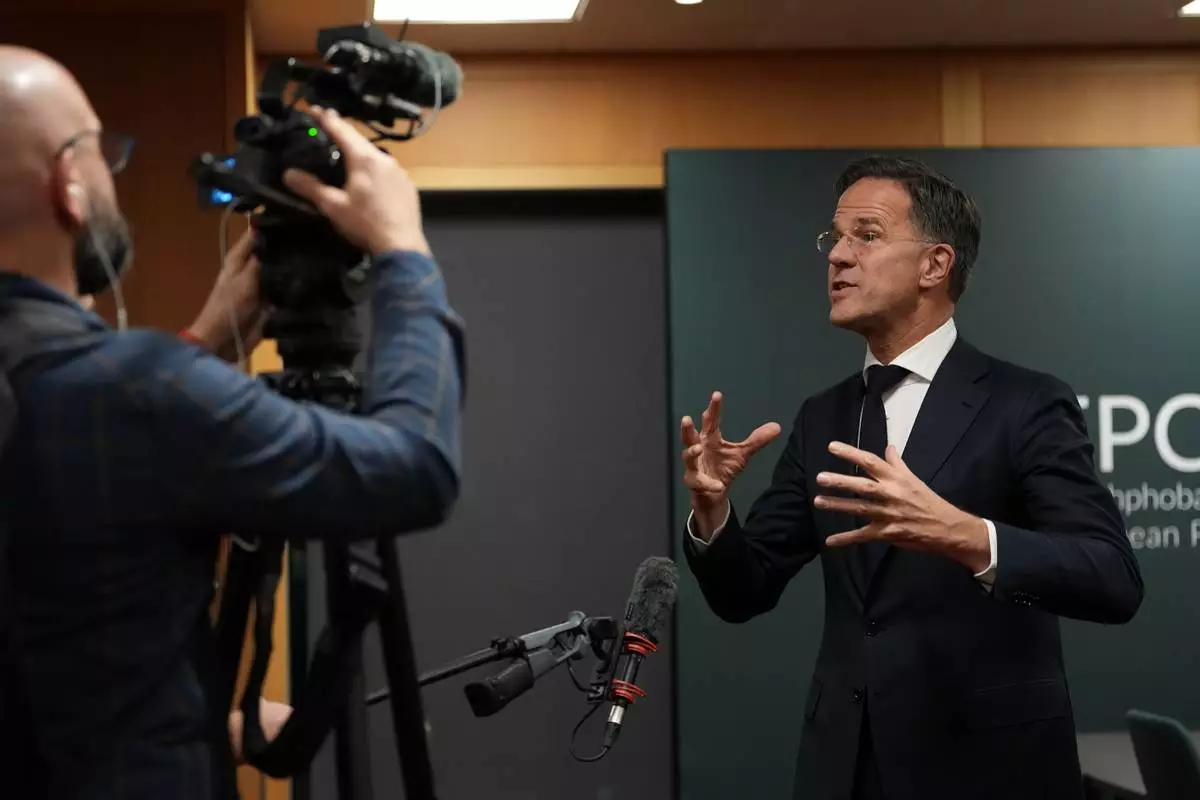
NATO Secretary General Mark Rutte speaks during an interview with Associated Press at the European Political Community (EPC) Summit in Dublin, Thursday, Nov. 12, 2026.(AP Photo/Virginia Mayo)
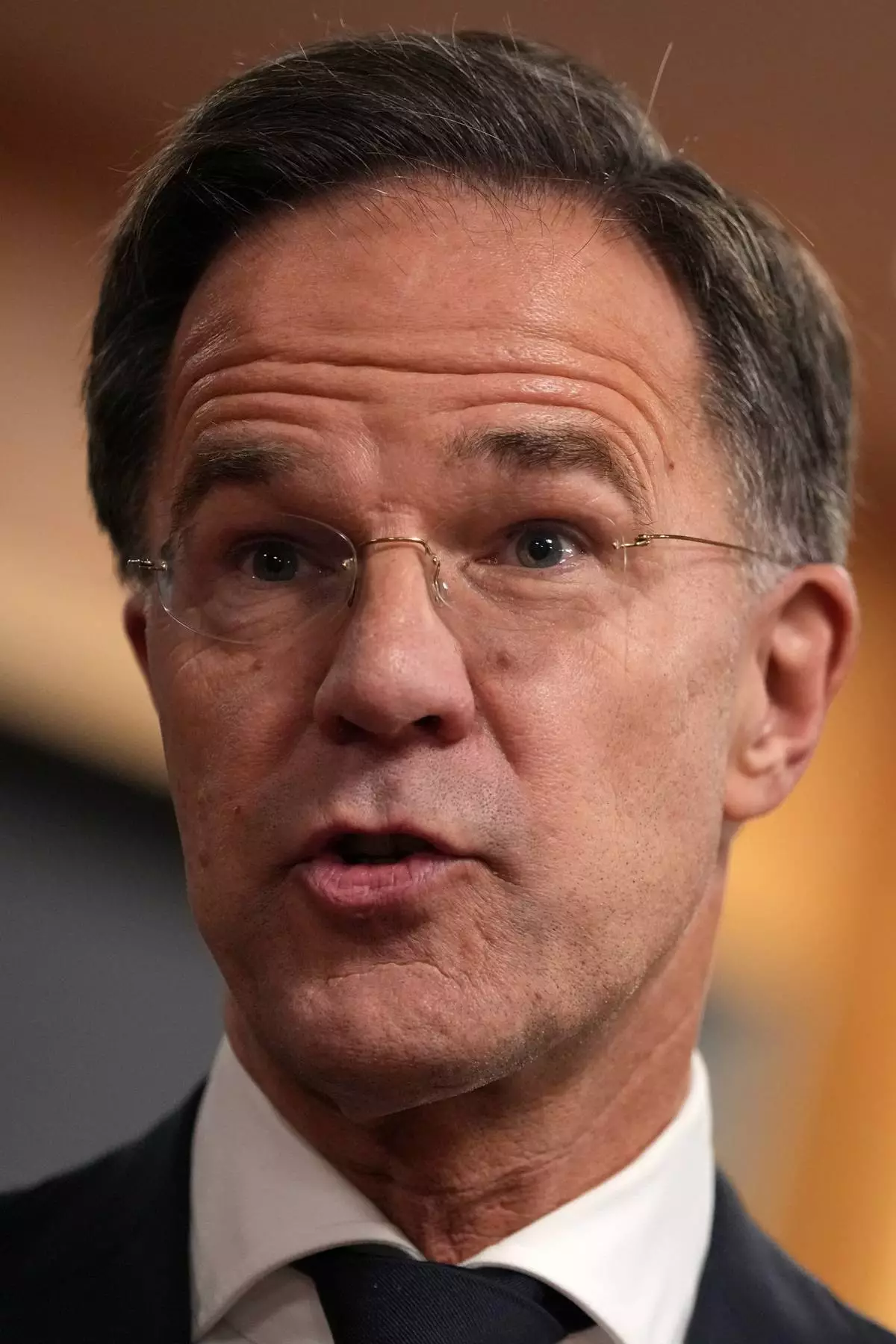
NATO Secretary General Mark Rutte speaks during an interview with Associated Press at the European Political Community (EPC) Summit in Dublin, Thursday, Nov. 12, 2026.(AP Photo/Virginia Mayo)
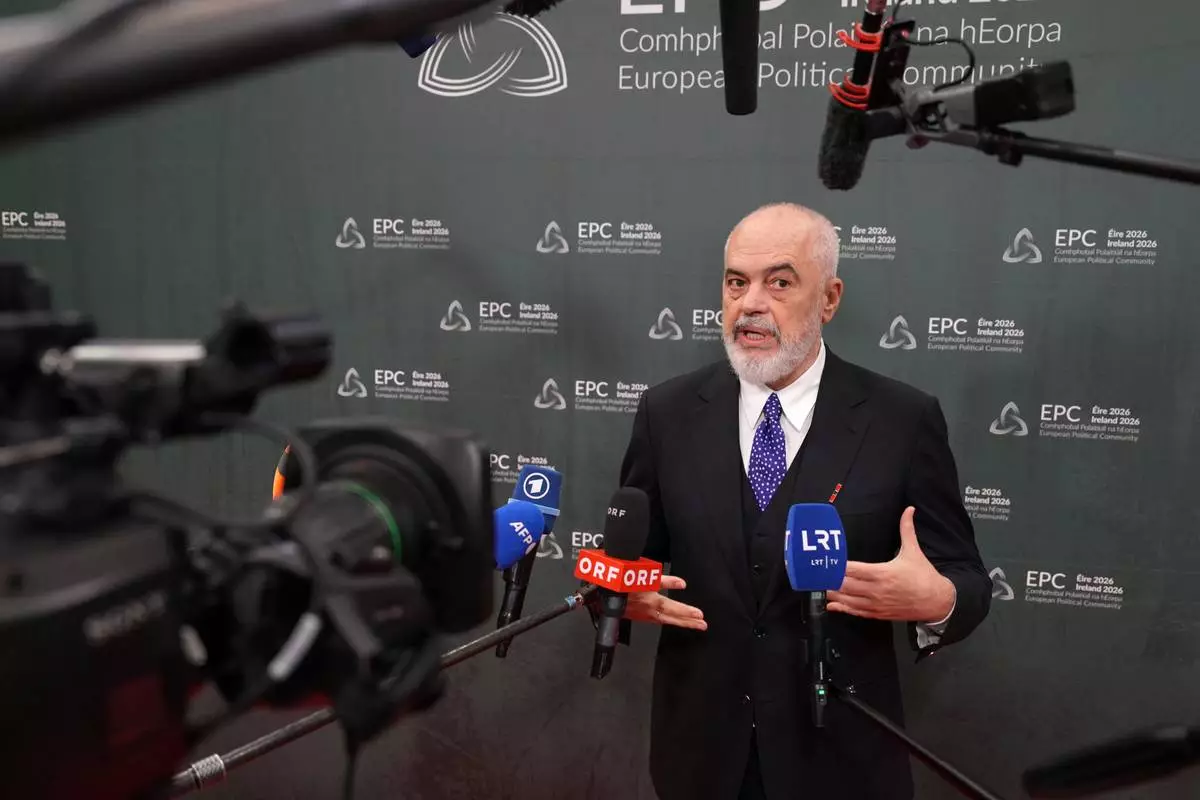
Albania's Prime Minister Edi Rama speaks to the media during the European Political Community (EPC) Summit in Dublin, Thursday, Nov. 12, 2026.(AP Photo/Virginia Mayo)
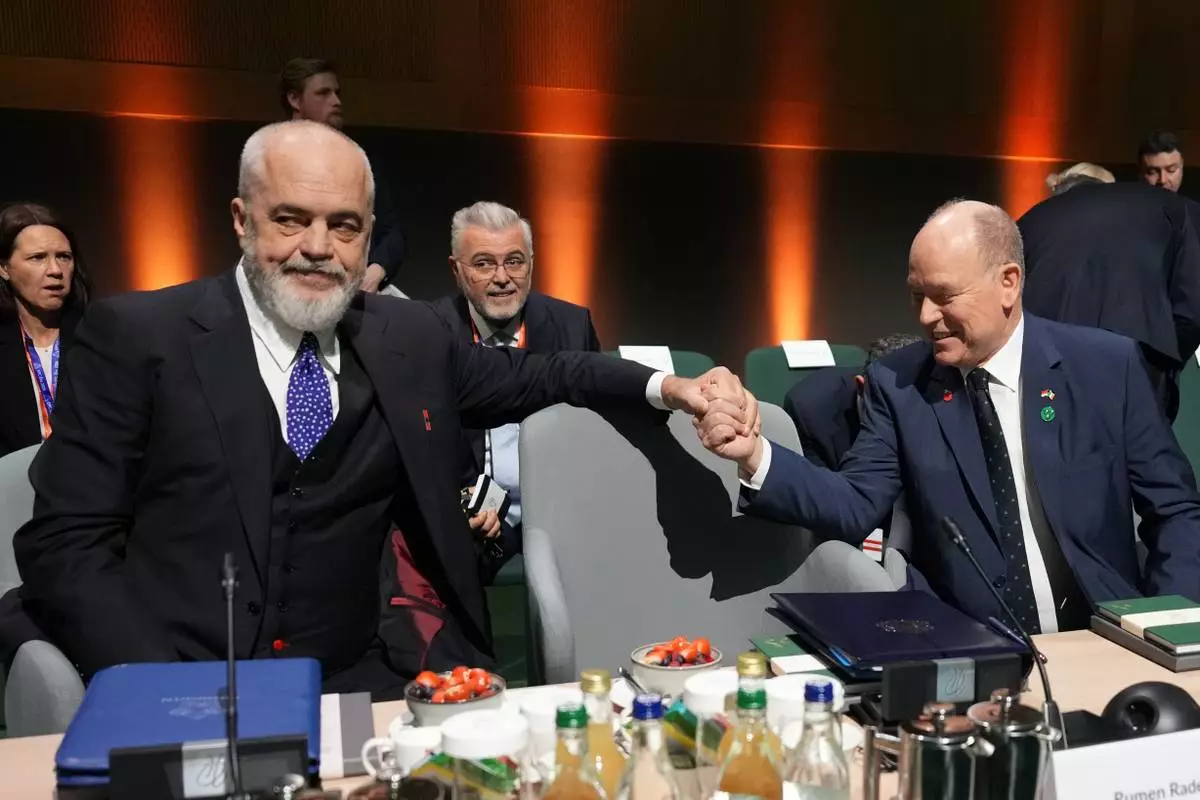
Albania's Prime Minister Edi Rama, left, shakes hands with Monaco's Prince Albert II during a round table meeting of the European Political Community (EPC), in Dublin, Thursday, Nov. 12, 2026. (AP Photo/Virginia Mayo)
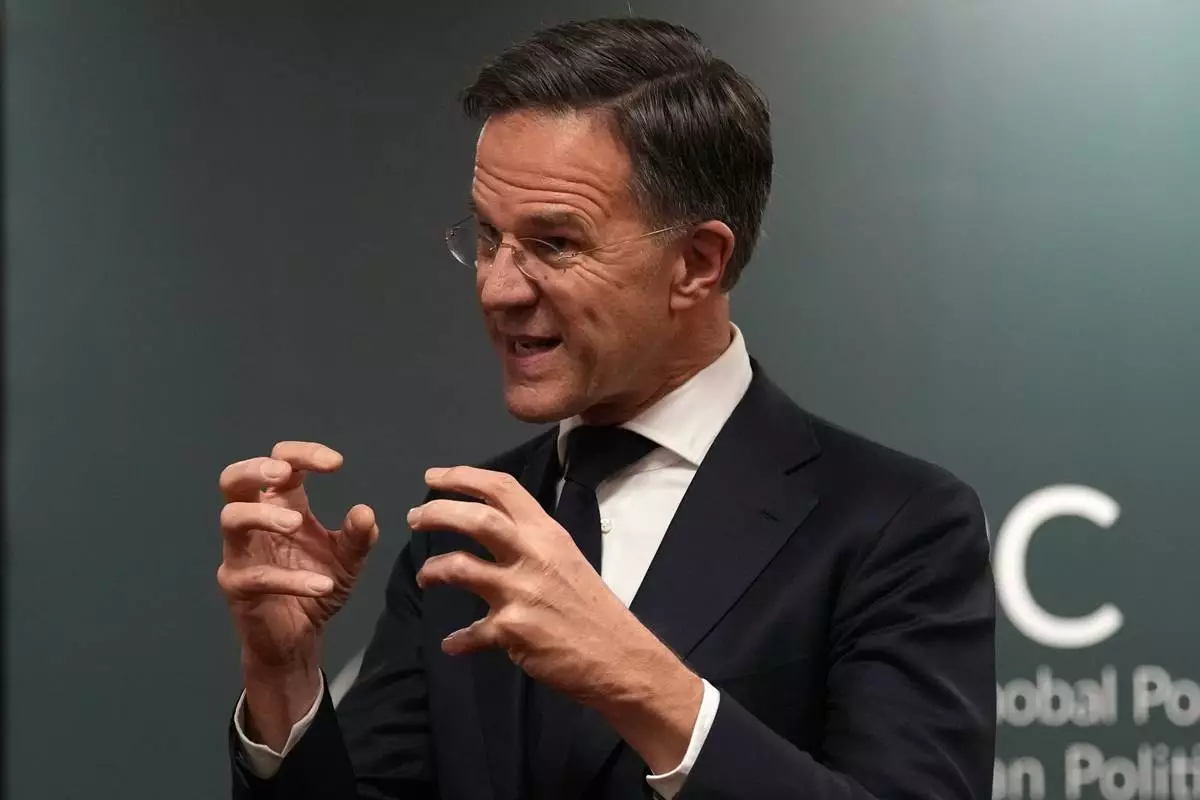
NATO Secretary General Mark Rutte speaks during an interview with Associated Press at the European Political Community (EPC) Summit in Dublin, Thursday, Nov. 12, 2026.(AP Photo/Virginia Mayo)
BUENOS AIRES, Argentina (AP) — Vast crowds of young Argentines, a generation that Catholic leaders had feared was abandoning the pews, packed the parks of Buenos Aires and cheered as if at a concert when Pope Leo XIV promised a church open to “todos, todos, todos” — everyone, everyone, everyone.
Those words, like all of Leo’s surest applause lines during the visit, belonged to his Argentine predecessor, Pope Francis. So did much of the week's adulation.
Francis’ fierce defense of the downtrodden made him a moral voice abroad but long embroiled him in political fights at home — controversy that many believe deterred him from returning as pope. More than a year after his death, the more measured Leo made the homecoming Francis never could, carrying on his legacy and helping Argentines embrace their once-polarizing pope as a unifying national figure.
“It’s as though it has finally become clear that Francis left a very important legacy, not just for Argentina but for the universal church,” said Pablo Forni, a sociologist at Argentina’s national research council, Conicet. “Leo is reaping what Francis sowed.”
Billboards welcoming Leo bore Francis’ face. Pilgrims waved signs declaring “Francisco y León, un solo corazón” — Francis and Leo, one heart. Even libertarian President Javier Milei, who once insulted Francis as “the representative of evil on earth," declared Francis “the most important Argentine in history” at Leo's welcome ceremony, bringing a packed hall of his political allies and foes to its feet.
As archbishop of Buenos Aires, Francis — then Jorge Mario Bergoglio — mobilized the church during Argentina’s 2001 economic crisis, sending priests into the slums and opening soup kitchens, schools and drug rehab centers as state services receded. But his concern for the poor did not make him a natural ally of Peronism, the long-dominant populist movement emphasizing social justice. He accused its leaders of arrogance and clashed with them over same-sex marriage.
Yet once Francis moved to Rome as pontiff, Peronists became some of his biggest fans, seeing their priorities reflected in his criticism of unbridled capitalism and his outreach to the marginalized. That affinity infuriated conservatives, who blame Peronism for ruining Argentina's economy and presiding over rampant corruption. However hard Francis tried to stay above the fray, even his smallest gestures — a dour expression beside right-leaning President Mauricio Macri, a relaxed lunch with left-leaning President Cristina Fernández de Kirchner — were read as proof of his political sympathies.
A homecoming would have meant treading a minefield. Francis visited more than 60 countries as pope, including four of Argentina’s five neighbors, but never returned home, despite invitations from four successive presidents.
“At first many people were thrilled to see an Argentine elected pope. But once they heard his criticism, they stopped loving him quite so much,” said the Rev. Lorenzo de Vedia, known as Padre Toto, one of the so-called slum priests who worked under Bergoglio in the capital’s informal settlements. “He became seen as a partisan pope.”
Argentines weren’t the only ones Francis provoked. His blunt, freewheeling papacy divided Catholics worldwide. He accused Vatican officials of “spiritual Alzheimer’s” and called attacks from American conservatives “an honor.” He delighted progressives by opening long-taboo debates, then disappointed them by balking at doctrinal change.
Now Leo — a Chicago-born former missionary in Peru whom Francis made a bishop and then a cardinal — is carrying the same causes forward with a gentleness that tempers his predecessor’s hard-charging style, church leaders say.
“Francis opened the way. He broke down walls. He was forceful and impetuous, firm in his principles and startling in his proposals,” said Cardinal Pedro Barreto, a Peruvian Jesuit and close ally of Francis. “Leo XIV is clearing the path Francis laid out so that it can be traveled by every baptized member of the church."
Leo called the trip “a homage” to Francis, and over four days he followed in his predecessor's footsteps: praying in Francis’ old cathedral, dispensing blessings at the prison where Francis once washed inmates' feet, embracing residents of a disability care home where he also preached and celebrating Mass at the Luján shrine he revered. Leo invoked Francis at least 26 times.
“Leo is fulfilling the promise that Francis left unfinished,” said Carlos Custer, a former Argentine ambassador to the Vatican. “Francis' presence was felt at every turn."
But Leo did more than honor Francis’ memory. In his own voice, and without the baggage of an Argentine passport, he revived the appeals that had made Francis at once beloved and divisive at home.
In Córdoba, Leo urged Argentines to keep “making a mess,” echoing Francis’ famous call for young Catholics to shake things up in their dioceses. Before an audience of garbage pickers and business leaders, he invoked Francis’ “three Ts” — tierra, techo y trabajo, or land, housing and work — the rallying cry of Argentina’s popular movements.
And in his opening address to political leaders last Sunday, standing beside a self-declared “anarcho-capitalist” president known for aggressive verbal outbursts and harsh austerity measures, he urged “careful use of words” and insisted that “the economy must be at the service of the person, not the person in the service of the economy.”
“There is continuity between them in every respect — in their message of peace, their love for the poor, their choice to go places where people are suffering, in their emotional connection to the people,” said the Rev. Carlos María Galli, a prominent Argentine theologian who was close to Francis. “Francis brought Leo to the center of the church, and Leo has now brought Francis back to us.”
Politicians scrambled to claim Leo's message as their own. Axel Kicillof, the Peronist governor of Buenos Aires province and a leading opposition figure, hailed the visit as “very necessary in these times of cruelty." Vice President Victoria Villarruel defended the concept of social justice derided by her boss and championed by Francis, blaming “ignorance and fanaticism” for its frequent association with Peronism.
Even Milei’s spokesman, Adrián Ravier, insisted Wednesday that by taming inflation, the government had put “the economy at the service of people.”
For observers, that political jockeying proved the wisdom of Francis’ decision to stay away — and the value of Leo as his messenger.
“Had Bergoglio said the same things and visited the same places, it would have been seen as far more political,” said Gustavo Morello, an Argentine sociologist of religion at Boston College. “But you can’t accuse Leo of being a Peronist. So when he speaks about workers or people with disabilities, it’s the church speaking ... and if you don’t like it, you can take it up with God.”
Associated Press writer Mauricio Savarese in Lima, Peru, contributed to this report.
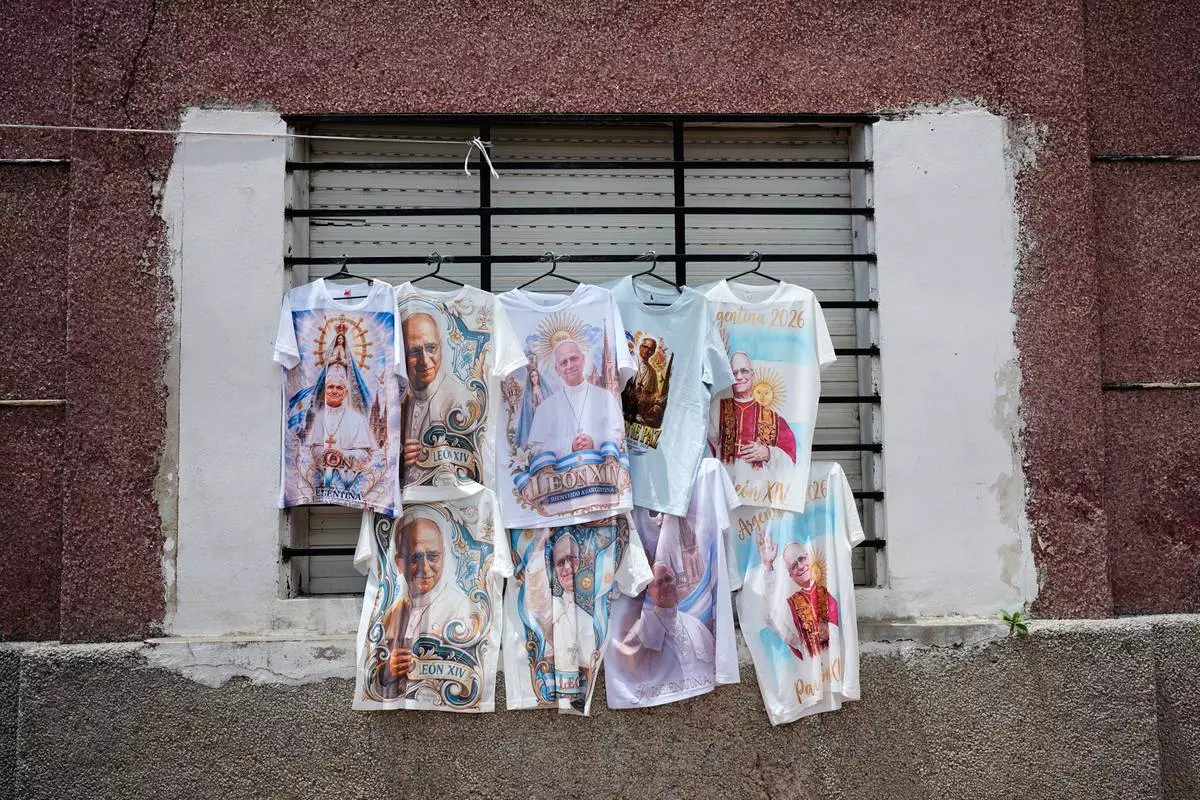
T-shirts featuring Pope Leo XIV hang for sale in a home's window a day before he is scheduled to celebrate Mass outside the Basilica of Our Lady of Luján in Luján, Argentina, Tuesday, Nov. 10, 2026. (AP Photo/Natacha Pisarenko)
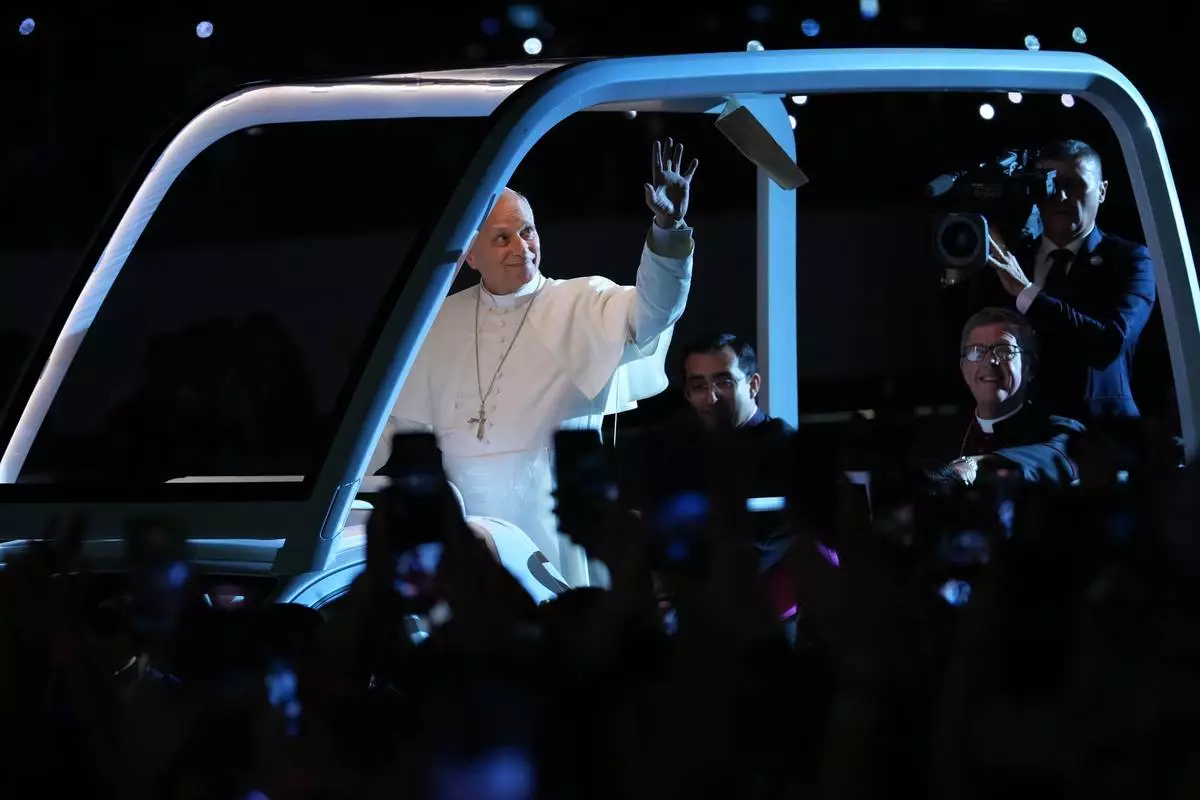
Pope Leo XIV arrives to lead a youth prayer vigil at Monumento de los Españoles in Buenos Aires, on the fifth day of his twelve-day apostolic journey to South America, Tuesday, Nov. 10, 2026. (AP Photo/Andrew Medichini)
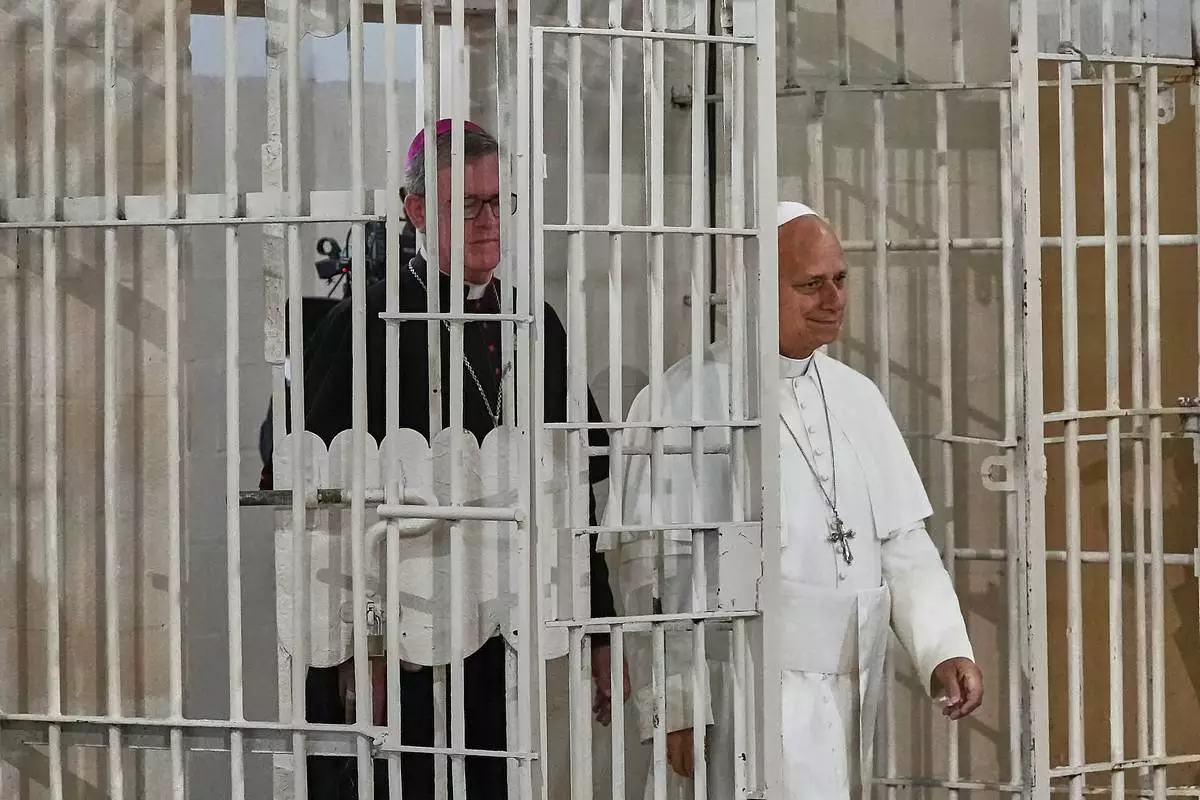
Pope Leo XIV, accompanied by Buenos Aires Archbishop Jorge Ignacio Garcia Cuerva, visits the federal prison complex in Buenos Aires, on the sixth day of his twelve-day apostolic journey to South America, Wednesday, Nov. 11, 2026. (AP Photo/Andrew Medichini)
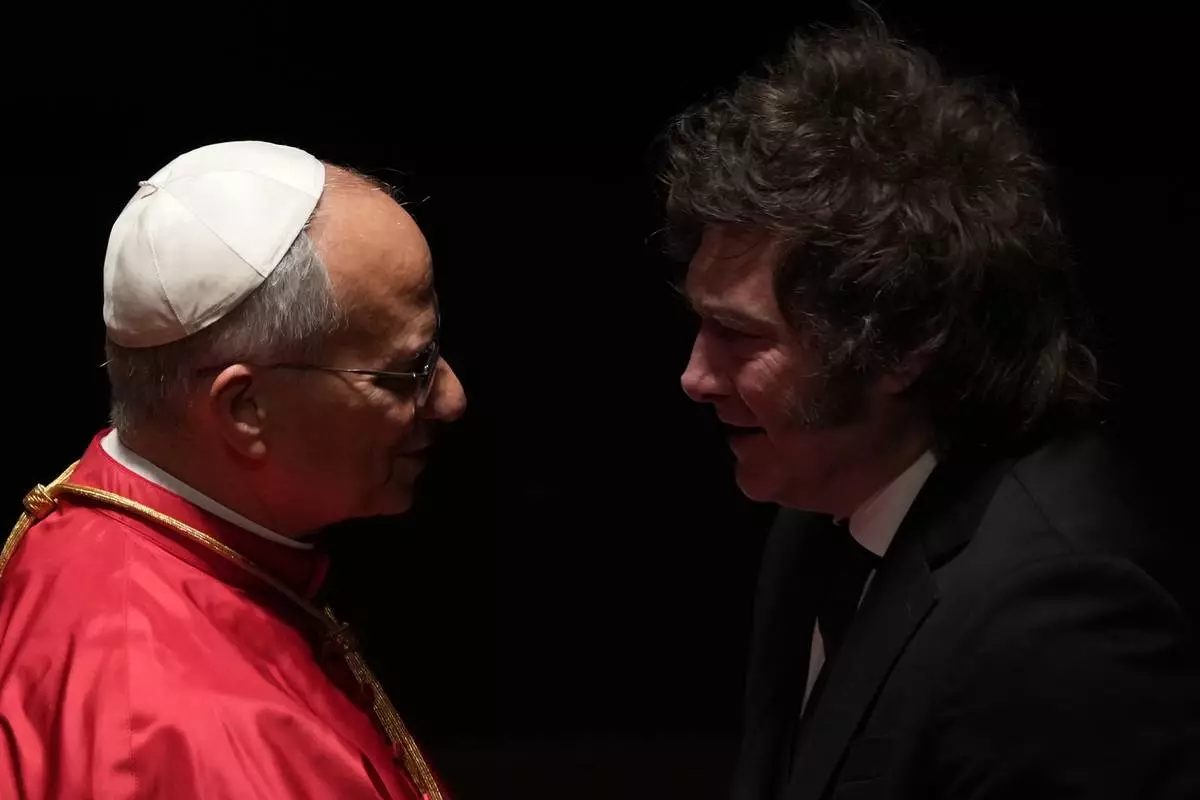
Pope Leo XIV shakes hands with Argentina's President Javier Milei as he meets authorities, civil society and the diplomatic corps at Palacio Libertad in Buenos Aires, on the third day of his twelve-day apostolic journey to South America, Sunday, Nov. 8, 2026. (AP Photo/Andrew Medichini)
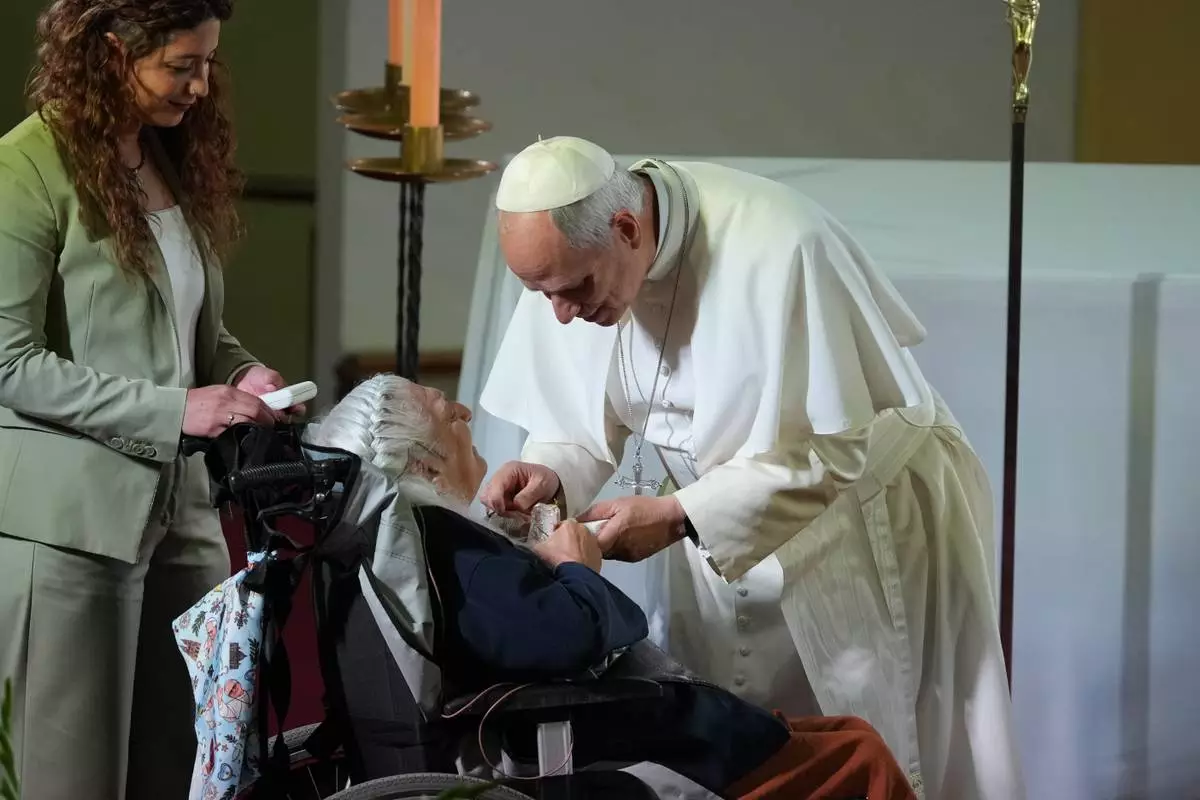
Pope Leo XIV, greets Marta Torres during his meeting with the staff and residents of the Pequeño Cottolengo Don Orione in Claypole, Argentina, on the fourth day of his twelve-day apostolic journey to South America, Monday, Nov. 9, 2026. (AP Photo/Andrew Medichini)