EDB signs MOU with Bureau of Academic Divisions of Chinese Academy of Sciences
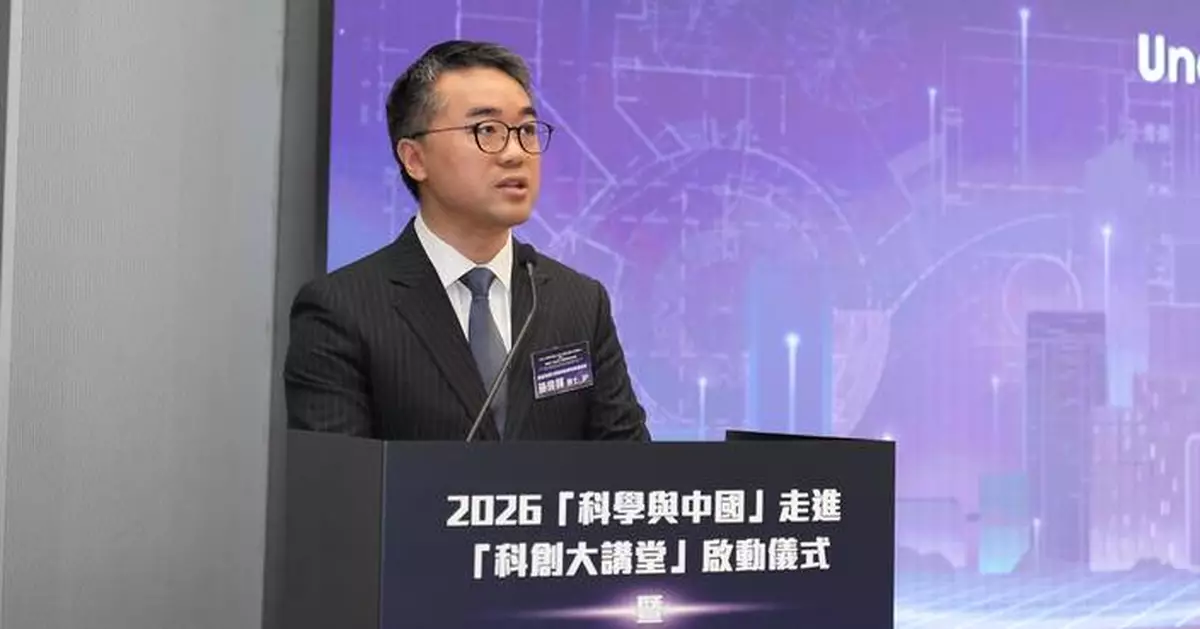
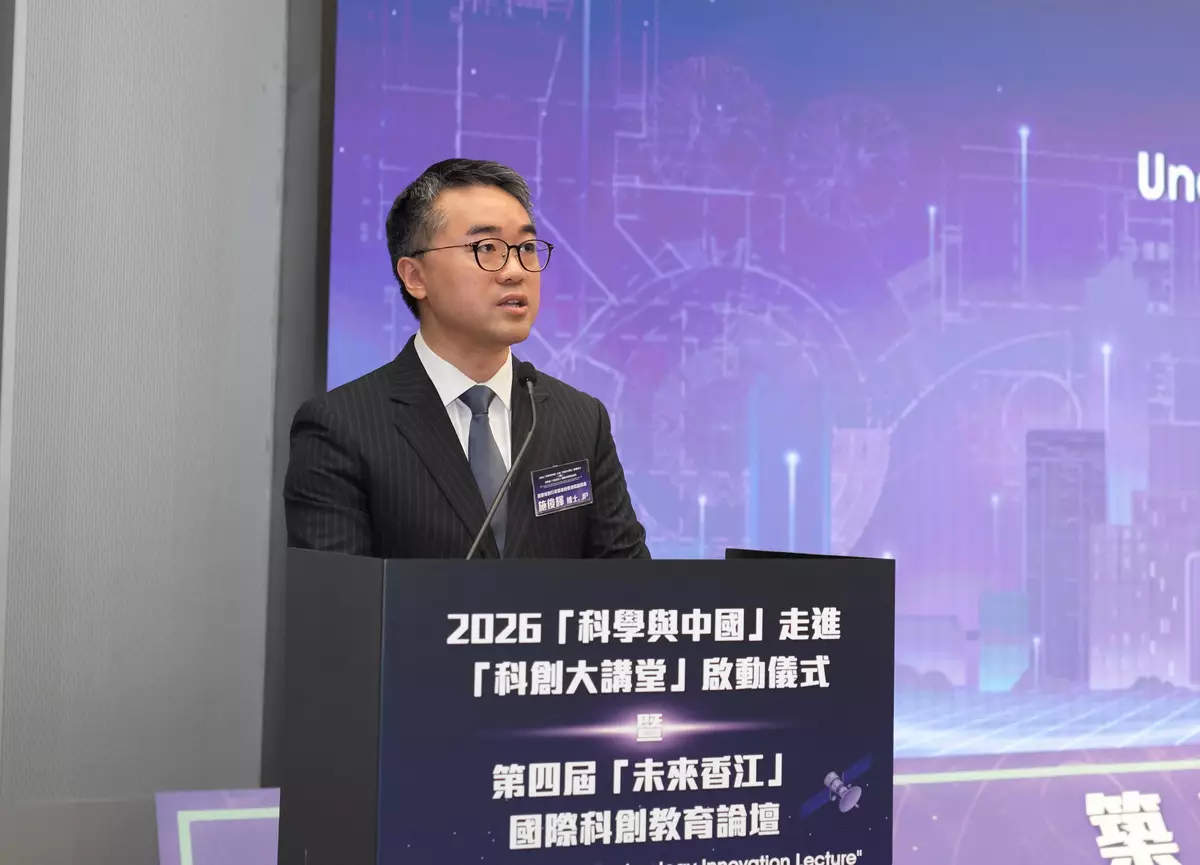
The 2026 "Science and Technology Innovation Lecture" Launching Ceremony cum the Fourth "Future Hong Kong" International STEM Education Forum, organised by the Hong Kong STEM Education Alliance and the Chinese Academy of Sciences (CAS) and co-organised by the Education Bureau (EDB), was held today (November 17) at the EDB Kowloon Tong Education Services Centre. The EDB also signed a Memorandum of Understanding (MOU) with the Bureau of Academic Divisions of the CAS to further institutionalise their collaboration in science education with a view to nurturing innovative talent for the future.
Speaking at the event, the Under Secretary for Education, Dr Sze Chun-fai, said that digital education is essential to enhancing Hong Kong's competitiveness and nurturing future talent. To dovetail with the National 15th Five-Year Plan and the First Five-Year Plan for Economic and Social Development of the Hong Kong Special Administrative Region (2026-2030) in advancing the integrated development of education, technology and talent, the Chief Executive's 2026 Policy Address further reinforces the Government's commitment to digital education and STEAM (science, technology, engineering, arts and mathematics) education, with a focus on driving pedagogical innovation and nurturing future innovation and technology (I&T) talent.
Dr Sze also emphasised that, to implement the Blueprint for Digital Education Development in Primary and Secondary Schools announced in June this year, the EDB is strengthening teacher training, supporting school-based planning and promoting the responsible use of AI in learning, teaching and assessment. On curriculum development, the EDB is currently conducting a consultation on the Information and Innovation Technology Curriculum Framework for Primary Schools (Provisional Draft), which aims to strengthen the interface between primary and secondary levels in technology education and cultivate students' ability to use technology for the good of society. Aerospace topics have also been incorporated into the Primary Science and the updated Junior Secondary Science curricula, enabling students to connect their learning with the country's achievements in space exploration and understand the development and application of scientific knowledge.
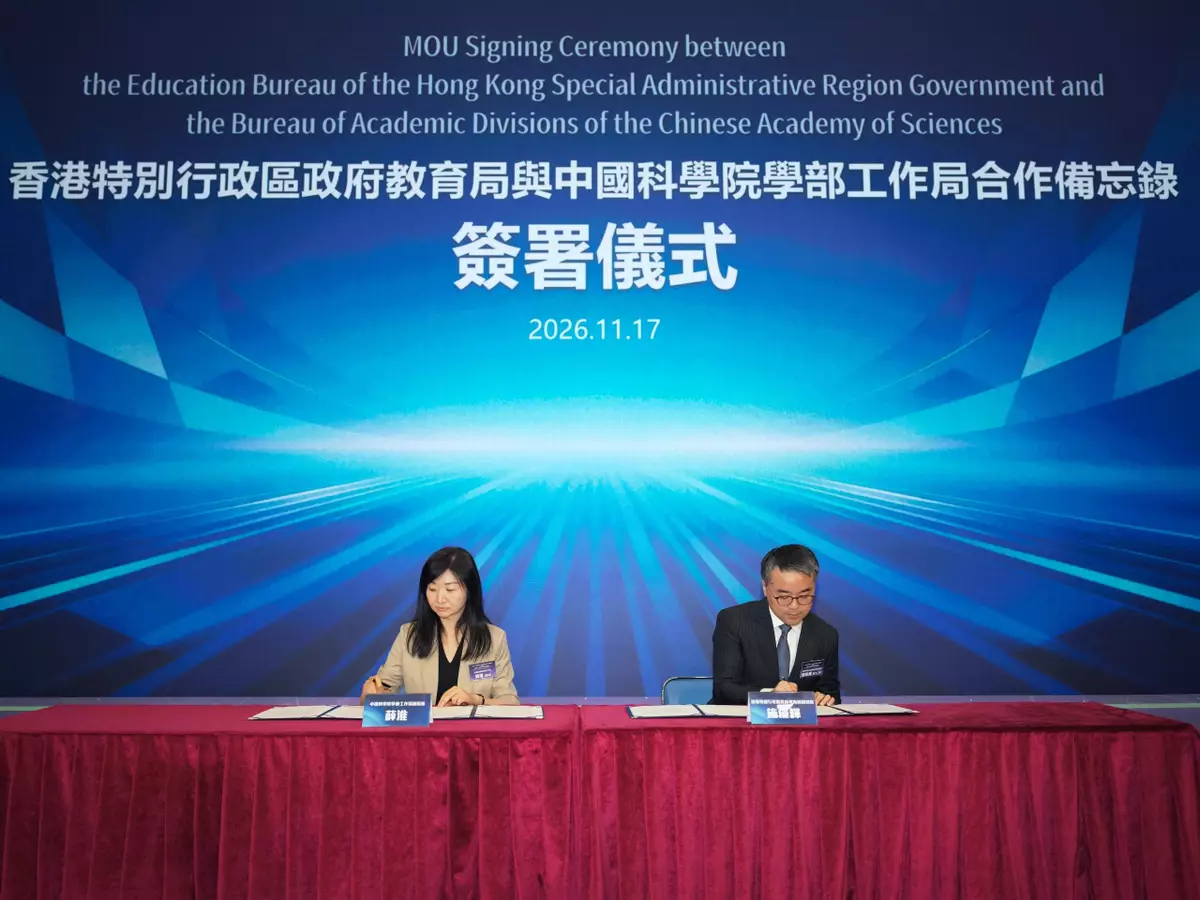
Subsequently, Dr Sze and Deputy Director of the Bureau of Academic Divisions of the CAS Ms Xue Huai signed the MOU on behalf of the EDB of the Hong Kong Special Administrative Region (HKSAR) Government and the Bureau of Academic Divisions of the CAS respectively. The MOU covers initiatives to organise popular science lectures in more schools, create more opportunities for Hong Kong teachers and students to participate in scientific inquiry on the Mainland, and enhance teachers' scientific literacy and professional skills through exchanges with experts. The EDB expressed its gratitude to the CAS and the Liaison Office of the Central People's Government in the HKSAR for their continued support. By connecting schools with scientific research institutions, the EDB hopes to translate the latest scientific research findings into teaching resources so that current scientific developments can inspire future research talent.
Launched in 2023, the "Future Hong Kong" International STEM Education Forum is in its fourth edition this year with the theme "Chasing Space Dreams, Nurturing Science Talent". It features keynote speeches and thematic sessions. The event is bringing scientists and educators together to exchange views and explore how space science can enrich learning and teaching, encourage the education sector to introduce frontier scientific research into the classroom, and inspire young people in Hong Kong to explore scientific innovation. In the morning session of the forum, Academician of the CAS and Director of the National Space Science Center of the CAS, Professor Wang Chi; Academician of the International Academy of Astronautics Professor Michel Blanc; and the Director of the Laboratory for Space Research of the University of Hong Kong, Associate Professor Yao Zhonghua, shared their insights into space science and exploration. Two thematic sessions were held in the afternoon to explore life science education and aerospace science education in the AI era. In addition, the Hong Kong STEM Education Alliance has been organising the "Science and Technology Innovation Lecture" since 2019, inviting academicians and experts of the CAS to give popular science lectures at primary and secondary schools in Hong Kong to broaden the I&T horizons of teachers and students.
EDB signs MOU with Bureau of Academic Divisions of Chinese Academy of Sciences Source: HKSAR Government Press Releases
EDB signs MOU with Bureau of Academic Divisions of Chinese Academy of Sciences Source: HKSAR Government Press Releases
DH takes multipronged approach to address antimicrobial resistance
In support of World Antimicrobial Resistance Awareness Week (WAAW), the Centre for Health Protection (CHP) of the Department of Health (DH) today (November 17) called on healthcare professionals, pharmacies and members of the public to support the Government's initiatives and recommendations to collectively address the threat that antimicrobial resistance (AMR) poses to public health. These measures include reducing unnecessary prescriptions of antibiotics to patients, using electronic means to systematically record data on the antimicrobial supply, taking antibiotics according to doctors' advice and completing the entire course of treatment as prescribed.
The Department of Health. Photo source: reference image
The World Health Organization (WHO) designates November 18 to 24 every year as WAAW. This year's theme is "One Health, One Action: Prevent AMR Now", emphasising the shared responsibility of governments, healthcare professionals and communities to prevent AMR.
"AMR is one of the world's most serious public health challenges. When bacteria and viruses develop AMR, infections become harder to treat or even untreatable. In 2021, about 4.71 million deaths worldwide were associated with drug-resistant bacteria. If we fail to act, this figure is projected to reach 8.22 million annually by 2050. According to the WHO estimates, there will be 18 433 deaths related to AMR in Hong Kong between 2020 and 2030, equivalent to an average of five deaths per day. Therefore, addressing AMR is a matter of the utmost urgency," said the Consultant (Antimicrobial Resistance) of the CHP, Dr Tang Hing-cheung.
The Government attaches great importance to the threats posed by AMR, and continues to put forward strategies and actions based on the Hong Kong Strategy and Action Plan on AMR (2023-2027) (Action Plan), promoting collaborations and exchanges across professions under the One Health framework.
Healthcare professionals
---------------------------
"Proper use of antimicrobials, including antibiotics, is one of the major strategies for controlling AMR. In June 2025, the CHP launched the sixth edition of the Interhospital Multi-disciplinary Programme on Antimicrobial ChemoTherapy (IMPACT) guidelines, which provide recommendations on prescriptions for inpatients with different infections. In January 2026, the CHP also released the updated Antibiotic Guidance Notes in Community Setting, focusing on seven common infections in the community, to serve as a reference for doctors and help reduce unnecessary prescriptions. Furthermore, public and private hospitals have already launched the Antibiotic Stewardship Programme to optimise antimicrobial prescriptions. According to the latest surveillance data, the proportion of antimicrobials in the Watch category (i.e. antimicrobials considered by the WHO to be at a higher risk of developing drug resistance) in the total supply of antimicrobials in Hong Kong decreased from 40.3 per cent in 2016 to 32.2 per cent in 2025. This indicates a change of prescription habits among doctors, and helps address the issue of AMR. In support of WAAW, the CHP issued a letter to all doctors in Hong Kong today, reminding them to refer to the relevant guidelines when prescribing antibiotics to patients. This will help further curb the occurrence of AMR and safeguard the effectiveness of existing treatments as well as public health," said Dr Tang.

Photo source: reference image
Pharmacies
-------------
One of the recommendations of the Action Plan is to strengthen the regulation of over-the-counter purchases of prescription-only antimicrobials, which includes reviewing and considering amending relevant ordinance(s) to mandate the systematic recording of antimicrobial prescription and dispensing data through electronic means. Phase 1 of the system platform was launched in June 2025 for voluntary participation by licensed drug dealers of antimicrobials, including manufacturers, wholesale dealers and retailers (i.e. authorised sellers of poisons, which are commonly referred to as pharmacies). As of late October, 2026, nearly 60 per cent of the relevant licensed drug dealers had completed their registration on the system platform. The latest surveillance data also showed that the wholesale supply of antimicrobials to community pharmacies continually dropped from 18.5 per cent in 2016 to 2.3 per cent in 2025. The Government is preparing to develop Phase 2 of the system platform to collect antimicrobial usage data covering private clinics, targeting to launch it in 2027.
During WAAW, the DH will step up outreach efforts to local pharmacies regarding regulations and guidelines on the use and supply of antibiotics to safeguard their effectiveness.

Photo source: reference image
Members of the public
----------------------------
According to a survey conducted by the CHP in 2025, the vast majority (96.8 per cent) of the respondents said that their last course of antibiotics was prescribed by a doctor, reflecting a high level of awareness regarding proper medication use. Nevertheless, the survey also found that about 60 per cent (58.2 per cent) of respondents were unaware that antibiotic-resistant bacteria can be transmitted from person to person, and nearly 30 per cent (26.6 per cent) did not know that thoroughly cooking food can effectively kill antibiotic-resistant bacteria in food, reflecting that there is still room for improvement in public awareness.
The CHP will continue to strengthen promotion and public education through online and offline channels to enhance the public's understanding of AMR and reduce the development of resistance caused by the misuse and overuse of antimicrobials.
Antimicrobials are medications used for treating microbial infections, which include antibiotics designated for treating bacterial infections. AMR happens when microorganisms (e.g. bacteria and viruses) evolve to become resistant to previously effective medications (i.e. antimicrobials). The CHP urged members of the public to eliminate AMR by observing the following:
- when you have colds, flu or are infected with COVID-19, consult a doctor promptly. Do not buy or take antibiotics without a prescription;
- do not demand antibiotics from doctors. Only take antibiotics when advised by a doctor and complete the entire course of treatment, even if symptoms improve;
- pay attention to and follow the health advice stated on the prescription bag and take appropriate infection control measures, such as maintaining hand hygiene, wearing a surgical mask when having respiratory symptoms, and disinfecting and covering all wounds properly to prevent person-to-person spread of antibiotic-resistant bacteria when taking antibiotics;
- receive seasonal influenza and COVID-19 vaccines to prevent secondary bacterial infections, thereby reducing the use of antibiotics and avoiding the occurrence of AMR;
- be aware of the risk of acquiring drug-resistant bacteria from ready-to-eat (RTE) foods. People taking antibiotics or antacidsand high-risk populations (such as pregnant women, infants and young children, the elderly and people with weakened immunity) are at a higher risk and should avoid eating raw or undercooked RTE foods; and
- observe good hygienic practices in the kitchen when handling food to minimise the risk of cross-contamination by drug-resistant bacteria.
Please visit the CHP thematic website and the CHP Facebook Page for more information on AMR and a video on experience sharing by an "AMR survivor".