Jensen Huang was unseated last week from the top job at Nvidia, a company that is a linchpin in the booming artificial intelligence sector. Huang broke his silence Tuesday.
The full statement, as posted on X, follows:
Over the past week, I’ve been overwhelmed by the love and support of friends, industry colleagues, and people I’ve never met. Thank you to everyone who has shown kindness to my family and me. It means the world to me.
I came to the United States 53 years ago, and becoming an American citizen is one of the greatest gifts and proudest moments of my life. NVIDIA has been my life’s work. Building it into the company it is today alongside my colleagues has been a privilege and an honor. Nowhere but in America could a company like NVIDIA be possible. I love our country, and I love NVIDIA.
I did not live up to the standards expected of everyone at NVIDIA, and I have made serious mistakes in my personal life. I created problems for the Board that I deeply regret. I own my mistakes completely, and I am committed to cooperating with the Board’s independent investigation.
Since my departure, I’ve seen an outpouring of calls from NVIDIA’s employees, investors, business partners, and customers for me to return as CEO. Many continue to reach out to me directly as the company navigates complex technology, market, competitive, and geopolitical dynamics. NVIDIA is a once-in-a-generation company. If the Board of Directors decides that my return is in the best interest of our shareholders, our employees, the company, and America, I would be honored to answer these calls and return as CEO.
Thank you again to everyone who has shared their good wishes. I am profoundly humbled by your support. To my family: I love you, and I will spend the rest of my life being worthy of yours.
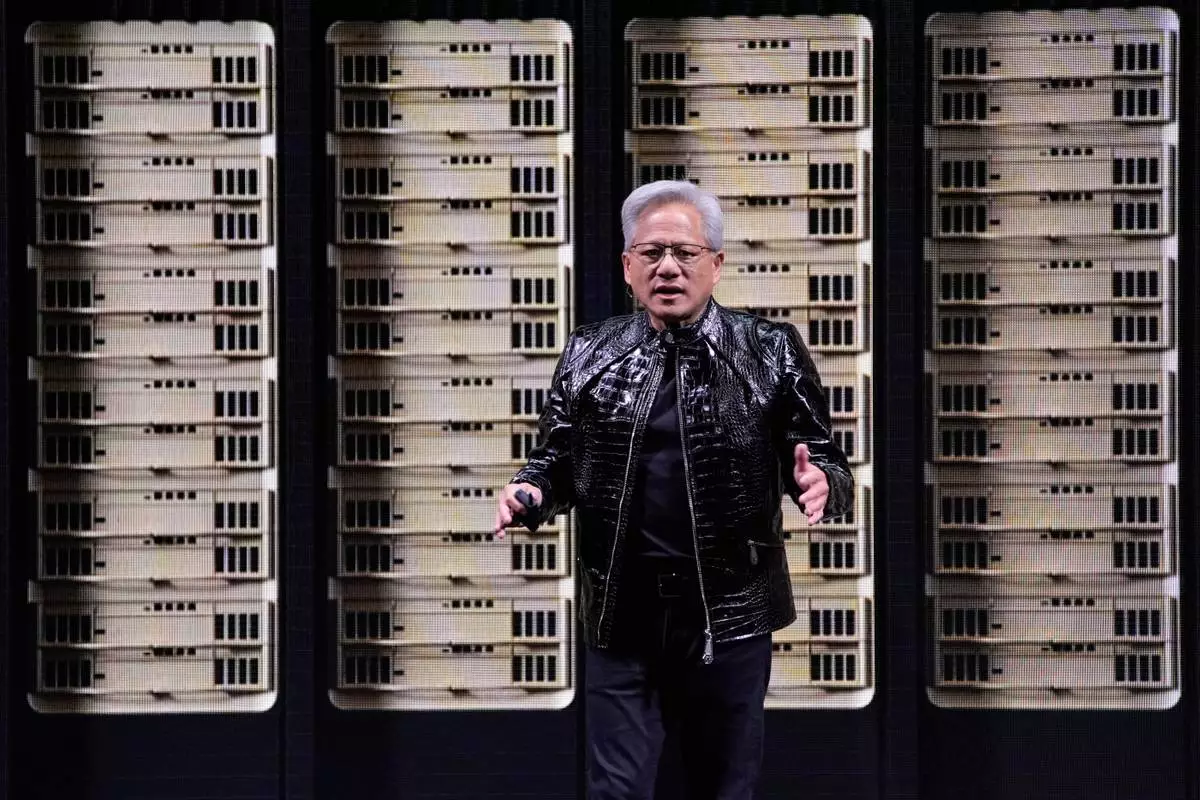
FILE - Nvidia founder and CEO Jensen Huang speaks about the NVIDIA Rubin AI super computing platform during a Nvidia news conference ahead of the CES tech show, Monday, Jan. 5, 2026, in Las Vegas. (AP Photo/John Locher, File)

FILE - Nvidia CEO Jensen Huang listens as President Donald Trump speaks during an event at the U.S. Institute of Peace, Oct. 8, 2026, in Washington. (AP Photo/Julia Demaree Nikhinson, File)
WASHINGTON (AP) — The Federal Aviation Administration has paused installing routers linked to last week’s ground stop that caused chaos for travelers, the agency said Tuesday.
The move comes amid growing scrutiny over the nation’s air traffic control system and as the Trump administration is making a new request for $50 billion to improve air travel. Democrats in the Senate are demanding that the administration provide clear answers about what went wrong.
President Donald Trump has blamed old technology and Democrats for the nationwide grounding of all planes and upheaval at the nation’s airports. But the FAA has been struggling to modernize the air traffic control system for decades — going back well before the first Trump administration.
FAA spokesperson Ian Gregor said the agency paused new installations of Juniper routers and disabled the functionality of all existing ones on Friday after technicians linked the problems to a new router in El Dorado, Arkansas. The FAA has said that another router installed three weeks earlier in Amarillo, Texas, also went haywire.
The system became overloaded when the federal contractor that maintains the FAA’s telecommunications network was replacing outdated copper wires with fiber optic lines across the nation.
The ground stop was needed, Transportation Secretary Sean Duffy said, after the new router that L3Harris installed in Arkansas resulted in a cascade of intermittent communications and radar signals at 17 of the 22 regional air traffic control centers. The centers direct planes cruising at high altitudes.
The FAA said that “excessive data” was flooding the system “at a rate of 1,000 connection attempts every 4 to 5 seconds.” That deluge created instability with “aircraft communications and radar feeds," the agency said.
For now, the FAA is relying on older Cisco routers that have been in place for 25 years to continue operating the network while they investigate the cause of Friday’s trouble.
The routers that malfunctioned last week are being tested in a lab at the headquarters of L3Harris.
A spokesperson for Hewlett Packard Enterprise, which owns Juniper, told ABC News that the company believes the routers were working properly when the ground stop occurred. The company did not immediately respond to inquiries from The Associated Press.
“Based on what we know today, the device functioned as it was configured to by the installer. It did not fail or act improperly,” the company said in its statement.
Democrats on the Senate Commerce Committee said they believe that only 400 out of more than 3,600 new routers have been installed.
“Identifying the device that failed does not establish why it failed. FAA must investigate further to determine the root cause and report to Congress on how it intends to prevent future issues,” the Democrats said in a letter sent to Duffy.
Upgrading the nation’s air transportation system is an effort that Congress has dedicated significant sums to in recent years. The problems with aging equipment at the FAA date back decades and past efforts to modernize the system have come up short.
Duffy has pushed Congress for billions more dollars to upgrade a system he said had been neglected for decades, saying again Monday that much more is needed.
The Trump administration on Tuesday sent a letter to key lawmakers outlining its request for $50.1 billion to modernize the system and make other improvements at airports.
The request calls for $10.1 billion for updating the nation’s air traffic control system. Similar amounts would go toward boosting airport infrastructure, replacing or refurbishing terminals at high-impact hubs, constructing five new traffic control centers and improving or replacing up to 140 FAA-owned air traffic control towers.
“Congressional approval of these funds will equip the FAA to deliver to the American people a brand-new air traffic control system that is safer, smarter, faster, and more efficient,” states the letter, which was obtained by The Associated Press.
Congress approved $12.5 billion last year to modernize much of the key infrastructure that more than 45,000 flights a day rely on to reach their destinations safely. The funds were earmarked for replacing outdated technologies such as copper wires, floppy discs and radars built in the 1980s, but much of that money will also go toward runway upgrades and other construction projects.
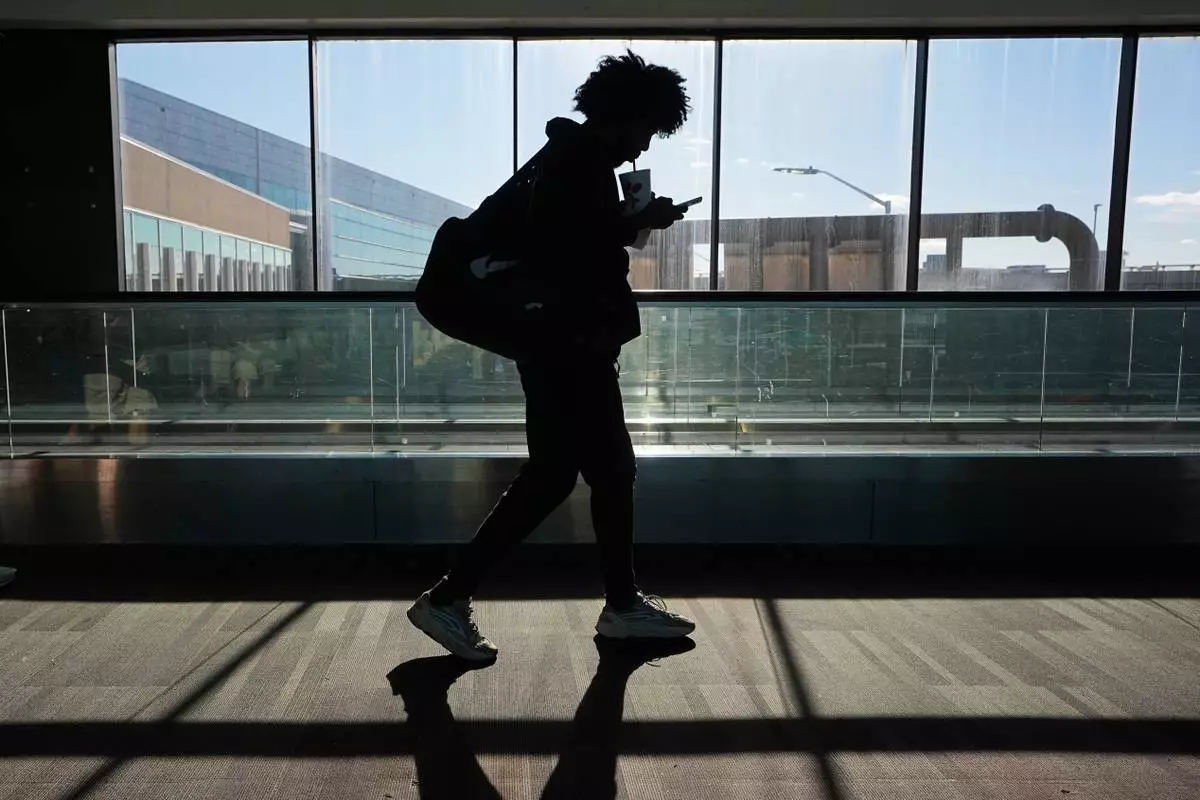
A traveler with a smartphone walks across a pedestrian bridge at Philadelphia International Airport in Philadelphia, Monday, Nov. 16, 2026. (AP Photo/Matt Rourke)
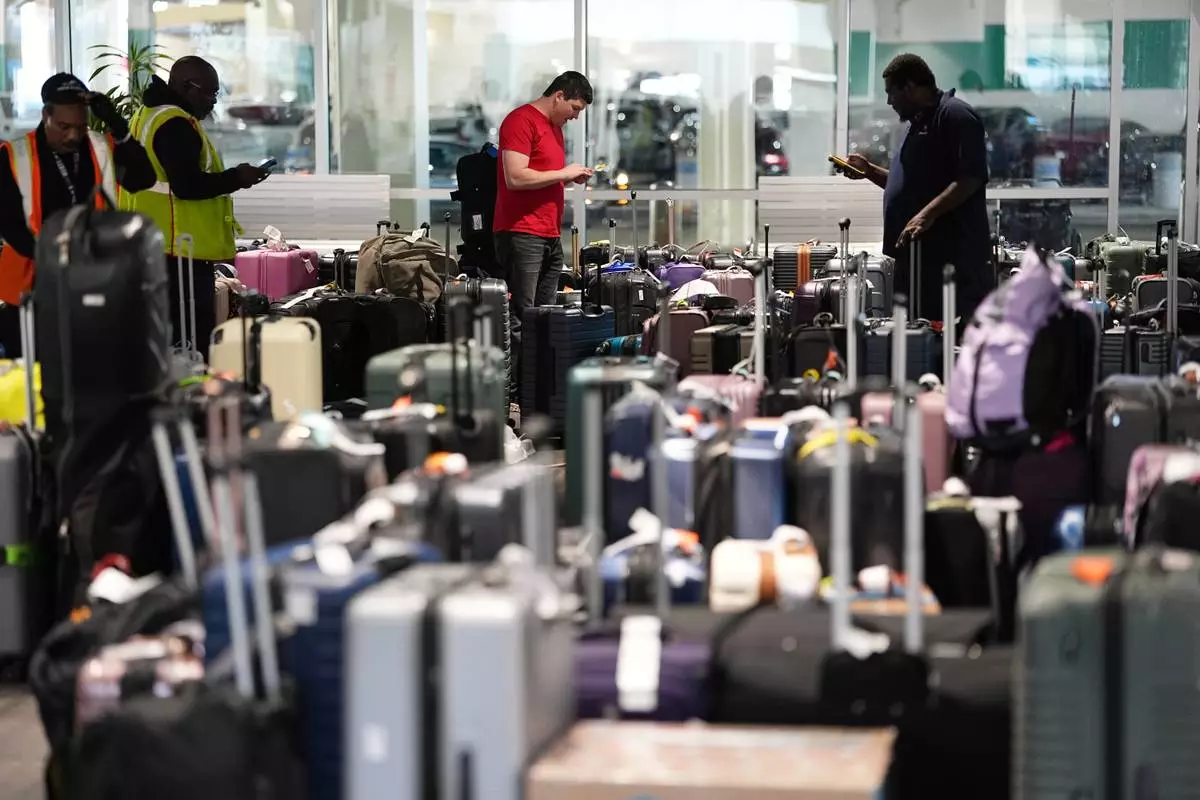
Luggage is set out for travelers to pick up at a baggage claim at Philadelphia International Airport in Philadelphia, Monday, Nov. 16, 2026. (AP Photo/Matt Rourke)
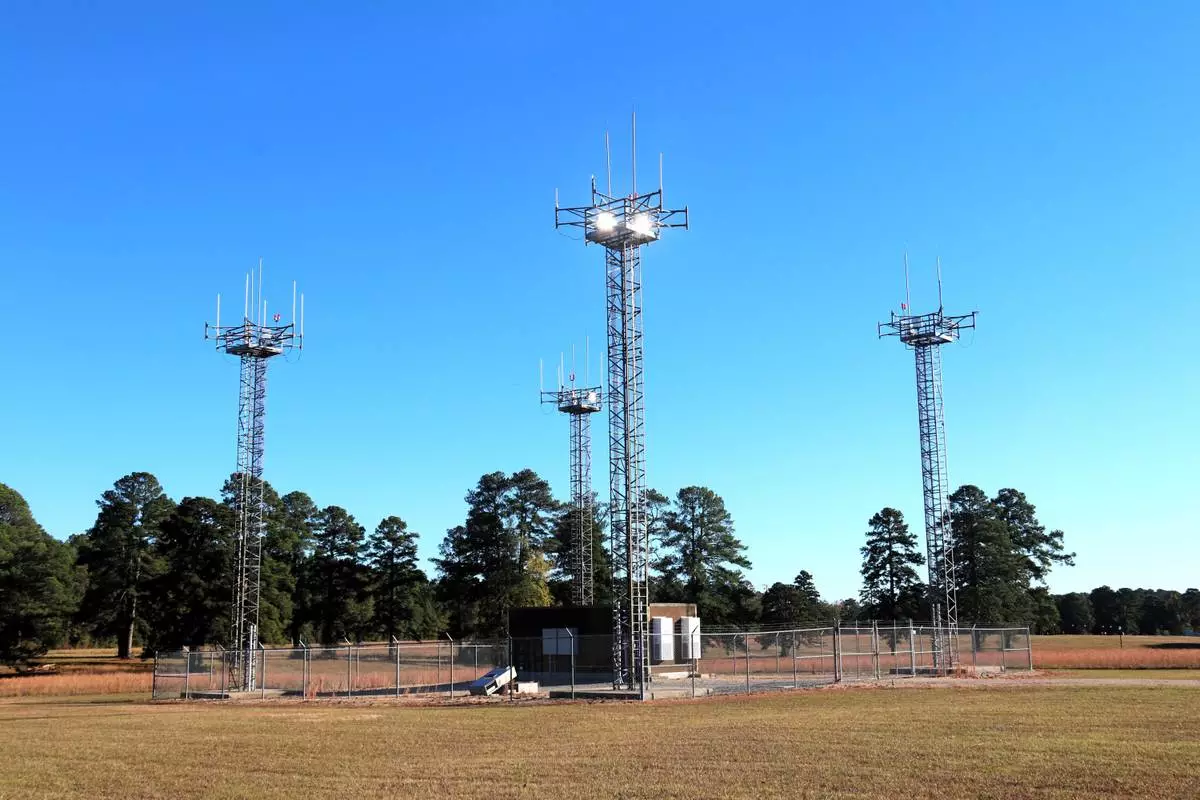
A building that housed a router blamed for a technical issue that caused a nationwide ground stop is seen Monday, Nov. 16, 2026, at South Arkansas Regional Airport in El Dorado, Ark. (Penny Chanler/The El Dorado News-Times via AP)