NBA superstar LeBron James sued the makers of an AI sports-betting app Tuesday, saying they have deliberately violated his publicity rights and trademarks by calling it “Bron” and using artificially generated images of him in their marketing.
In a lawsuit filed in U.S. District Court in New York, James' attorneys called it “a willful, bad-faith tactic” to use the player's fame, likeness and nickname to promote “a new and unknown product.”
The complaint asks the court to block the makers from using the Philadelphia 76ers star's name, to give up any money they've already made, and to award damages — including fair market value for the use of his name as well as punitive damages.
“Defendants did not care that they had engaged in illegal conduct to gain notoriety for their previously unknown app,” the lawsuit states. “They intentionally created the false impression that Mr. James endorsed and was affiliated with their Bron App, in an effort to drive downloads and paid subscriptions."
Messages sent by The Associated Press through the app’s website and to email addresses for its founders seeking comment were not immediately returned Tuesday.
The app’s developer, PlayVision Inc., is based in California. It was launched by Chief Executive Anish Gupta and Chief Technology Officer Marc Zoghby in 2025, with backing from the startup accelerator Y Combinator, as a program that would use artificial intelligence to analyze game and practice footage for sports teams and fans.
This year, the company released its “Bron” app, which it says does not take direct wagers but charges a subscription fee for services like bet tracking and odds comparisons. It launched a marketing campaign this month that featured an image of a person resembling James — down to his tattoos, voice and number 23 jersey — sitting in a locker room and scrolling through the app.
James' lawyers sent a cease-and-desist letter, as previously reported by Front Office Sports. The company took the ad down, but not before it had been reposted and viewed about 1 million times, the lawsuit said.
Gupta responded to the attorneys' demand on social media by writing that the app would get a new name, but no new name had been adopted by the time the lawsuit was filed, leading James' legal team to suggest the company was milking the controversy for attention. Gupta wrote on social media this week that the new name will be announced Wednesday.
The lawsuit notes that James typically commands tens of millions of dollars for such endorsement deals, and that he already has an exclusive deal with the prediction market platform Polymarket. It alleges that the app's marketing was especially harmful in part because it showed the AI-generated James scrolling through bets involving NBA players.
“The integrity of NBA competition — and the public’s confidence that players are not betting on the games they play — is of paramount importance to the league, its players, and its fans,” the lawsuit said. “Any suggestion that an active NBA player is betting on NBA games is therefore far from a trivial matter, and it should not be used for clicks and views."
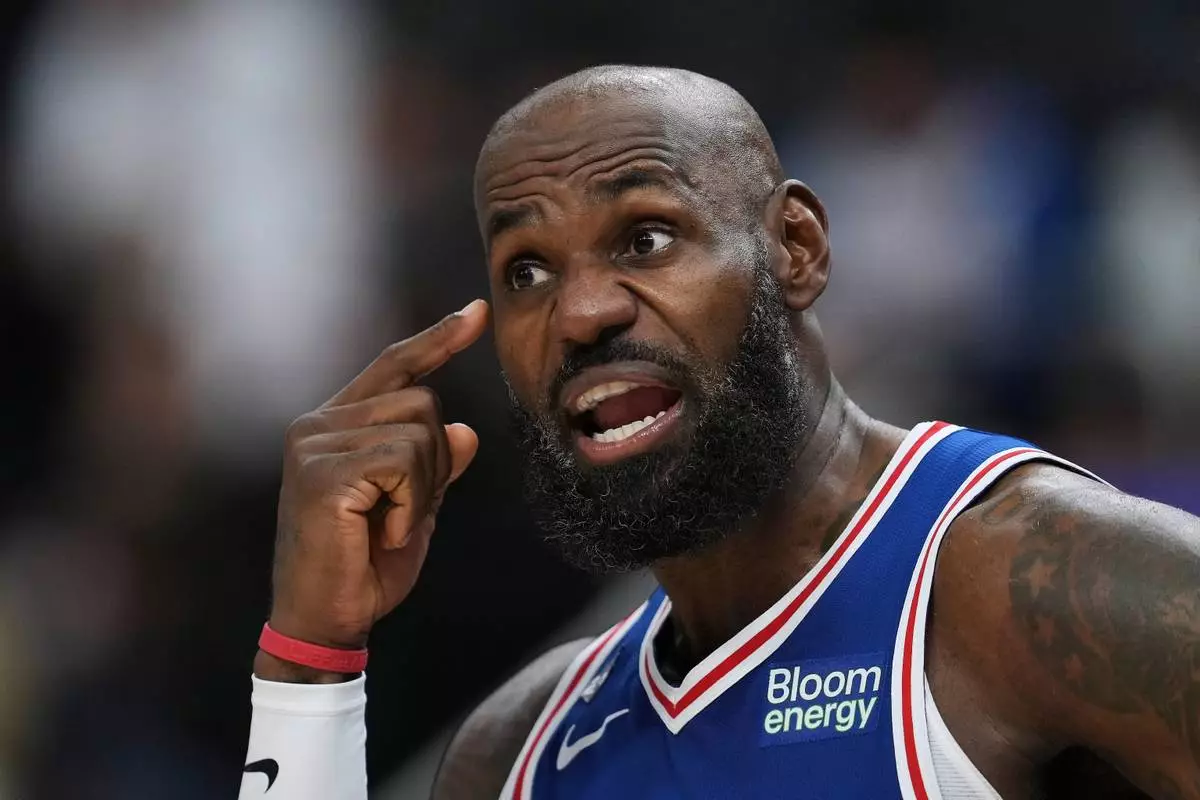
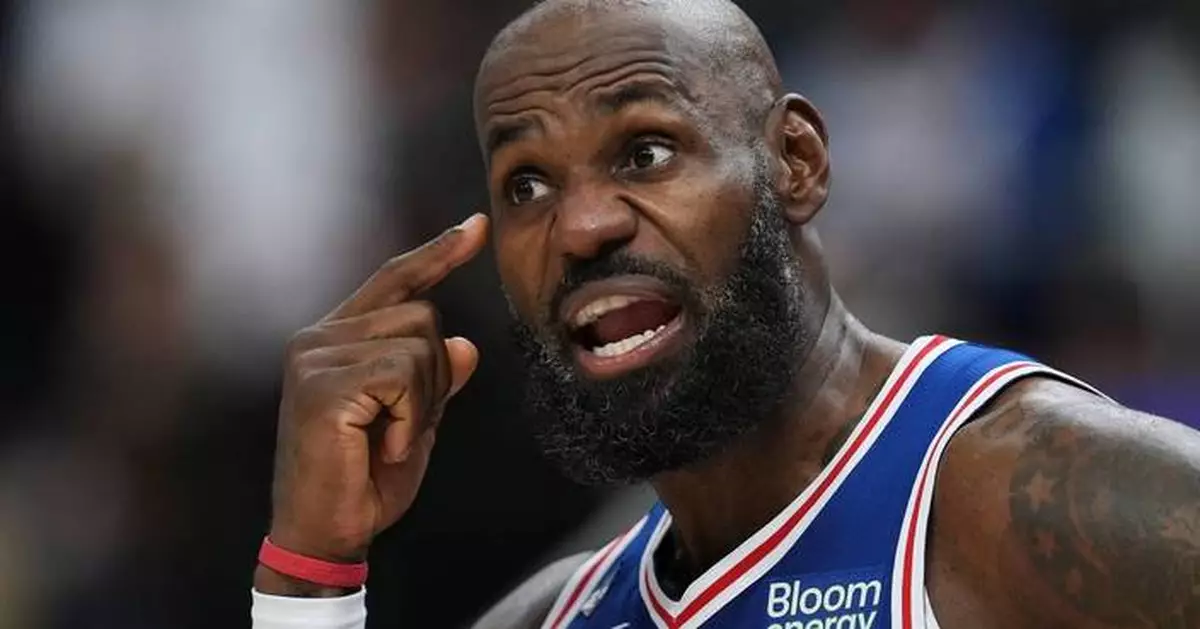
Philadelphia 76ers forward LeBron James (23) signals a teammate against the Detroit Pistons in the second half of an NBA basketball game in Detroit, Wednesday, Nov. 4, 2026. (AP Photo/Paul Sancya)
LONDON (AP) — An Oxford University college was the center of a freedom of speech controversy Tuesday for hosting an event featuring Nathan Cofnas, an academic widely criticized for his assertions that very few Black people would belong at the top of a merit-based society.
Hundreds of protesters turned up outside Oriel College ahead of the speech by Cofnas, who raised his profile earlier this year when he made plagiarism accusations against the late Cambridge professor Jason Arday. The crowds held placards reading “Far right off campus,” and some activists tried to block people from entering the college to attend the talk.
Ultimately, Cofnas spoke to about two dozen people inside the college, using a microphone to be heard over chants of “Shut him down” outside. He claimed that diversity, equity and inclusion efforts are based on a lie and that the idea that all races have equal potential is false, the student newspaper Cherwell reported.
More than 30,000 people signed an online petition backed by the Stand Up to Racism campaign saying the university should not have given Cofnas a platform to assert that DEI undermines higher education. But supporters of the event, including some Oxford academics, backed Oriel for taking a stand for free speech.
Cofnas, who was invited to speak by a student society supporting the anti-immigration Reform UK party, has argued that in a meritocracy, Black people “would disappear from almost all high-profile positions outside of sports and entertainment.”
The backlash has included members of Parliament and American poet Amanda Gorman, now studying at Oxford. “It sends a very clear message to students of color and faculty and staff that racism is welcome here,” Gorman said in an Instagram video that challenged the organizers to give her or others at Oxford a similar platform to speak against white supremacist views.
Protesters placed a Ku Klux Klan hood and a sign reading “Racists welcome here” on the college's statue of 19th-century imperialist Cecil Rhodes. In Parliament, a Labour lawmaker complained that "In 2026, Oxford University will give a platform to a eugenicist."
“Free speech sits alongside equality law, not above it, and little thought seems to have been given to Oxford’s Black students," lawmaker Bell Ribeiro-Addy added.
Cambridge University terminated the position of Cofnas, a philosophy researcher, in 2024 after his critique of DEI programs sparked protests. His views drew even wider attention this year after he accused Arday, lauded as the youngest Black professor in Cambridge history, of plagiarism and of fabricating much of his life story and achievements.
Arday, 41, was found dead at his London apartment in August after weeks of intense media scrutiny.
Cambridge then came under fire, accused of elevating Arday in a rush to promote diversity despite red flags about his qualifications. News organizations were criticized for amplifying Cofnas' allegations into a cruel public takedown motivated by racism.
Oriel College said on its website that its decision to allow Tuesday's event “does not imply endorsement by the College of the views of its speakers.”
The Oxford Universities' Reform Society, which organized the event, stressed that its committee alone — not Oriel College or the wider University of Oxford — made the decision to host Cofnas, and that the college was simply complying with free speech laws.
The group said it seeks to “rebalance” representation at Oxford and described Cofnas as “repeatedly victimized.” Its statement said the group is “committed to broadening participation in university life by removing systemic barriers for marginalized voices.”
Cofnas took a postdoctoral position at Ghent University in Belgium this year but was suspended following the media storm over Arday.
He wrote in The Wall Street Journal in August that he was wrongly accused of racism and his views are misunderstood. He argued that he was citing Harvard's own findings when he stated that under a colorblind system, Black students would make up just 0.7% of the university's undergraduate population.
“Racial representation at many American institutions is maintained by Harvard-style affirmative action,” he wrote. “There are many brilliant black scholars. But it’s a difficult fact to face that in a truly colorblind system that didn’t take race into account, there would be a shocking lack of diversity in certain institutions.”
Cambridge University said last year that an inquiry concluded that “while seen by many as offensive,” Cofnas' views “did not breach the law and did not contravene University regulations designed to uphold free speech.”
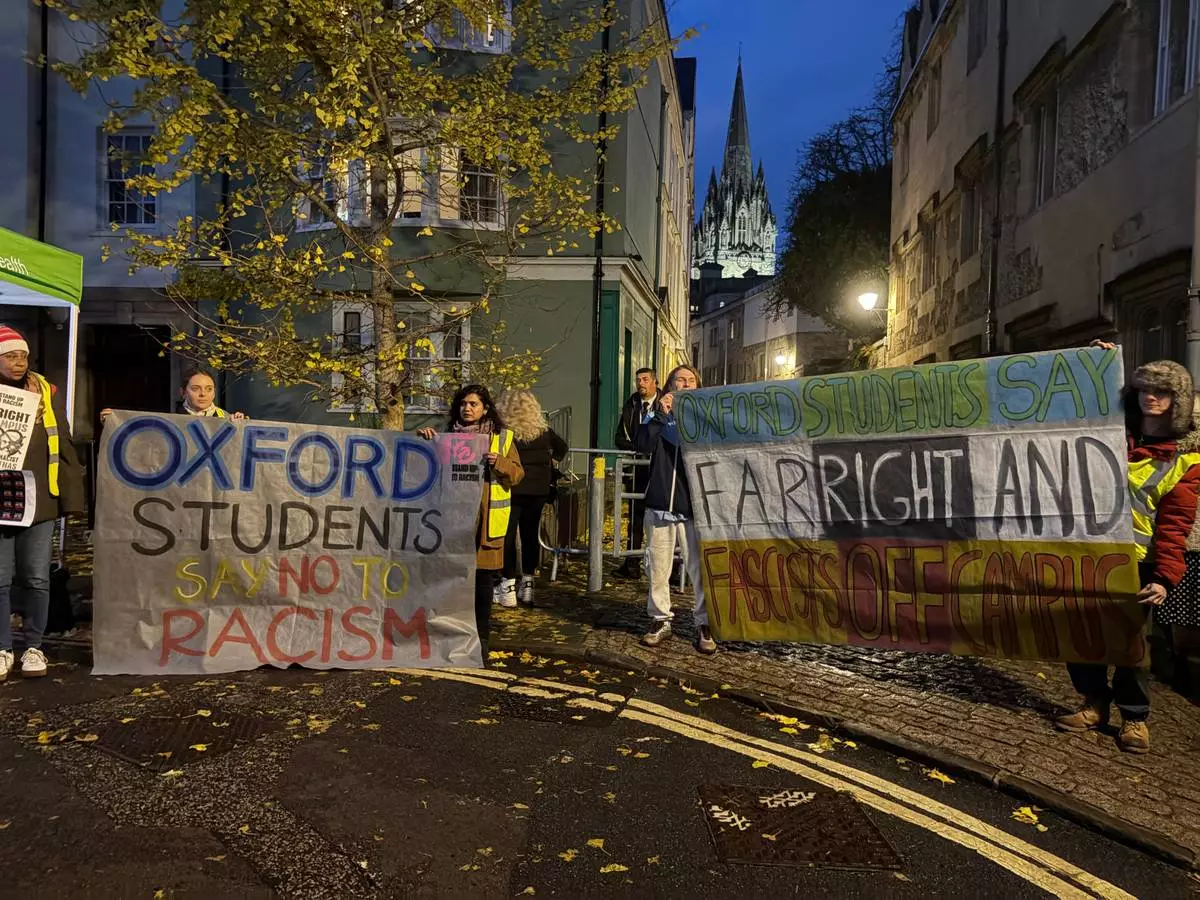
People gather outside Oxford University's Oriel College in Oxford, England, on Tuesday, Nov. 17, 2026, in a protest against a talk by Nathan Cofnas, the academic who accused the late Professor Jason Arday of plagiarism. (Jordan Reynolds/PA via AP)
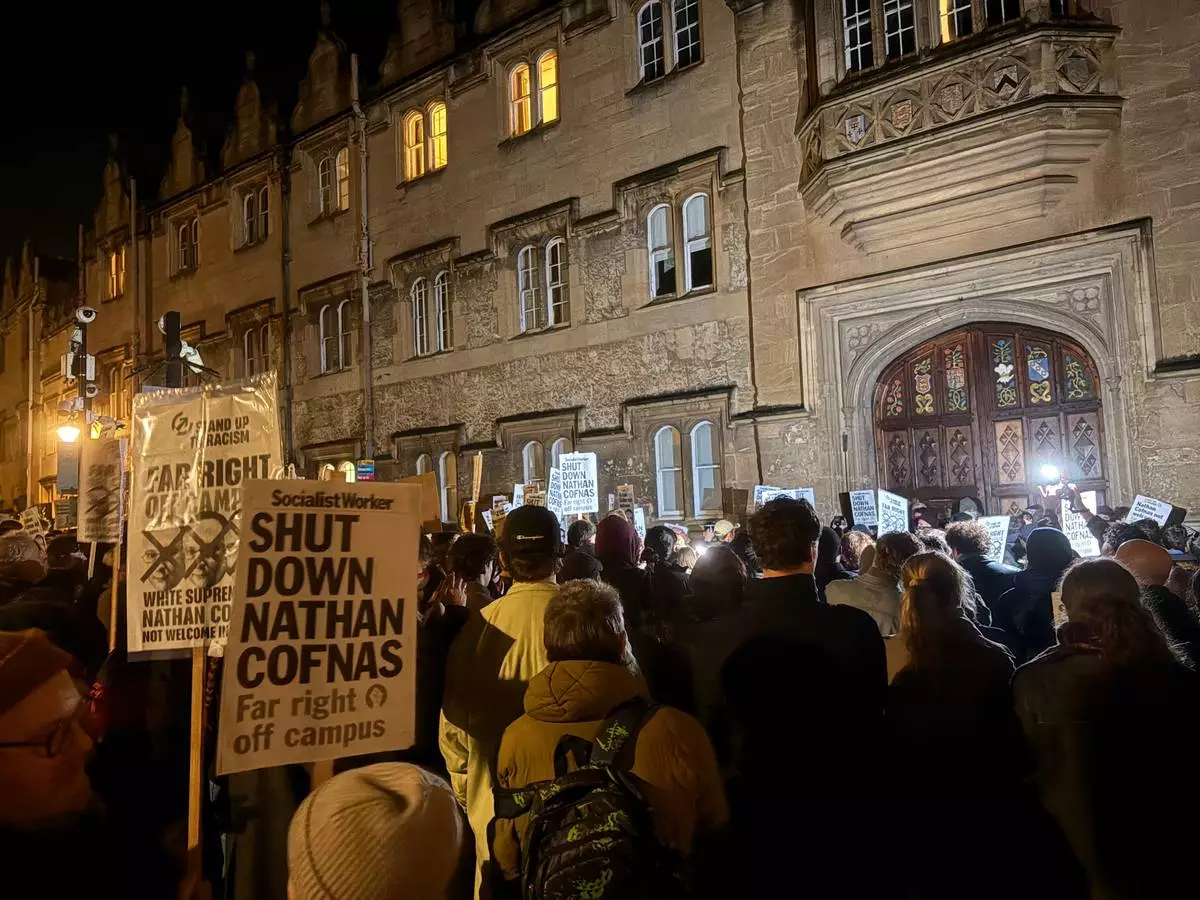
People gather outside Oxford University's Oriel College in Oxford, England, on Tuesday, Nov. 17, 2026, in a protest against a talk by Nathan Cofnas, the academic who accused the late Professor Jason Arday of plagiarism. (Jordan Reynolds/PA via AP)
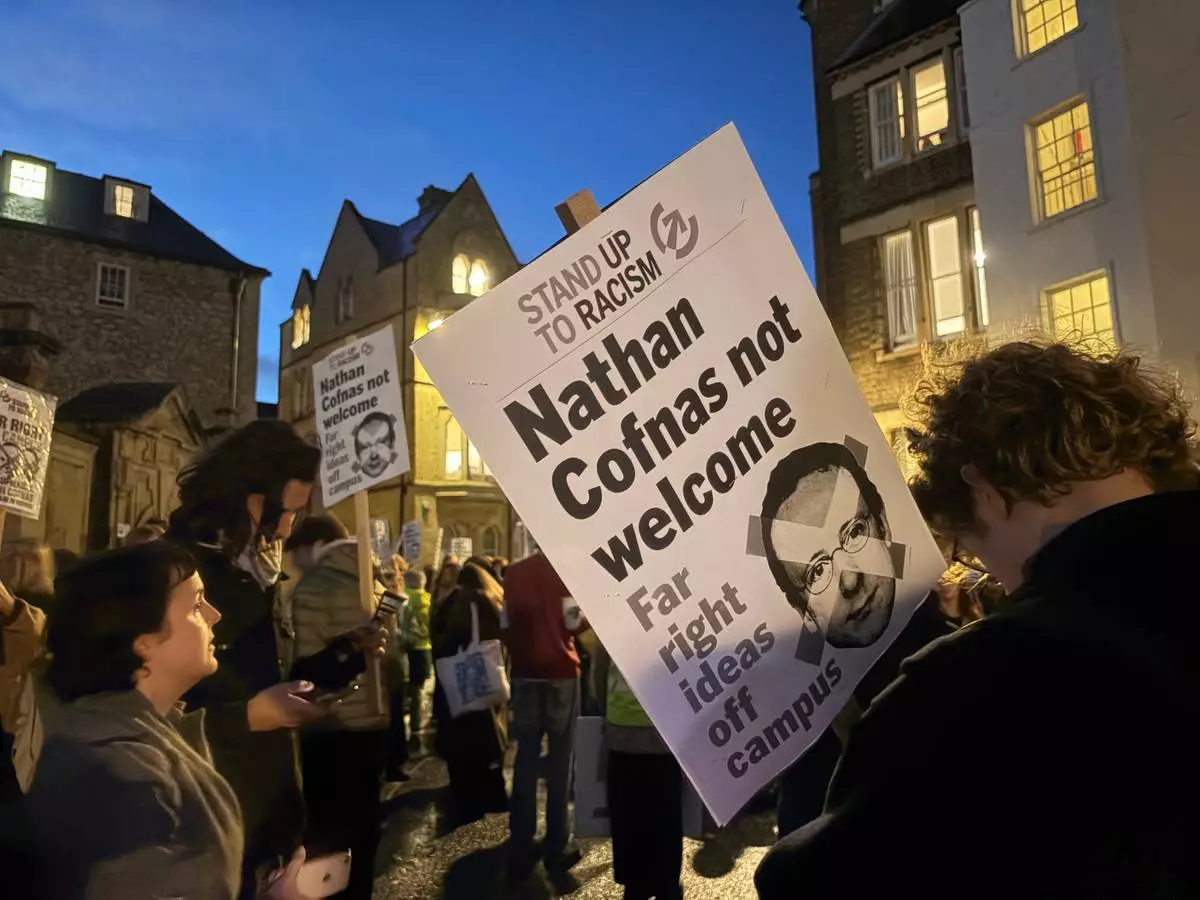
People gather outside Oxford University's Oriel College in Oxford, England, on Tuesday, Nov. 17, 2026, in a protest against a talk by Nathan Cofnas, the academic who accused the late Professor Jason Arday of plagiarism. (Jordan Reynolds/PA via AP)
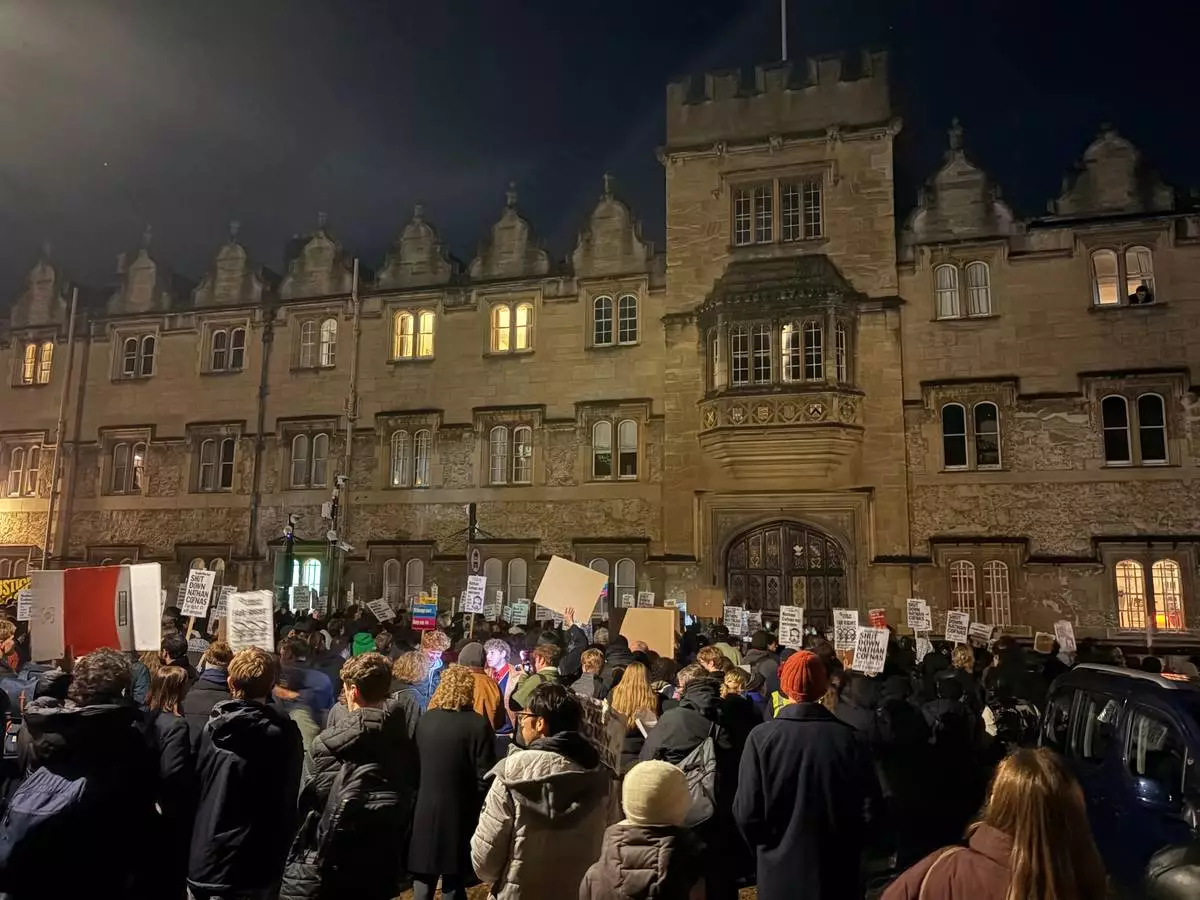
People gather outside Oxford University's Oriel College in Oxford, England, on Tuesday, Nov. 17, 2026, in a protest against a talk by Nathan Cofnas, the academic who accused the late Professor Jason Arday of plagiarism. (Jordan Reynolds/PA via AP)
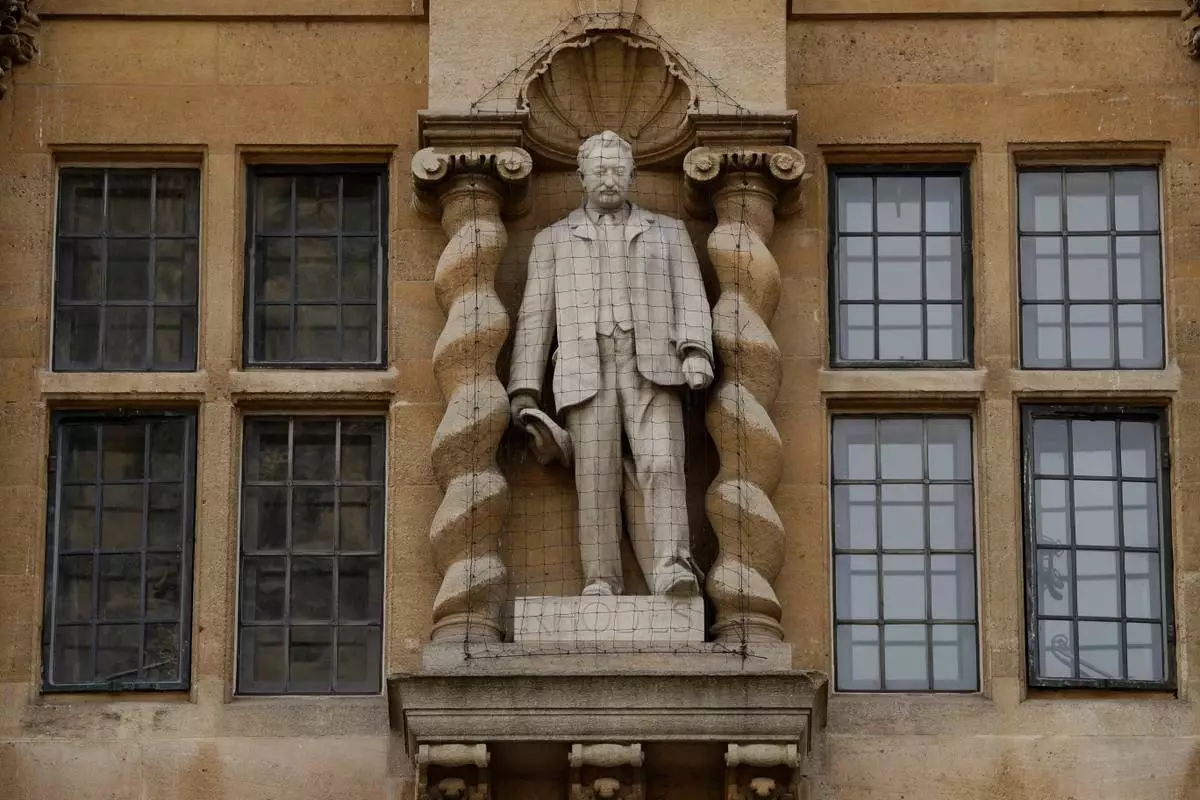
FILE - In this Wednesday, June 17, 2020 file photo, a view of the statue of Cecil Rhodes, the Victorian imperialist who supported apartheid-style measures in southern Africa stands mounted on the facade of Oriel College in Oxford, England. (AP Photo/Matt Dunham, File)