
Skip to Content Facebook Feature Image

School districts have fewer students, but some are delaying painful budget decisions

News

School districts have fewer students, but some are delaying painful budget decisions
News

News

School districts have fewer students, but some are delaying painful budget decisions

2026-11-18 19:38 Last Updated At:19:40

SEATTLE (AP) — Nearly four decades ago, state auditors delivered a stark warning to Seattle Public Schools.

The district needed to close several campuses with low enrollment to avert a deepening budget crisis. But the recommendations generated a fierce neighborhood outcry, so Seattle officials set the audit aside.

Then, 34 years later, history repeated itself. In 2024, Seattle’s then-superintendent proposed shuttering up to a fifth of its schools because there weren’t enough students to fill them, but again scrapped the plan after community resistance.

Now, the district’s back in the same financial bind, with opposition already building against a new plan to shutter nearly a dozen campuses.

The cycle in Seattle reflects what some education experts call a national paralysis in school district boardrooms. Public school enrollment has plummeted by more than 1.4 million students since the pandemic, according to a recent study by Stanford University researchers Thomas Dee and Jaymes Pyne. That’s primarily due to declining birth rates and expanding school choice. Yet, rather than downsize to match their new financial reality, district leaders throughout the country have largely hesitated.

AP is covering school closures in partnership with The Hechinger Report and Big Local News at Stanford University.

One out of every 4 public schools in the U.S. has lost 15% or more of its student population since 2019, according to the study. (In Seattle, enrollment has fallen by roughly 8% since that year, to below 49,000 students.) Despite these empty desks, the overall number of schools in operation remains virtually unchanged — and teacher headcounts have actually grown by 1% nationwide.

“School districts have been playing Hamlet on this for a while now and dithering on this question,” Dee said. “We’ve never had more teachers per student in our nation’s history.”

Today’s budget woes can be attributed, at least in part, to more than $190 billion in federal pandemic relief aid. The one-time cash allowed superintendents to maintain staffing levels in spite of shrinking student bodies. With those federal funds exhausted, many districts now must confront painful structural deficits. And the needs remain acute. Disability diagnoses are rising — and they’re costly, adding to the financial strain. Many students also haven’t caught up academically after the pandemic.

Research from Arkansas, California, Chicago and elsewhere suggests closing a school yields only modest and temporary budget relief.

“The conversation really should be about the educational experience: How do we better serve the students with the resources we have left?” said Liza Rankin, a Seattle school board member since 2019, noting that employee pay and benefits account for roughly 80% of a district’s budget. “Closing schools doesn’t save much money to begin with. Payroll is where the big money is.”

Instead, leaders have preferred to rely on one-time reserves or small administrative cuts.

In San Francisco, where enrollment fell 10% since 2019, a $100 million-plus deficit prompted a chaotic proposal from the district in late 2024 to shutter more than a dozen schools. That plan was shelved following the superintendent’s resignation. And earlier this year, a new superintendent reached a $183 million contract with the United Educators of San Francisco, or UESF.

In its most recent budget, the district projects it will close its structural deficit next school year, mostly relying on early retirements and cuts to central office to avert closures. The current budget also projects, however, a $26 million deficit by the following year.

Labor leaders insist any panic is unwarranted.

A UESF spokesperson argued the district’s substantial cash reserves could stabilize the budget. Its rainy day fund stood at nearly $139 million last year, according to the district, though it expects to draw down its reserves to just $52 million over the next two years.

Experts strongly warned against tapping rainy day funds to cover ongoing expenses, like salary.

“That could buy them more time, maybe provide another year of planning, but it doesn’t come close to resolving the structural issues that San Francisco has,” said Jason Willis, a school finance expert with research group WestEd who trains K-12 budget officers.

There are no easy solutions — and students could pay the price. Closing schools can set students back academically, research shows, and teacher layoffs may be even more disruptive to student learning.

Still, Dee, the Stanford researcher, warned that if local leadership fails to act, other political actors might. State takeovers of school districts have been rising, with at least 21 happening since 2023, according to a tally from nonprofit news outlet Chalkbeat.

Under state takeovers, school board members and superintendents often have much less flexibility to determine how to cut budgets — or whom to lay off.

Sharon Lurye of The Associated Press contributed reporting.

The Associated Press’ education coverage receives financial support from multiple private foundations. AP is solely responsible for all content. Find AP’s standards for working with philanthropies, a list of supporters and funded coverage areas at AP.org.
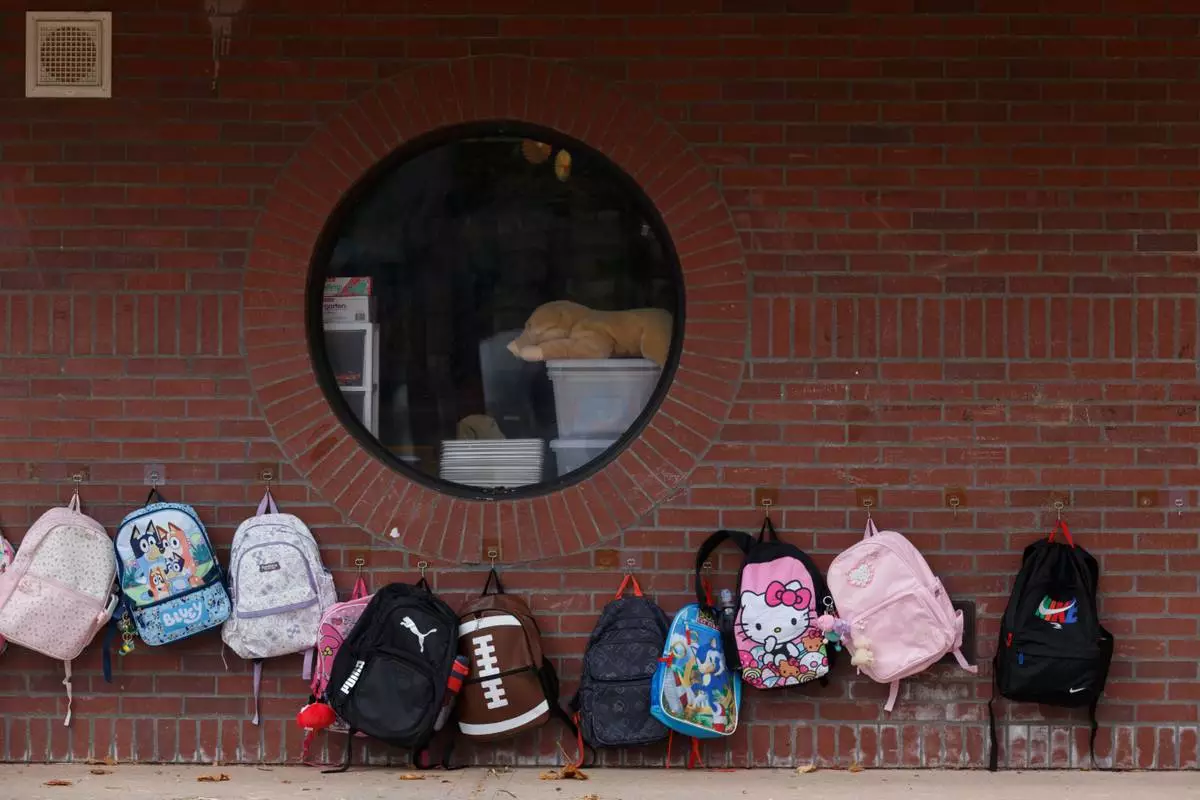
Backpacks hang outside a classroom at Glen Cove Elementary on Monday, Aug. 17, 2026, in Vallejo. (AP Photo/Juliana Yamada)
Backpacks hang outside a classroom at Glen Cove Elementary on Monday, Aug. 17, 2026, in Vallejo. (AP Photo/Juliana Yamada)

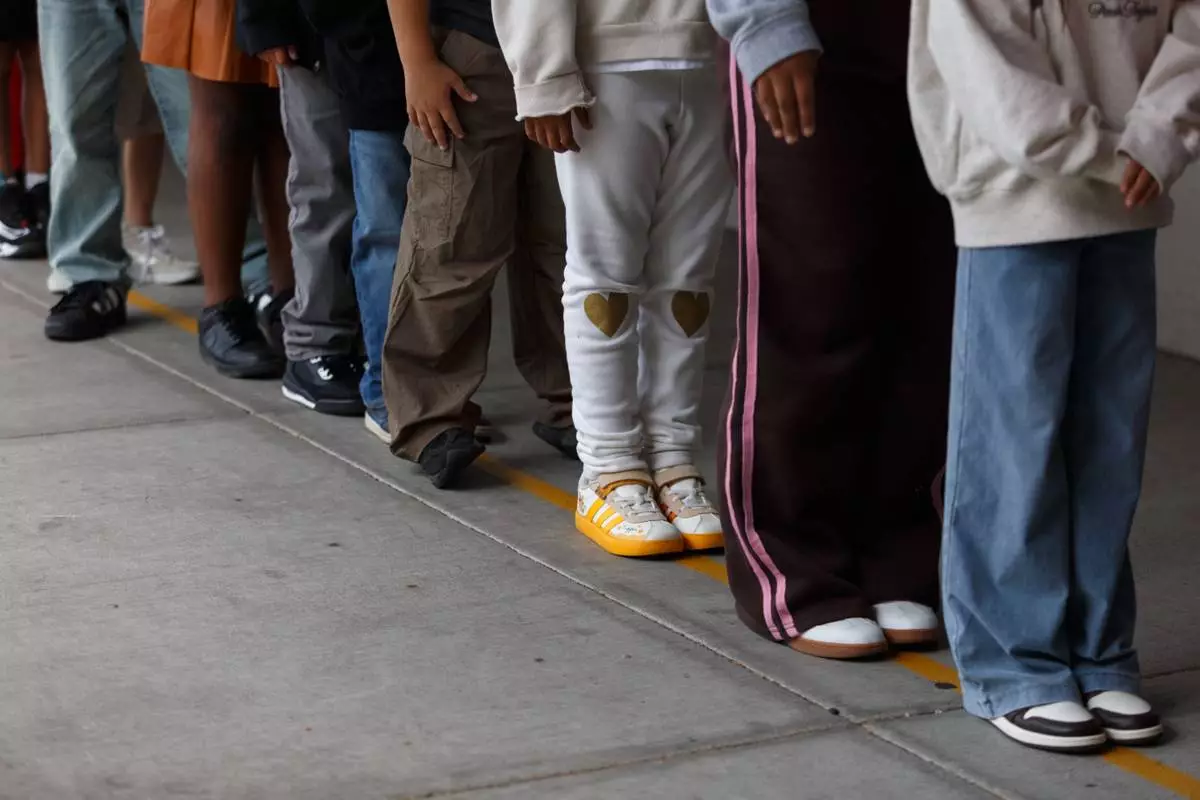
Fourth graders in Mrs. Johnson's class wait in line at Steffan Manor Elementary on Monday, Aug. 17, 2026, in Vallejo. (AP Photo/Juliana Yamada)
Fourth graders in Mrs. Johnson's class wait in line at Steffan Manor Elementary on Monday, Aug. 17, 2026, in Vallejo. (AP Photo/Juliana Yamada)

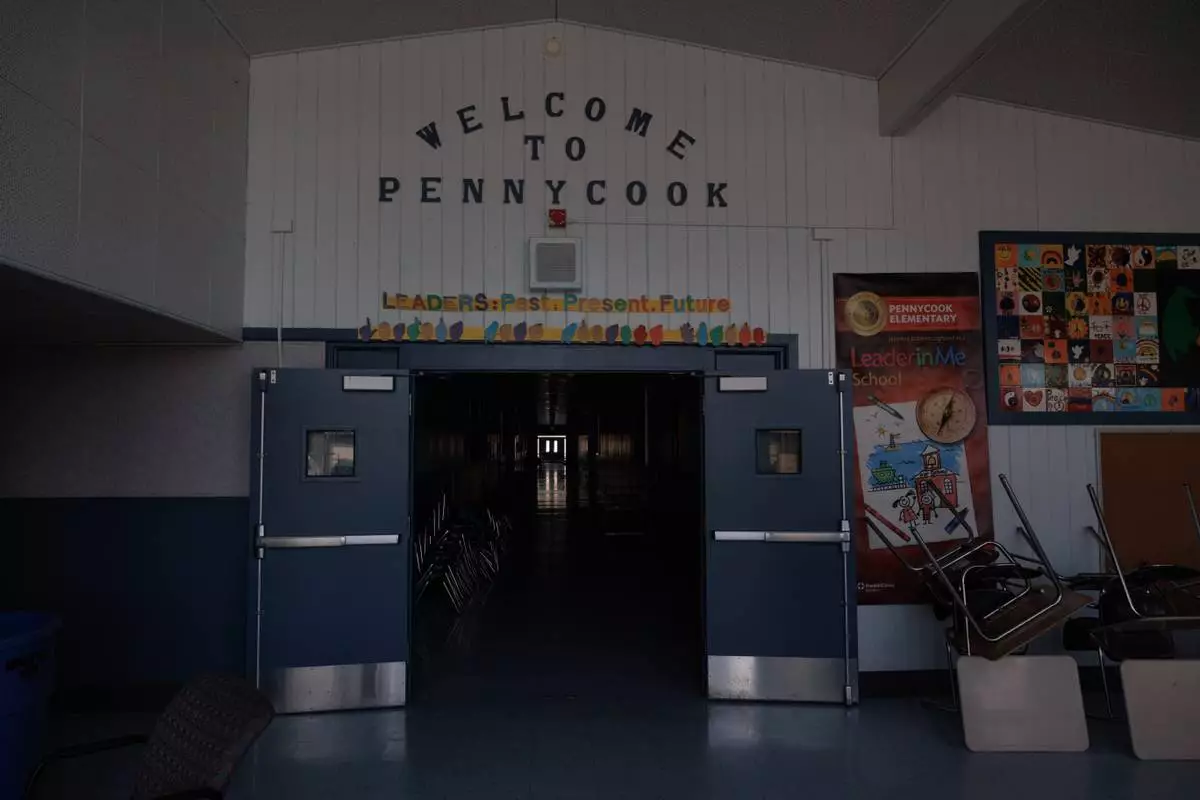
A dark and empty Pennycook Elementary School is shown on Tuesday, Aug. 18, 2026, in Vallejo. (AP Photo/Juliana Yamada)

A dark and empty Pennycook Elementary School is shown on Tuesday, Aug. 18, 2026, in Vallejo. (AP Photo/Juliana Yamada)

Iran’s targeting of its Gulf neighbors picked up Wednesday with attacks on Bahrain and on a Kuwaiti base used by U.S. forces, in an apparent retaliation for American fire a day earlier.

Iran-backed Houthis also fired two cruise missiles at Riyadh, following a major attack by the Saudi-backed coalition on the rebel group’s missile and drone capabilities.

Meanwhile, a state-run oil giant in the United Arab Emirates said one of its vessels was attacked while transiting the Strait of Hormuz.

Here is the latest news from the Middle East on Wednesday. Read our full coverage here.

The Saudi-led coalition fighting the Iranian-backed Houthis said Wednesday it launched a major air attack across the rebel-held territories in Yemen, which the Houthis said killed at least 17 people.

Maj. Gen. Turki al-Malki, the coalition spokesman, said the strikes launched Tuesday targeted Houthi tunnels to mountain warehouses that store ballistic missiles, and workshops to assemble and store drones. He said “60 legitimate military targets” were destroyed in the capital, Sanaa, and the provinces of Amran, Saada and Hodeida.

A spokesman for the Houthi-run health ministry, Anees al-Asbahi, said one strike hit a sponge factory in Hodeida, killing at least 15 people and wounding 15 others. Another strike on Saada killed at least two people and wounded four. In Sanaa, at least nine people were wounded in a strike on a shoe factory, al-Asbahi said.

Al-Malki said Saudi air defenses intercepted and destroyed two cruise missiles fired by the Houthis on Wednesday toward the capital, Riyadh. Saudi Arabia also sounded alerts in three cities in the kingdom's south, near the border with Yemen, but officials later said the potential danger had passed, without providing more details. The alerts have become a usual occurrence in recent months.

Wednesday's fighting came after Saudi-backed forces pulled out from areas around the Bab el-Mandeb Strait in a setback to the anti-Houthi camp. The withdrawal consolidated the Iran-backed rebels’ grip on the waterway that serves as a key route for global oil and commercial goods shipments.

The Iranian army claimed early Wednesday it targeted Ali Al Salem Air Base with drones, triggering air defense alerts in the oil-rich Gulf country for the first time in weeks.

The army claimed it attacked air defense systems, as well as drone and missile launch platforms, Iran’s state broadcaster reported.

U.S. Central Command, which oversees U.S. forces in the Middle East, did not immediately comment.

Kuwait’s army said Wednesday its air defenses intercepted drone attacks but did not immediately report damage. And Bahrain’s army reported its defense systems repelled a number of Iranian attacks.

The Abu Dhabi National Oil Company said one crew member was unaccounted for and 11 others were injured in the attack Tuesday. It did not identify the vessel or say who was behind the attack in a statement Wednesday.

Maritime incidents in and around the Strait of Hormuz have increased in recent weeks. Iran claimed attacks on vessels it said transited “unauthorized” routes, and said others hit navy mines.

A Panama-flagged gas tanker was also attacked earlier this week while transiting the strait, the Indian embassy in Oman said. One Indian crew member was unaccounted for and two more were injured.

Hundreds of people protested after 13 workers died in a weekend bus crash, demanding that the bus company's leaders resign, Iranian state media reported. Videos shared on social media showed people chanting anti-theocracy slogans, including “death to the dictator," in the town of Abdanan, a hot spot for anti-government protests in January.

The protest was among the first in Iran since thousands of people were killed earlier this year in a major government crackdown on dissent.

On Tuesday, Iranian authorities arrested protesters, including seven Kurdish people, among them a 15-year-old boy, according to the Hengaw Organization for Human Rights. The group said two detainees, including the boy, were later released, while the whereabouts of the others remained unknown.

Strikes early Wednesday killed a Palestinian in Gaza City and another in Deir al-Balah, in central Gaza, according to Shifa Hospital and Al-Aqsa Martyrs Hospital, where the bodies were taken.

Israel’s military said it targeted a Hamas militant in Gaza City but did not immediately comment on the other strike. At least 1,650 Palestinians have been killed in Gaza since Israel and Hamas reached a ceasefire deal last year, according to the Health Ministry, which is part of the Hamas-run government. Its figures are generally considered reliable by the international community.

This report will be updated throughout the day as new developments emerge.

Ezzidin and Magdy reported from Cairo, Egypt.

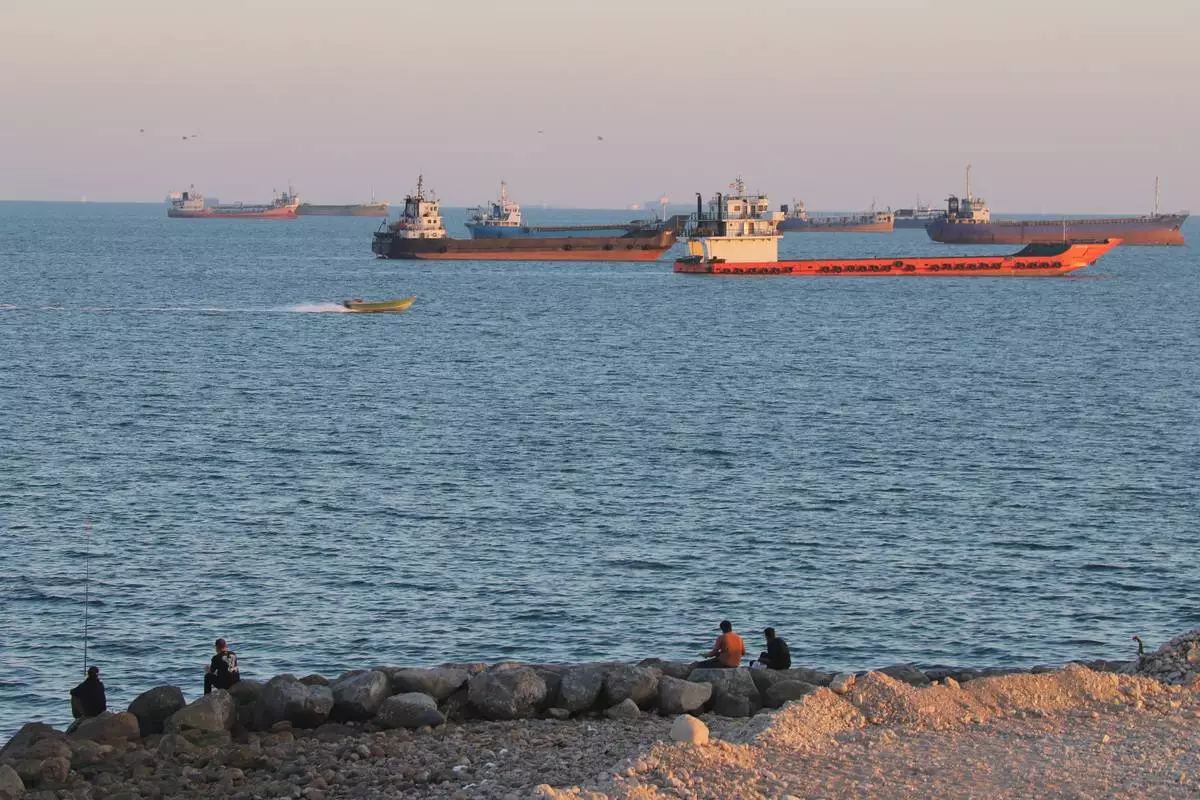
People sit on rocks along the shore as cargo ships lie at anchor in the Strait of Hormuz off Bandar Abbas, Iran, early Friday, Nov. 13, 2026. (Amirhosein Khorgooi/ISNA via AP)

People sit on rocks along the shore as cargo ships lie at anchor in the Strait of Hormuz off Bandar Abbas, Iran, early Friday, Nov. 13, 2026. (Amirhosein Khorgooi/ISNA via AP)

Recommended Articles