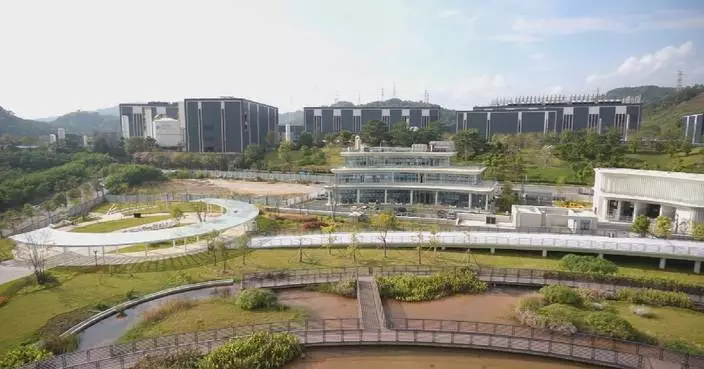
A growing number of global talents are choosing to seek out new opportunities in south China's Shenzhen, which has transformed from a humble fishing town into a bustling modern metropolis in the space of just a few short decades.
Shenzhen is seen as a pioneering city in China's reform and opening-up drive. After being designated as one of the country's first special economic zones in 1980, it quickly became a major manufacturing center before now evolving into a hub of high-tech innovation.
The city's growing international appeal is becoming increasingly clearer as more and more foreigners opt to build their careers and make Shenzhen their home.
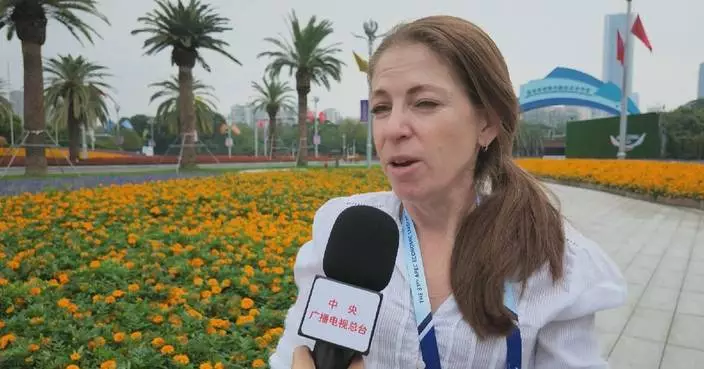
Among them is Australian entrepreneur Jen Duncombe, who previously ran a business in Hong Kong for 13 years before shutting it down. She was then lured to nearby Shenzhen, a city she believes is welcoming and full of opportunity.
As she plans her next venture, Duncombe is now working on building up a social circle that mixes more Chinese and foreign friends, and believes Shenzhen offers the perfect environment to work and live.
"It's just a really good mix. We've got the technology and efficiency -- but then we've also got these big, wide, quiet spaces, a lot of green," she said.
The transformation from a small fishing town into a thriving business hub has continued to attract sizable investment and see more companies, particularly those in the tech sector, set up a base in the city. Remarkably, the GDP of the city's Nanshan District -- seen as a hub for innovation -- has skyrocketed to more than one trillion yuan a year -- nearly 150 billion U.S. dollars.
With an eye on the future, many educators from around the world are also seeing the city as a great destination for work.
British national Alaine Christian was previously in Dubai but found her way to Shenzhen, where she is now an assistant headteacher at the Harrow International School.
The prestigious school opened in Shenzhen just six years ago, and Christian joined the staff to develop its international baccalaureate program, adding to the city's reputation for top-flight education.
"When I saw the job, I had to look at where Shenzhen was. Then, you go down the rabbit hole and actually the more I researched it, the more I'm like 'wow, look at this architecture, look at this infrastructure,'" said Christian, who added that the city "blew her away."
Shenzhen's rise -- from mudflats and fishing boats into a booming economic hub with towering skyscrapers -- was driven by a vision of opening China up to the world and embracing foreign investment.
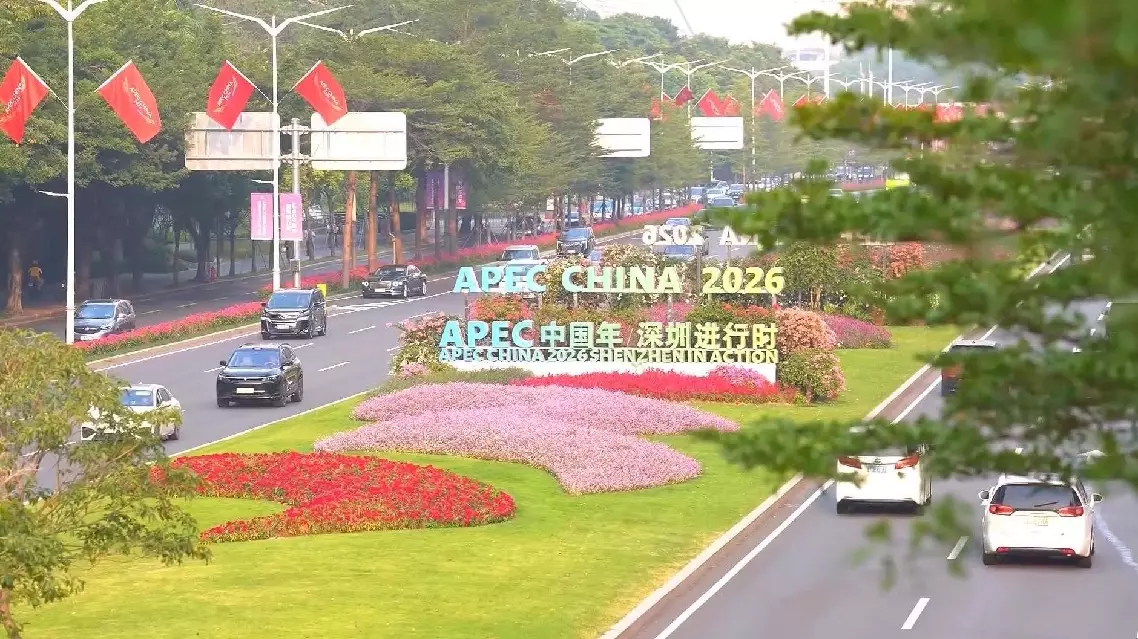
Shenzhen was in the global spotlight this week as the city played host to the 33rd Asia-Pacific Economic Cooperation (APEC) Economic Leaders' Meeting, gathering leaders from the 21 APEC member economies.

Growing number of global talents choose to make Shenzhen home
Chinese President Xi Jinping's keynote speech at the opening ceremony of the Asia-Pacific Economic Cooperation (APEC) CEO Summit has drawn positive reactions from international business leaders and scholars, who say it provides important guidance for advancing Asia-Pacific cooperation and building a shared future for the region.
Xi delivered the speech titled "Forging Ahead with Resolve Toward a Bright Future for the Asia-Pacific" at the APEC CEO Summit 2026 on Wednesday in Shenzhen, south China's Guangdong Province.
He called for building a bridge of openness and cooperation so that the region can prosper together, urging support for free and open trade and investment as well as efforts to keep global industrial and supply chains stable and smooth.
International observers said that the speech underscored China's important role in promoting regional cooperation and bringing economies together amid growing global uncertainties.
"I think President Xi is demonstrating the importance that China's playing in bringing the economies of the Asia-Pacific region and others to the table. And you see this organization represents 62 percent of GDP in Asia and the Pacific, there's over 2,000 business leaders, there's non-APEC economies attending. So it's quite a remarkable event," said Robert Hanlon, director and principal investigator of Canada and the Asia Pacific Policy Project (CAPPP) at Thompson Rivers University.
They also highlighted the opportunities for international businesses through closer cooperation with China, saying that openness and partnership remain essential to the region's economic prospects and the country's development offers valuable examples for others in the Asia-Pacific region.
"President Xi Jinping has very effectively crystallized some good points about the future prospects of doing business in the world, and in particular in partnership with China. I think the messages are very clear, the world needs openness and China is open for business," said Lawrence Loh, director of Center for Governance and Sustainability, National University of Singapore.
"It was actually a very encouraging speech, I mean, when you look at this success that China has had, especially in this region, the Greater Bay Area region, in developing the infrastructure, the commitment to technology, the workforce, it's really a success story, and the message this morning was, this is one of many examples that China has a long-term vision for innovation and especially development and the building of the infrastructure needed," said Annette Gregg, CEO of World Trade Centers Association.
On trade, representatives welcomed China's continued support for multilateralism and free and open markets, saying that rejecting protectionism and trade restrictions is important for sustaining regional economic growth.
"His remarks are in keeping with the leadership China has shown in relation to our multilateral trade organizations and also to ensure that we have free and open trading markets. The ability to distill in a short period the desire to reject tariffs and other decisions by external countries to a restricted trade environment was very welcome," said Philip Dalidakis, Australia's representative to APEC Business Advisory Council.
The two-day Asia-Pacific Economic Cooperation (APEC) CEO Summit 2026 drew more than 2,000 representatives from 21 APEC economies and 13 non-APEC economies, including Britain, France, Germany and Switzerland.
Held annually since 1996, the event serves as the highest-level platform for leaders of APEC economies and business representatives to compare notes and advance regional economic development.
Xi's speech at APEC CEO Summit offers guidance for advancing Asia-Pacific cooperation: int’l observers