Skip to Content Facebook Feature Image

Shenzhen offers solutions for tech-enabled low-carbon growth among APEC economies

China

China

China

Shenzhen offers solutions for tech-enabled low-carbon growth among APEC economies

2026-11-19 21:14 Last Updated At:21:48

Shenzhen is turning local low-carbon technology scenarios into Asia-Pacific cooperation proposals, using Asia-Pacific Economic Cooperation (APEC) platforms to share "Shenzhen samples" and "Shenzhen solutions" on green development.

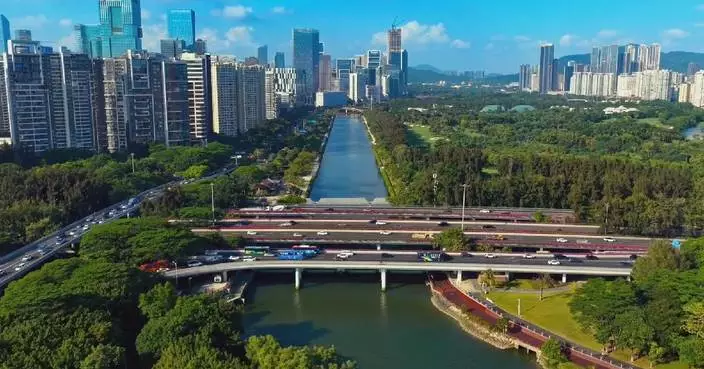
As the 2026 APEC Economic Leaders' Week is currently underway in Shenzhen City, south China's Guangdong Province, the city is showcasing its latest progress in low-carbon and green development.

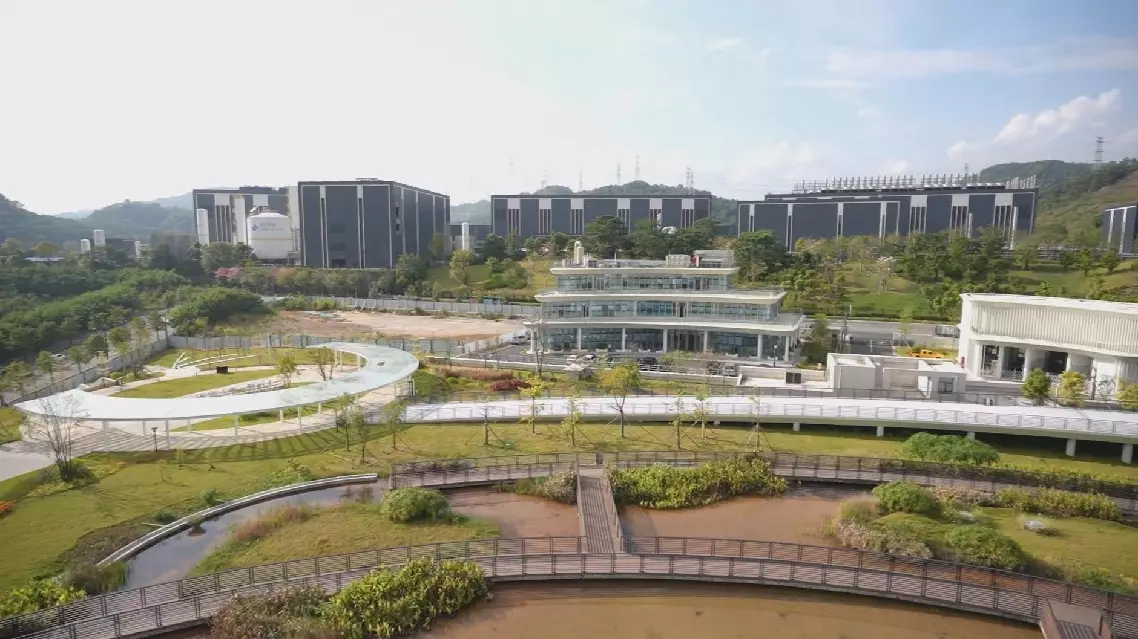
In Longhua District, Zhangge City Park hides a 40,000-square-meter wastewater treatment plant underground, the first of its kind in China to apply a HarmonyOS-based smart system. Developed by tech giant Huawei, HarmonyOS, or Hongmeng in Chinese, is an open-source operating system designed for various devices and scenarios, including intelligent screens, tablets, wearables and cars. It was first launched in August 2019.

Tian Yangeng, general manager of the Zhangge Comprehensive Water Quality Purification Plant, said that the biggest challenge of operating such an underground structure is coordinating the load, waterproofing, drainage, ventilation, odor control and safety management. The smart system has helped lower costs and improve energy efficiency.

"On the left is an AI recognition camera that measures the concentration of alum floc. The algorithm in this unit calculates the defluorination dose. With this smart system, we can cut our dose by at least 20 percent, which greatly lowers our chemical costs," said Tian.

Technology-enabled low-carbon development is moving from Shenzhen cases to the wider Asia-Pacific region. In September, the Seminar on APEC Technologies Empower Low Carbon Action (TELCA) was held in Longhua, with more than 40 policy and industry representatives from 18 APEC economies visiting local projects.

One showcased solution is a household green power system. Solar roof tiles generate electricity and store it in a portable unit similar to a power bank, while an AI management system balances supply and demand across peak and off-peak hours.

"Some APEC members have areas with less-developed municipal infrastructure. Portable energy storage products like this can meet their daily needs. After seeing it, they were very excited and asked how to place orders and how to serve places that may not yet have grid access," said Fei Dan, marketing head of solar roof tile products of a Shenzhen-based company.

All these cases show that Shenzhen is connecting local technology scenarios with APEC's low-carbon cooperation platform.

"One of the outcomes of the seminar is a report on APEC technology-enabled low-carbon action project, which will soon be released on the official website of APEC. So far, we have linked resources from 20 economies and helped local enterprises reach cooperation intentions worthy more than 50 billion yuan (about 7.5 billion U.S. dollars) with APEC economies," said Wu Wei, an official from the Longhua International Cooperation Center (LICC).
Shenzhen offers solutions for tech-enabled low-carbon growth among APEC economies

Shenzhen offers solutions for tech-enabled low-carbon growth among APEC economies
A growing number of global talents are choosing to seek out new opportunities in south China's Shenzhen, which has transformed from a humble fishing town into a bustling modern metropolis in the space of just a few short decades.

Shenzhen is seen as a pioneering city in China's reform and opening-up drive. After being designated as one of the country's first special economic zones in 1980, it quickly became a major manufacturing center before now evolving into a hub of high-tech innovation.

The city's growing international appeal is becoming increasingly clearer as more and more foreigners opt to build their careers and make Shenzhen their home.

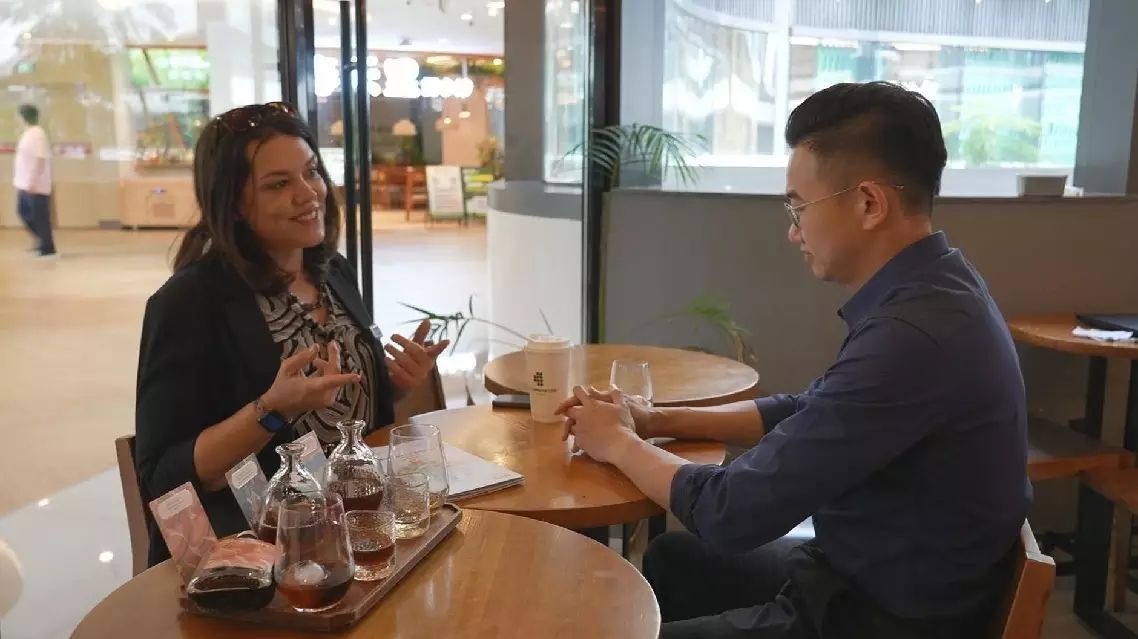
Among them is Australian entrepreneur Jen Duncombe, who previously ran a business in Hong Kong for 13 years before shutting it down. She was then lured to nearby Shenzhen, a city she believes is welcoming and full of opportunity.

As she plans her next venture, Duncombe is now working on building up a social circle that mixes more Chinese and foreign friends, and believes Shenzhen offers the perfect environment to work and live.

"It's just a really good mix. We've got the technology and efficiency -- but then we've also got these big, wide, quiet spaces, a lot of green," she said.

The transformation from a small fishing town into a thriving business hub has continued to attract sizable investment and see more companies, particularly those in the tech sector, set up a base in the city. Remarkably, the GDP of the city's Nanshan District -- seen as a hub for innovation -- has skyrocketed to more than one trillion yuan a year -- nearly 150 billion U.S. dollars.

With an eye on the future, many educators from around the world are also seeing the city as a great destination for work.

British national Alaine Christian was previously in Dubai but found her way to Shenzhen, where she is now an assistant headteacher at the Harrow International School.

The prestigious school opened in Shenzhen just six years ago, and Christian joined the staff to develop its international baccalaureate program, adding to the city's reputation for top-flight education.

"When I saw the job, I had to look at where Shenzhen was. Then, you go down the rabbit hole and actually the more I researched it, the more I'm like 'wow, look at this architecture, look at this infrastructure,'" said Christian, who added that the city "blew her away."

Shenzhen's rise -- from mudflats and fishing boats into a booming economic hub with towering skyscrapers -- was driven by a vision of opening China up to the world and embracing foreign investment.

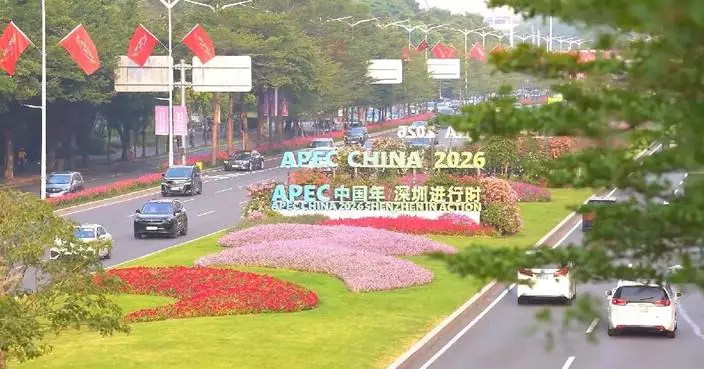
Shenzhen was in the global spotlight this week as the city played host to the 33rd Asia-Pacific Economic Cooperation (APEC) Economic Leaders' Meeting, gathering leaders from the 21 APEC member economies.

Growing number of global talents choose to make Shenzhen home

Growing number of global talents choose to make Shenzhen home

Recommended Articles