Iran is willing to end the current state of "neither war nor peace" through negotiations with the United States, and its proposed two-day plan to reopen the Strait of Hormuz remains on the table, Iranian Foreign Minister Seyed Abbas Araghchi has said.
In a recent interview with Iranian media, Araghchi said that Tehran seeks a lasting agreement through diplomacy that would safeguard its national interests and prevent another war, on condition that the United States clearly expresses its willingness to reach an agreement and takes necessary confidence-building measures.
Iran's proposed plan to cease hostilities and reopen the strait initially envisaged a seven-day implementation period, which was later shortened to two days.
According to Araghchi, the plan stipulates that Washington fulfills its commitments on the first day, including lifting recently imposed sanctions against Iran, and Tehran will reopen the strait and begin negotiations with Washington on the second day.
Washington did not respond positively to the submitted plan, Araghchi said, adding that the proposal remains valid if the United States is genuinely serious about reaching an agreement.
Iran's seven conditions for reopening the strait must be fulfilled, but Tehran is prepared to discuss their implementation and timetable, even if the two-day period is further shortened, he said.
Iran is also ready to hold expert-level talks with the United States on the details of the proposal, provided that Washington first revises its position and takes the necessary confidence-building measures, he added.
Regarding regional mediation efforts, Araghchi said that Qatar and Pakistan continue to convey messages, exchange views and put forward proposals between Iran and the United States, and that the existing communication channels remain active. Iran currently sees no reason to replace the mediators or add new ones, he said.
Araghchi stressed that lasting regional peace must be inclusive, and that it is impossible for some countries to enjoy peace and development while others continue to face sanctions, economic pressure and insecurity.
U.S. President Donald Trump said Friday that Iran is interested in reaching an agreement with the United States but remains unwilling to accept terms Washington considers acceptable.
"Iran wants to make a deal, but they don't want to make a deal that's acceptable to me," Trump told reporters at a White House press conference.
Trump's special envoys Steve Witkoff and Jared Kushner met with senior Qatari officials in Berlin on Thursday to discuss mediation efforts, U.S. online news outlet Axios reported.
In a telephone interview with Axios on Thursday, Trump suggested he would not make a decision on his next steps regarding Iran until the new year.
Iran's Parliament Speaker Mohammad Baqer Qalibaf said Monday that peace will not be restored to the West Asia region without ending the war in Lebanon.
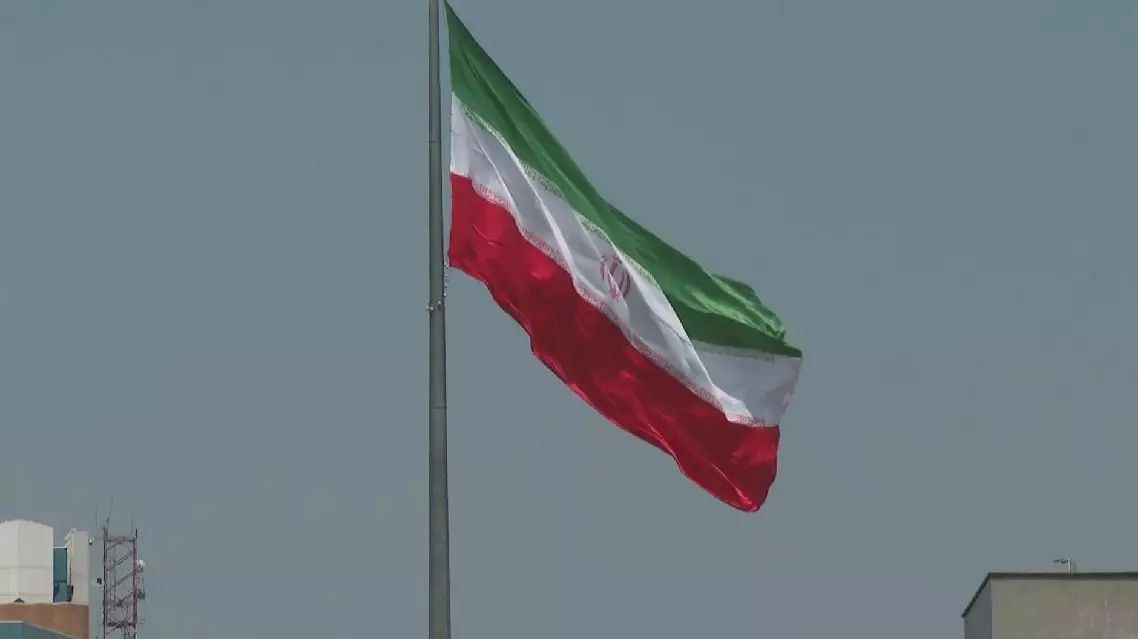
Iranian FM says Tehran ready for talks with U.S. on plan to reopen Strait of Hormuz
Japanese civic groups on Friday submitted a petition bearing 47,000 signatures to the Defense Ministry, opposing Japan's acquisition of nuclear-powered submarines and calling on the government to abandon the plan.
At a press conference following the submission, representatives of the groups expressed concern that the government's consideration of nuclear-powered submarines, alongside moves to create exceptions to the non-introduction principle of Japan's Three Non-Nuclear Principles, could fundamentally alter the country's status as a non-nuclear-weapon state.
This move by the Japanese government violates the pacifist concept of the Japanese Constitution and must be stopped, they noted.
"This would be a serious departure from the pacifist principles enshrined in Japan's Constitution and its 'exclusively defense-oriented policy.' Nuclear-powered submarines are built to enable long-duration, long-range voyages. If Japan truly adheres to the 'exclusively defense-oriented policy,' why does it need to travel such long distances?" said Akira Kawasaki, a Japanese social activist.
The petitioners emphasized that this not only runs counter to Japan's fundamental commitment to peace, but also fails to provide Japan with any substantive benefits.
"I don't think Japan should possess nuclear-powered submarines. There are many reasons for this, but the most important is that it would be a serious departure from pacifism. I don't think this would bring any positive benefits to Japan," said Asano Hideo, the coordinator of Japan Campaign to Abolish Nuclear Weapons.
Beyond the submarine issue, petitioners have also voiced alarm over broader shifts in Tokyo's nuclear policy, warning against any move to weaken the nation's long-standing anti-nuclear pledges.
"[The Japanese government's] revision of the long-standing Three Non-Nuclear Principles could place a heavy burden on the public and even cause chaos. I believe this issue should be considered carefully," said Sato Kazuo, a Japanese journalist.
Meanwhile, some people are criticizing the government's spending priorities, arguing that taxpayer money should go toward easing the financial strain on ordinary citizens rather than expanding defense capabilities.
"I think the government has completely messed up where it should spend money. If so much money is invested in the defense, then more funds should be allocated to help ordinary people who are just barely maintaining a normal life, and more assistance should also be provided to those who are truly in financial difficulty. I think the funds should be used in these areas," said an activity participant.
In October, Japanese Prime Minister Sanae Takaichi told parliament that the government would hold "concrete and realistic discussions" on the possibility of the Self-Defense Forces acquiring nuclear-powered submarines.
Meanwhile, Japanese media recently have reported that the government is considering making exceptions to the Three Non-Nuclear Principles, allowing nuclear weapons to be brought into Japan in emergencies, when revising the National Security Strategy, one of the country's three key security policy documents, by the end of this year.
The developments have sparked widespread concern and opposition among the public and civic groups.
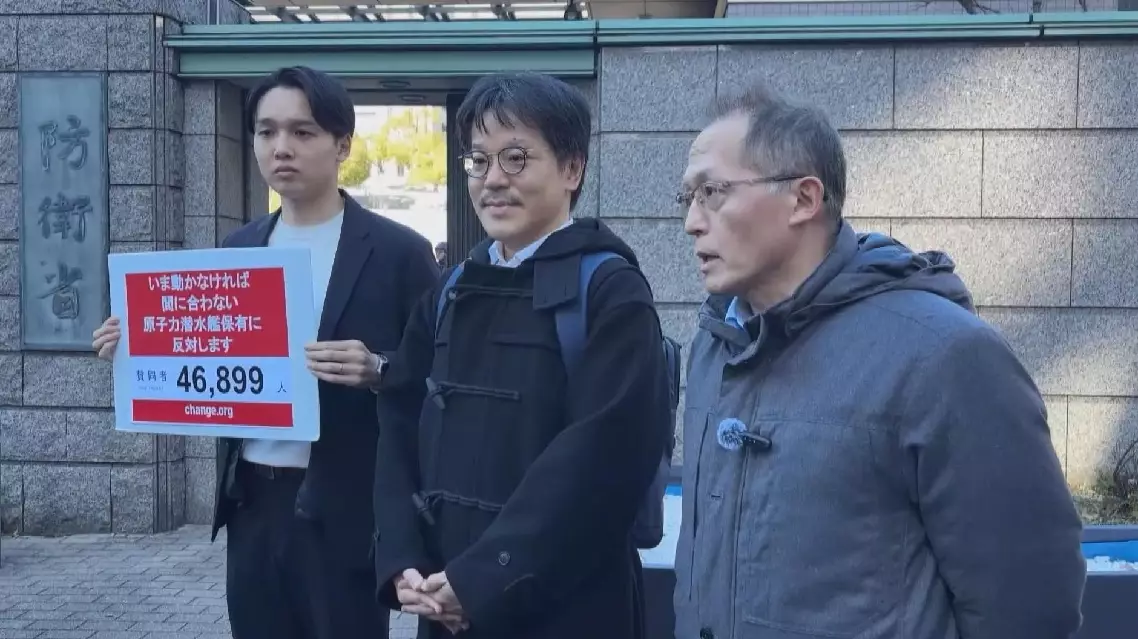
Tens of thousands of Japanese petition against having nuclear-powered submarines