Business owners and innovators say China provides a vast platform of innovation for businesspeople from home and abroad, offering a reliable supply chain alongside networking and matchmaking events.
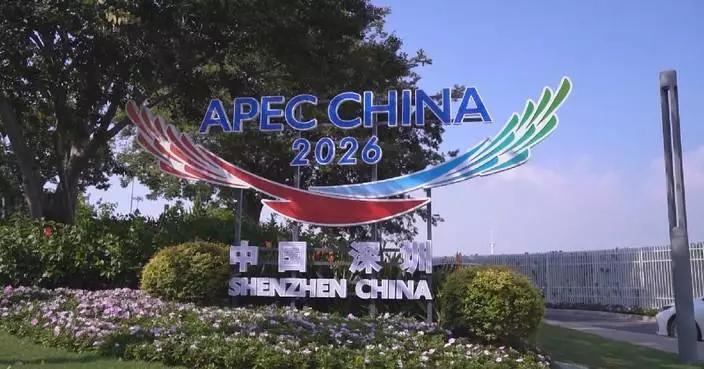
The Asia-Pacific Economic Cooperation (APEC) meetings have just wrapped up in the Chinese tech hub of Shenzhen, turning high-level gatherings into practical business leads for visiting founders and executives.
Over the past couple of days, TroubleMaker, a product development community in Huaqiangbei's mega electronics marketplace, has seen more overseas visitors arriving to turn those connections into collaboration opportunities.
TroubleMaker founder Henk Werner said that after traveling to many places around the world, he finds Shenzhen's innovation ecosystem to be the most comprehensive. From sourcing quality electronic components and linking up with local factories to scaling into mass production and reaching buyers at home and abroad, it lets businesses move quickly across the entire cycle.
"We have helped thousands of teams getting access to Chinese engineering and manufacturing to make their product idea come true. And we have helped countless teams from all around the world who need weeks to access, to acquire their components, and we get it in the same day here in Huaqiangbei," he said.
In addition to offering a reliable supply chain, China is also an ideal place for networking and matchmaking. A delegation of eight enterprises from central China's Henan Province attended the APEC meetings, bringing together firms from sectors such as advanced materials, high-end equipment, and aviation logistics.
One of them is Censtar, a supplier of energy equipment and services. Its general manager said the company has taken advantage of the event to connect with potential partners.
"Through this event, we have established extensive cooperative relationships with partners across the supply chain. As of now, about 20 to 30 companies have shown interest in cooperating with us," said Yu Wei, general manager of Censtar.
Noting that the APEC meetings have deepened the enterprise's understanding of markets across geographic locations, Yu explained that island regions are seeking microgrid solutions, while manufacturing-intensive areas are looking to co-develop energy storage technologies.
Overseas enterprises are particularly drawn to China's diverse range of real-world application scenarios -- environments where their technologies can be thoroughly tested and refined, while Chinese firms, in turn, gain access to broader markets, he said.
"Through the APEC meetings, we have gained insight into new demands for energy transition within the Asia-Pacific region, which will help us better support the region's shift toward a greener energy future," he said.
Another attending company is China Railway Engineering Equipment Group (CREG). Its deputy chief engineer said the firm aims to built itself from a manufacturer to a creator.
"By leveraging technology and innovation, we are shifting our focus from merely fulfilling orders, to creating, transforming, and leading the market -- with a goal of providing more Chinese solutions for global infrastructure development," said He Fei, deputy chief engineer of China Railway Engineering Equipment Group (CREG).

APEC sparks new partnerships, market insights for business leaders in China