As Christmas markets light up Budapest, Hungary, the high cost of living caused by inflation is weighing on households.
The holiday season is shining a spotlight on whether the country's fragile economic recovery, after three years of stagnation, will bring relief to ordinary families.
The lights, food and the festive atmosphere of Hungary's Christmas markets bring many people together. But behind the decorations, the rising costs of living is changing how families approach the holidays.
For Marta Petrus, a mother of six, every purchase is a financial calculation.
"We honestly hoped things would get easier, but they haven't. Prices are extremely high, and everything keeps getting more expensive," said Marta.
Marta is a teacher and a school social worker. Her husband works too, while together they also run a business. Yet supporting six children means even basic groceries take a significant share of their income.
"For our family, one kilogram of chicken breast is nowhere near enough. And that already costs more than six U.S. dollars," she said.
For families like Marta's, the lights, food and gifts available at the Christmas market are all part of the magic.
But some things are out of reach. A traditional Hungarian meal in Budapest can cost around 17 dollars, while a traditional cake starts at about nine dollars, reflecting a 36-percent rise in food prices over six years.
"We honestly don't go to the Christmas markets to spend money. We usually just look around. Maybe we'll have a hot chocolate, but that's about it," said Marta.
At Budapest's main Christmas market, vendors have also experienced a financial hit this year.
"Everything is expensive. We also have to pay high rental fees for our stalls, and those costs are reflected in the prices we charge customers," said Zora, a vendor.
Hungary's inflation peaked this year at 2.1 percent, and while prices have since stabilized, economists say a full recovery after around three years of stagnation is both fragile and in the early stages.
At Budapest's Central Market Hall, where people shop for their everyday meals, the cost of putting food on the table is a reminder that the pressure on household budgets doesn't end with Christmas.
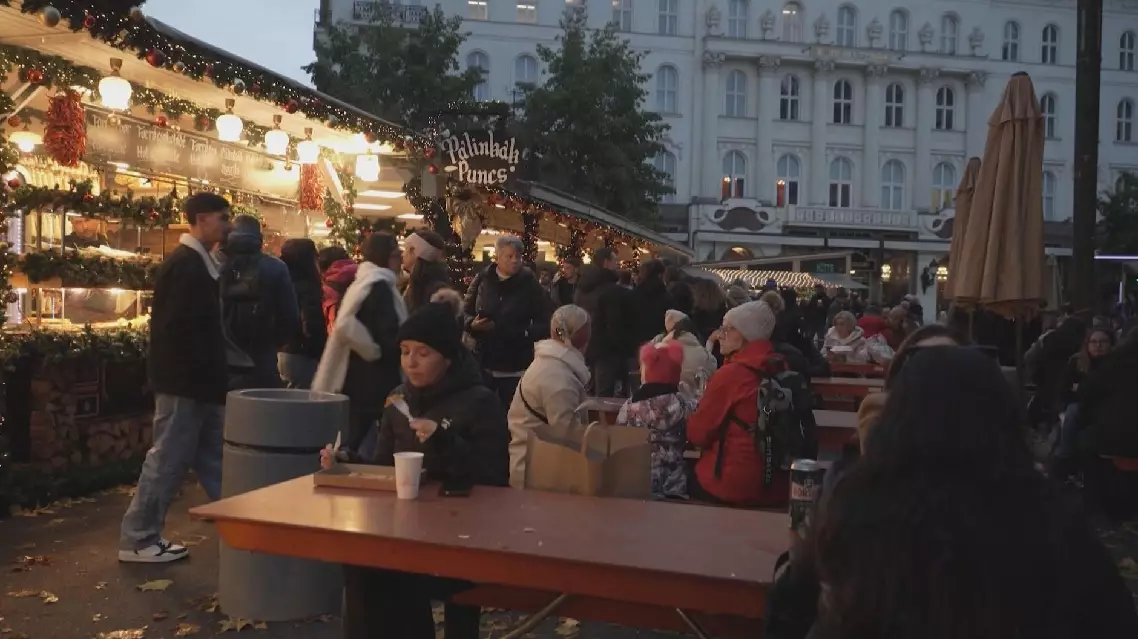
High prices triggered by inflation dampen Hungarian families' Christmas spirit
Business leaders and diplomats praised the focus on openness, dialogue, and cooperation at the 2026 Asia-Pacific Economic Cooperation (APEC) Economic Leaders' Week in the southern Chinese tech hub of Shenzhen, saying the APEC's commitment to openness will help bolster global trade stability.
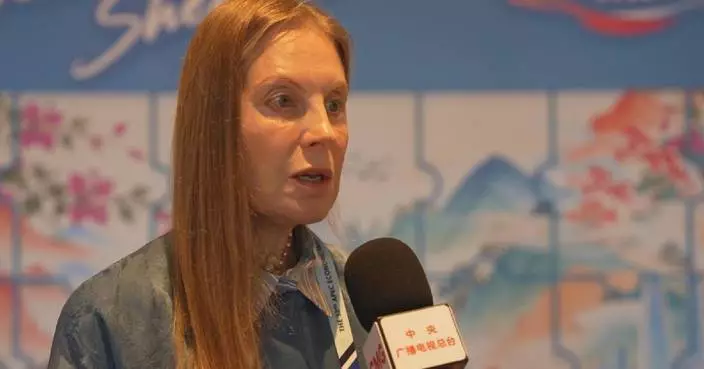
Speaking on Saturday on the sidelines of the Central China Investment and Trade Expo in Zhengzhou, capital city of central China's Henan Province, representatives from the United States, Russia, Kenya, and Poland said the consensus-building at the APEC Economic Leaders' Week could create new opportunities for economic cooperation with China.
"So it is important when President Xi and President Trump have a good meeting that sends positive signals to the business community. Of course, the U.S. and China are the world's two largest economies. We already trade a lot with each other. And so that gives us confidence to believe that things will continue on. And there will be opportunities for American companies in China," said Michael Hart, president of the American Chamber of Commerce in China.
Tatiana Monaghan, General Secretary of the International Chamber of Commerce (ICC) Russia, said the focus on trade, connectivity, innovation, and development is practical and beneficial for business.
"The most important signal is that all 21 economies adopted the Shenzhen leaders' declaration by consensus, even in a difficult, global environment. The focus on trade, connectivity, innovation, and development is very practical for business," said Monaghan.
Kenyan Ambassador to China Willy Kipkorir Bett said that high-level engagement among major global powers signals a closer collaboration and international trade.
"And the people who have the highest influence globally are the three. When the three meet, the indication or the signal to the world is that we are going to have a more collaborative, more multilateralism, and more international trade happening now. And there's going to be more peace in the world, hopefully," said Bett.
Dawid Lasek, chairman of the Association of the Carpathian Euroregion Poland, welcomed the efforts on promoting a peaceful, multilateral world, saying partners are ready to cooperate to positively influence global markets and ties with China.
"We need to live in a peaceful, multilateral world. So that's why any path for the peaceful future is what we need the most right now. So we are happy. We are ready to cooperate, to [make] positive influence on the global market and the cooperation with China," said Lasek.
The Central China Investment and Trade Expo, which kicked off on Saturday, continues through Monday.
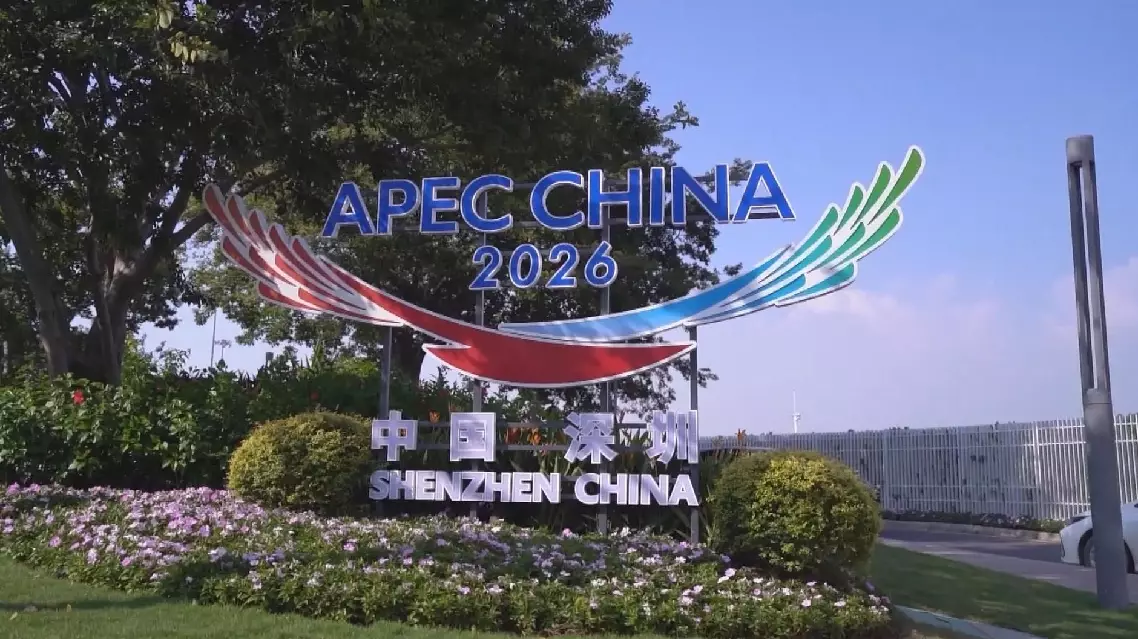
APEC's push for openness, dialogue boosts global trade confidence: business leaders