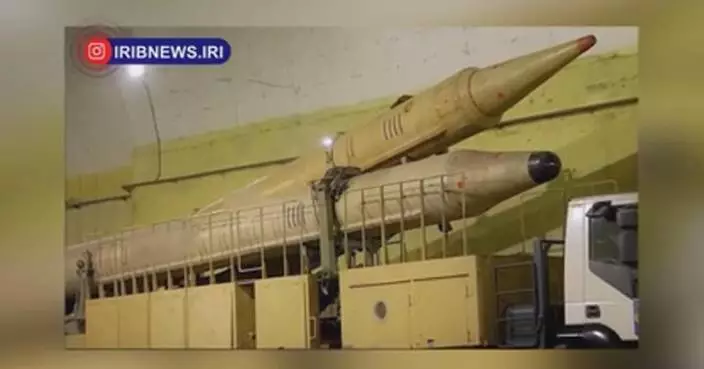
Iran's President Masoud Pezeshkian said on Saturday the country is engaged in a "silent" economic war, "which is far more difficult than a conflict involving the launching of missiles and destruction," according to the official news agency IRNA.
He said at a conference in Tehran that the "enemy" had expected to cause a famine in the country and a shortage of goods in the domestic market but had failed to achieve its objectives, adding that Iran's "wheels of production continue to turn," while stressing that the economic war waged by the United States was certainly not simple.
He added that Iran's security and military forces had responded with strength, while calling for greater national unity and solidarity in the face of the "enemy's invasions and unequal war."
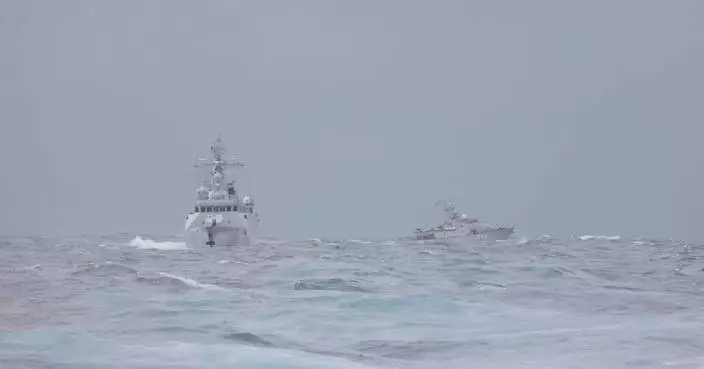
Separately, Iranian Interior Ministry spokesman Ali Zeinivand on Saturday pointed to the U.S. anti-Iran naval blockade as well as land and aerial restrictions, noting that the restrictions have failed to stop the country's trade transactions.
He said the Interior Ministry is consulting with neighboring countries and following up on the border and trade issues, expressing hope that the existing problems would be resolved. He added that the temporary closures of the borders with neighbors have not caused serious disruptions in the country's border transactions.
On Feb. 28, Israel and the United States launched joint attacks on Tehran and other Iranian cities. Iran responded with waves of missile and drone attacks targeting Israel and U.S. bases and assets in the region, and tightened its grip on the Strait of Hormuz. The United States has also imposed a naval blockade on Iran and intensified its economic pressure on the country.
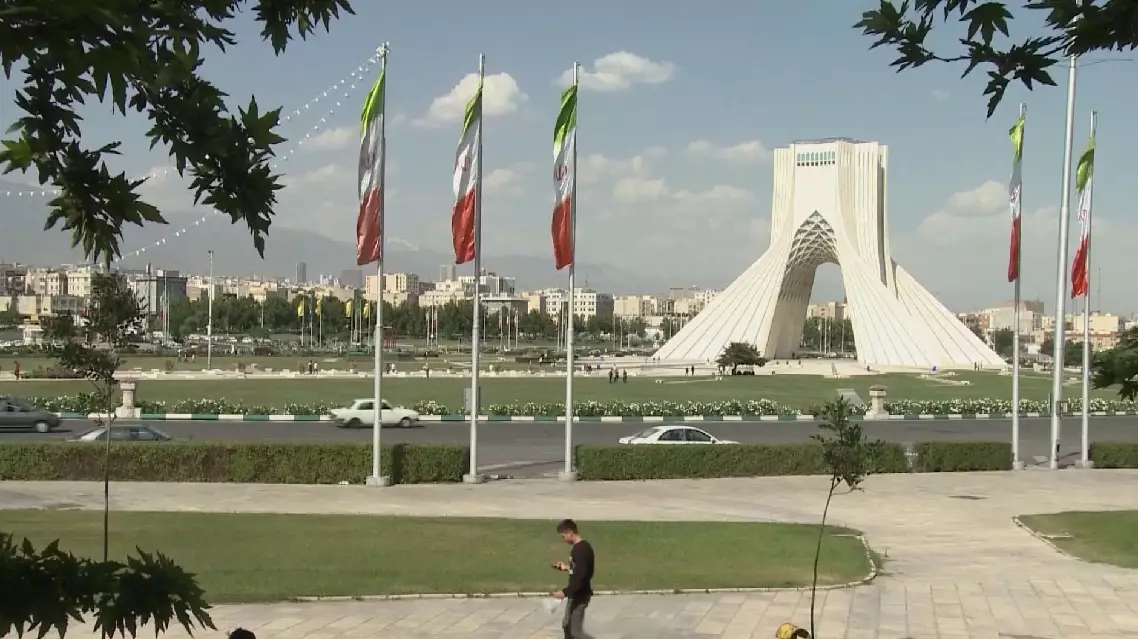
Iran engages in "silent" economic war: president
Amid rising global trade protectionism and geopolitical conflicts that are disrupting the industrial and supply chains, China's important proposal of building an Asia-Pacific community has charted the course for Asia-Pacific cooperation, a Russian business figure said.
Chinese President Xi Jinping chaired the 33rd Asia-Pacific Economic Cooperation (APEC) Economic Leaders' Meeting in the southern metropolis of Shenzhen on Thursday, calling for further efforts to build an Asia-Pacific community and write a new chapter of the Asia-Pacific miracle.
In his speech, Xi stressed that building an Asia-Pacific community requires solidarity and mutual assistance, openness and integration, enterprise and innovation, as well as inclusive development.
Tatiana Monaghan, secretary-general of the Russian National Committee of the International Chamber of Commerce or ICC Russia, said in an exclusive interview with China Media Group that these requirements provide guidance for economic cooperation in the Asia-Pacific.
"The four ideas solidarity, openness, innovation and inclusiveness aren't just words for diplomats. For companies, they mean very practical things, shared rules, open markets, new technologies and growth that reaches smaller businesses too," she said.
During this year's APEC meetings, China announced a number of new practical measures in support of Asia-Pacific cooperation, including funding APEC practical cooperation, establishing a research center for an Asia-Pacific community, setting up cooperation institutions in areas such as digital technology, cross-border data flows, clean energy and small and medium-sized enterprise development, and supporting the establishment of a global alliance for bay area economic cooperation.
Monaghan noted that these concrete actions will provide a strong boost to deepening and solidifying the building of an Asia-Pacific community.
"We welcome these initiatives greatly. That's the fund for practical cooperation. The research center gives the Asian Pacific community vision practical solutions. Funding the practical cooperation gives more opportunities to projects," she said.
This year marks the 20th anniversary of the proposal of the Free Trade Area of the Asia-Pacific (FTAAP) vision. China advocates the concept of open regionalism, works to bring APEC members together and revitalizes the FTAAP process.
The APEC Economic Leaders' Meeting this year adopted the APEC Trade Digitalization Cooperation Framework (2027-2030), an important measure to promote trade facilitation in the region and support FTAAP building.
Monaghan said this will bring tangible benefits to Russian companies.
"The Free Trade Area of Asia Pacific is a long-term goal. China has proposed outcome documents on it as well as on connectivity, artificial intelligence and the digital economy. And China opened its market wider to reform rules, regulations and standards. When rules work together across borders, Russian companies can sell to several markets on the same terms," she said.
Born amid the waves of economic globalization, APEC has been one of the world's most dynamic engines of growth. Today, the APEC economies are home to about 40 percent of the world's population, and account for more than 60 percent of global GDP and nearly half of global trade.

China's proposals deepen Asia-Pacific community building: Russian business figure