Skip to Content Facebook Feature Image

Gaza’s humanitarian crisis forces children out of school, into hard labor

China

China

China

Gaza’s humanitarian crisis forces children out of school, into hard labor

2026-11-22 18:36 Last Updated At:18:47

The war in Gaza has forced tens of thousands of Palestinian children out of school and into hard labor to help support their families, leaving many struggling to survive amid widespread displacement and devastation.

The conflict has driven a deepening humanitarian crisis that leaves children without the basic rights to life, education, health, and safety that United Nations member states are committed to upholding.

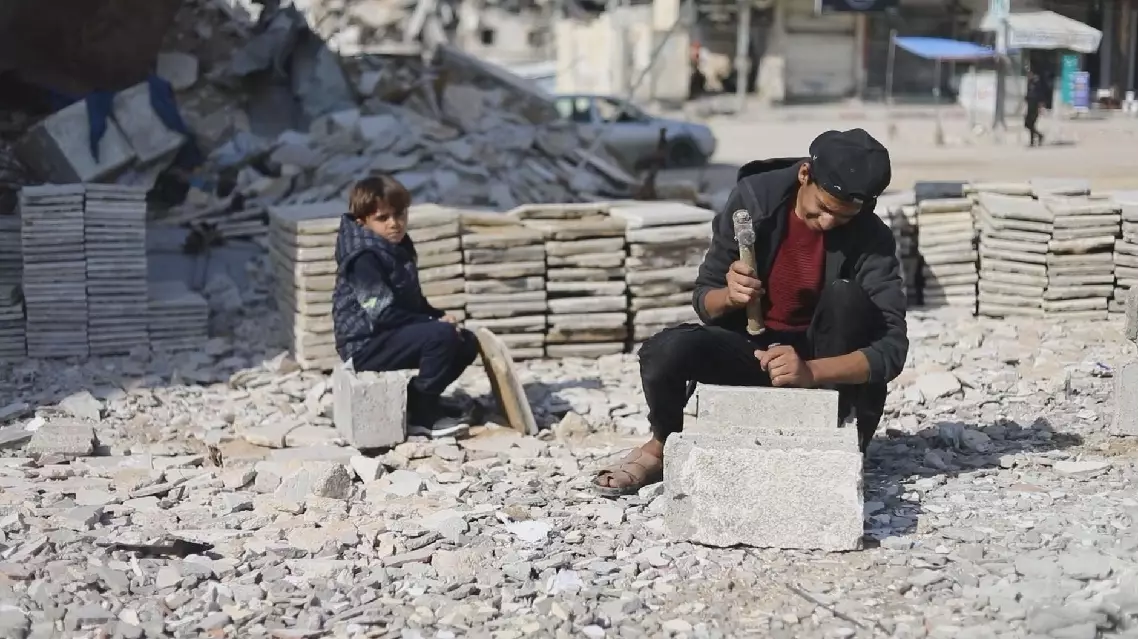
Among them is 15-year-old Ahmed Al-Zabda, struggling to make a living amid the devastation. He spends his days chipping cement away from stones and tiles salvaged from destroyed homes.

Displaced from Gaza City's Shujaiya neighborhood, Ahmed was forced to leave school to help provide for his family. His experience reflects the growing hardship facing children whose families have lost both their homes and their livelihoods.

"I go to work at seven in the morning and stay until after sunset. I have no choice because I need to earn a living and help my family with expenses. At night, I can't sleep because my back, legs and hands hurt. I face many difficulties doing this work," said Ahmed.

For Ahmed, school has been replaced by hard labor, reflecting how the war has disrupted the lives of children across Gaza.

"Anyone my age should never have to do this kind of work. They should be studying at school or playing and enjoying their freedom. But here, at this age, we have no freedom. Either you work, or you have nothing to eat," he said.

As the family endures increasingly difficult living conditions, Ahmed's mother struggles to provide for her children while holding on to the hope of a better future for her son.

"I don't want to see him work. I wanted him to continue his education because he was an excellent student, one of the top in his class. But his siblings are still young, and he helps us cover their expenses," she said.

UNICEF estimates that around 800,000 displaced children in Gaza are living in dire conditions, many sheltering in tents or damaged buildings without access to basic necessities.

For children like Ahmed, the struggle to survive has come at the cost of their education and childhood, as the burden of supporting their families falls on shoulders far too young to bear.
Gaza’s humanitarian crisis forces children out of school, into hard labor

Gaza’s humanitarian crisis forces children out of school, into hard labor

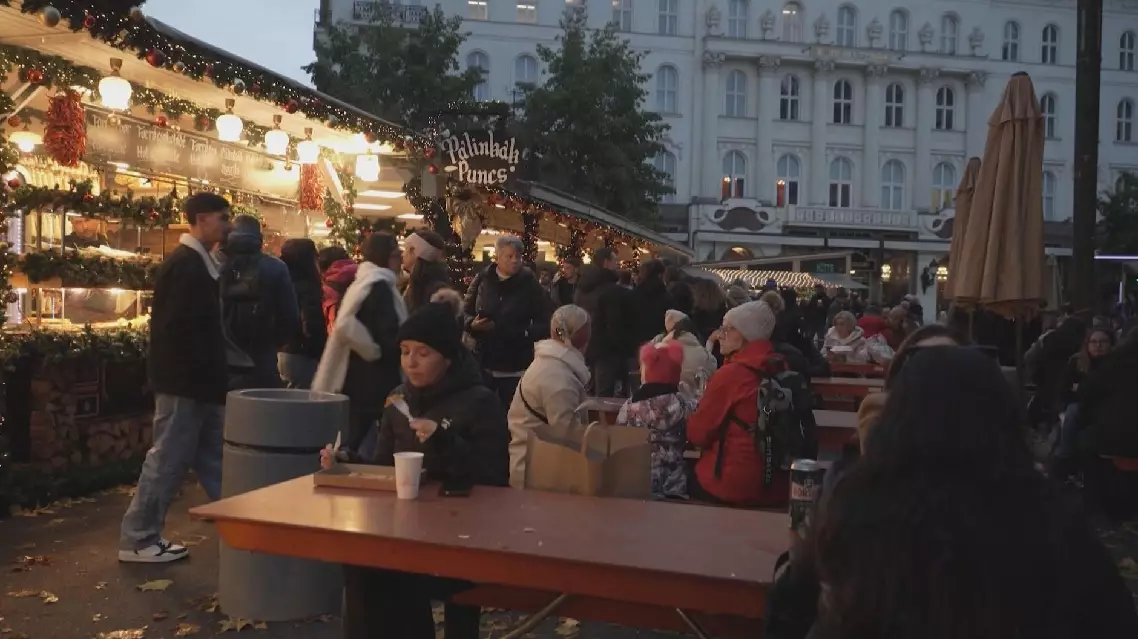
As Christmas markets light up Budapest, Hungary, the high cost of living caused by inflation is weighing on households.

The holiday season is shining a spotlight on whether the country's fragile economic recovery, after three years of stagnation, will bring relief to ordinary families.

The lights, food and the festive atmosphere of Hungary's Christmas markets bring many people together. But behind the decorations, the rising costs of living is changing how families approach the holidays.

For Marta Petrus, a mother of six, every purchase is a financial calculation.

"We honestly hoped things would get easier, but they haven't. Prices are extremely high, and everything keeps getting more expensive," said Marta.

Marta is a teacher and a school social worker. Her husband works too, while together they also run a business. Yet supporting six children means even basic groceries take a significant share of their income.

"For our family, one kilogram of chicken breast is nowhere near enough. And that already costs more than six U.S. dollars," she said.

For families like Marta's, the lights, food and gifts available at the Christmas market are all part of the magic.

But some things are out of reach. A traditional Hungarian meal in Budapest can cost around 17 dollars, while a traditional cake starts at about nine dollars, reflecting a 36-percent rise in food prices over six years.

"We honestly don't go to the Christmas markets to spend money. We usually just look around. Maybe we'll have a hot chocolate, but that's about it," said Marta.

At Budapest's main Christmas market, vendors have also experienced a financial hit this year.

"Everything is expensive. We also have to pay high rental fees for our stalls, and those costs are reflected in the prices we charge customers," said Zora, a vendor.

Hungary's inflation peaked this year at 2.1 percent, and while prices have since stabilized, economists say a full recovery after around three years of stagnation is both fragile and in the early stages.

At Budapest's Central Market Hall, where people shop for their everyday meals, the cost of putting food on the table is a reminder that the pressure on household budgets doesn't end with Christmas.

High prices triggered by inflation dampen Hungarian families' Christmas spirit

High prices triggered by inflation dampen Hungarian families' Christmas spirit

Recommended Articles