The Crescent Spring, a famed desert oasis in northwest China's Gansu Province, has recorded its largest surface area in over 20 years, according to local authorities.
Known for its crescent-moon shape, the spring in Dunhuang, a city of Gansu, now spans more than 2.13 hectares, the latest monitoring data showed.
Its average water depth has risen from 1.29 meters in 2011 to 3.89 meters, with a maximum depth reaching 4.9 meters, while water quality has remained stable at Grade II under China's five-tier surface water classification system.
"The water level of the Crescent Spring is actually a direct result of the continuous rise in groundwater levels across the entire Dunhuang Basin. When water replenishment from the 12 connected lakes increases, the water level of the Crescent Spring rises accordingly," said Zhao Duohui, deputy director of the monitoring center at the Gansu Provincial Institute of Geological Environment Monitoring.
A water-replenishment project, known as the "12 Connected Lakes," was built along the Dunhuang section of the Danghe River and put into operation in 2018.
Nestled among the towering dunes of Mingsha Mountain in Dunhuang, a key hub of the ancient Silk Road, Crescent Spring has been celebrated for at least 2,000 years as a natural marvel where shifting sands and clear waters coexist in harmonious balance, according to historical records.
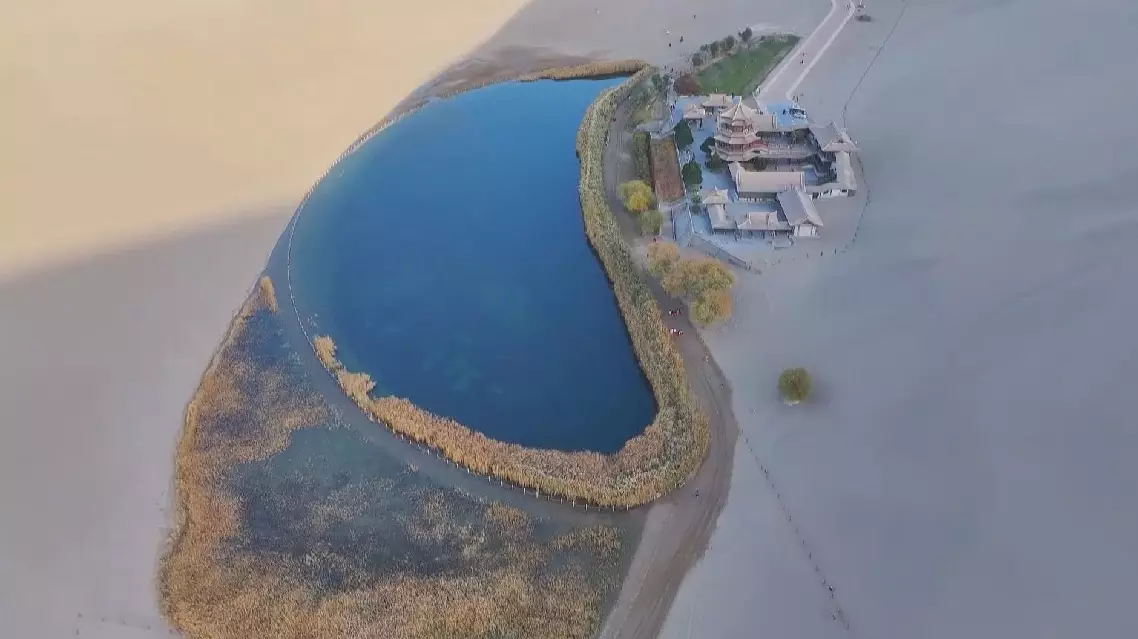
Crescent Spring in Dunhuang reaches largest surface area in over 20 years
To mark the 2026 World Television Day on Nov. 21, a series of events was held in Wuhan City, in central China's Hubei Province, on Saturday, gathering representatives from the radio and television, science and technology, and education sectors to explore the future development of the broader audio-visual industry.
Established by the United Nations, World Television Day aims to promote global cooperation and exchange in the media sector, leveraging television's power to drive cultural dissemination and social development.
The series of events featured a main forum, themed seminars, and concurrent sessions, including an auto exhibition, held in Wuhan's Economic and Technological Development Zone.
Known as "China Auto Valley" for its robust automotive manufacturing base, the venue provided a dynamic backdrop to bring cutting-edge audio-visual technologies out of the conference halls and connect them with other industries.
Artificial intelligence and other next-generation digital technologies were frequently mentioned at the main forum.
Attendees explored how these innovations are reshaping the audio-visual landscape from multiple perspectives, including technological foundations, practical applications, and large-scale industrial implementation.
"We need to explore ways to build key mobile apps and create top-tier platform accounts, enabling mainstream radio and television institutions to advance into the main battlefield of the internet and that of economic and social development. This will ultimately help realize our goal of building a new type of mainstream media characterized by omnimedia reach, ultra-high-definition quality, and high intelligence," said Zhu Yannan, president of the China Association of Newspapers and Journals in Radio, Film and Television.
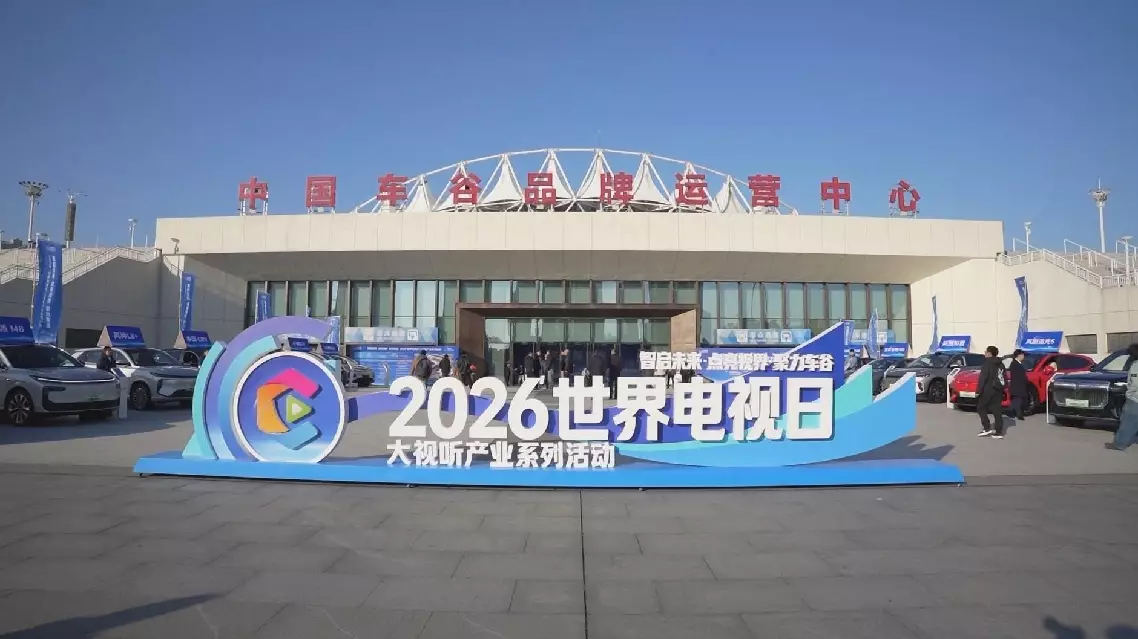
World Television Day marked in China's Wuhan with diverse activities