An upgraded artificial intelligence system has been deployed for China's mega South-to-North Water Diversion Project for water management, quality protection and operations, the state-owned corporation managing the project said on Saturday.
China South-to-North Water Diversion Corporation released the upgraded "Tianhe" large model V2, an upgrade that builds on V1's foundation and moves into deeper application, steering water network management decisions toward a collaborative approach integrating data, mechanisms and intelligence.
The South-to-North Water Diversion Project is the world's largest water transfer initiative, designed to channel fresh water from the water-rich Yangtze River basin in east China to the country's arid northern regions.
For flood control, the newly released model is connected to 27 remote-sensing satellites and 237 weather radars, aggregating rainfall, water level and other multi-source data to cut flood situation analysis from hours to minutes.
For water quality protection, the V2 model draws on a monitoring system spanning water source, conveyance and receiving areas, with 50 million monitoring records integrated into its database. It can simulate the migration and diffusion of pollutants and algae, generate gate operation recommendations and emergency response plans, driving water quality emergency handling toward data-driven and model-based precision.
Latest figures show that phase one of the project's eastern and central routes have diverted more than 92 billion cubic meters of water northward since full operations began in late 2014, providing a stable, high-quality water supply to nearly 200 million people and supporting over 19 trillion yuan (about 2.85 trillion U.S. dollars) in GDP growth in northern China.
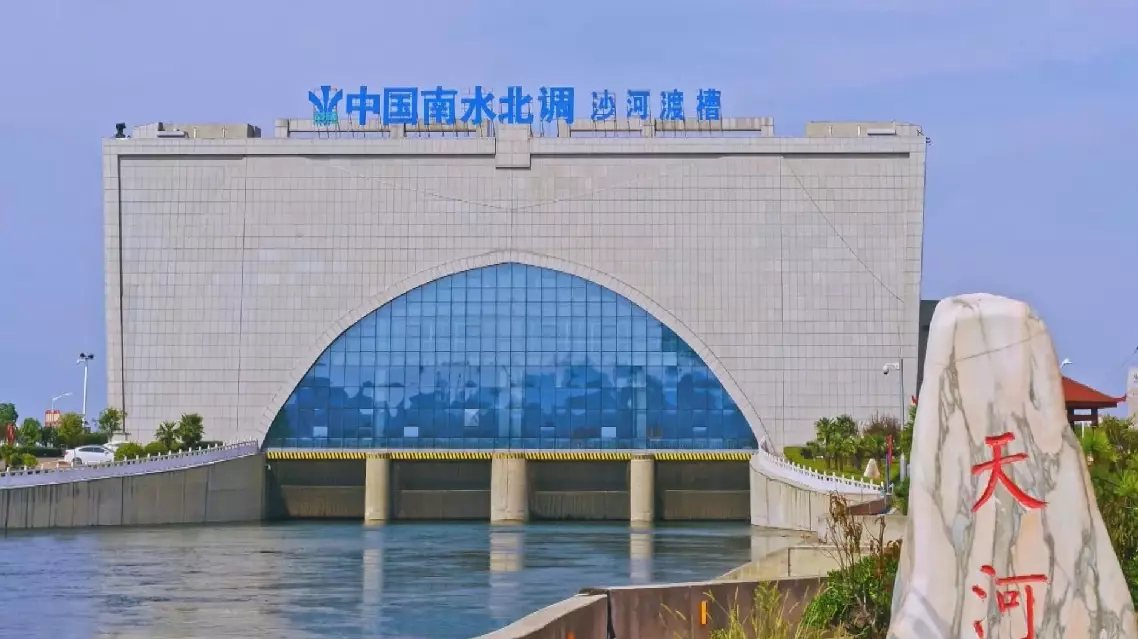
China deploys upgraded AI system to mega water diversion project
As the migratory season gets underway, a nature reserve in Rongcheng City, east China's Shandong Province, and a wetland park in Datong City, north China's Shanxi Province, have welcomed a large number of whooper swans arriving for the winter.
Whooper swans from Siberia and Mongolia arrive at the Rongcheng Swan National Nature Reserve in the eastern city every year in mid-to-late October.
Adult whooper swans have white plumage and yellow-and-black bills, while grayish-brown individuals are mostly young birds born this year. The fledglings just completed the long-distance migration, the first in their lives, alongside their parents.
According to the reserve, more than 6,000 whooper swans had arrived in Rongcheng as of Friday, with more expected to follow. In the coming months, they will stay and rest here until they migrate again next spring.
For migratory birds on long journeys, a perfect wintering site depends on abundant food, suitable waters and a safe habitat.
Rongcheng has become one of China's main wintering habitats for whooper swans because its Swan Lake is not simply an ordinary freshwater lake but a coastal lagoon connected to the sea. The surrounding terrain blocks part of the wind and waves, and seawater exchange keeps some waters from freezing in winter, making them suitable for whooper swans to rest and move about.
In addition, eelgrass grows beneath the water in dense patches, forming seagrass beds that serve as one of the whooper swans' important food sources.
At the Shenxi National Wetland Park in Hunyuan County, Datong, flocks of whooper swans arrived every November.
On the sparkling lake, the swans are seen playing together and gliding across the water, or dipping their heads to feed and resting peacefully on the surface.
In recent years, Hunyuan County has advanced ecological governance and restoration at the wetland park by improving hydrology and restoring wetland vegetation to consolidate the ecological base. With clear waters, lush plants and a stable ecosystem, the park is now an ideal wintering habitat for migratory birds.
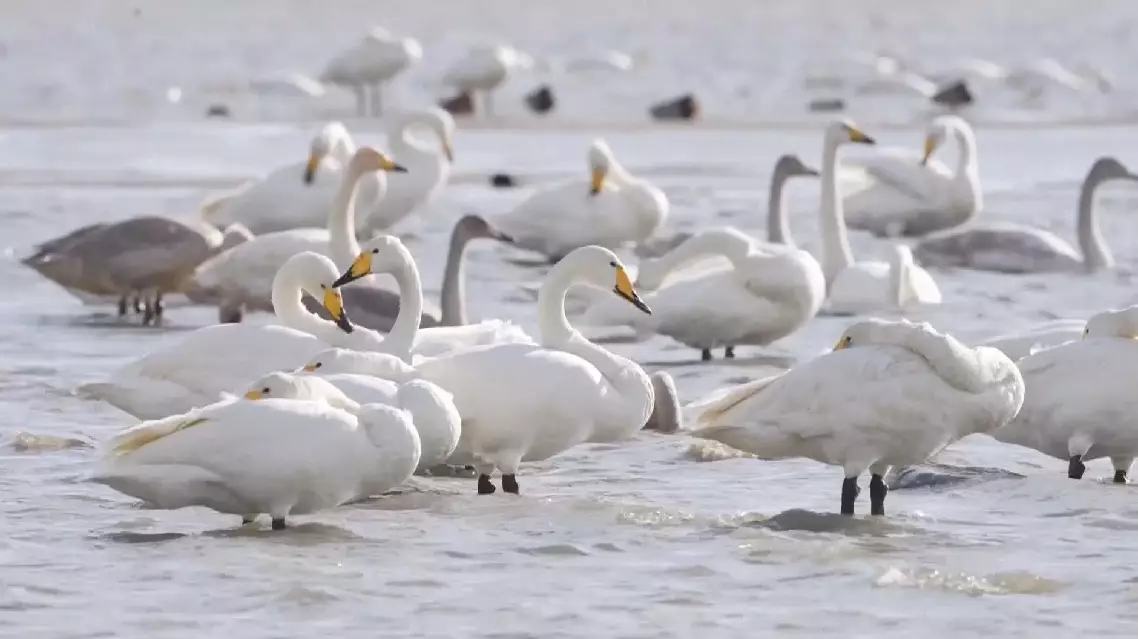
Whooper swans wintering in China's Shandong, Shanxi provinces