As the migratory season gets underway, a nature reserve in Rongcheng City, east China's Shandong Province, and a wetland park in Datong City, north China's Shanxi Province, have welcomed a large number of whooper swans arriving for the winter.
Whooper swans from Siberia and Mongolia arrive at the Rongcheng Swan National Nature Reserve in the eastern city every year in mid-to-late October.
Adult whooper swans have white plumage and yellow-and-black bills, while grayish-brown individuals are mostly young birds born this year. The fledglings just completed the long-distance migration, the first in their lives, alongside their parents.
According to the reserve, more than 6,000 whooper swans had arrived in Rongcheng as of Friday, with more expected to follow. In the coming months, they will stay and rest here until they migrate again next spring.
For migratory birds on long journeys, a perfect wintering site depends on abundant food, suitable waters and a safe habitat.
Rongcheng has become one of China's main wintering habitats for whooper swans because its Swan Lake is not simply an ordinary freshwater lake but a coastal lagoon connected to the sea. The surrounding terrain blocks part of the wind and waves, and seawater exchange keeps some waters from freezing in winter, making them suitable for whooper swans to rest and move about.
In addition, eelgrass grows beneath the water in dense patches, forming seagrass beds that serve as one of the whooper swans' important food sources.
At the Shenxi National Wetland Park in Hunyuan County, Datong, flocks of whooper swans arrived every November.
On the sparkling lake, the swans are seen playing together and gliding across the water, or dipping their heads to feed and resting peacefully on the surface.
In recent years, Hunyuan County has advanced ecological governance and restoration at the wetland park by improving hydrology and restoring wetland vegetation to consolidate the ecological base. With clear waters, lush plants and a stable ecosystem, the park is now an ideal wintering habitat for migratory birds.
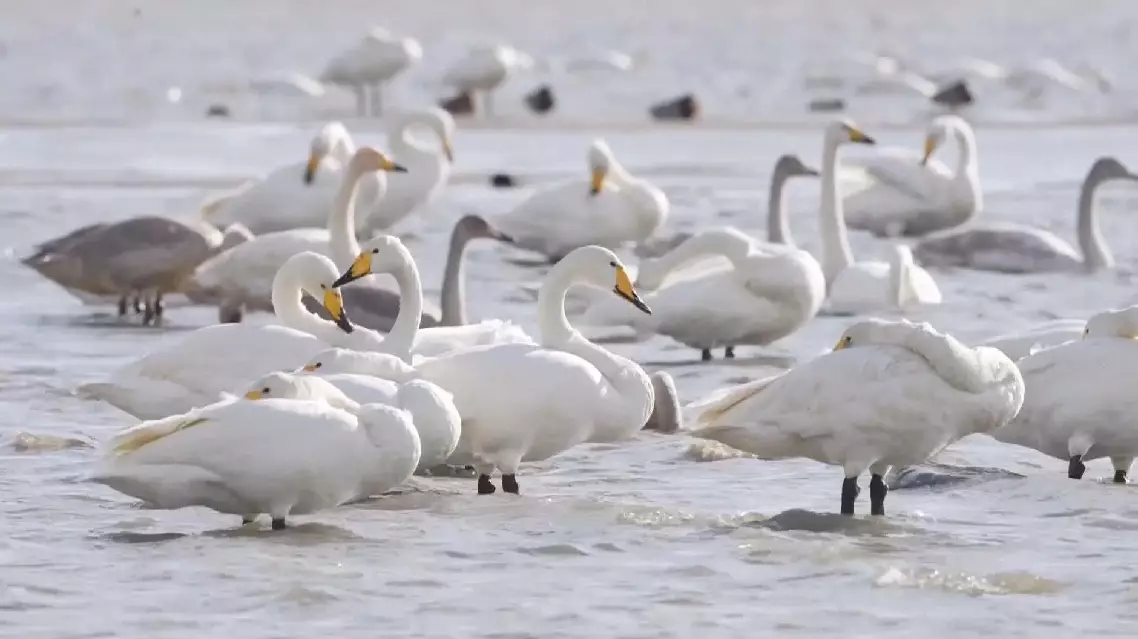
Whooper swans wintering in China's Shandong, Shanxi provinces
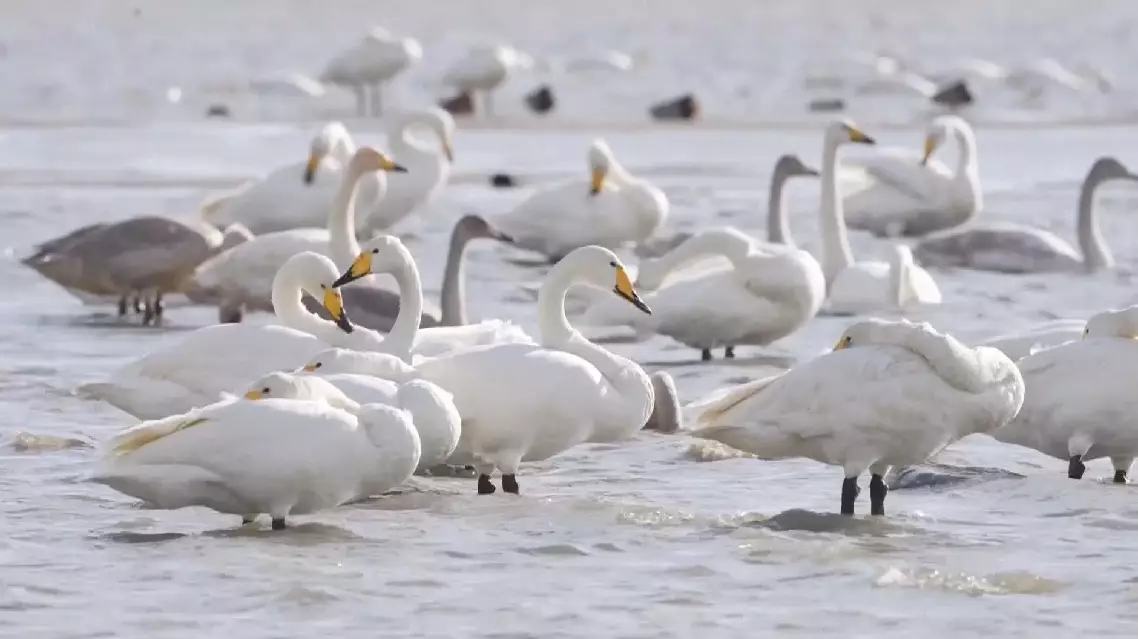
Whooper swans wintering in China's Shandong, Shanxi provinces
China's second domestically built large cruise ship, Adora Flora City, departed from Guangzhou City, south China's Guangdong Province, on Sunday on its maiden commercial voyage, a milestone in the country's push to build and operate its own cruise fleet.
The six-day, five-night itinerary will take more than 3,800 passengers to Hong Kong and Vietnam from the Nansha International Cruise Home Port.
"I saw in a news last year that this is China's second domestically built cruise ship. Boarding here in Guangzhou is quite convenient. So I bought tickets right away and brought my family," a passenger surnamed Chen.
Port authorities said they had optimized clearance procedures to handle the large passenger volume.
"By completing the data registration process upon departure, travelers can clear customs on their return trip by simply scanning a QR code, reducing the time required for manual inspection at individual checkpoints from approximately 60 seconds to as little as four seconds," said Wang Yifei, an officer at the Nansha border inspection station.
The 341-meter-long ship, with a gross tonnage of 141,900, features 2,130 guest cabins and can accommodate over 5,200 guests.
Adora Flora City will operate over 50 international cruise voyages, with Guangzhou serving as its home port. Beyond its standard four- and five-night routes, the ship will offer nearly 10 nine-day, eight-night voyages linking destinations in Vietnam, Malaysia and Brunei.
The launch follows the entry into service of Adora Magic City, China's first homegrown large cruise ship, and signals that the country's ability to independently build and commercially operate large cruise vessels is maturing.
"The dual-ship operating model for domestically built cruise ships will significantly expand capacity, enabling year-round, regular service. This will, in turn, drive demand across a range of upstream and downstream sectors, including port services, transport connectivity, hospitality and dining, travel retail, and ship supplies while fostering the development of a local supply chain in south China," said Guo Jia, assistant vice president of product and customer experience at Adora Cruises.
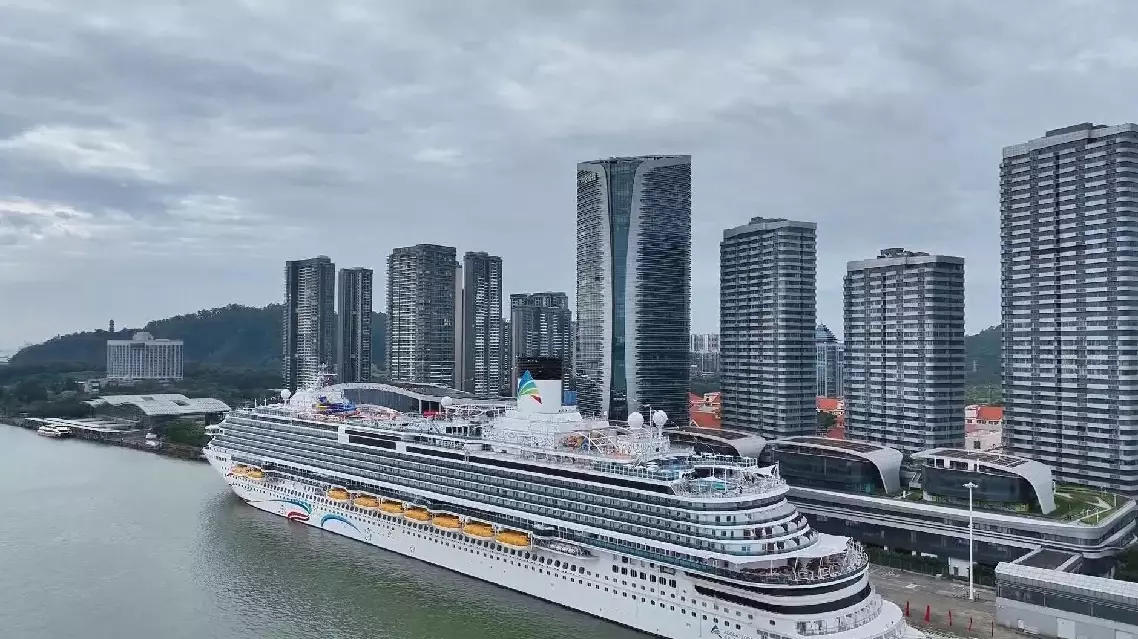
China's 2nd homegrown large cruise ship sets sail on maiden commercial voyage