As DR Congo's North Kivu province remains a major Ebola hotspot, local schools are facing significant barriers to implementing targeted hygiene measures to curb disease transmission and sustain in-person learning.
At the Kisungu Institute in Beni, maintaining academic activities while protecting pupils and teachers is a core priority. Handwashing stations have been installed to encourage regular handwashing and sanitization among all students and staff.
Kirere Mutsahire, a teacher at the Kisungu Institute, outlined the enforced protocols across the campus.
"In addition to the washbasins, we have hand sanitizers in the classrooms. We use the hydroalcoholic gel to sanitize our hands after using the toilets. We try to ensure that as soon as a child enters the playground, they must wash their hands, and outside every classroom we have a washbasin so they can wash their hands after using the toilet. We also forbid them from greeting one another. Hugs are already banned within the school," he said.
The safety measures have been integrated into daily learning routines. Each morning, teachers walk students through existing Ebola prevention measures to raise awareness and support broader efforts to contain transmission.
However, not all schools have the resources to roll out such comprehensive safeguards. Butanuka Primary School, which serves more than 1,300 pupils, is among the campuses struggling to secure basic handwashing facilities and essential hygiene supplies.
Despite the shortages, teachers at Butanuka still prioritized hands-on instruction, demonstrating proper handwashing techniques to children before the start of lessons each day.
The measures are not effective as the school cannot even secure enough soap, leaving the whole school community at urgent risk, Michel Mukosasenge, a teacher at Butanuka Primary School, described.
"We have heard of 34, or even 35, deaths in various schools across the city. This is already a danger to us, including the teachers, because look at how the children are crammed into the classrooms: we are all at risk. Yet the authorities have left us to fend for ourselves. We do not have the necessary resources to protect ourselves and we are receiving no assistance whatsoever. Even when we ask the school management for soap, they tell us that they too lack the resources," he said.
According to UNICEF, 43 schools in the region have been affected by the outbreak. Roughly 50 schoolchildren have contracted Ebola, and 35 have died from the virus.
Local education authorities report that only 600 of the approximately 2,500 schools in affected areas have received infection prevention and control kits, calling for greater community participation in the broader fight against Ebola.
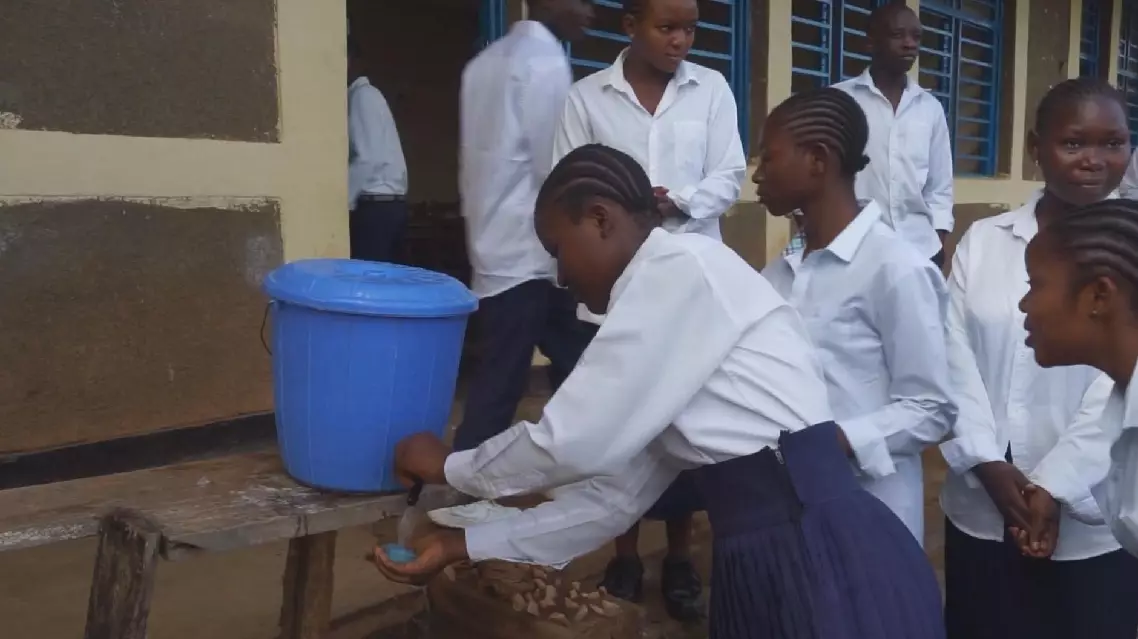
Schools in DR Congo grapple with hygiene gaps to keep classrooms open