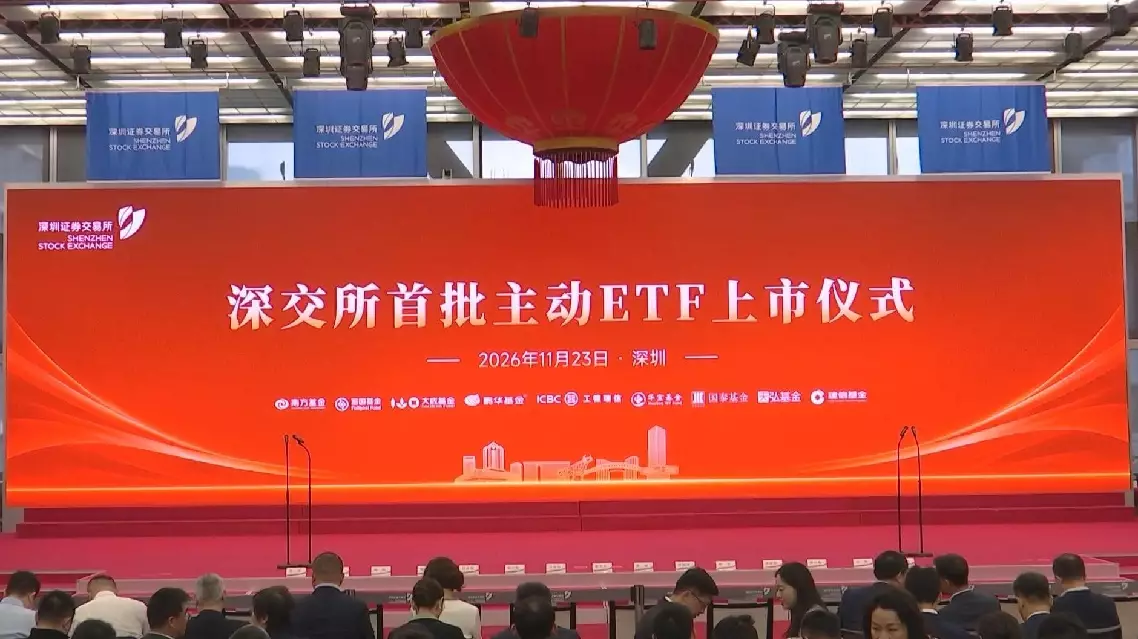
China's first batch of 18 actively managed exchange-traded funds (ETFs) generated more than 8 billion yuan, or about 1.2 billion U.S. dollars, in combined trading value on Monday, their debut trading day on the Shanghai and Shenzhen stock exchanges.
Within the first half-hour, every fund had recorded more than 100 million yuan, or 15 million U.S. dollars, in trading value.
Demand had been strong before trading began. All 18 funds reached their fundraising caps of 2 billion yuan each and closed subscriptions early, raising a combined 36 billion yuan, or about 5.4 billion U.S. dollars. Insurers and occupational pension plans were among the investors.
The funds are managed by both Chinese and international firms, including J.P. Morgan Funds.
"We are very optimistic about the prospects for active ETFs in China. J.P. Morgan Asset Management will invest 500 million yuan (over 75 million U.S. dollars) in J.P. Morgan Funds' first active ETF to demonstrate our long-term confidence in both the Chinese market and active ETFs," said Guo Peng, deputy general manager of J.P. Morgan Funds.
Unlike passive ETFs, which track an index, active ETFs allow fund managers to choose stocks and adjust their holdings within a stated investment strategy. Investors can trade them on an exchange throughout the day. Orders in conventional actively managed mutual funds are generally priced using a net asset value calculated after markets close.
The new funds must also disclose their holdings before each trading session, based on their portfolios at the previous day's close. Conventional actively managed mutual funds typically disclose their ten largest holdings quarterly, giving investors a less frequent view of managers' stock picks.
"Daily disclosure helps active fund managers maintain discipline and stick to a consistent investment style, something the industry has long struggled with. It pushes managers to compete on research and investment expertise, seek returns above their benchmarks and stay focused on their core purpose of serving investors," said He Dianhong, a fund manager at Southern Asset Management.
China's first active ETFs debut with 8 bln yuan
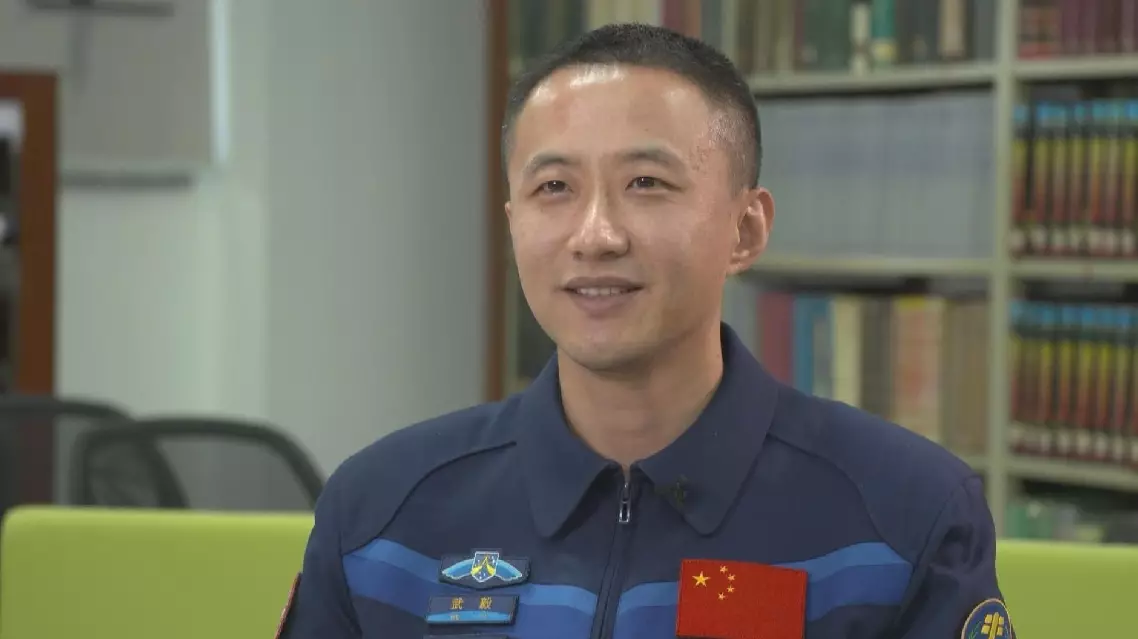
Flight engineer Wu Yi is poised to fulfill a long-held spaceflight dream forged over six years of grueling training as he prepares to lift off Wednesday aboard the Shenzhou-24 spacecraft on China's first crewed mission to include an international astronaut.
Wearing a suit weighing about 100 kilograms and braving heavy water resistance, Wu spent hours on end practicing underwater tasks such as extravehicular transfers, equipment maintenance, and emergency response. The simulated weightlessness pool was just one of the many demanding exercises required to prepare for orbit.
A young man who grew up in Yulin, northwest China's Shaanxi Province, and graduated from the National University of Defense Technology, Wu said a fascination with the cosmos has been with him since childhood.
"I think the desire to explore the unknown and curiosity about the vast universe are innate in every child. I'm fortunate to have grown up in an era when China opened its third batch of astronaut recruitment to engineers and researchers, giving me a chance to finally join the space program," said the astronaut.
In 2019, China launched the selection process for its third group of astronaut candidates, opening applications to spaceflight engineers and payload specialists for the first time. Meeting all the preliminary criteria, Wu applied without hesitation.
"During the second-round selection, a lot of the tests felt like they were pushing the human body to its absolute limit, such as the spinning chair everyone's heard about, and all kinds of physical endurance drills. To get a good score, you just had to grit your teeth and challenge your own limits," he recalled.
After multiple rounds of screening, Wu was selected as an astronaut candidate in September 2020. But that was just the beginning. Ahead of him lay more than 200 training subjects across eight major fields, each one a fresh challenge. Beyond knowing how to run the space station inside and out, Wu also had to master complex experiments ranging from human physiology and genetics to cell biology.
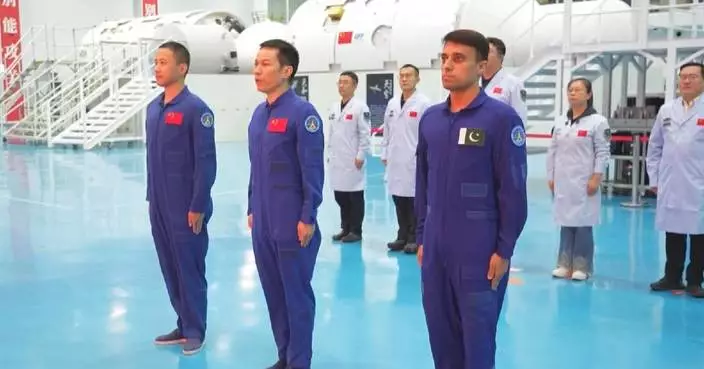
Years of relentless training and evaluations eventually earned Wu a spot on the Shenzhou-24 crew alongside veteran commander Tang Hongbo and Pakistani astronaut Muhammad Zeeshan Ali. To well prepare for the mission, Wu and his teammates have gone through targeted, high-intensity drills. Once in orbit, the trio will conduct scientific experiments and technology tests, manage station operations and host science lessons from space.
As flight engineer, Wu will play a key role in keeping the station running smoothly, inspecting, repairing, and upgrading gear both inside and outside the cabin.
From a ground researcher to a spacefarer, Wu is heading into space full of confidence, carrying his family's blessings and hopes. "My family may have worries, but they have great faith in our country's space technology. More than anything, they're full of hope, expecting me to complete the mission successfully and come home safe and sound. What I would say to myself is: work efficiently and get the job done well. After all these years of relentless effort, my dream of spaceflight is finally within reach," said the astronaut.
The Shenzhou-24 crewed spacecraft is scheduled to be launched at 08:18 Beijing Time on Wednesday from the Jiuquan Satellite Launch Center in northwest China.
Rookie astronaut ready to fulfill space dream after 6 years of training