China and Pakistan will jointly develop new protective and self-healing space materials through performance verification in space during the upcoming Shenzhou-24 mission, according to the Technology and Engineering Center for Space Utilization under the Chinese Academy of Sciences.
China's Shenzhou-24 crewed spaceship is scheduled to be launched at 08:18 Beijing Time Wednesday from the Jiuquan Satellite Launch Center in northwest China, the China Manned Space Agency announced on Tuesday.
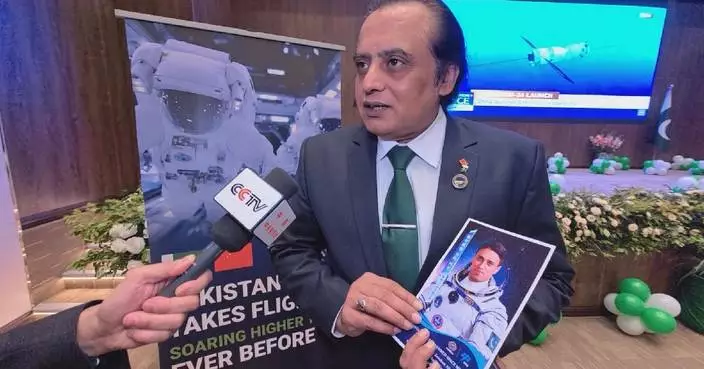
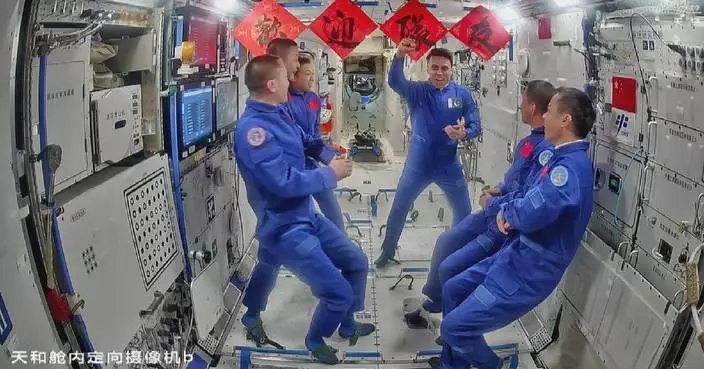
Chinese astronauts Tang Hongbo, Wu Yi, and Pakistani astronaut Muhammad Zeeshan Ali will carry out the mission.
Among the four experiments during the mission, two will focus on space materials, which are graphene-based hybrid composites and carbon fiber composites.
The experiment on graphene-based hybrid composites for protective use in space missions was put forward by the Pakistan Space and Upper Atmosphere Research Commission.
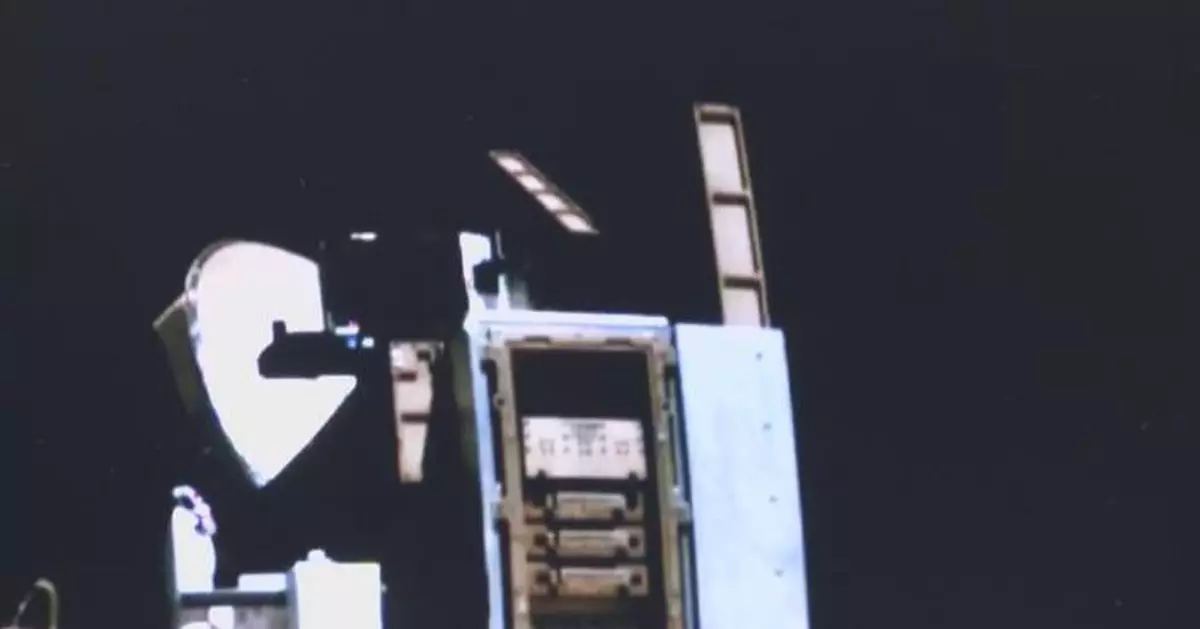
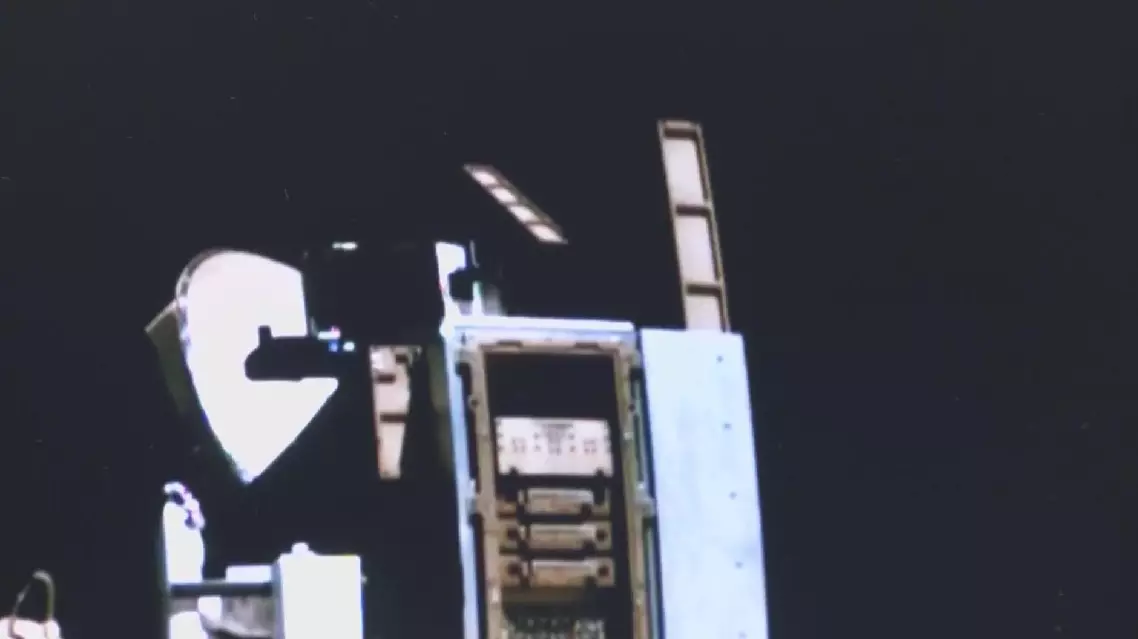
Multi-layer graphene-based hybrid composite materials and aluminum reference samples of equal area density will be placed outside China's Tiangong space station for extravehicular exposure in the experiment.
Scientists will use built-in track detectors to record incident trajectories of particles, and compare the composites with reference samples in shielding effectiveness, mechanical properties and thermal properties.
The experiment studying self-healing composite materials in space environments will be also an extravehicular exposure experiment in which self-healing carbon fiber composites with and without pre-set microcracks will be placed outside the space station for sunlight to heat them up and trigger their autonomous repair mechanism.
Scientists will use the images captured in the experiment to study the crack healing process and repair efficiency of the materials.
Graphene is a typical carbon nanomaterial used to make shielding layers to protect extravehicular equipment from being attacked by high-energy particles, while experiments on heat-triggered self-healing carbon fiber composites aim to study the self-recovery properties of the materials after microcracks are caused by cold-heat alternations, radiation and micrometeoroid impacts in space.
China, Pakistan to jointly explore new space materials