The U.S. Army is planning to detonate 5 tons of degraded and dangerous lead azide in southeastern Iowa Wednesday in what military officials say is an unprecedented effort to prevent a spontaneous, uncontrolled explosion at the site.
While authorities say a host of safety measures will be in place to limit the plume of lead particles that will drift from the Iowa Army Ammunition Plant, public concerns remain about the potential health and environmental effects.
The Army says the lead azide, which is used as an initiating explosive in munitions, is degrading. Crystallization inside the containers increases the risk of an explosion as the outside temperature changes, especially when it's below freezing.
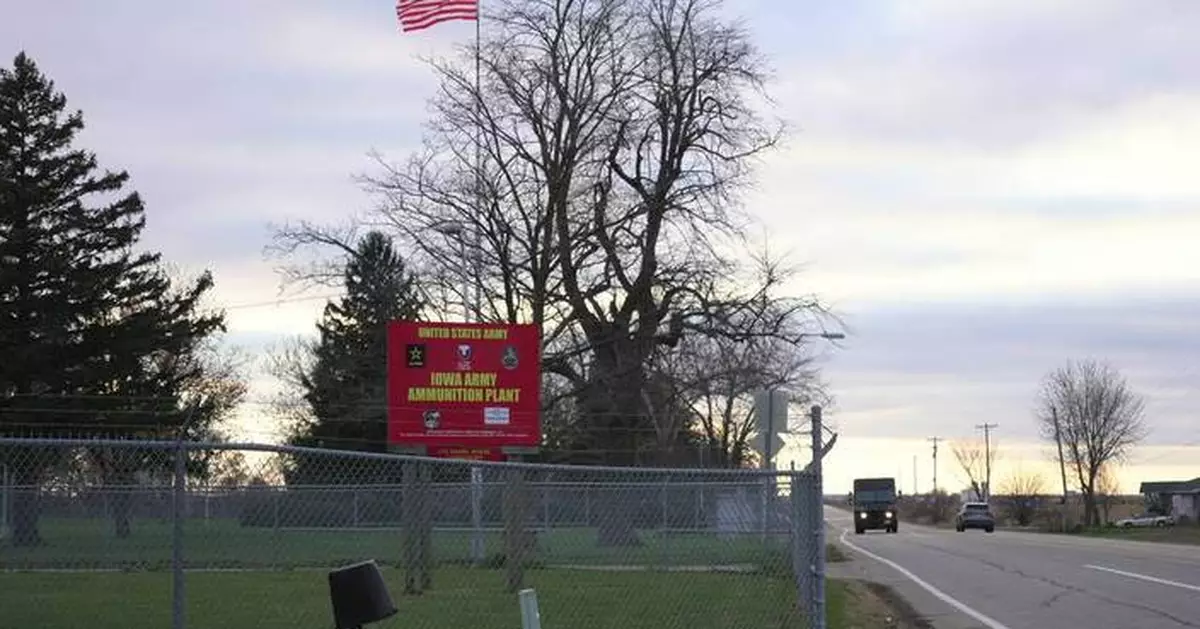
The ammunition plant is in Middletown, not far from the Mississippi River and the Illinois and Missouri state lines.
Here's what to know about the planned explosion:
Lead azide is a highly sensitive compound including lead and nitrogen that historically has been used in detonators to set off other explosives. The military moved away from using lead azide because of its hazards and officials have said it is no longer needed for munitions production.
Lead is a neurological toxicant that can harm the brain, nervous system and other organs.
Production of lead azide increased sharply during the Vietnam era, especially for use in gravel mines, according to the Army's emergency application to detonate the Iowa stockpiles. Mass production began declining in the early 1980s and eventually ceased, the application said.
The 68 barrels of lead azide set for detonation in Iowa, transferred there in 2009 from an Army facility in Texas, are the nation’s entire stockpile of the compound, the Army said.
Army Col. Aaron Teller, a munitions emergency response specialist, said in a court filing that the Army will use a combination of C-4 explosives, explosive charges and diesel fuel to blow up the stockpile. The diesel will be used to enhance the consumption of the lead azide, and the charges are intended to direct the blast effects downward, Teller said.
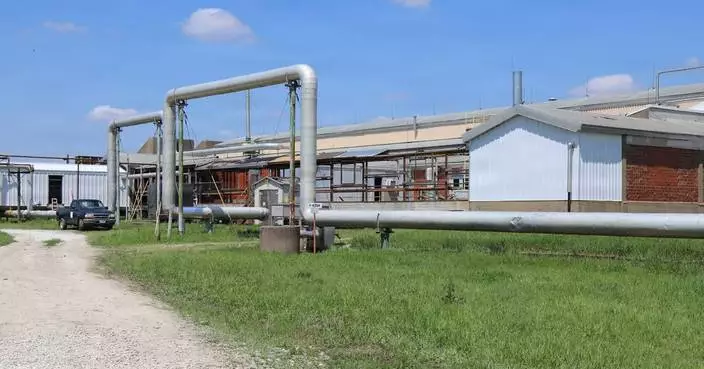
The lead azide is stored at the Iowa site in reinforced structures, known as magazines.
The Army and other federal agencies placed sand barriers about two stories high around the magazines along with walls consisting of four 16,000-gallon (60,000-liter) water tanks.
Special screening to contain the lead has been installed. A 2-foot (61-centimeter) layer of foam that will flood the area is meant to dissipate the blast and capture particles that blow off the stockpiles, Army officials said. The ground above and surrounding the storage magazines will be saturated with water before and during the detonation to reduce particle dispersal.
The Army planned extensive drone surveillance of lead levels before and after the detonation to see if the levels rise and to identify areas that may need cleanup. Officials expect to contain most of the blast particles at the site.
During the last lead azide detonation by the Army in Colorado in 1977, no mitigation measures were used and 75% of the lead particulate remained at the site, officials said.
The plume likely will head southwest and away from nearby Burlington, a city of just under 25,000 people.
Wednesday's forecast for the area calls for winds of 5 to 10 mph (8 to 16 kph), blowing to the southwest, according to the National Weather Service.
There were no mandatory evacuations as of Tuesday. The Federal Emergency Management Agency said it is supporting the recommended relocation of all residents of Middletown, Iowa, and immediate surrounding areas beginning Tuesday.
The recommended evacuation zone is a 5-mile (8-kilometer) cone that extends southwest of the Iowa plant. An emergency notification sent to cellphones Tuesday morning told people up to 20 miles (32 kilometers) away to remain indoors with windows closed “to avoid airborne lead dust, noise and vibration.”
Government officials said support will be provided to people who choose to leave the area, including transportation, short-term lodging and food, water and other supplies. People who evacuate will be notified when it's safe to return.
Environmentalists who sued last week to stop the detonation said in court filings that there is no safe exposure level for lead, which is especially harmful to children. Lead has been shown to permanently damage children's brains and development.
They said lead also is harmful to adults and has been linked to heart, kidney and liver disease as well as reproductive harm, cognitive decline and cancer.
The environmentalists said the Army's own modeling showed that a large amount of farmland in the area as well as waterways could be contaminated with lead dust from the detonation.
“Once lead dust is dispersed, there is no undoing the harm,” one filing stated. “Lead persists in the environment and spreads easily between media. Lead dust in the air will not just disappear once it settles to the ground—people, cattle, chickens and wildlife will continue to face exposures to lead from soil, water runoff, and deposition into waterbodies.”
Federal officials said they are taking precautions to keep people safe. Recommendations include cleaning outdoor surfaces, including areas children have touched.
“The team overseeing this operation conducted extensive safety and environmental reviews, analyzed potential blast impacts, practiced the planned detonation procedures, and put safety zones, monitoring systems, and emergency-response plans in place,” the Army said.
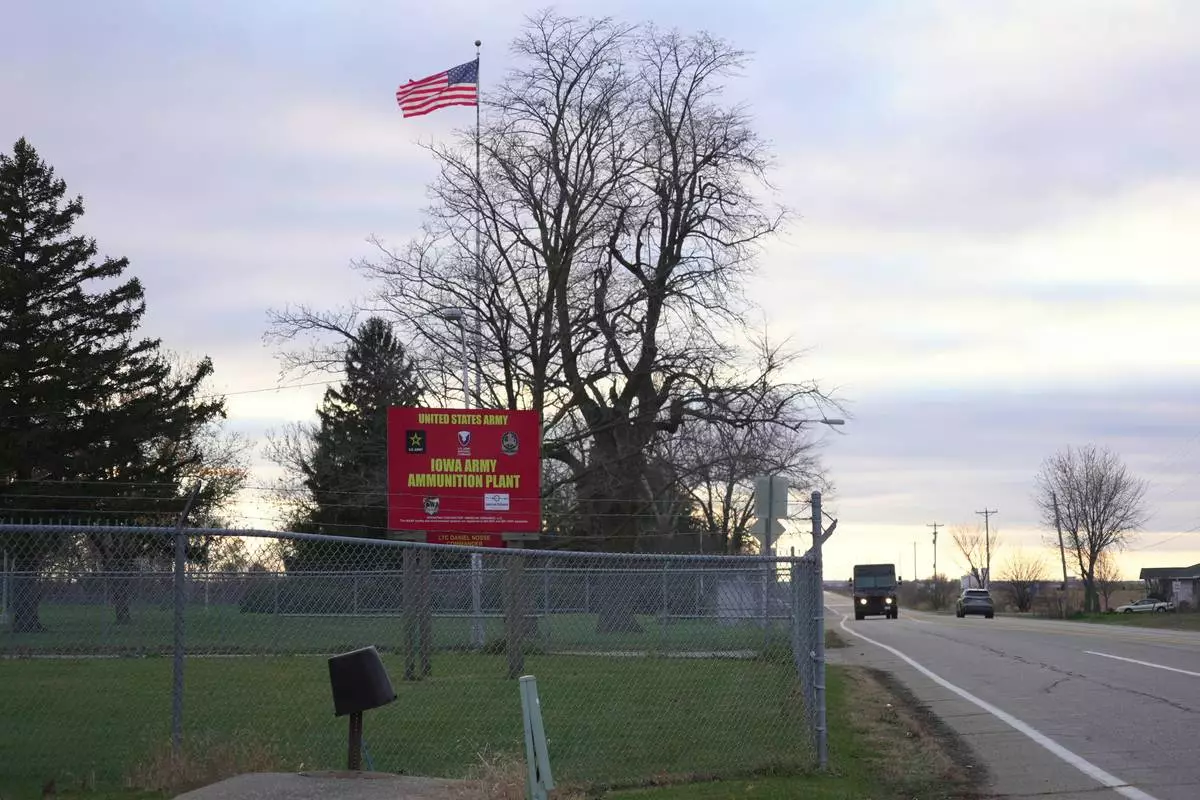
A sign is displayed for the United States Army's Iowa Army Ammunition Plant in Middletown, Iowa, Monday, Nov. 23, 2026. (AP Photo/Laura Bargfeld)
KILLEEN, Texas (AP) — Fort Hood shooter Nidal Hasan tells court he plans to file a petition to delay his execution by firing squad.
THIS IS AN APNewsAlert. Check back for updates. AP's earlier story is below.
Three survivors of the shooting at Fort Hood will not be allowed to witness the execution of Nidal Hasan who fatally shot 13 people in the attack at the Texas Army post in 2009, military officials said Tuesday.
Hasan was found guilty of multiple counts of murder and attempted murder related to those killed and the more than 30 who were wounded by gunfire in the attack.
On Nov. 10, the Army said the three cannot attend the execution scheduled for Dec. 3 because none of them was the direct victim of those charges, citing regulations governing military executions. An email sent Tuesday and shared with The Associated Press by recipients said military officials rejected their request for reconsideration, citing security and space issues.
The three argued that the Army should apply a broader definition of “victim” from the Uniform Code of Military Justice that says a victim can be someone who suffered “direct physical, emotional or pecuniary harm.” They argued that the military's refusal to allow them to attend was saying they had not been victims because they were not struck by bullets.
A previous plan to livestream the military execution, the first since 1961 and the first by firing squad since World War II, was rescinded after bipartisan backlash.
The letter signed by the commandant of Fort Leavenworth, the military prison where Hasan is being held, said the three cannot appeal again.
“Please understand that this is not meant as a judgment on any emotional injury you or others suffered as a result of CP Hasan’s crimes,” it said.
Retired Colonel Kathy Platoni, who would have been Hasan's supervisor during a planned deployment to Afghanistan, said the denial felt like a betrayal.
“I would desperately like to attend,” Platoni said from her home in Ohio. “To look Hasan in the eye and say, ‘You didn’t get me.'”
The Army noted in a statement that regulations specify who can witness a military execution, and reiterated the size and space restrictions.
“Efforts have been made over the years, from the trial to notifications to memorials and now to the execution, to recognize the impacts and support the victims,” the Army statement said.
Platoni said the survivors from her unit deployed to Afghanistan 29 days after the attack, because, “we still served our country, and if we didn’t, (Hasan) would have won.”
She said the building where Hasan initially opened fire had been crowded with returning soldiers and those preparing to deploy. She had been moved to another building when the attack began.
“The looks on the faces of my friends and colleagues as they carried in the dying and wounded that day … it will haunt me for the rest of my life,” she said.
She said they carried in the badly wounded captain who had rushed Hasan with a chair to try to stop the shooting.
“I was throwing computers to the ground trying to get the tablecloths because we needed blankets. We didn’t have medical supplies or even water,” she said. “I still have that blood-stained uniform, from kneeling down next to that young man, trying to get him to stay with us. That will be with me forever.”
Julia Wilson, who was nine months pregnant when Hasan opened fire, said her request to witness was also denied. She said the way the military has handled the case has caused her anguish.
“We have faced institutional betrayal after institutional betrayal,” Wilson said. “We remain on that battlefield because of that … if they don’t fix it we’re never going to leave that battlefield. We’ll never heal.”
Platoni had been on the list of victims and survivors kept by the military’s victim liaison since Hasan’s 2013 court marshal trial. Everyone on that list received notification in March that there had been movement in scheduling the execution, Platoni said.
Platoni said she did not think space was really the issue. The military told victims and survivors that about 160 witnesses would be allowed to attend the execution, and through her work with survivors and families of victims she believed about 90 people had decided to go. Platoni conceded that those details may have changed.
An Army official, who spoke on condition of anonymity to discuss sensitive plans, said that military is not planning to release any details about the firing squad or protocols, including the number of servicemembers involved.
Retired Major C. Alan Hopewell testified at Hasan's trial. He confirmed Hasan's identity after he was shot by two service members attempting to halt his rampage. One of those officers had asked Hopewell to accompany her to the execution.
He said Tuesday that he would accept the denial but with mixed feelings.
“I’m disappointed that our status as victims is not recognized,” Hopewell said. “A bullet missed me and hit my car. I guess if the bullet had hit me … they would consider me a victim and let me attend.”
Hopewell, Platoni and Wilson said that even after the execution they will continue to push for the Fort Hood shooting to be redefined as an act of domestic terrorism instead of workplace violence.
Hopewell recently underwent surgery unrelated to the shooting and said he's not certain his doctors would have cleared him to witness the execution. Nonetheless, he had hoped the Army would grant him the right.
“I guess it feels more like a duty, like a fulfillment of my responsibility to those soldiers who were killed and injured, who were threatened,” Hopewell said.
Lauer reported from Philadelphia. Associated Press reporter Konstantin Toropin in Washington, D.C., contributed.
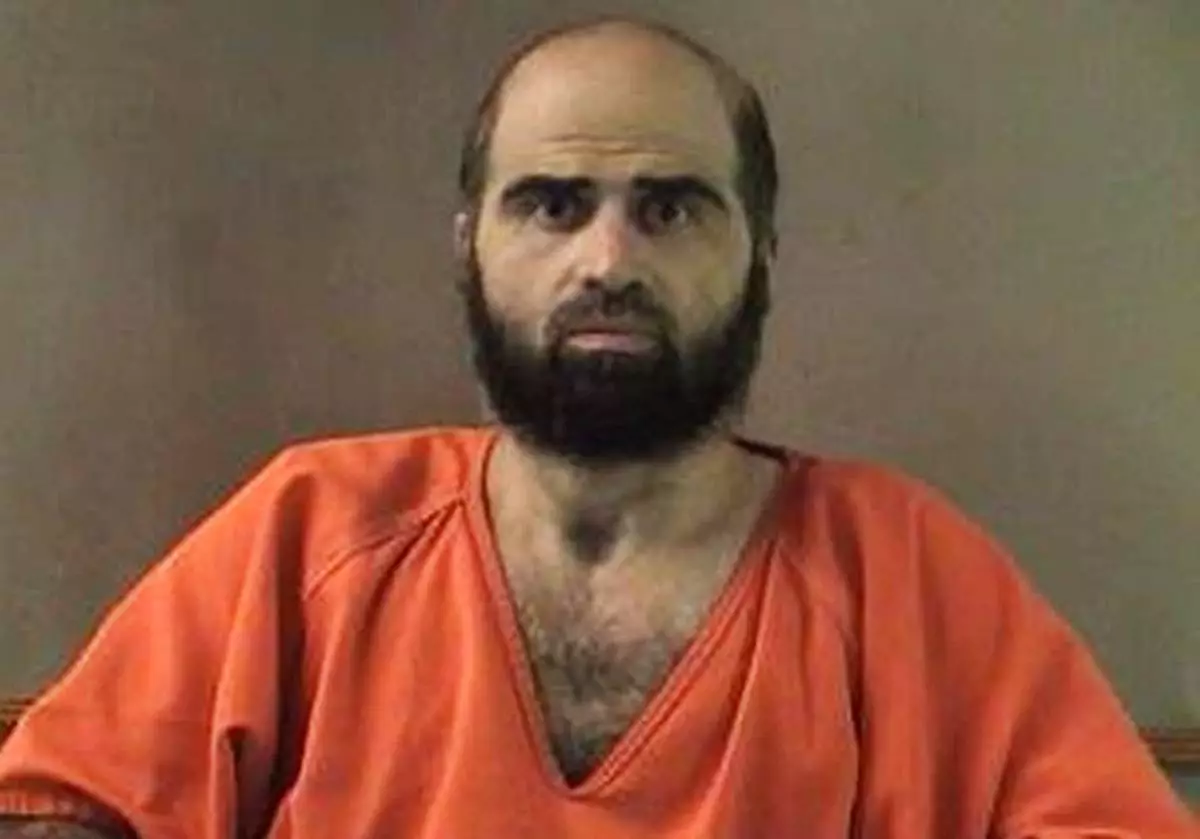
FILE - This undated photo provided by the Bell County Sheriff's Department shows former Army psychiatrist Maj. Nidal Hasan. (Bell County Sheriff's Department via AP, File)
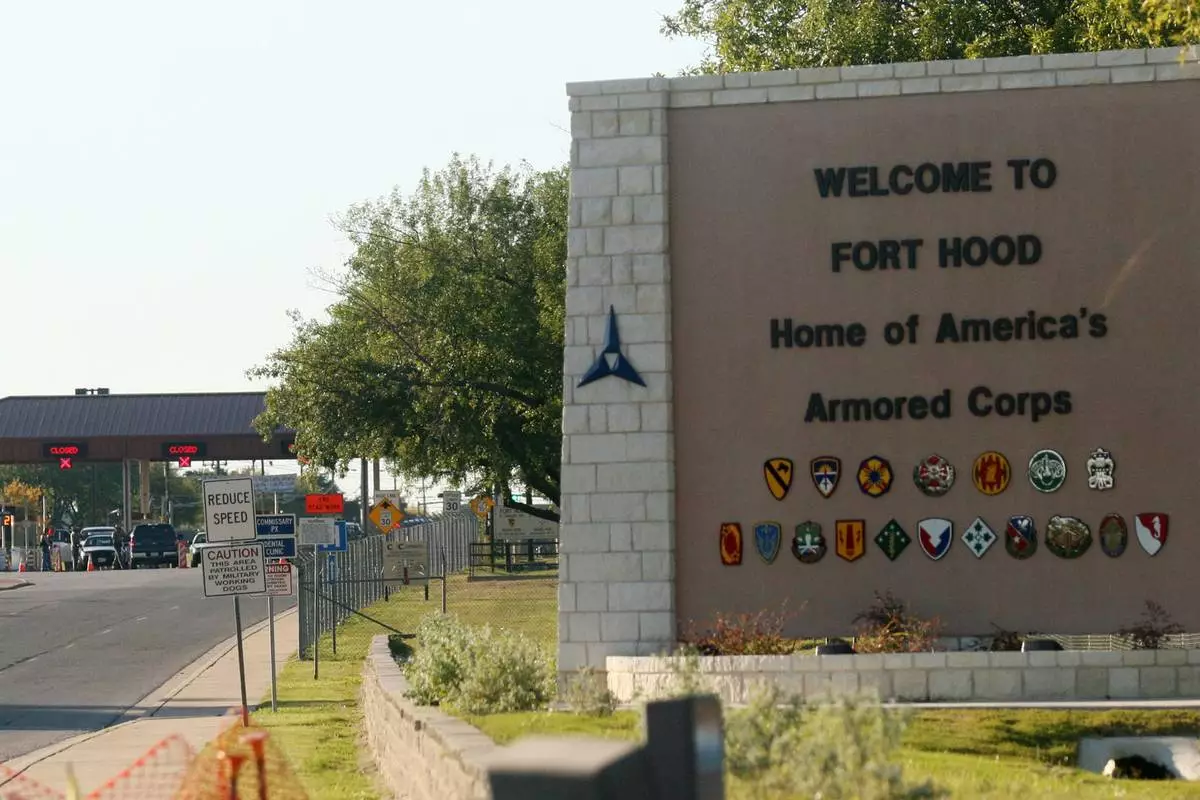
FILE - An entrance to Fort Hood Army Base is seen in Fort Hood, Texas, Nov. 5, 2009. (AP Photo/Jack Plunkett, File)