The Kansas City Royals have reached a two-year, $20 million agreement with free-agent infielder Alec Bohm, a person familiar with the move said Wednesday.
The person spoke to The Associated Press on condition of anonymity because the deal had not been announced pending a physical.
The deal would give the Royals a replacement for third baseman Maikel Garcia. The team traded the MVP of the World Baseball Classic for victorious Venezuela to the Seattle Mariners in a six-player swap last week, with that deal bringing in right-hander Bryce Miller and two other pitchers.
At the time, Royals general manager JJ Picollo said the team “had to get some pitching somehow, some way" after a 69-93 season in explaining why they moved Garcia. Now Kansas City will turn to the 30-year-old Bohm to fill that loss.
Bohm had spent the past seven years in Philadelphia, where he was a 2024 All-Star when he hit .280 with 97 RBI and 15 home runs. Bohm has offered consistent production in the past four years in particular, driving in 88 runs and hitting 15 homers last year.
“If Alec is not back, I’d say he’s done a good job for us," Phillies president of baseball operations Dave Dombrowski said at his season-ending news conference in October. “He works hard. He’s gotten a lot of big hits. ... There’s a lot of positives and I know that if he is not back with us, those 90 runs he drives in every year will be missed and we’ll have to pick it up in other ways.”
The Phillies took Bohm with the No. 3 overall pick in the 2018 draft after he had played three seasons at Wichita State.
AP Sports Writers Dave Skretta and Dan Gelston contributed to this report.
See AP’s full MLB coverage here

FILE - Philadelphia Phillies' Alec Bohm runs out a one-run double against the Atlanta Braves in the inning during Game 1 of baseball's National League Wild Card Series, Sept. 29, 2026, in Atlanta. (AP Photo/Brynn Anderson, File)
The U.S. Army detonated 5 tons of degraded and dangerous lead azide in southeastern Iowa Wednesday in what military officials have described as an unprecedented effort to prevent a spontaneous, uncontrolled explosion at the site.
Following two loud booms at the Iowa Army Ammunition Plant, a wispy white plume was briefly seen before it dissipated. Officials called it a success as air sampling following the operation showed no concentrations of lead.
While authorities put a host of safety measures in place to limit the lead particles in the plume, public concerns persisted about the potential health and environmental effects.
The Army says the lead azide, which is used as an initiating explosive in munitions, had degraded. Crystallization inside the containers increased the risk of an explosion as the outside temperature changed.
The ammunition plant is in Middletown, not far from the Mississippi River and the Illinois and Missouri state lines.
Here’s what to know about the explosion:
Lead azide is a highly sensitive compound containing lead and nitrogen that historically has been used in detonators to set off other explosives. The military moved away from using lead azide because of its hazards and officials have said it is no longer needed for munitions production.
Lead is a neurological toxicant that can harm the brain, nervous system and other organs. A group of environmentalists who sued in an effort to stop the detonation say there is no safe exposure level for lead, which is especially harmful to children.
Production of lead azide increased sharply during the Vietnam era, especially for use in gravel mines, according to the Army's emergency application to detonate the Iowa stockpiles. Mass production began declining in the early 1980s and eventually ceased, the application said.
Officials have said the nation's stockpile of lead azide was transferred to the Iowa ammunition plant in 2009.
The Army and other federal agencies placed sand barriers about two stories high around the magazines along with a barrier consisting of four 16,000-gallon (60,000-liter) water tanks.
A 2-foot (61-centimeter) layer of foam flooded the area to dissipate the blast and capture particles that blew off the stockpiles, and the ground above and surrounding the storage magazines was saturated with water before and during the detonation to reduce particle dispersal.
The U.S. Environmental Protection Agency began taking samples of the air, water and soil around the area of the blast and in the path of the plume before the detonation and continued Wednesday to identify areas that may need cleanup.
NASA also was keeping an eye on the plume, using satellites and research planes, while scientists from numerous universities conducted their own sampling.
During the Army's last lead azide detonation in Colorado in 1977, no mitigation measures were used and 75% of the lead particulate remained at the site, officials said.
There were no mandatory evacuations, but federal officials recommended the day before that residents in the immediate area leave.
By Wednesday morning, that advice changed. An emergency notification sent to cellphones about an hour before the detonation said evacuation was no longer safe and recommended that all residents within 20 miles (32 kilometers) — including those in the communities of Middletown, Augusta and Burlington — stay indoors and close all windows and doors to block lead dust.
Some took the advice, while others went outside to watch the blast. Bystanders expressed disappointment that the rumble and plume weren't as big as they had expected.
The environmentalists who tried to block the detonation said the Army's own modeling ahead of the detonation showed that a large amount of farmland in the area as well as waterways could be contaminated with lead dust from the detonation.
"Lead dust in the air will not just disappear once it settles to the ground — people, cattle, chickens and wildlife will continue to face exposures to lead from soil, water runoff, and deposition into waterbodies,” the environmentalists argued in court filings.
Federal officials said they took precautions to keep people safe, pointing to the safety and environmental reviews that began early this year and the work done over months by a team of experts to chart out the detonation.
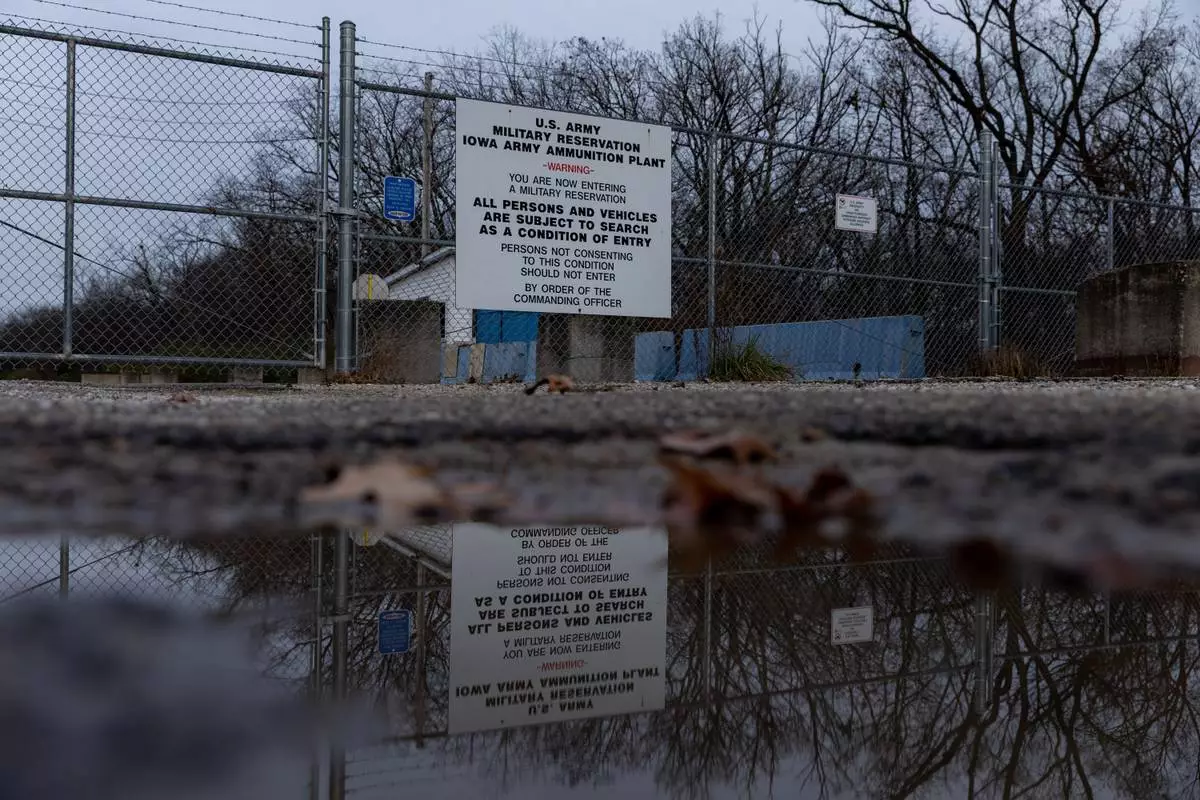
A locked gate secures the south entrance of the Iowa Army Ammunition Plant in Augusta, Iowa, Tuesday, Nov. 24, 2026. (AP Photo/Austin Johnson)
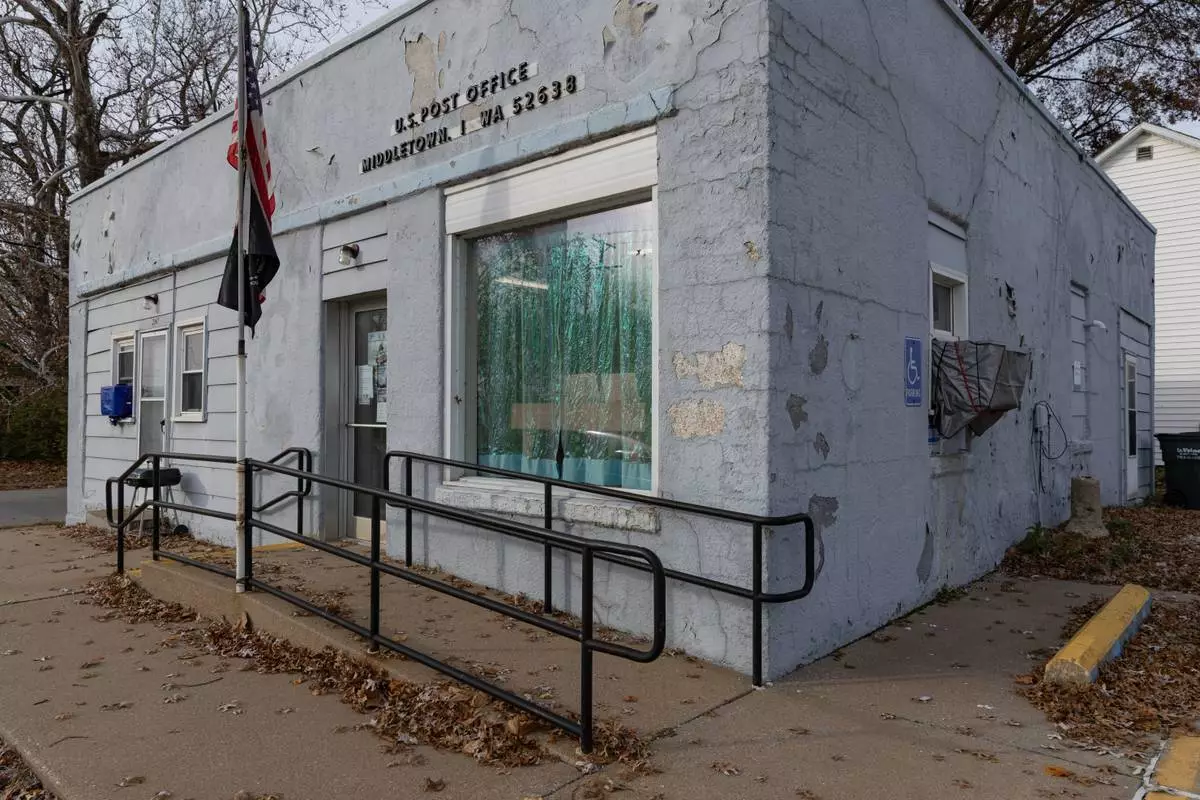
Tarps cover window air-conditioning units at the local post office in Middletown, Iowa, Tuesday, Nov. 24, 2026. (AP Photo/Austin Johnson)
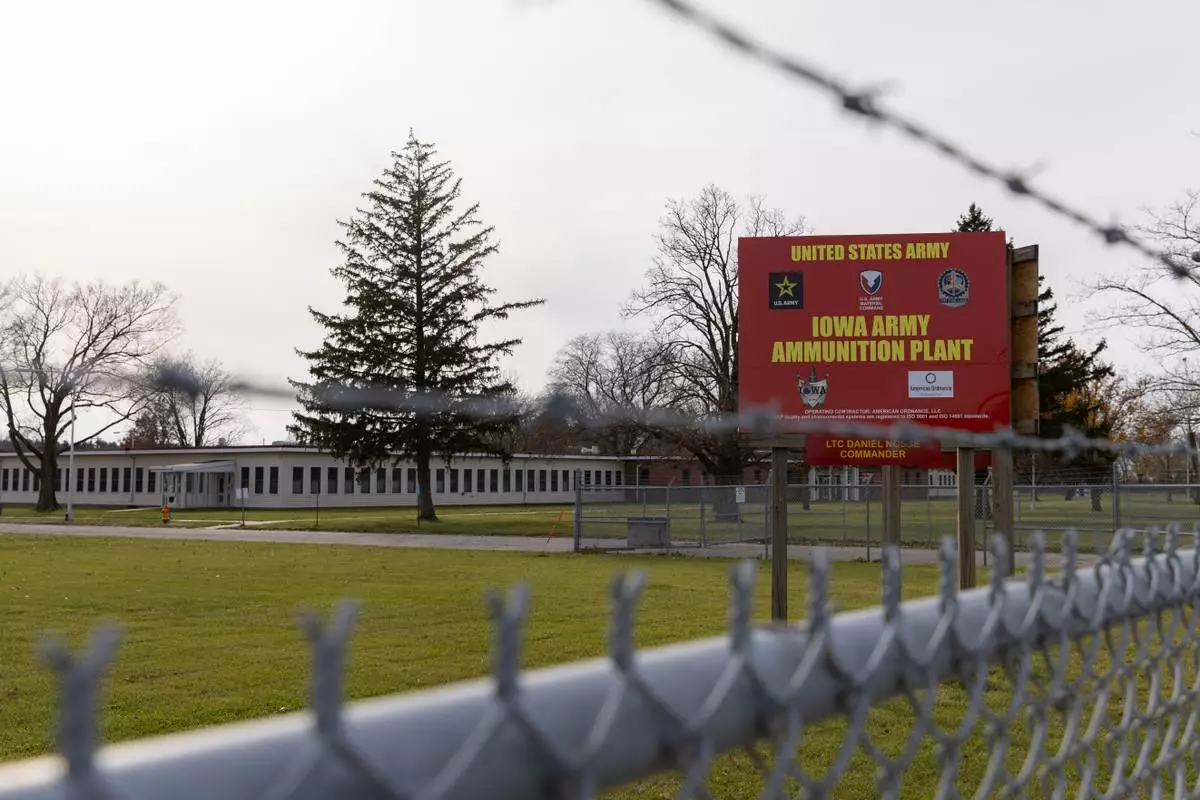
Administration building at the Iowa Army Ammunition Plant in Middletown, Iowa, Tuesday, Nov. 24, 2026. (AP Photo/Austin Johnson)
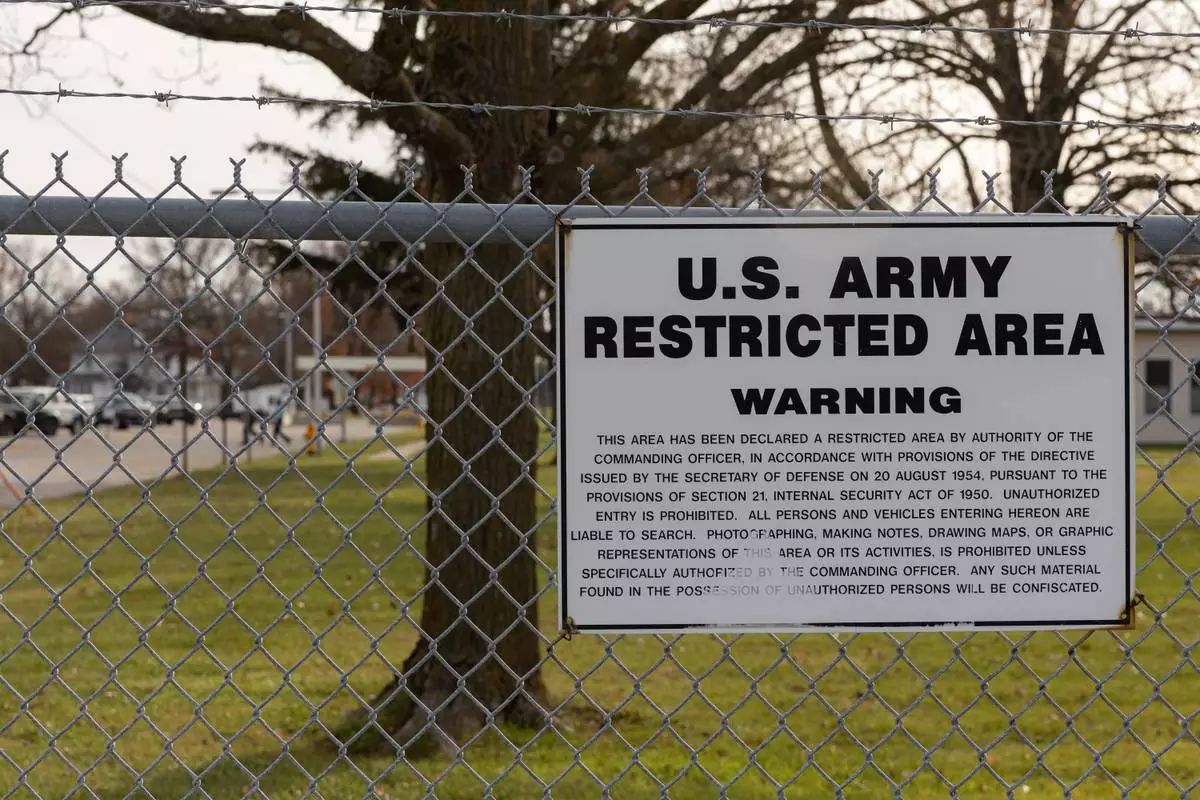
Warning signs surround the administration building at the Iowa Army Ammunition Plant in Middletown, Iowa, Tuesday, Nov. 24, 2026. (AP Photo/Austin Johnson)
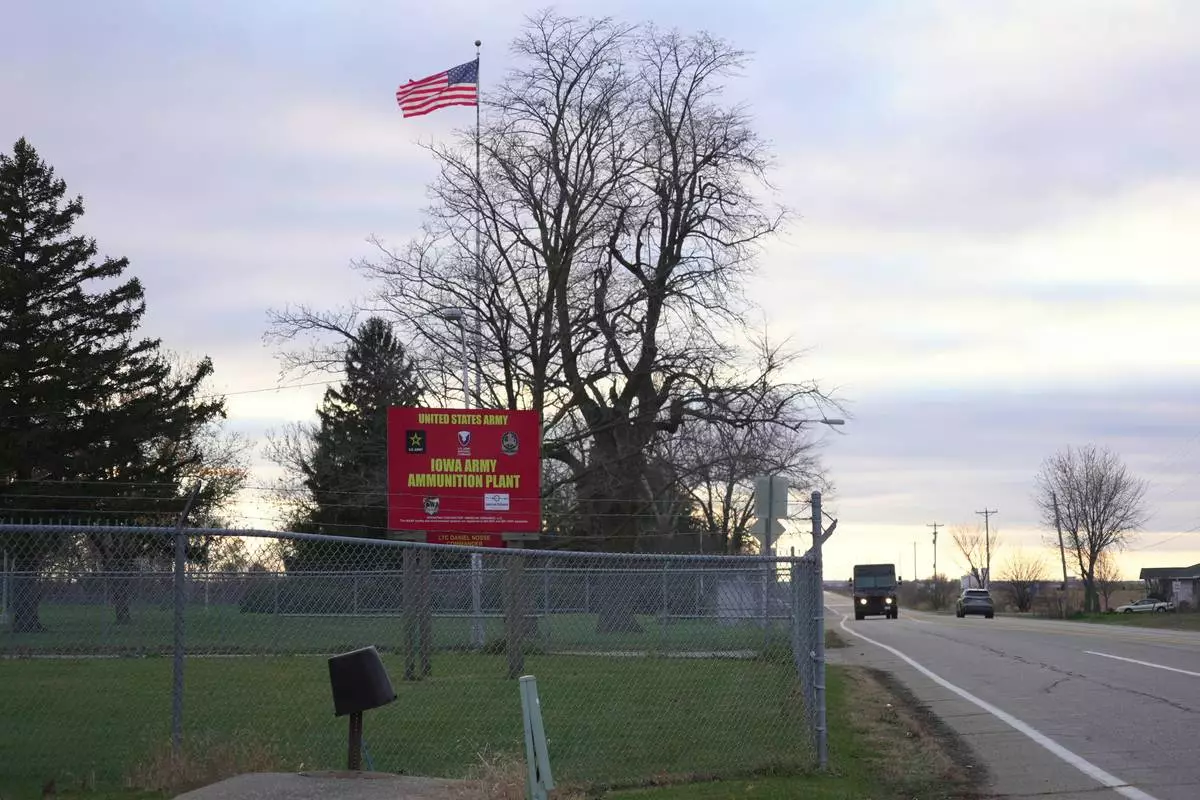
A sign is displayed for the United States Army's Iowa Army Ammunition Plant in Middletown, Iowa, Monday, Nov. 23, 2026. (AP Photo/Laura Bargfeld)