China on Thursday unveiled a new five-year plan for the development of trade in services, outlining 25 key tasks across seven areas to foster new growth drivers.
The plan, jointly released by the Ministry of Commerce and seven other government departments, covers the 2026-2030 period and sets a target of steadily expanding the scale of service trade and enhancing China's international competitiveness by 2030.
For the first time, it defines development directions for both producer services and consumer services, and calls for building stronger combined competitiveness of manufacturing and services, while shaping new advantages in exports of consumer services such as travel, culture, and traditional Chinese specialty services.
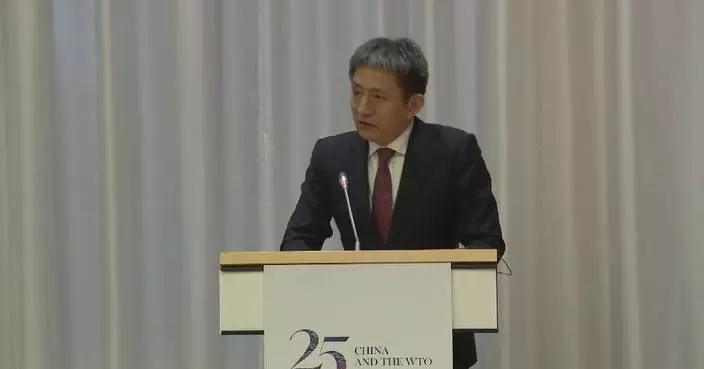
"This plan places greater emphasis on the synergy between service trade and industry, investment, and consumption. Research and development and design, inspection and testing, and other services going global alongside manufacturing will bring more high-value-added orders. Meanwhile, enhanced international service capabilities in consultancy and legal services will help Chinese enterprises in their overseas development. Furthermore, service exports such as tourism and culture will attract more foreign consumers to travel, shop, and study in China. All these will be new growth drivers," said Wang Bo, deputy director general of the Department of Trade in Services under the Ministry of Commerce.
Alongside expanding exports, the plan also calls for greater imports of producer services such as research and development and design, and resource recycling, while encouraging more imports of quality consumer services including medical and health care, performances and sports events.
"Service imports, like service exports, are of great significance to both Chinese enterprises and the daily lives of the Chinese people. For enterprises, importing advanced technologies, research and development and design, and other services helps enhance innovation capacity and production efficiency. For the public, expanding imports of quality services in medical and health care, culture, and sports offers more diverse, convenient, and high-quality consumer choices. China's vast market demands provide broad opportunities to overseas service providers. Expanding service imports can attract more high-quality international service institutions to the Chinese market, delivering mutual benefit and win-win outcomes," said Wang Xuekun, president of the Chinese Academy of International Trade and Economic Cooperation under the Ministry of Commerce.

China targets steady expansion of service trade, stronger global competitiveness by 2030