Anita DeFrantz, the bronze-medal rower who became best known for breaking barriers to give women a long-lasting voice at the highest reaches of male-dominated Olympic policymaking, has died. She was 74.
No cause of death was given in the announcements of DeFrantz's death Thursday from the international and U.S. Olympic committees. She had been in declining health over the past few years.
DeFrantz, who in 1986 became the first American woman and first Black American named to the International Olympic Committee, also became the first woman to serve as an IOC vice president, in 1997. She also was vice president of the organizing committee for the LA Olympics in 1984 and served as chair of the IOC’s Women in Sport Commission for 20 years.
IOC President Kirsty Coventry, an Olympic swimmer who has credited DeFrantz for helping her ascend to the most powerful spot in the Olympic hierarchy, called DeFrantz “a mentor, a friend and a true inspiration to me, and to so many others around the world.
“From my earliest days in the Olympic Movement, she showed me what courageous leadership looked like, and what was possible for women in sport,” Coventry said.
Edwin Moses, the record-setting hurdler who was a contemporary of DeFrantz's, said “every woman who has a high-level position in sports today, they can thank Anita DeFrantz.”
DeFrantz won bronze in the 1976 Olympics as captain of the women's eight team in Montreal. She trained for an Olympic return and, in 1980, gained a sense of the disconnect between athletes and the boardrooms that made decisions on their behalf.
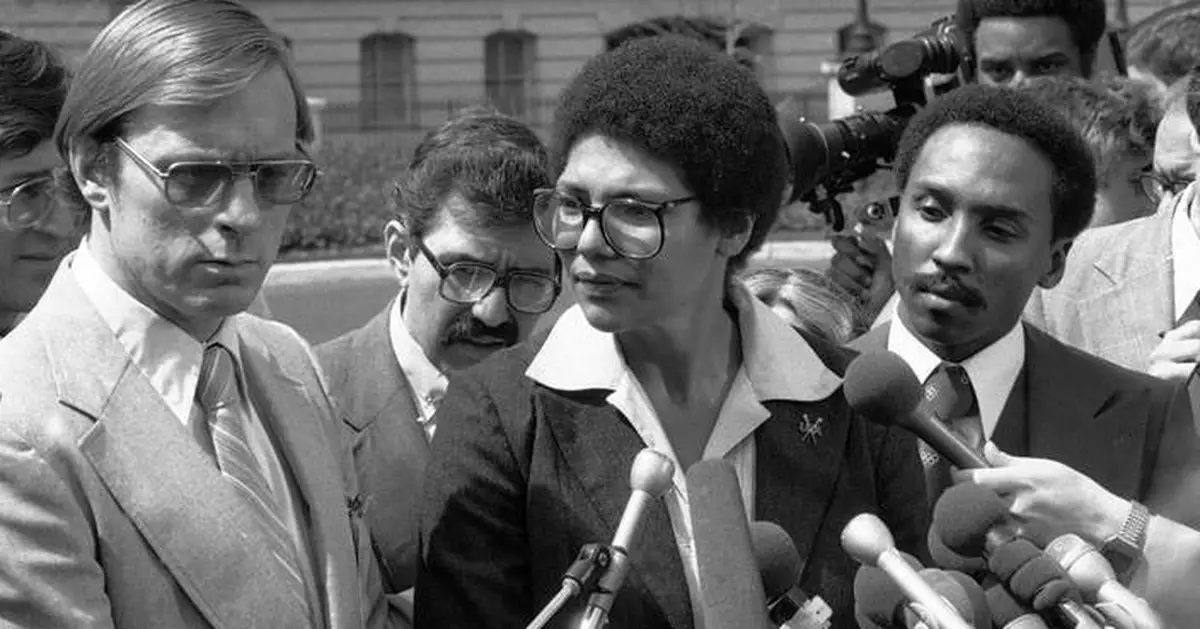
She was part of the U.S. team that never made the trip to the boycotted Moscow Olympics. As spokeswoman for the U.S. athletes' advisory council, she led a lawsuit against the U.S. Olympic Committee, which, pressed by the Carter administration, had authorized the boycott.
That was the first part of her push to be at the table where those decisions were made.
In an interview last year with The Associated Press before being inducted into the Team USA Hall of Fame, DeFrantz recalled the feeling of realizing how much work there was to be done when she attended her first IOC meeting in 1986.
“I walked in and I thought, ‘This is odd,’” she said. “It was this cavernous room” and of the 90 or so committee members, she was one of only five women.
“We had to help people open their minds a little," she said.
Change came slowly. It took until 2024 for the Olympics to reach gender parity — with women making up half of the 10,500 athletes at the Paris Games. Today, 46 of the IOC's 106 members are women.
“She often stood for things and wasn't supported but plowed ahead anyway," said Donna de Varona, the gold-medal Olympic swimmer who served with DeFrantz on the IOC women's commission. "In every sense of the word, she was a warrior as an athlete, and as someone who always fought for the right thing, even when the politics might not have been in her favor.”
DeFrantz's roles with the IOC also gave her a spot on the U.S. Olympic and Paralympic Committee's board of directors for decades. In a statement, CEO Sarah Hirshland and chairman Gene Sykes called DeFrantz “one of the most consequential Olympians our nation has ever known.”
Intrigued by a group of rowing shells placed in front of an administration building to spur interest in the sport, DeFrantz took up rowing at Connecticut College, though she was never a star there.
It wasn't until she attended law school at Penn that she began training on the Schuylkill River in Philadelphia — a venue teeming with Olympic-caliber rowers — and got a sense of what was possible.
“And she lit on fire," Bart Gullong, her coach at Connecticut College, said in a 1997 interview with the Hartford Courant. "She lost 45 to 50 pounds and really trained hard. She made the national team the following year. And the following year she made the Olympic team.”
That set the stage for the bronze medal, then a life of Olympic advocacy.
Moses said DeFrantz's depth of knowledge about the Ted Stevens Amateur Sports Act — which passed in 1978 and has governed the Olympics in the U.S. ever since — made hers the perfect lead voice for athletes who took a risk in fighting the 1980 boycott. That, in turn, opened doors to the IOC.
“She got in the ring and squared up with everyone," Moses said. “And because of her legal background and her temperament and ability to be a great moderator and negotiator, she was able to get a tremendous amount done. Not just for women, but for the athletes, Paralympics, all of the things that people were not thinking about at that time.”
Gold-medal sprinter Allyson Felix, who was inducted alongside DeFrantz in the U.S. hall last year, said her advocacy work and her own position on the IOC wouldn't have been possible were it not for DeFrantz's work over decades.
“A game-changer,” Felix called her.
Sitting at a quiet corner in a restaurant for the AP interview in Colorado Springs, Colorado, last year, DeFrantz — her voice barely above a whisper — said she was flattered by all the attention she was receiving. But, always pushing, she insisted there was still much work to be done.
“It’s all about letting people have opportunities,” she said. “You can’t make an Olympian. But you can open the door to possibilities.”
See AP’s full sports coverage here
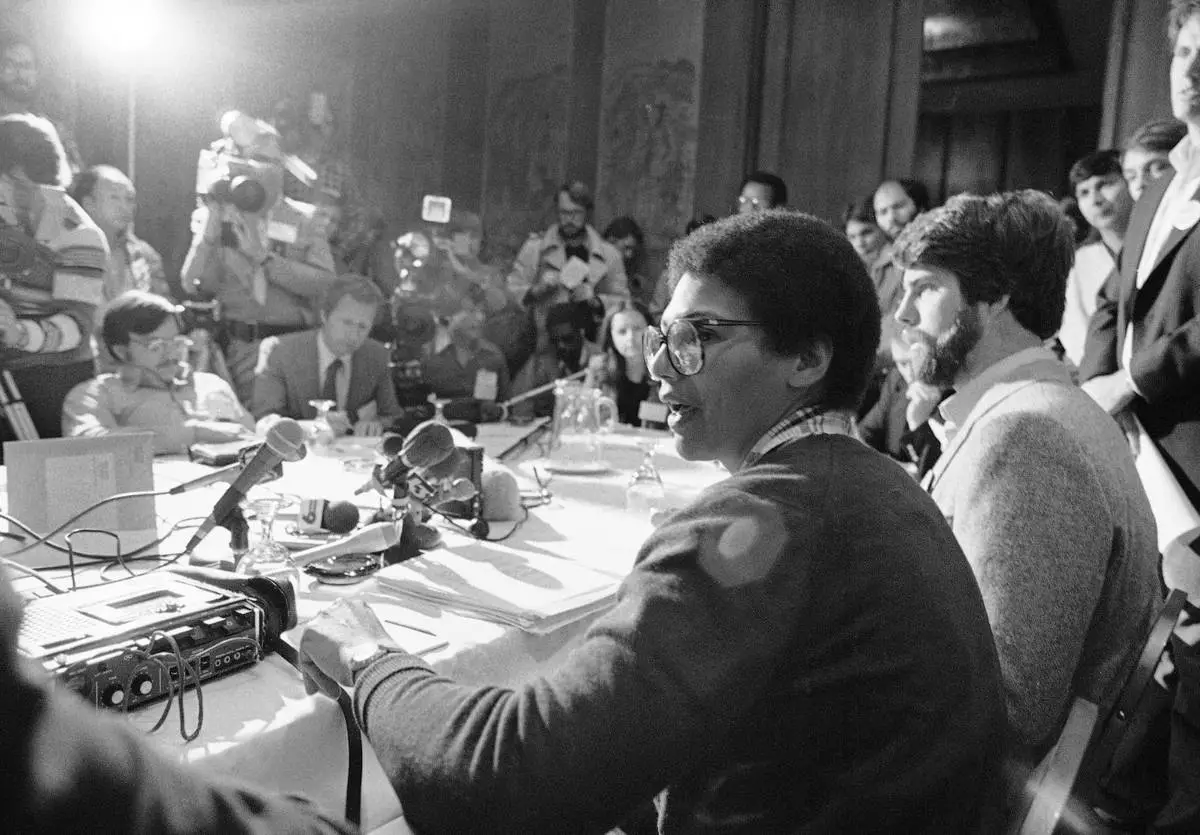
FILE - Anita DeFrantz, of Princeton, N.J., a member of the Olympic rowing team and the Olympic Advisory Council, talks to members of the media at a news conference in Colorado Springs, Colo., April 11, 1980. (AP Photo/Ed Andrieski, File)
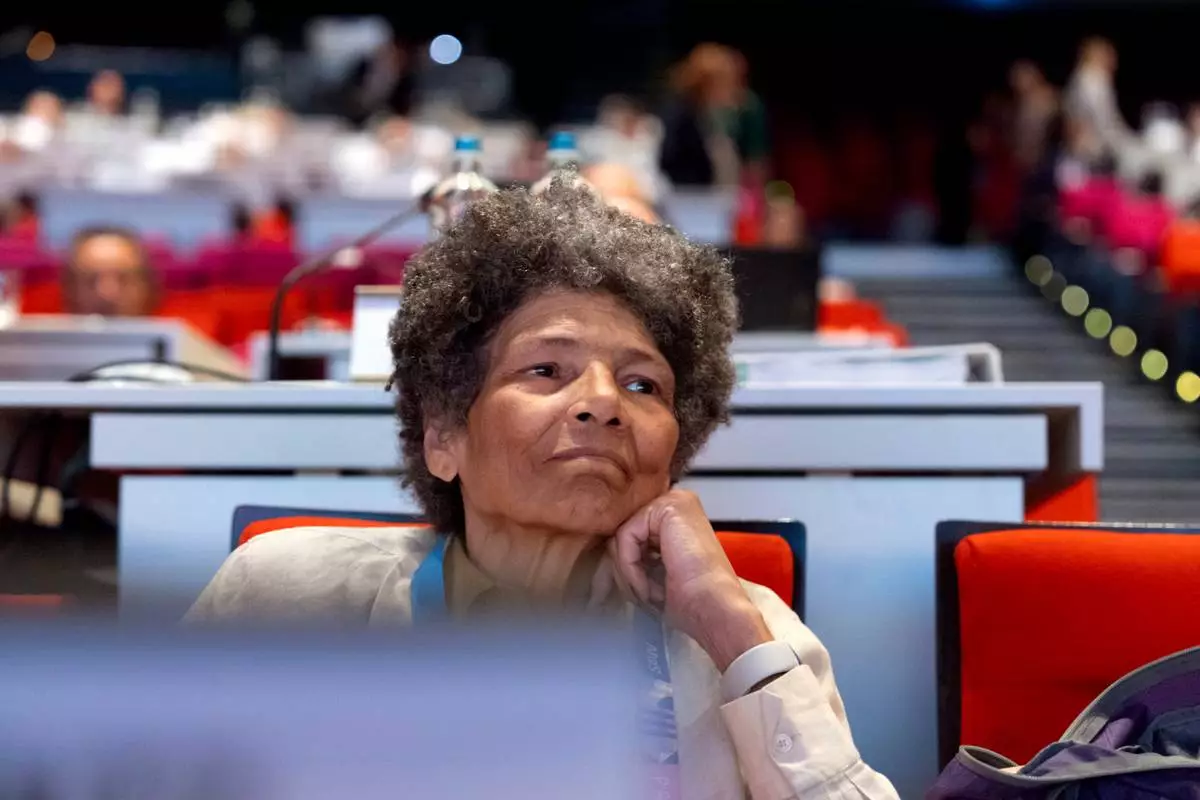
FILE - IOC member Anita DeFrantz, of the United States, attends the start of the 142nd IOC session at the 2024 Summer Olympics, July 23, 2024, in Paris. (AP Photo/David Goldman, File)
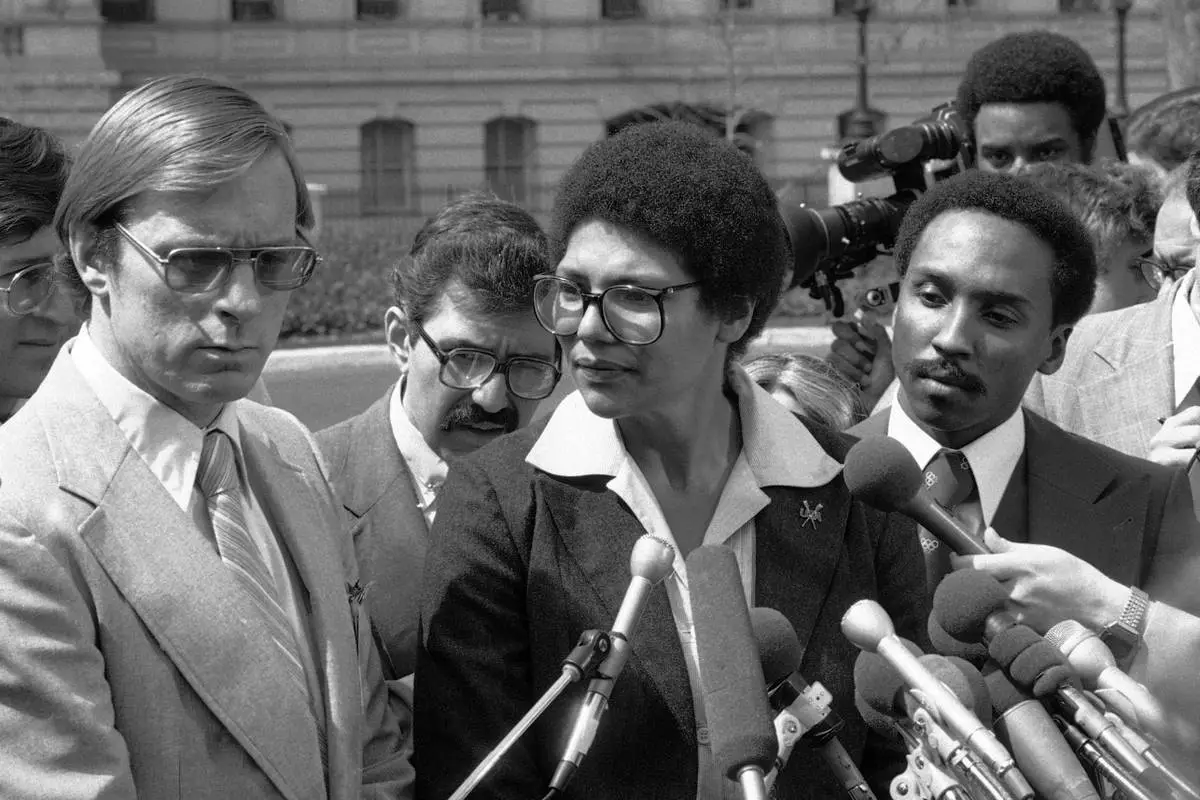
FILE - Anita DeFrantz, spokeswoman for the U.S. Olympic Committee's Athletes Advisory Council, flanked by Larry Hough, left, and Fred Newhouse right, answers questions from reporters outside the White House in Washington on April 4, 1980. (AP Photo/File)