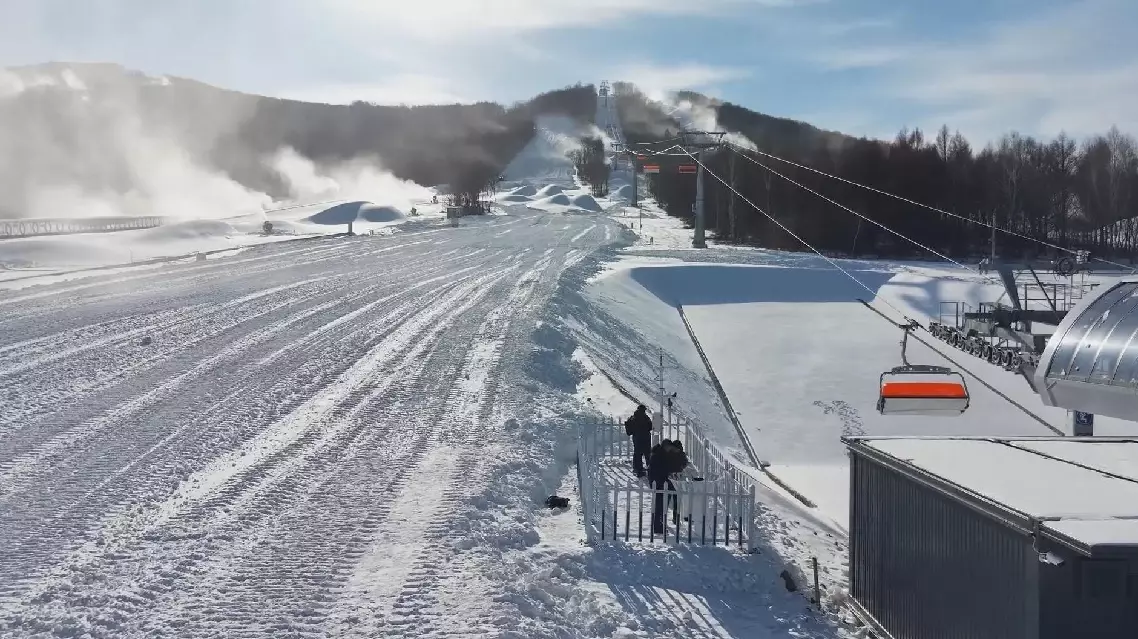
Changchun, capital of northeast China's Jilin Province, has built a three-dimensional weather monitoring network to safeguard the 33rd Winter Universiade and promote broader public participation in winter sports.
Starting in December 2025, Beidahu and Songhua lakes were the first venues to deploy nine basic automatic weather stations.
Subsequently, 38 high-precision monitoring units, 27 observation devices, four weather radars, and eight traffic weather stations were installed across the four competition venues and along the Changchun-Jilin Expressway, ensuring full coverage of the venues and connecting routes.
"We have set up a three-dimensional monitoring system that covers the core competition venues, surrounding transit routes, and mobile emergency units. Based on the real time monitoring data, it delivers 100-meter, minute-by-minute objective forecasts and high impact weather warnings," said Pang Peilin, an expert of Jilin Provincial Meteorological Bureau.
Beyond supporting the Winter Universiade, the entire weather monitoring network has been integrated into the province's permanent observation station registry. After the Games, it will continue to provide precise, safety focused meteorological services for public skiing, winter educational programs, and outdoor snow and ice activities.
The 33rd Winter Universiade will run from January 15 to 25, 2027. It will be the first Winter Universiade held in China since Harbin in 2009, following the Beijing 2022 Winter Olympics and the 2025 Harbin Asian Winter Games.
Changchun 2027 will feature 97 events across 12 sports. Freestyle skiing will be the only snow sport staged in both Winter Universiade host cities.
Changchun sets up 3-dimensional meteorological monitoring system for Winter Universiade
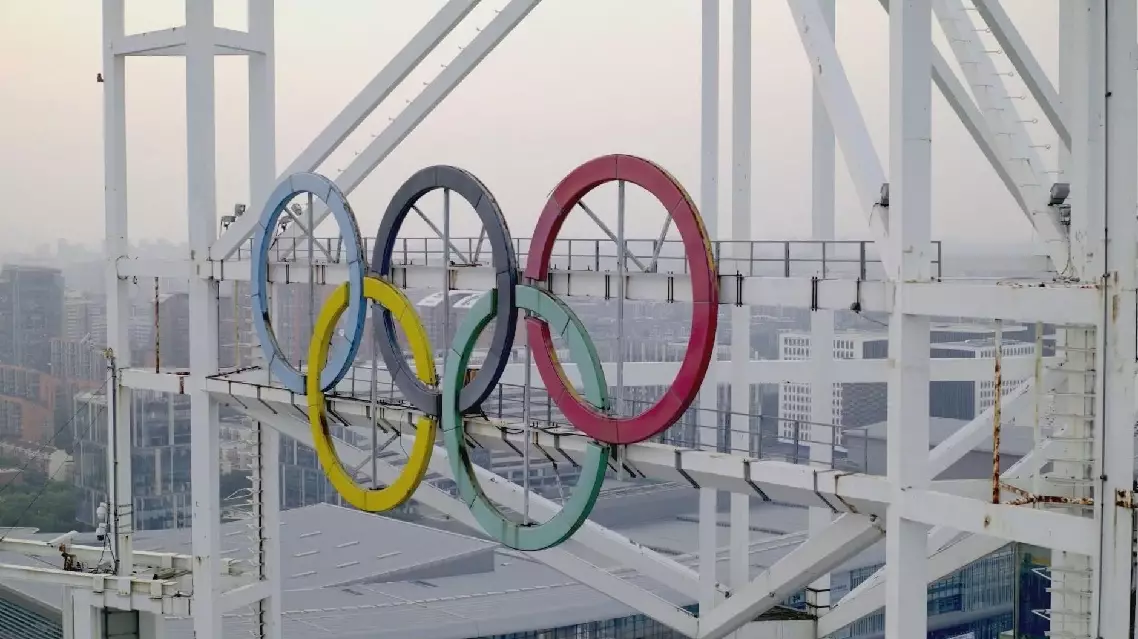
Representatives gathered in Beijing for the 2026 Olympic Museums Network (OMN) General Assembly, marking the network's 20th anniversary and praising the city's dual-Olympic legacy utilization.
The assembly was held from Wednesday to Friday at the Beijing Olympic Museum (BJOM) and attended by representatives from 38 museums and sports institutions across 24 countries.
Delegates participated in discussions regarding OMN's updated Memorandum of Understanding and engaged in exchanges of views on four key topics: Artificial Intelligence; Exhibitions, Collections and Museum Development; Marketing and Audience Engagement; and Experiential Learning.
"Beijing is the only city in the world that has hosted both the summer and the winter Olympics, and for us it was very emblematic to host and to have this 20th general assembly of the Olympics Museums Network here in Beijing, China, and we were very very happy," said Yasmin Meichtry, the OMN chair and also the interim director of the Olympic Foundation for Culture and Heritage. The delegates visited the Bird's Nest, the National Speed Skating Oval, and Shougang Park. They highly commended the innovative post-Games revitalization and utilization of Beijing's dual Olympic legacy, calling it an achievement that leads the world.
[What the Beijing Olympic Museum should do is to] focus on telling the Olympic stories of Beijing, the stories of the Winter Olympics, and the stories of China, so as to carry forward and develop the Winter Olympics spirit. This meeting is actually a very good opportunity to showcase our capabilities in this regard to the world," said Hou Ming, the director of Beijing Olympic Museum (BJOM).
The BJOM, which commemorates both the Olympic Summer Games 2008 and the Olympic Winter Games 2022, became the 33rd member of the OMN in 2023.
Beijing hosts 2026 Olympic Museums Network General Assembly