The city of Nagasaki in southwestern Japan has replaced references to the Nanjing Massacre with the term "Nanjing Incident" in updated exhibition materials for its Atomic Bomb Museum, sparking outcry from citizens' groups and history scholars.
According to Kyodo News, the materials were presented Friday at a meeting of the museum's operation council.
City officials claimed at the meeting that the change was based on descriptions in mainstream Japanese history textbooks and official terminology used by Japan's Foreign Ministry.
Some of the exhibition updates have already begun, with the entire process expected to be completed by mid-March 2027.
The proposed change had already drawn opposition from various quarters when it was first disclosed.
Tatsuo Sekiguchi, head of a Nagasaki citizens' group and a former journalist who interviewed Nanjing Massacre survivors, voiced deep concern.
"First of all, such revisions can make people feel that Japan is trying to downplay or diminish the brutality of the massacre. And it's not just the Chinese who will think so. People from countries hurt by Japanese colonial rule or invasion may see it the same way. The rest of the world would understand it likewise, because the Nanjing Massacre is already an established historical fact," he said. "What historical truth actually can be greatly affected by the way it is phrased. If 'massacre' is expressed as 'incident,' young people who study this history in the future will find it difficult to correctly understand this period of history, and difficult to judge which expression better conforms to historical facts," said a Japanese visitor at the museum.
Meanwhile, Sekiguchi said he believes that from the perspective of the international community, particularly countries that once suffered from Japanese aggression and colonial rule, how the Nanjing Massacre and other historical events are described is not merely a matter of word choice, but rather concerns how Japan acknowledges and reflects on its wartime responsibilities.
"Foreign media have also come to interview about this issue. They think it's something that deserves global attention. This isn't just a Chinese issue. The whole world is watching. Nagasaki's atomic bomb survivors' groups have documented their testimonies and added English subtitles for international audiences. Then English comments came, saying 'Japan must not forget the Nanjing Massacre.' That's how the international community has responded," said Sekiguchi.
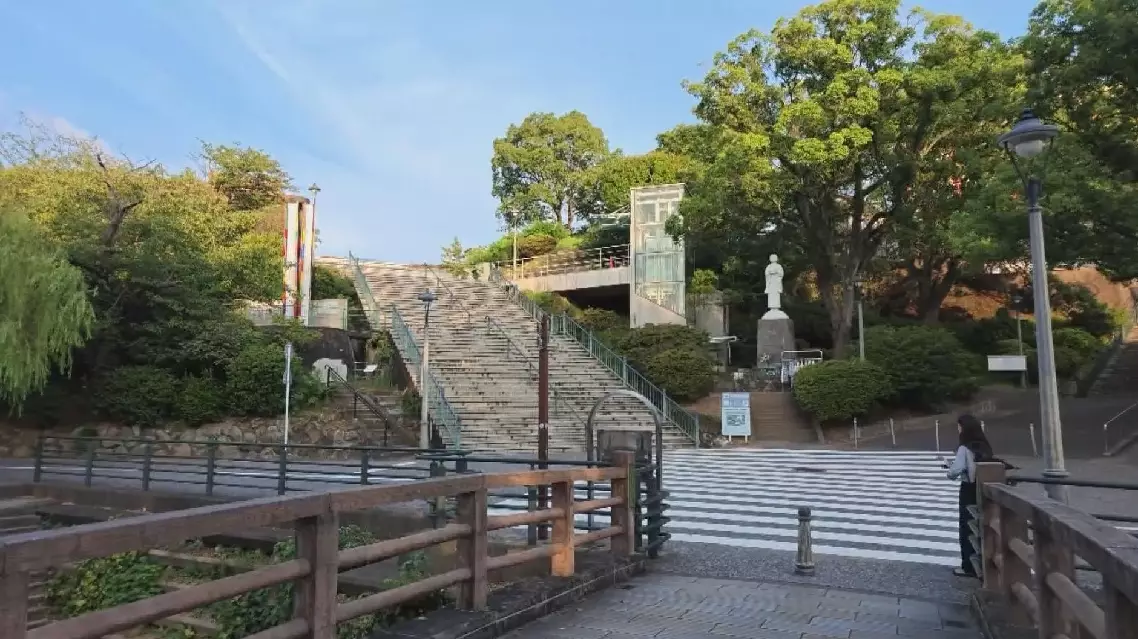
Nagasaki A-bomb museum begins replacing 'Nanjing Massacre' with 'Nanjing Incident', sparking outcry
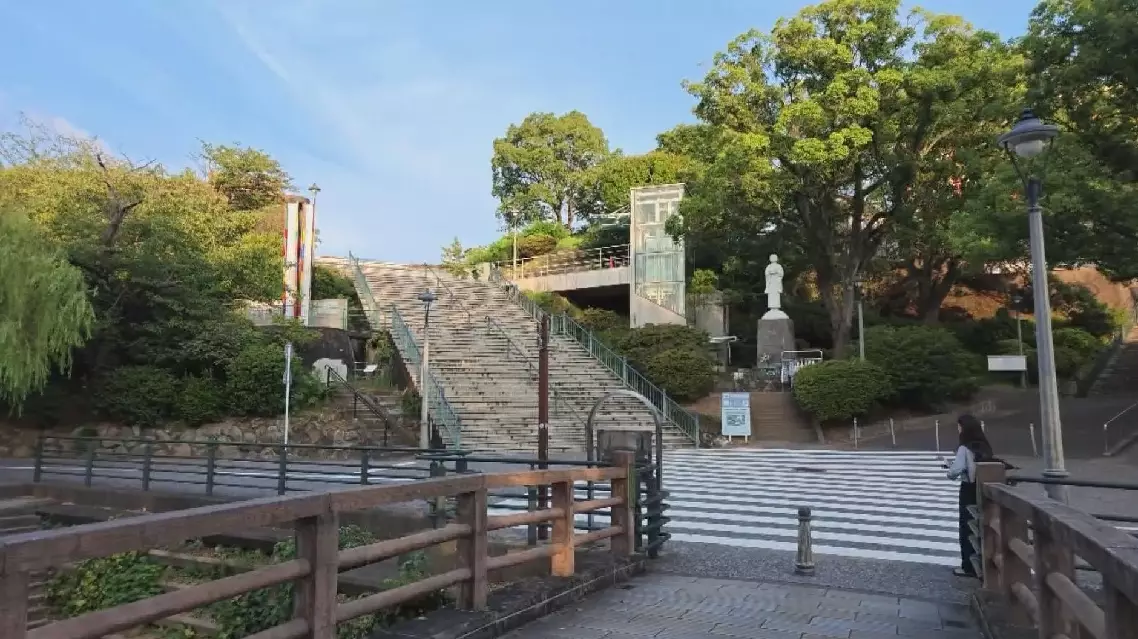
Nagasaki A-bomb museum begins replacing 'Nanjing Massacre' with 'Nanjing Incident', sparking outcry
A heartwarming reunion between two prominent Chinese and U.S. table tennis players marked the 55th anniversary of "Ping-Pong Diplomacy" between the two countries this year, highlighting the enduring friendship between the two peoples.
Judy Hoarfrost was 15 when she first walked into Beijing's Capital Indoor Stadium in April 1971 as a member of the American national team table tennis delegation -- a trip that would change the course of China-U.S. relations.
In April this year, she returned to the same arena, embracing her old friend and former Chinese rival Liang Geliang as the two countries commemorated the anniversary.
The commemoration, co-hosted by the Chinese People's Association for Friendship with Foreign Countries, the General Administration of Sport and China Media Group drew more than 500 participants, including government representatives, sports figures and youth delegates from both China and the United States.
The historic exchange began in 1971, when the U.S. table tennis team, then in Nagoya, Japan, for the World Table Tennis Championships, was invited to visit China. The team arrived on April 10 that year to commence their visit to China, becoming the first U.S. group to visit since the founding of the People's Republic of China in 1949.
The breakthrough ended more than two decades of estrangement and helped pave the way for then U.S. President Richard Nixon's landmark visit to China in 1972 and the establishment of diplomatic ties in 1979.
Hoarfrost was the youngest member of that original U.S. delegation, while Liang, a multiple-time world champion, was 21 at the time of the 1971 exchange.
For Hoarfrost, the return stirred memories of a Beijing vastly different from the city she encountered as a teenager more than half a century ago.
"Here I am in Beijing. It was in 1971; I was right here, and it was just all bicycles and there were a few buses just packed with people. For an amazing 'Ping-Pong Diplomacy' trip. And here I am on my way to go see Liang Geliang. He and I were both the youngest players on our respective teams," Hoarfrost said during a taxi ride through the capital in April to meet Liang.
Meeting Liang again, she said, was the highlight of the trip. The two played a game at the Capital Indoor Stadium, the site that witnessed the historic matches between the Chinese and U.S. national teams in April 1971. The two then sat together and pored over old photos capturing those historic moments.
"Amazing to be back and to get to see my old friend Liang Geliang and reminisce and look at photos, some of which I've not seen before, and get to play with him. He's a superstar," Hoarfrost said.
Liang reflected on how far both countries have come since.
"Looking back on these decades, seeing where our country is today, and how friendship between the peoples of China and the United States has grown better and better, it fills me with great joy," he said.
Hoarfrost said the legacy of that unlikely diplomatic opening remains as relevant as ever.
"The spirit of 'Ping-Pong Diplomacy,' our legacy, really, is about the power of sports and the power of people just meeting together with our common interests, how it can bring us together, how it can help us to understand each other, and how the small ball can move the big ball, and it's just, it's a lesson I would like us all to learn," she said.
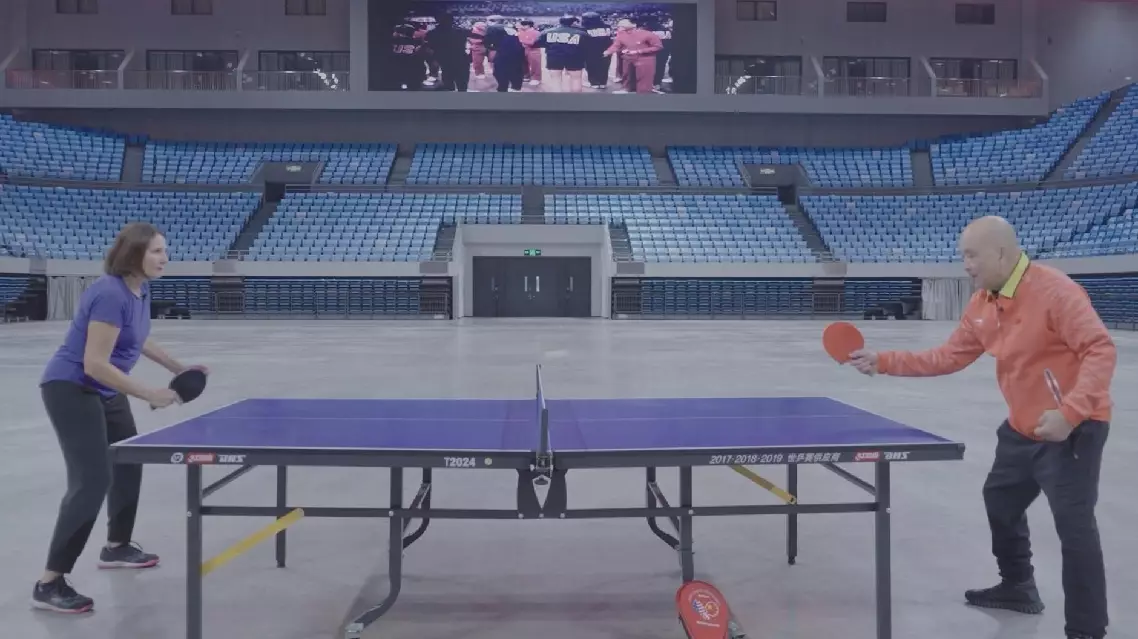
China-US "Ping-Pong Diplomacy" reunion in Beijing highlights enduring people-to-people friendship