Skip to Content Facebook Feature Image

New evidence unveiled by Harbin museum confirms Japan's WWII chemical warfare as "systematic state crime"

China

China

China

New evidence unveiled by Harbin museum confirms Japan's WWII chemical warfare as "systematic state crime"

2026-11-28 21:39 Last Updated At:22:47

Three newly disclosed pieces of evidence documenting the Japanese military's chemical warfare in China during World War II offer what researchers describe as a complete chain of proof of a "systematic state crime" perpetrated by the invading troops.

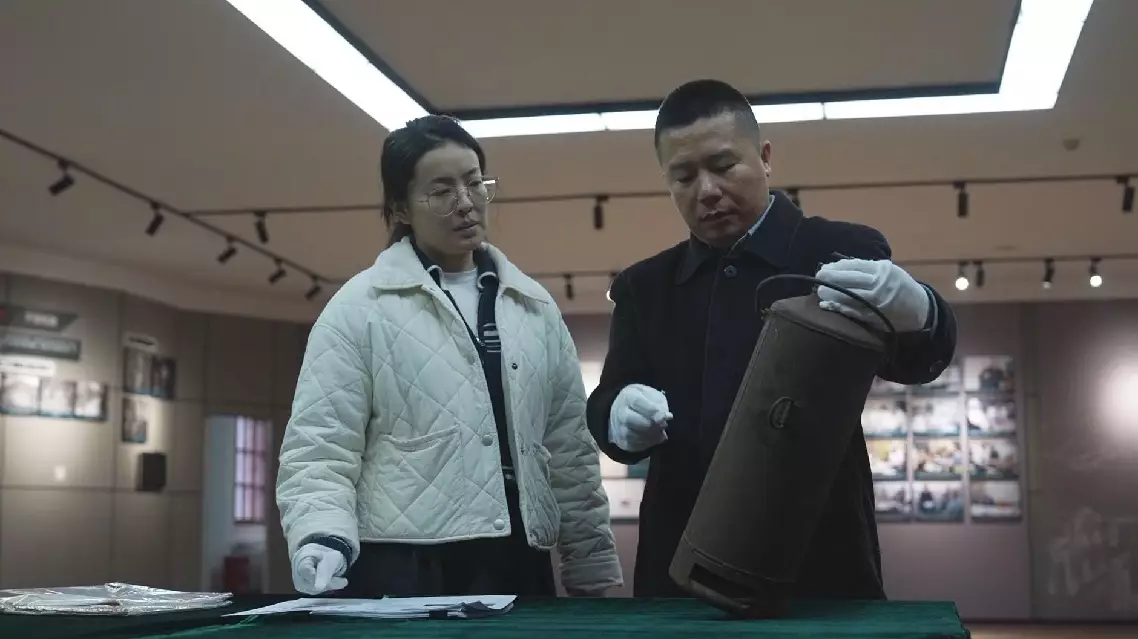
The items -- a refill canister for a chemical agent dispersal device and two historical documents related to chemical warfare -- were collected in Japan by the Exhibition Hall of Evidences of Crime Committed by Unit 731 of the Japanese Imperial Army, a museum built on the former site of the Japanese army's notorious biological and chemical warfare base in Harbin, the provincial capital of northeast China's Heilongjiang.

Established as the nerve center for Japanese biological warfare in China and Southeast Asia during WWII, Unit 731 conducted human experiments on at least 3,000 people, and Japan's biological weapons killed over 300,000 people in China.

Released by the exhibition hall on Friday, the items together provide corroborating evidence of the Japanese military's weapons manufacturing, personnel training and field testing during its war of aggression in China.

"The canister bears a nameplate listing its serial number, date of manufacture in 1938, and Japanese manufacturer. Its inner walls are coated with a special material to resist corrosion from the vesicant filling. These details provide direct and solid evidence of Japan's wartime atrocities," said Jin Shicheng, head of the exhibition hall's publicity, education and exhibition department.

"On the battlefield, the Japanese military employed various methods to use chemical weapons in China. These included gas shells, the spraying of chemical agents from specially equipped vehicles and manual dispersal by soldiers. The newly unveiled device was loaded with blister agents, such as mustard gas, and manually operated by Japanese soldiers to release the toxic agents," he said.

One of the two newly released documents is a collection of teaching materials and notes for Japanese chemical warfare trainees, compiled in 1942.

"Postwar testimonies from former Japanese military personnel reveal that what the Japanese military described as training in protection against toxic agents was actually intended to prepare its troops to conduct chemical warfare," Jin said.

The other document, compiled in 1938, records the impact of extremely cold weather on chemical warfare operations. Experts believe the related tests were most likely conducted in northeast China.

"These three pieces of evidence were all collected in Japan. Together, they corroborate one another, forming a complete chain of evidence that confirms Japan's chemical warfare was a top-down, premeditated, organized and systematic state crime," Jin said.

Japan's abandoned chemical weapons across China continue to pose severe threats to the safety of lives, property and the environment, and insufficient efforts and input from the Japanese side mean the destruction process is far behind schedule.

"Further research into historical documents is vital to defending historical truth against distortion. It could also provide potential clues for locating burial sites of Japanese abandoned chemical weapons," Jin said.

Located in Harbin's Pingfang District, the Exhibition Hall of Evidences of Crime Committed by Unit 731 of the Japanese Imperial Army constitutes the largest and best-preserved complex of biological warfare sites in the history of global warfare, including more than 20 ruins and remains such as the old headquarters, special prisons, bacterial laboratories, and incinerators.

Since its new building opened in August 2015, the hall has received more than 16 million visits, according to official data.
New evidence unveiled by Harbin museum confirms Japan's WWII chemical warfare as "systematic state crime"

New evidence unveiled by Harbin museum confirms Japan's WWII chemical warfare as "systematic state crime"
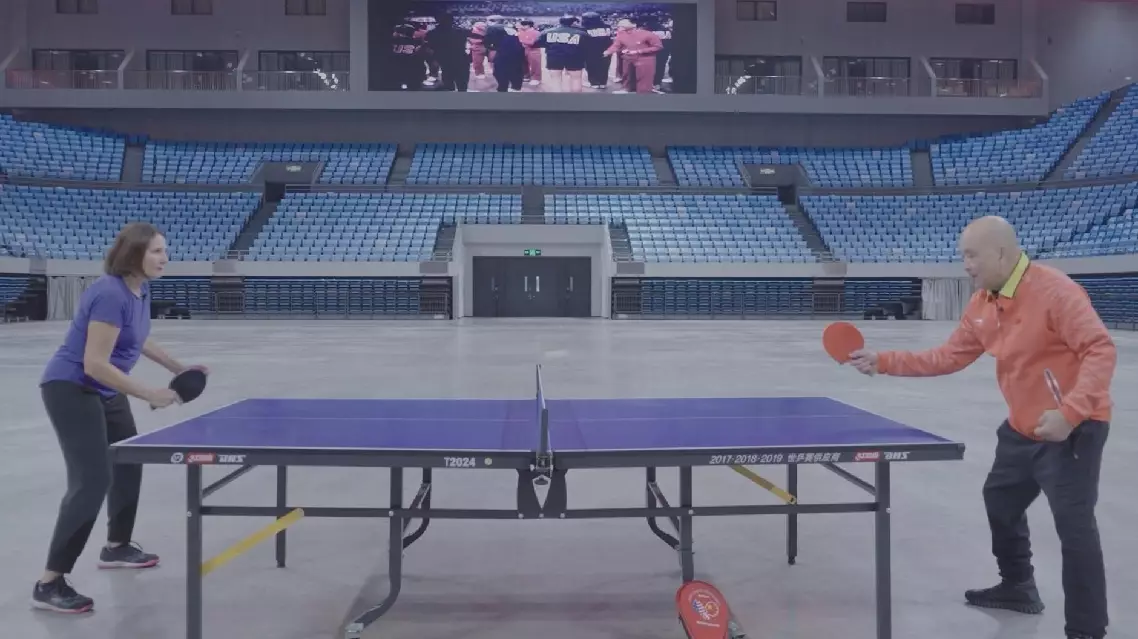
A heartwarming reunion between two prominent Chinese and U.S. table tennis players marked the 55th anniversary of "Ping-Pong Diplomacy" between the two countries this year, highlighting the enduring friendship between the two peoples.

Judy Hoarfrost was 15 when she first walked into Beijing's Capital Indoor Stadium in April 1971 as a member of the American national team table tennis delegation -- a trip that would change the course of China-U.S. relations.

In April this year, she returned to the same arena, embracing her old friend and former Chinese rival Liang Geliang as the two countries commemorated the anniversary.

The commemoration, co-hosted by the Chinese People's Association for Friendship with Foreign Countries, the General Administration of Sport and China Media Group drew more than 500 participants, including government representatives, sports figures and youth delegates from both China and the United States.

The historic exchange began in 1971, when the U.S. table tennis team, then in Nagoya, Japan, for the World Table Tennis Championships, was invited to visit China. The team arrived on April 10 that year to commence their visit to China, becoming the first U.S. group to visit since the founding of the People's Republic of China in 1949.

The breakthrough ended more than two decades of estrangement and helped pave the way for then U.S. President Richard Nixon's landmark visit to China in 1972 and the establishment of diplomatic ties in 1979.

Hoarfrost was the youngest member of that original U.S. delegation, while Liang, a multiple-time world champion, was 21 at the time of the 1971 exchange.

For Hoarfrost, the return stirred memories of a Beijing vastly different from the city she encountered as a teenager more than half a century ago.

"Here I am in Beijing. It was in 1971; I was right here, and it was just all bicycles and there were a few buses just packed with people. For an amazing 'Ping-Pong Diplomacy' trip. And here I am on my way to go see Liang Geliang. He and I were both the youngest players on our respective teams," Hoarfrost said during a taxi ride through the capital in April to meet Liang.

Meeting Liang again, she said, was the highlight of the trip. The two played a game at the Capital Indoor Stadium, the site that witnessed the historic matches between the Chinese and U.S. national teams in April 1971. The two then sat together and pored over old photos capturing those historic moments.

"Amazing to be back and to get to see my old friend Liang Geliang and reminisce and look at photos, some of which I've not seen before, and get to play with him. He's a superstar," Hoarfrost said.

Liang reflected on how far both countries have come since.

"Looking back on these decades, seeing where our country is today, and how friendship between the peoples of China and the United States has grown better and better, it fills me with great joy," he said.

Hoarfrost said the legacy of that unlikely diplomatic opening remains as relevant as ever.

"The spirit of 'Ping-Pong Diplomacy,' our legacy, really, is about the power of sports and the power of people just meeting together with our common interests, how it can bring us together, how it can help us to understand each other, and how the small ball can move the big ball, and it's just, it's a lesson I would like us all to learn," she said.

China-US "Ping-Pong Diplomacy" reunion in Beijing highlights enduring people-to-people friendship

China-US "Ping-Pong Diplomacy" reunion in Beijing highlights enduring people-to-people friendship

Recommended Articles