Visitors at Tianmen Mountain in Zhangjiajie, central China's Hunan Province, were treated to a breathtaking spectacle on Friday as a shaft of sunlight pierced straight through the natural cave arch.
The moment is a rare winter treat exclusive to Tianmen Mountain, appearing on clear mornings from November to February and lasting just over 10 minutes.
"So we are here in Tianmen mountain because we think it's a very beautiful place in the world and it's very special to see the light," said a tourist from Spain.
"I've seen videos online and on social media of Tianmen Mountain as well as the places around here. It looks pretty spectacular seeing the light come through the cave. Super cool," said Daniel Ramsay, another tourist who came from New Zealand.
According to statistics, a total of 340,000 people have visited Tianmen Mountain scenic area since November, an increase of 22.78 percent year on year.
Benefiting from visa-free transit policies and an extensive network of international flight routes, the site hosted 125,000 overseas visitors, a year-on-year growth of 32.84 percent.
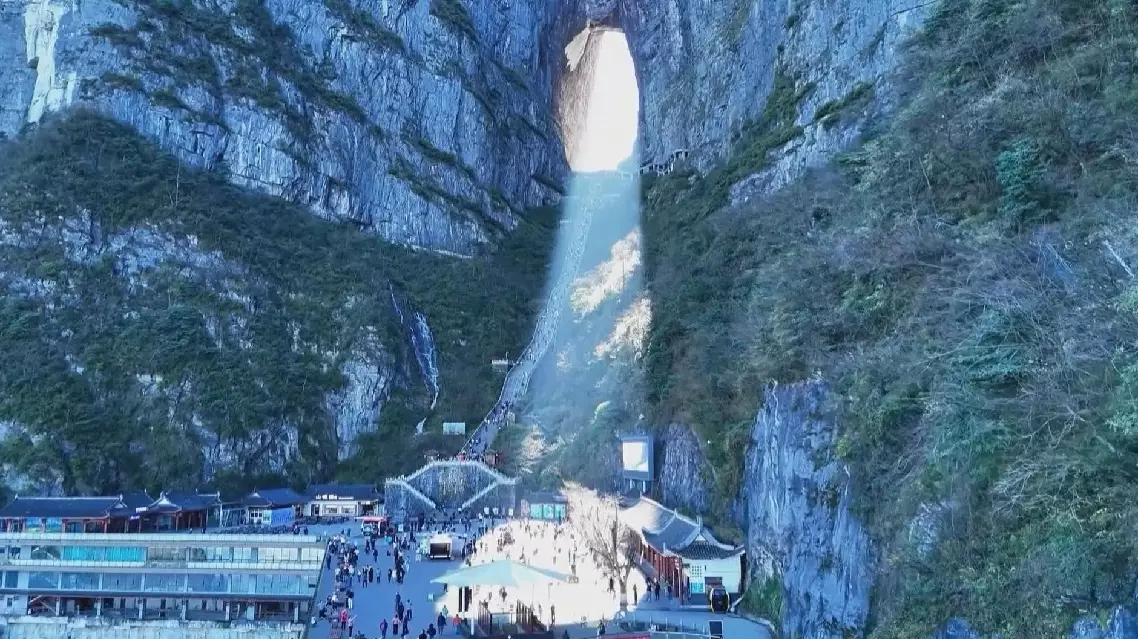
Visitors treated to rare winter sunbeam at Tianmen Mountain in central China
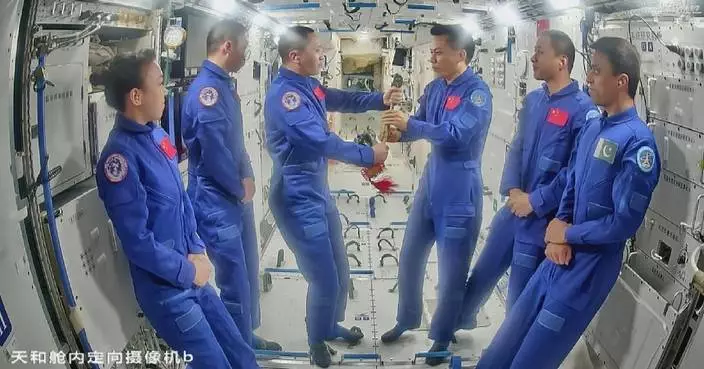
Arslan Mehmood, a teacher at the Confucius Institute Islamabad, a department of the Beijing Language and Culture University, recalled the Chinese-learning journey of Pakistani astronaut Muhammad Zeeshan Ali, who made history on Wednesday as the country's first citizen to enter space aboard China's Shenzhou-24 crewed spacecraft, and praised him as hardworking and diligent.
The spacecraft lifted off from the Jiuquan Satellite Launch Center in northwest China on Wednesday morning, and the crew entered Tiangong that afternoon.
In January this year, eight trainees from Pakistan's Space and Upper Atmosphere Research Commission came here to learn Chinese, with Mehmood as their Chinese teacher.
At the time, Mehmood had no idea that one of his students would become the first astronaut in Pakistan's history. After learning the news, he bought a model spacecraft and placed it in his office. "When he arrived, he couldn't speak any Chinese at all -- he didn't even know 'ni hao (hello).' We started teaching him from 'ni hao (hello)'," said Mehmood.
What was originally a one-month Chinese course was extended by another month at the students' own request, as they felt their Chinese was still not good enough.
Three hours of Chinese classes a day was no easy task for these beginners. Pronunciation, in particular, gave them plenty of trouble, but it also brought plenty of laughter to the classroom. To help the students correct their pronunciation, Mehmood even made a comparison chart for them. After going to China for space training, Ali has continued to learn Chinese. Now, the student who once could not even say "ni hao (hello)" is able to express his feelings in Chinese in front of the media. "When he started learning Chinese here, he couldn't speak any Chinese at all. Although it was only two months, our classes were relatively long -- three hours every day. After he was selected to go to China, he kept learning Chinese. By now, he should already be able to communicate with Chinese people in Chinese without any problem," he said. Mehmood has also begun looking forward to seeing his students again. He hopes to sit together with them and chat as they used to -- only this time, what they will talk about are stories from space.
"We want to meet them. We also want to recall with them what they were like when they first arrived. And we want to hear the whole story from their own mouths," he said.
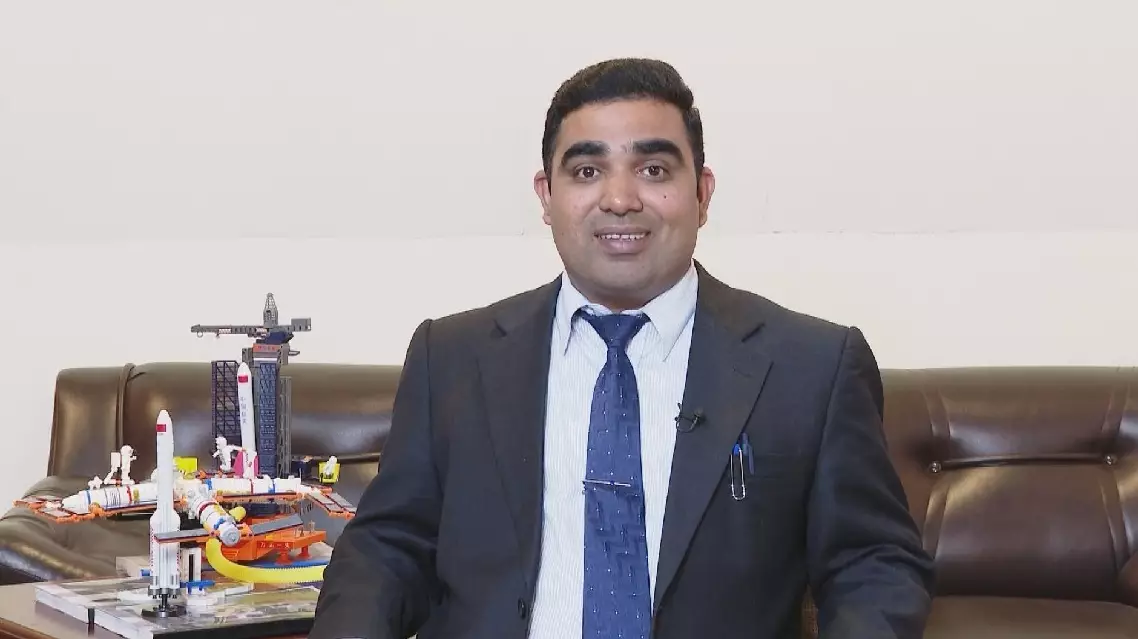
Confucius Institute teacher recalls first Pakistani astronaut's Chinese language learning journey