Skip to Content Facebook Feature Image

Harsh winter deepens misery of Palestinians in Gaza displacement camps amid severe aid shortages

China

China

China

Harsh winter deepens misery of Palestinians in Gaza displacement camps amid severe aid shortages

2026-11-29 12:52 Last Updated At:16:44

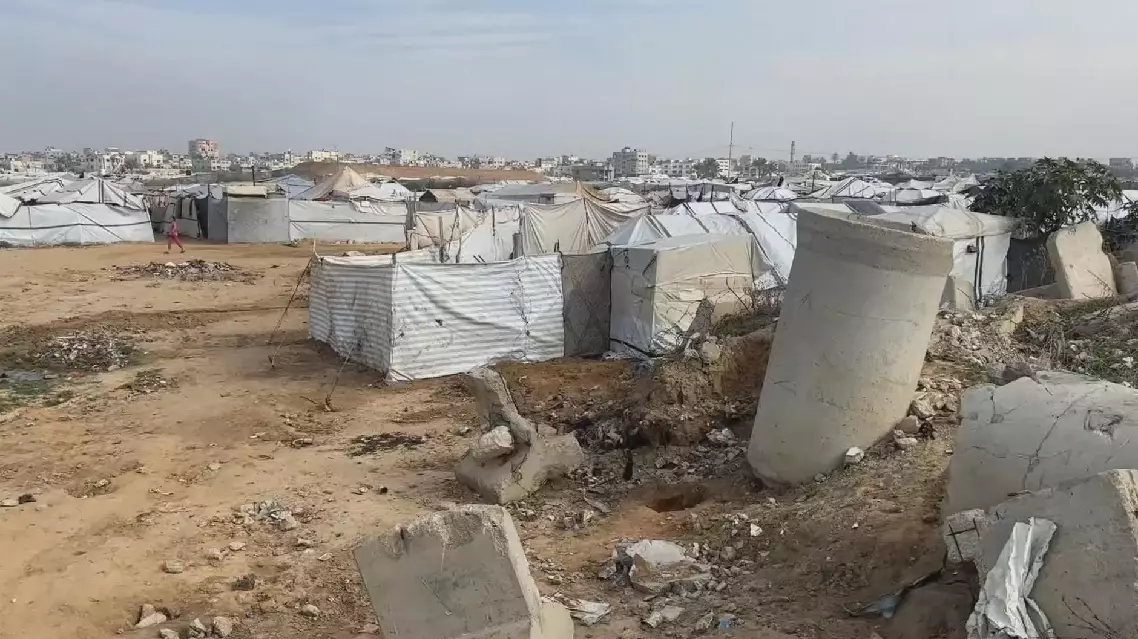
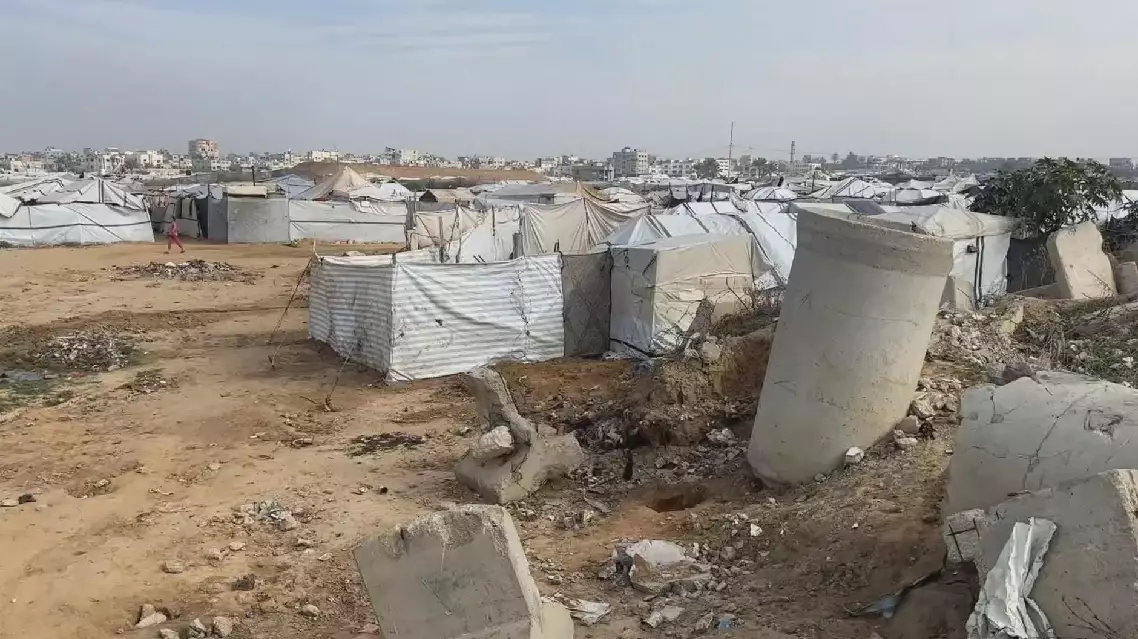
The misery of displaced Palestinians living in displacement camps in the war-torn Gaza Strip is deepening as a harsh winter sets in and aid supplies remain critically low.

As of now, nearly 1.4 million people in the Gaza Strip are still living in tents and various temporary shelters, accounting for nearly two-thirds of the total population, according to statistics.

While demand for winter supplies in Gaza is enormous, the delivery of outside aid is nonetheless struggling to get through.

Relevant UN organizations recently said that the entry of basic supplies such as tents, tarpaulins and plastic cloth into Gaza remains restricted, and that more than 100,000 tents are currently stored on the other side of the crossing, waiting to be transported from Egypt into Gaza.

"People here have had to put up tents. At first everyone thought this would only be a temporary arrangement, but now it has been three full years. These tents are already dilapidated, unable to keep out the summer heat or withstand the winter cold. Now these displaced people are going through their fourth winter. They urgently need tents that can provide protection and winter supplies to help them live with dignity," said Basim Abu Jeri, a researcher at the Al-Mezan Center for Human Rights.

In addition to the people living in tents, local relief agencies estimate that about 700,000 people in the Gaza Strip are living in dangerous buildings full of cracks that could collapse at any moment, and that about 470,000 families are in urgent need of emergency relief.

Meanwhile, the latest report from the UN Office for the Coordination of Humanitarian Affairs (OCHA) shows that only 35 percent of the minimum funding required for the Gaza's winter aid response plan has so far been secured. In a recent one-week period, winter supplies such as tents and blankets were distributed to only about 10,000 families, far short of the enormous relief needs.

"We visited various refugee camps, and of course we are doing our utmost to carry out emergency relief, such as building sand dikes or raising the foundations of tents. But to be honest, these efforts are often in vain, especially when you are facing the 'tent predicament.' Tents have now become a nightmare -- a nightmare that stings the heart of every Palestinian in Gaza. The best and fastest way to relieve the people of Gaza is reconstruction, and we call on the international community and the whole world to act accordingly," said Egyptian Committee for Gaza Relief Spokesman Mohamed Mansour.
Harsh winter deepens misery of Palestinians in Gaza displacement camps amid severe aid shortages
Harsh winter deepens misery of Palestinians in Gaza displacement camps amid severe aid shortages


Harsh winter deepens misery of Palestinians in Gaza displacement camps amid severe aid shortages

Harsh winter deepens misery of Palestinians in Gaza displacement camps amid severe aid shortages

The logistics industry's investment and financing market remained active in 2026, with capital support for the sector's digital and platform-based development continuing to climb, according to a report released by the China Federation of Logistics and Purchasing (CFLP) on Sunday.

As of October 2026, the logistics industry had seen more than 500 merger and acquisition cases, with the transaction volume exceeding 100 billion yuan (about 14.1 billion U.S. dollars), while the scale of logistics industry funds surpassed 300 billion yuan.

Capital is increasingly concentrated in sectors that have already demonstrated the capability for large-scale deployment, such as unmanned logistics, autonomous driving for trunk lines and smart heavy trucks, last-mile autonomous delivery, and cross-border fulfillment.

In terms of transport capacity, about 38 million truck drivers nationwide are engaged in road freight services year-round, with nearly 70 percent mainly handling cross-provincial or nationwide transport. Nearly 80 percent of truck drivers have used digital freight platforms.

Beyond sourcing cargo, drivers' use of value-added services on digital freight platforms shows a marked concentration pattern, with refueling services accounting for 48.83 percent and freight settlement services taking up 46.75 percent.

Experts say that under the guidance of the national strategy for logistics network construction, logistics platforms and transport capacity will enter a critical period of transition from scale expansion to quality improvement.

Against this backdrop, cultivating new quality productive forces through digital technology and building a new industry ecosystem featuring network-wide coordination, intensive cost reduction and efficient win-win outcomes have become a core task for the high-quality development of the logistics industry.

"The value of online freight platforms does not lie in the simple stacking of infrastructure, but in reshaping the way logistics is organized with data, algorithms and rules. Transport capacity offers a physical carrier, while platforms provide the organizational link. They are deeply coupled and mutually empowering, driving the logistics network to move from infrastructure connectivity toward systemic efficiency," said Yang Guodong, vice president of the CFLP.

China's digital freight platform investment keeps rising: report

China's digital freight platform investment keeps rising: report

Recommended Articles