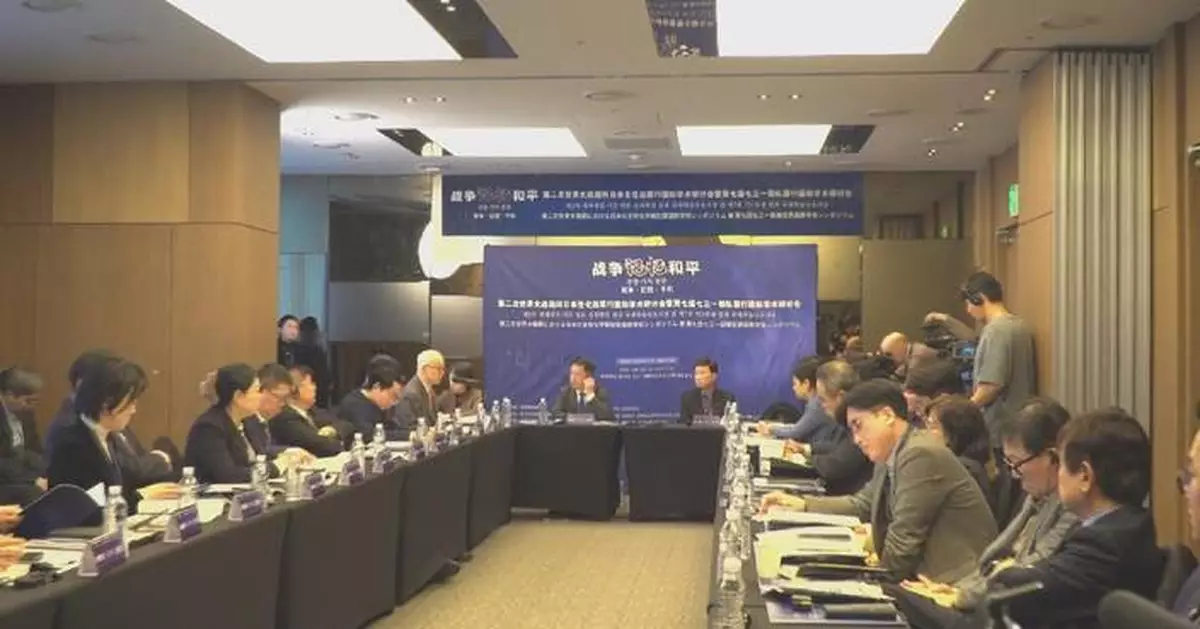
An academic seminar on Japan's biological and chemical warfare crimes during World War II (WWII), also the seventh international seminar on the crimes of Unit 731, was held in Seoul, the Republic of Korea (ROK), on Saturday.
Experts and scholars from China, the ROK and Japan, using historical archives as well as results of their field investigations and research on victims, further exposed the crimes of Japanese militarists in waging bacterial warfare and conducting medical human experiments, and called for stronger cross-border cooperation to spread the historical truth more widely.
A key focus of this seminar is how to transcend national and regional boundaries to further expose the historical truth of Japan's biological warfare, through historical archives, field investigations, victims' testimonies and the preservation of historical sites.
Japanese participants at the seminar said that an in-depth study of the war crimes of Japanese militarists requires both continued excavation of historical materials and the Japanese society's facing up to history. In Japan, however, research in this field still faces many practical obstacles.
"In my view, only Japanese scholars can truly conduct in-depth research on those Japanese who were present at the scene of those events and on their experiences. In Japan, however, this remains a rather small field of research: scholars studying biological and chemical warfare are few in number, and the Japanese government has yet to acknowledge these historical facts at the national level," Japanese scholar Fuyuko Nishisato said.
ROK scholars said that research on the crimes of Unit 731 should not be confined to any single country or region, but should start from the historical experience of Northeast Asia as a whole and reflect on the profound lessons brought by war.
"Japanese militarism brought invasion to many parts of China, where large numbers of civilians were massacred and endured immense suffering. Among the most brutal chapters of this history stands Unit 731. Through the research, I have come to a deeper understanding that war must never break out again in Northeast Asia. This is not merely China's concern. It is a shared concern confronting the ROK, China, Japan and all countries in the region," said Kim Joo-yong, director of the Institute of Korea-China History and Culture at Wonkwang University.
"The issue of Unit 731's victims is by no means confined to Harbin alone. New leads on victims continue to come to light in the ROK as well. This is not a historical issue that belongs to the past, but a significant historical fact that the whole world should remember and face together," said Kim Wol-bae, specially-appointed professor of Harbin University of Science and Technology.
Participants at the seminar said that further investigating relevant historical leads and strengthening history education are important ways to help younger generations understand the historical truth. "What we should do is to help the next generation remember these historical wounds and never forget what once happened," said ROK expert Kim Gwang-seon.
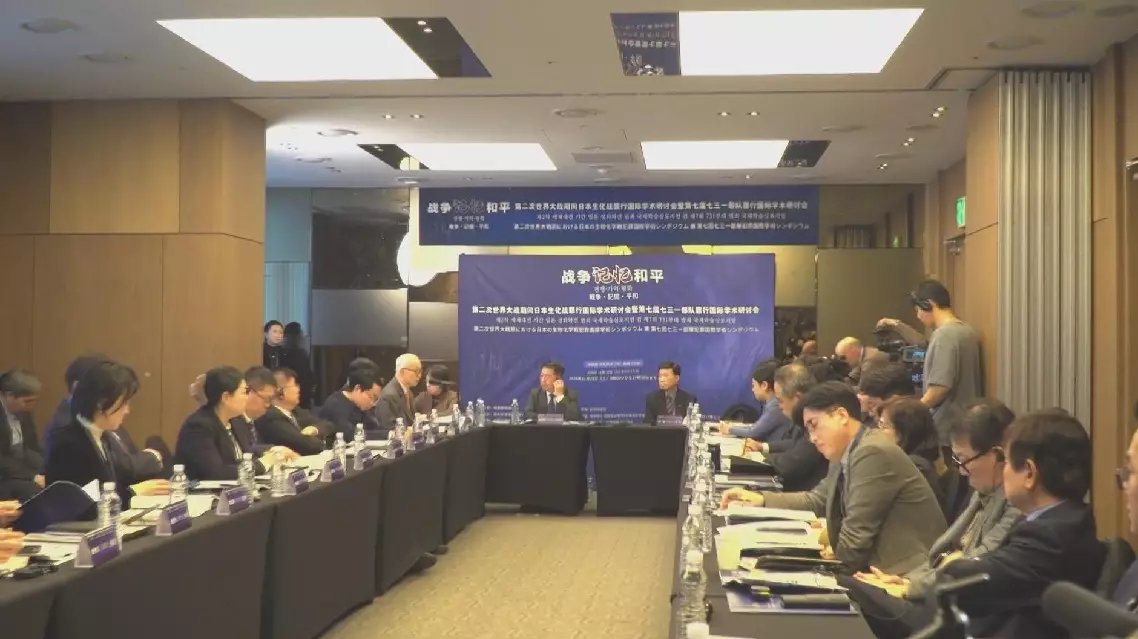
Seoul hosts seminar on Japan's WWII biological, chemical warfare crimes