Japan's scholars and activists condemned Nagasaki City's whitewashing of the Nanjing Massacre, toning it down with the term "Nanjing Incident" in updated exhibition materials, and urged the Japanese government to face up to and deeply reflect on the history of aggression.
Nagasaki in southwestern Japan has unveiled updated exhibition materials for its Atomic Bomb Museum, in which references to the Nanjing Massacre are toned down with the term "Nanjing Incident," Kyodo News reported.
The materials were presented Friday at a meeting of the museum's operation council.
City officials claimed at the meeting that the change was based on descriptions in mainstream Japanese history textbooks and official terminology used by Japan's foreign ministry.
The whitewashing wording has triggered strong outrage amongst Japanese scholars.
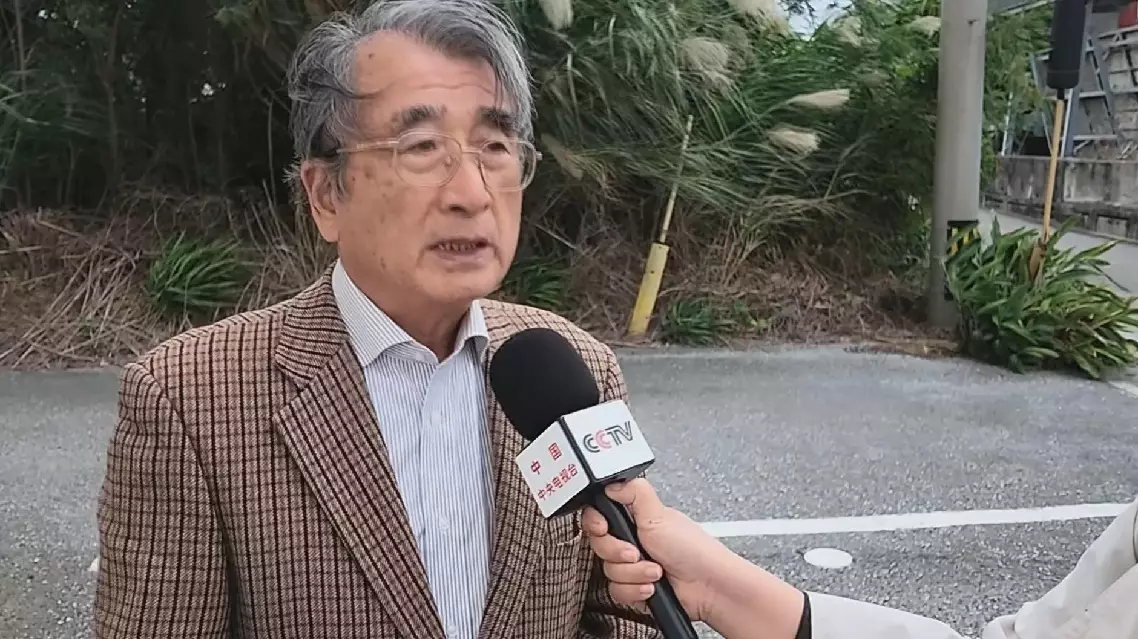
"Japan inflicted extremely severe harm to China with events like the Nanjing Massacre and the Bombing of Chongqing. No matter how many apologies Japan has made, it will never be enough. In my view, Japan must continue to apologize for that consistently. I think that any nation that denies its own history is bound to head down the wrong path. We must squarely face these historical facts and ensure they are passed on to the next generation. History must not be covered up, absolutely it must never be concealed or distorted. Otherwise, it will be impossible for Japan to ever become a truly peaceful nation," said Teruya Hiroyuki, Professor Emeritus of Okinawa International University.
"When I was young, the Nanjing Massacre was indeed written in our textbooks. We also had the opportunity to study this period of history on our own. But today, Japan's relevant government departments have tried to remove all traces of that shameful history from the textbooks. I think this is very abnormal," said Inagaki Kinuyo, Professor Emeritus of Meio University.
Japanese people with vision pointed out that historical exhibitions should accurately convey to visitors the background and course of the war, as well as Japan’s responsibility for the war.
"Japan is now engaged in a large-scale movement to falsify history. Whether it is the government, or the so-called opinion leaders and media, all are involved in doing so. It is truly outrageous and deeply regrettable. To tone down a massacre as an 'incident,' isn't that an act of trivializing it, as if it were just an ordinary occurrence? Such wording is simply a deliberate attempt to clear oneself from a crime, as if one were not a party to it. Yet, it was we who initiated all of this, so it cannot be lightly termed as an 'incident.' We carried out a massacre. We must lodge a strong protest against this, this is what I hold. We must confront the historical truth seriously. Only then can we speak of genuine friendship, peace, and goodwill. If we refuse to acknowledge what we have done, or even worse, attempt to erase them entirely, how could any authentic relationship ever be built? The Japanese government has continuously pushed such things. A government like this is truly unacceptable," said Yamashiro Hiroji, representative of the Okinawa Prefectural Chapter of the Social Democratic Party of Japan (SDP).
"I have a strong sense of crisis for relevant expressions becoming increasingly vague in historical exhibitions in Hiroshima, Nagasaki and other places. I think this situation is very inappropriate. The Japanese government should have truly done soul-searching, made apologies and compensation in the first place. In terms of education, we should also carry out historical education that truly reflects on the war of aggression. Yet, none of these things has been done, which made me furious. Although we are just ordinary people, in order to get along well with people in China and the Korean Peninsula, we must first face up to the aggressive wars we launched in the past and sincerely apologize for it. I believe that without such an apology, it is impossible to truly live on good terms with each other," said Nakayama Yoshito, head of Motobu Town War Sites Preservation Association.
Japanese condemn Nagasaki's whitewashing of Nanjing Massacre