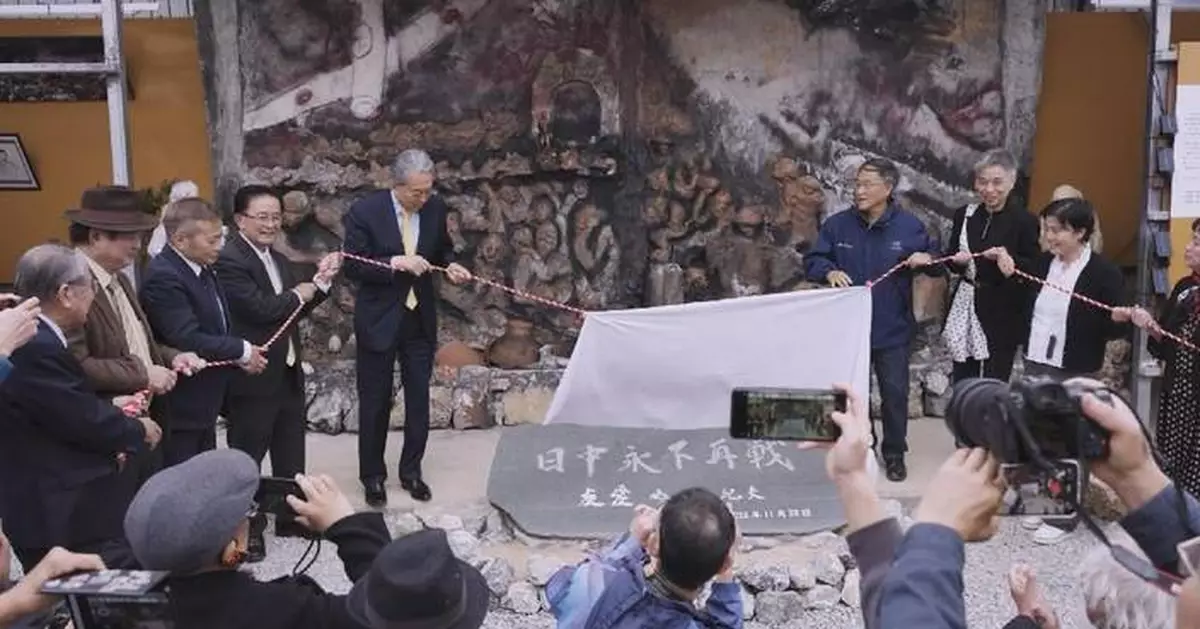
Peace advocates from China and Japan gathered in Japan's southern prefecture of Okinawa on Saturday to unveil an anti-war relief and a peace monument, aiming to express a shared commitment to cherishing peace and opposing war through art.
The "Anti-War and Peace" relief at the "No More War Between Japan and China" monument was jointly created by an Okinawan sculptor and a delegation from China.
The anti-war and peace relief uses stark visual imagery to depict the suffering of the Chinese people under Japanese aggression.
Japan waged a years-long aggression against China beginning with the First Sino-Japanese War in 1894, an on-site introduction says.
It also says that following the full-scale invasion in 1937, Japanese militarists inflicted heavy civilian casualties in atrocities including the Nanjing Massacre and the Bombing of Chongqing. They also caused grave suffering on the Chinese people by using biological and chemical weapons, a violation of international law.
The ceremony followed an April 2025 visit to Okinawa by survivors and bereaved relatives of the Bombing of Chongqing and Japanese germ warfare, which sparked the initiative.
Joint work on the relief began in November 2025, with participants aiming to encourage Japanese society to reflect on its wartime past.
"I want to say to the Japanese government: you owe Chongqing an apology, and you also owe the people of Okinawa an apology. When Germany (former West German Chancellor Willy Brandt) knelt to acknowledge guilt, he earned the respect of the world. You stand there pretending to be ignorant, refusing to admit your guilt or apologize, which will only make Asian countries remember your crimes," said Su Yuankui, a survivor of the Bombing of Chongqing.
Attendees and speakers at the ceremony said that Japan's younger generations must learn about and reflect on the wartime history.
"I am acutely aware that young people in Japan today, particularly those in their teens and twenties, have fewer and fewer opportunities to learn about the history of the war at school. Precisely because of this, they are especially eager to know what actually happened back then. I also teach at a university, and I have been thinking about how best to pass this history on to my students in a meaningful way," said Misato Shimizu, an associate professor at Meio University.
"Japan has yet to reflect on the last war, but is already trying to take the next step. When I hear people express concern about this, I feel strongly that this is a responsibility my generation must shoulder, and I was profoundly moved," said Takamatsu Mihoko, an education professional.
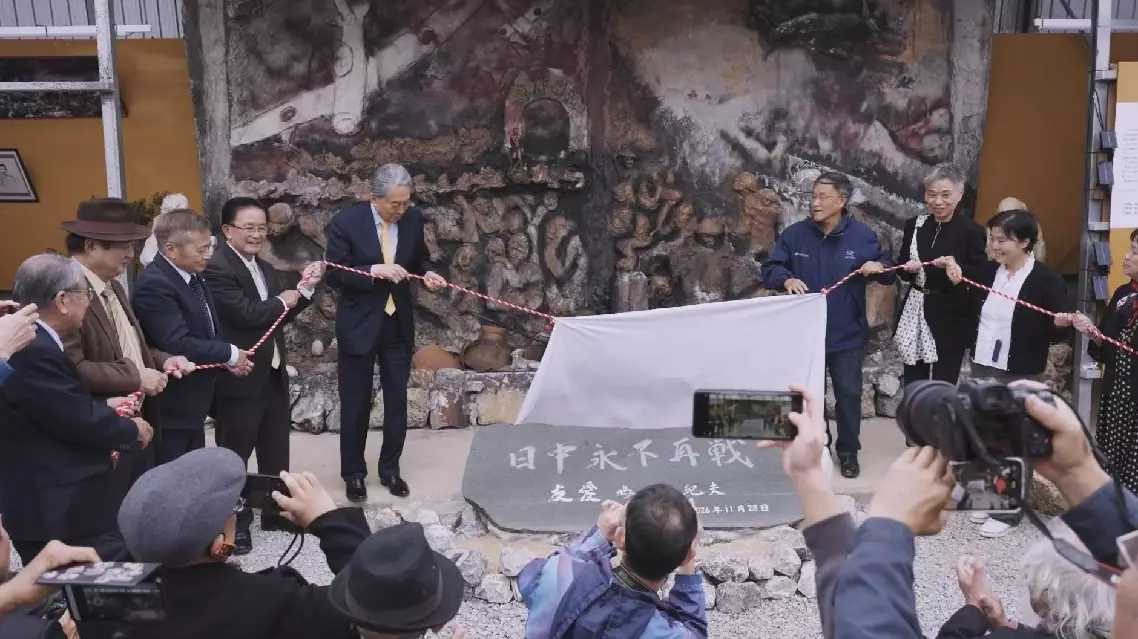
Anti-war relief, China-Japan peace monument unveiled in Okinawa
An academic seminar on Japan's biological and chemical warfare crimes during World War II (WWII), also the seventh international seminar on the crimes of Unit 731, was held in Seoul, the Republic of Korea (ROK), on Saturday.
Experts and scholars from China, the ROK and Japan, using historical archives as well as results of their field investigations and research on victims, further exposed the crimes of Japanese militarists in waging bacterial warfare and conducting medical human experiments, and called for stronger cross-border cooperation to spread the historical truth more widely.
A key focus of this seminar is how to transcend national and regional boundaries to further expose the historical truth of Japan's biological warfare, through historical archives, field investigations, victims' testimonies and the preservation of historical sites.
Japanese participants at the seminar said that an in-depth study of the war crimes of Japanese militarists requires both continued excavation of historical materials and the Japanese society's facing up to history. In Japan, however, research in this field still faces many practical obstacles.
"In my view, only Japanese scholars can truly conduct in-depth research on those Japanese who were present at the scene of those events and on their experiences. In Japan, however, this remains a rather small field of research: scholars studying biological and chemical warfare are few in number, and the Japanese government has yet to acknowledge these historical facts at the national level," Japanese scholar Fuyuko Nishisato said.
ROK scholars said that research on the crimes of Unit 731 should not be confined to any single country or region, but should start from the historical experience of Northeast Asia as a whole and reflect on the profound lessons brought by war.
"Japanese militarism brought invasion to many parts of China, where large numbers of civilians were massacred and endured immense suffering. Among the most brutal chapters of this history stands Unit 731. Through the research, I have come to a deeper understanding that war must never break out again in Northeast Asia. This is not merely China's concern. It is a shared concern confronting the ROK, China, Japan and all countries in the region," said Kim Joo-yong, director of the Institute of Korea-China History and Culture at Wonkwang University.
"The issue of Unit 731's victims is by no means confined to Harbin alone. New leads on victims continue to come to light in the ROK as well. This is not a historical issue that belongs to the past, but a significant historical fact that the whole world should remember and face together," said Kim Wol-bae, specially-appointed professor of Harbin University of Science and Technology.
Participants at the seminar said that further investigating relevant historical leads and strengthening history education are important ways to help younger generations understand the historical truth. "What we should do is to help the next generation remember these historical wounds and never forget what once happened," said ROK expert Kim Gwang-seon.
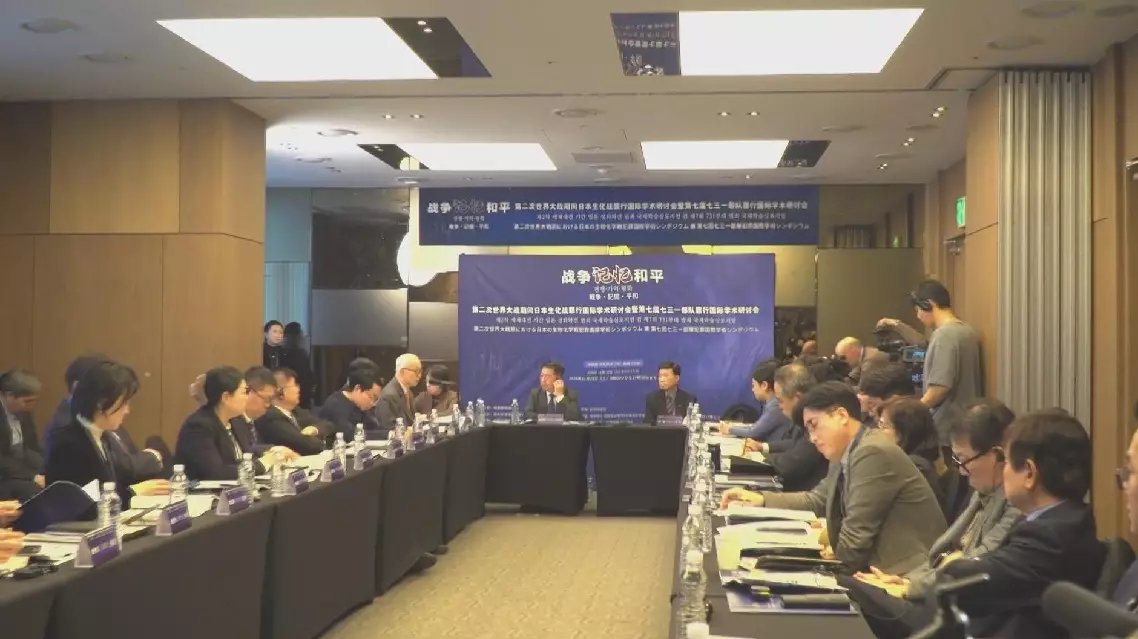
Seoul hosts seminar on Japan's WWII biological, chemical warfare crimes