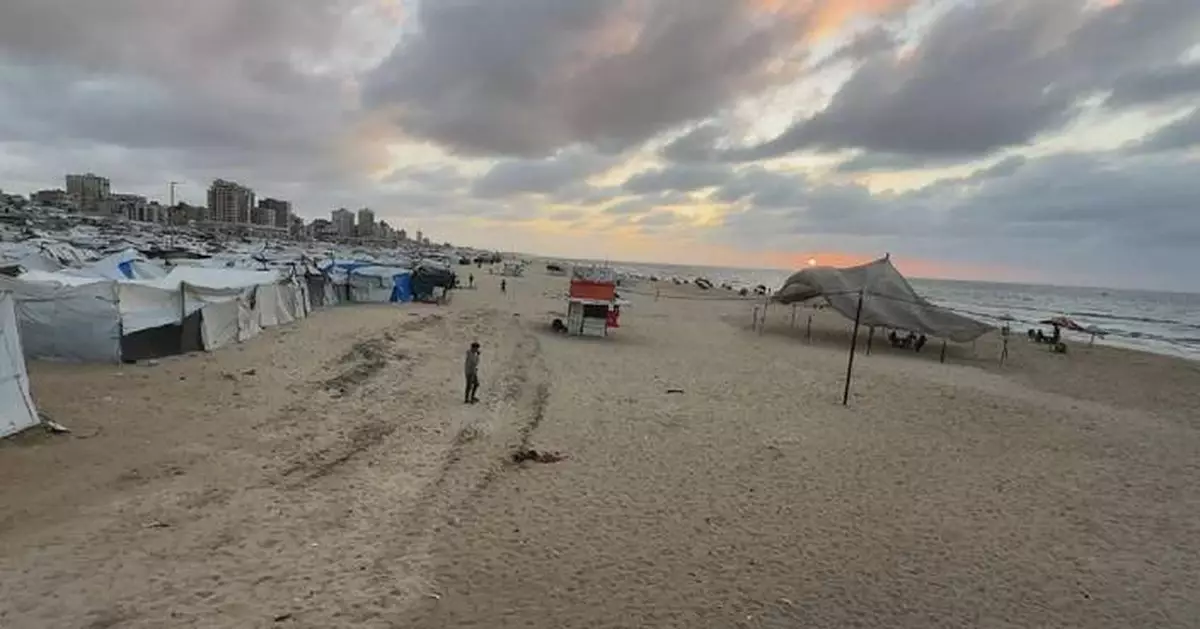
Displaced Palestinians sheltering in tents along Gaza's coast are bracing for another winter storm, with little protection from flooding as vital cold-weather and emergency supplies remain stranded outside the territory's crossings.
On Gaza's beaches, the first line of defense against the encroaching sea is not a concrete seawall but a barrier the residents have built themselves. They are filling discarded cooking pots with sand and lining them up in front of their tents.
The pots, roughly the size of car wheel rims and 30 to 40 centimeters deep, have been stacked two or three high to form a long barrier around a camp of tightly packed tents. Murad Qudeh, a displaced resident, was using a shovel to add sand, reinforcing the line before the storm arrives.
"We are rushing to build a sand embankment to prepare for the heavy rain that is coming. We don't have the right tools," he said.
The pots were supplied by the United Nations (UN) and charities to prepare meals for aid distributions. Worn out after long use and stored in warehouses, they have now been pressed into service as building material for flood defenses.
An analysis by the UN Satellite Center estimates that more than 40,000 temporary tents are clustered along Gaza's coast, with about 220,000 people living in areas highly vulnerable to seawater flooding. Inside the camps, many shelters are made of worn plastic sheeting and blankets, and winter winds have already torn some of the tents apart.
The makeshift defenses offer little reassurance. Families are also filling woven sacks with sand and piling them around their tents in a last-minute effort to keep floodwater out.
Behind it all, memories of past winters hang heavy over the camps, where flooded tents and hurried nighttime escapes have become part of life on the shoreline. "Last year, when it rained, I took my family to stay with relatives and stayed behind alone to guard the tent. All our belongings were swept onto the beach. Whenever a storm comes, I have to take my family somewhere else. We have been through so much. Every winter is a hardship. If the waves rise even a little, we are terrified. No one sleeps. There is no peace or security. Everyone is on edge," said Jadallah Guleh, a displaced resident.
The effort, though, is shadowed by doubt, with many convinced that the pots and sacks will prove no match for whatever the winter brings.
"These sand embankments can't protect us. Do you understand? They never have. Last year, we managed to build them, but it was all in vain. When it rained, we had to run to higher ground and stay until 06:00, until daylight. When we returned, our belongings were soaked or swept away by the sea. The tents and everything else were gone," said Qudeh.
For tens of thousands of displaced people on Gaza's beaches, the pot-and-sand defenses are no lasting solution. As winter storms approach, what they urgently need is to leave the dangerous shoreline and find genuinely safe shelter.
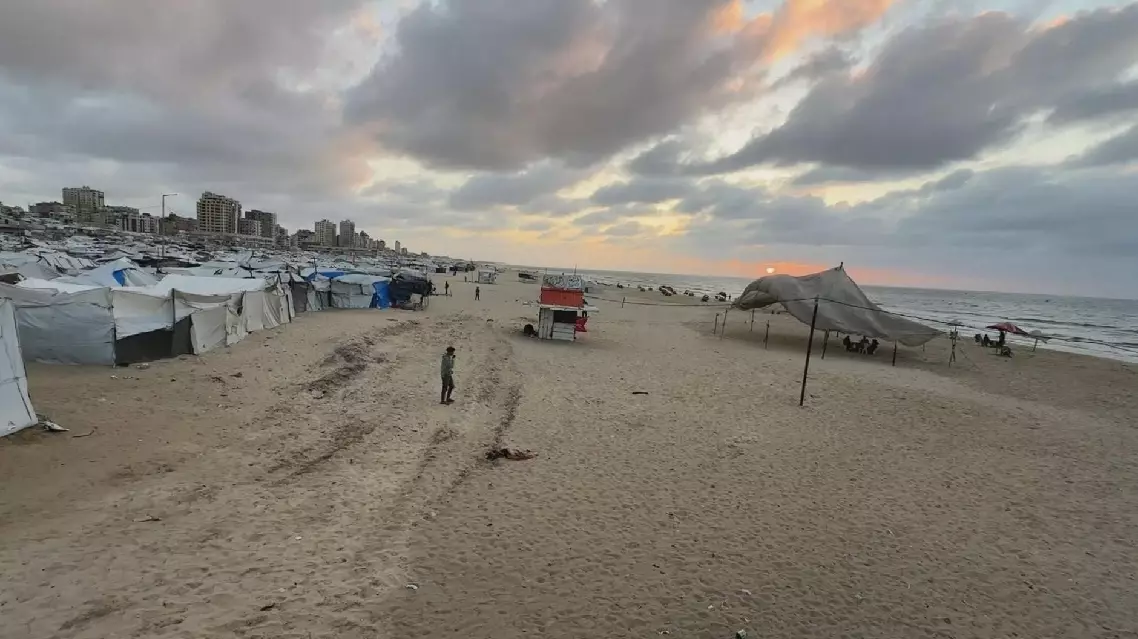
Displaced Gazans in coastal tents face winter floods as aid stuck at crossings
An academic seminar on Japan's biological and chemical warfare crimes during World War II (WWII), also the seventh international seminar on the crimes of Unit 731, was held in Seoul, the Republic of Korea (ROK), on Saturday.
Experts and scholars from China, the ROK and Japan, using historical archives as well as results of their field investigations and research on victims, further exposed the crimes of Japanese militarists in waging bacterial warfare and conducting medical human experiments, and called for stronger cross-border cooperation to spread the historical truth more widely.
A key focus of this seminar is how to transcend national and regional boundaries to further expose the historical truth of Japan's biological warfare, through historical archives, field investigations, victims' testimonies and the preservation of historical sites.
Japanese participants at the seminar said that an in-depth study of the war crimes of Japanese militarists requires both continued excavation of historical materials and the Japanese society's facing up to history. In Japan, however, research in this field still faces many practical obstacles.
"In my view, only Japanese scholars can truly conduct in-depth research on those Japanese who were present at the scene of those events and on their experiences. In Japan, however, this remains a rather small field of research: scholars studying biological and chemical warfare are few in number, and the Japanese government has yet to acknowledge these historical facts at the national level," Japanese scholar Fuyuko Nishisato said.
ROK scholars said that research on the crimes of Unit 731 should not be confined to any single country or region, but should start from the historical experience of Northeast Asia as a whole and reflect on the profound lessons brought by war.
"Japanese militarism brought invasion to many parts of China, where large numbers of civilians were massacred and endured immense suffering. Among the most brutal chapters of this history stands Unit 731. Through the research, I have come to a deeper understanding that war must never break out again in Northeast Asia. This is not merely China's concern. It is a shared concern confronting the ROK, China, Japan and all countries in the region," said Kim Joo-yong, director of the Institute of Korea-China History and Culture at Wonkwang University.
"The issue of Unit 731's victims is by no means confined to Harbin alone. New leads on victims continue to come to light in the ROK as well. This is not a historical issue that belongs to the past, but a significant historical fact that the whole world should remember and face together," said Kim Wol-bae, specially-appointed professor of Harbin University of Science and Technology.
Participants at the seminar said that further investigating relevant historical leads and strengthening history education are important ways to help younger generations understand the historical truth. "What we should do is to help the next generation remember these historical wounds and never forget what once happened," said ROK expert Kim Gwang-seon.
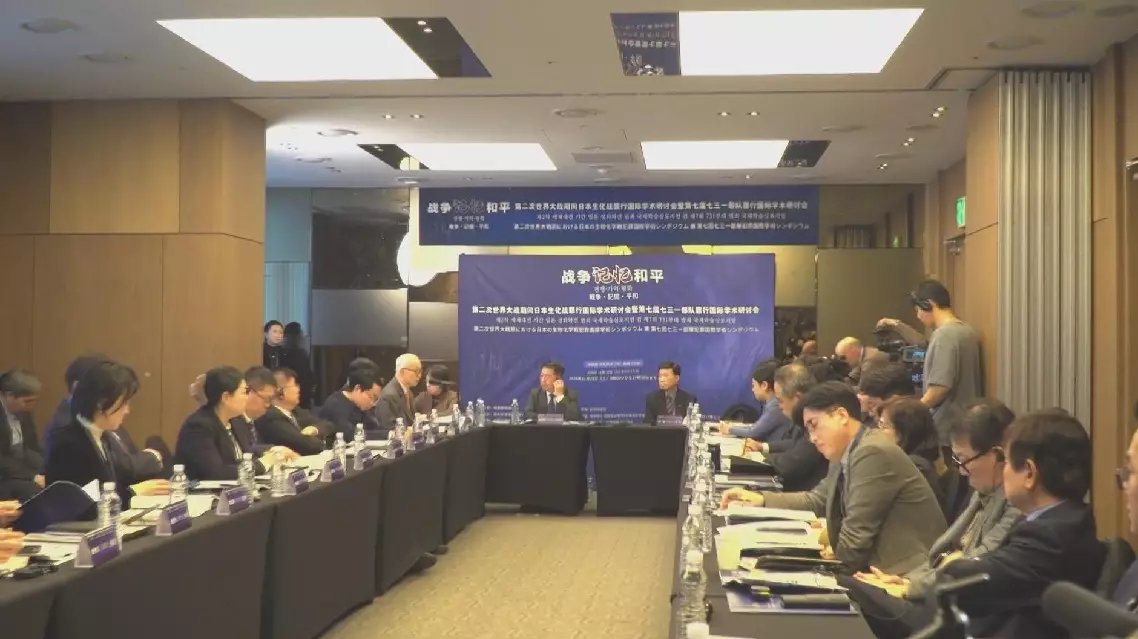
Seoul hosts seminar on Japan's WWII biological, chemical warfare crimes