Israeli forces shot and killed a man in the occupied West Bank. The military claimed he tried to grab a soldier's weapon and that another soldier was injured in the clash.
And in Gaza, Israel's near-daily strikes continued Sunday, killing one person and injuring others.
Here is the latest news from the Middle East on Sunday. Read our full coverage here.
Israeli forces shot and killed a Palestinian man, Hikmat Mohammed Faraj, 62, in the village of Madama in the occupied West Bank on Saturday, the Palestinian Health Ministry said.
Israel’s military said Saturday evening that a soldier killed a man in an operation in the Madama area, south of Nablus. It did not name the man and did not immediately respond to a request for comment on Sunday on whether he was Faraj.
The military said in its Saturday statement that soldiers entered a building from which stones had been thrown at them. It said a man tried to grab a soldier’s gun and “redirected the weapon” as the soldier fired, wounding another soldier nearby. It said the Israeli forces then killed the man.
An Israeli strike killed one Palestinian and wounded others early Sunday in Jabaliya, on the northern edge of Gaza City, health officials at Shifa Hospital said.
Israel’s military said it struck a “militant” in the area, without elaborating or providing evidence.
The overnight casualty is the latest in Gaza, where near-daily Israeli fire and airstrikes continue more than one year after Israel and Hamas struck a fragile ceasefire agreement. It came after Doctors Without Borders earlier in the weekend condemned an Israeli strike that killed two men who worked as watchmen at one of its clinics in Gaza City.
Israel has killed over 1,700 Palestinians since the ceasefire took effect, according to the Gaza Health Ministry, which is part of the Hamas-run government but whose figures are generally considered reliable by the international community.
Ezzidin reported from Cairo, and Saeed from Abu Snan, Israel.
This report will be updated throughout the day as new developments emerge.
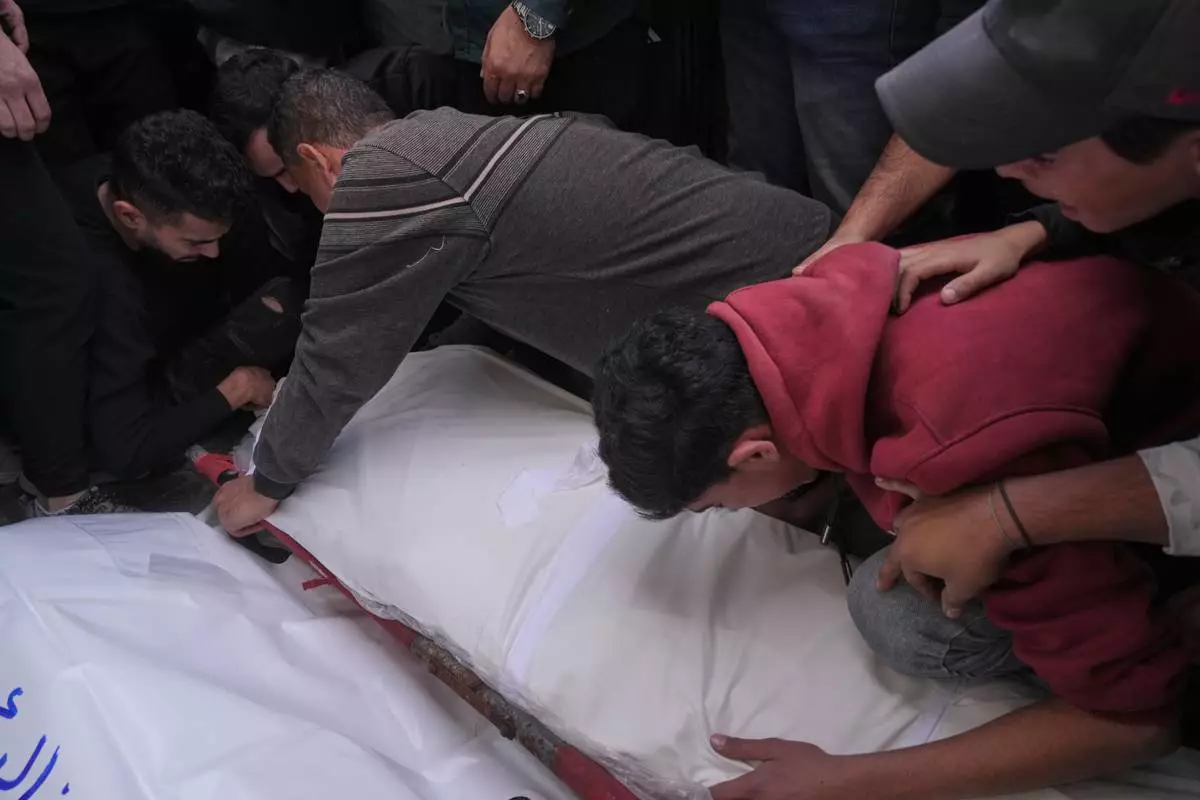
Mourners grieve over the bodies of two Palestinian watchmen employed by Doctors Without Borders, known as MSF, who were killed in an Israeli airstrike the previous night, at a hospital morgue ahead of their funeral in Gaza City, Saturday, Nov. 28, 2026. (AP Photo/Jehad Alshrafi)
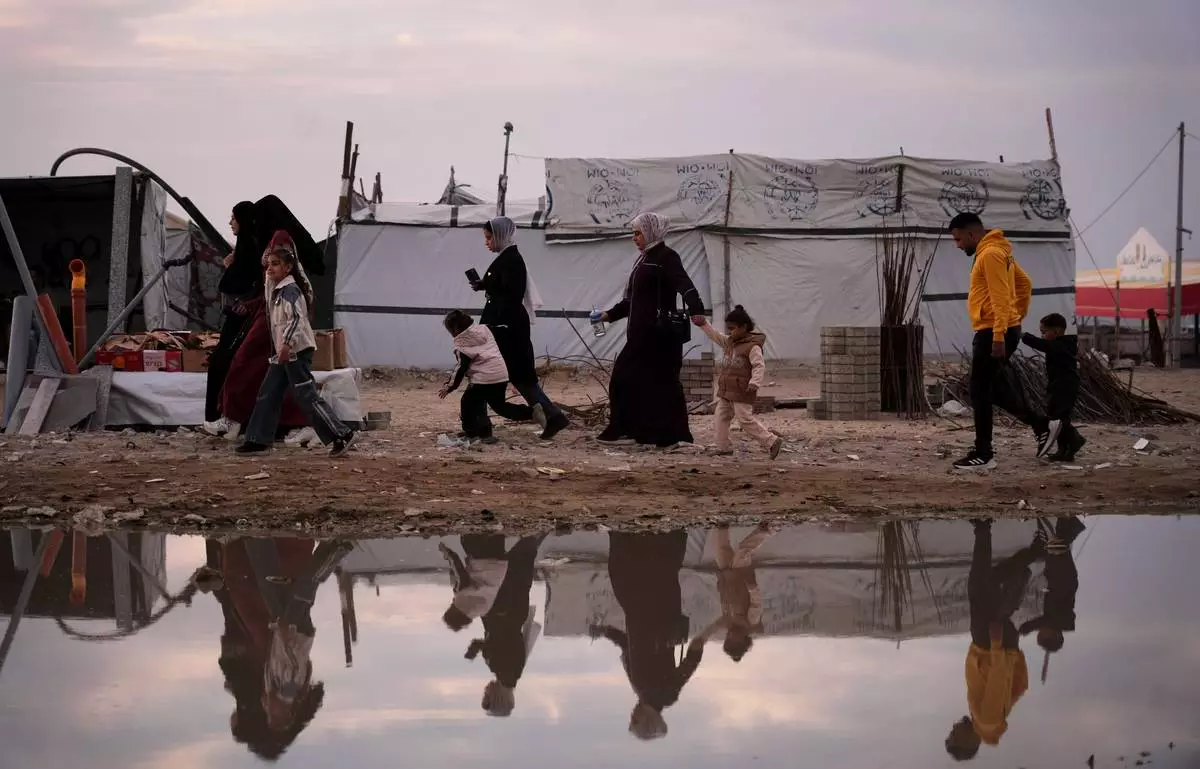
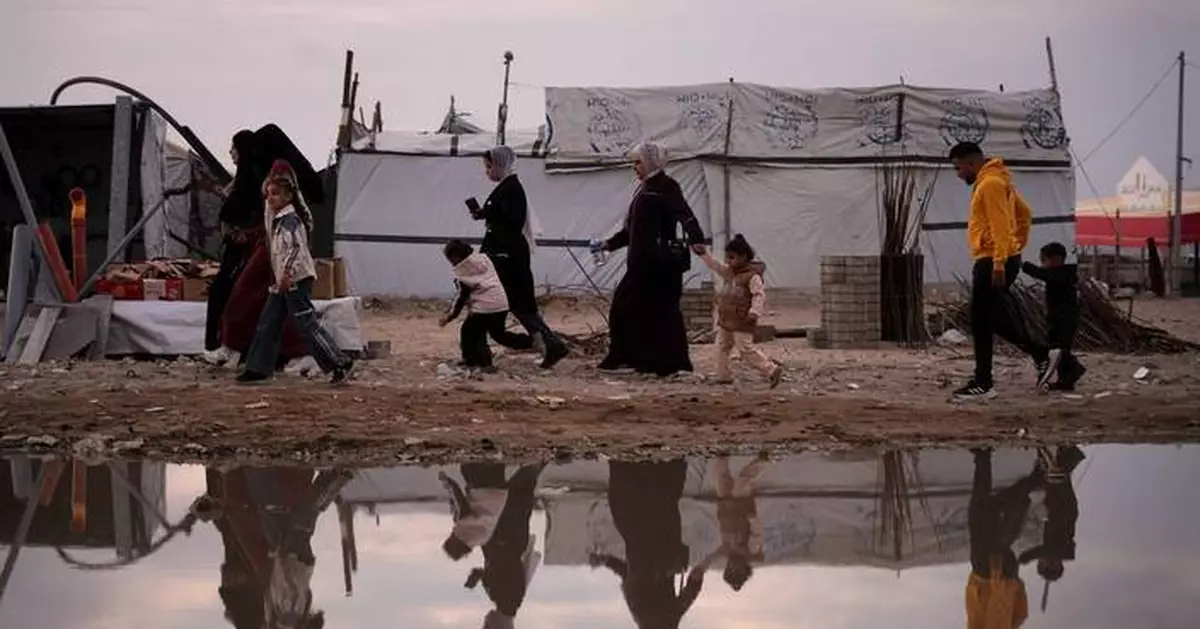
Palestinians walk past sewage in Gaza City, Thursday, Nov. 26, 2026. (AP Photo/Jehad Alshrafi)
ISLAMABAD (AP) — Pakistan's military announced Sunday that it will send troops to help strengthen Saudi Arabia’s defenses amid relentless attacks by Yemen’s Iran-backed Houthi rebels.
In a statement, it said the troops would carry out their duties within Saudi territory under existing defense cooperation arrangements.
The military did not disclose the number of soldiers, their specific assignments, the duration of the deployment, or when the troops are set to land in Saudi Arabia.
Saudi Arabia, a major U.S. ally in the region, has been facing mounting pressure after the Iran war erupted in February following U.S. and Israeli strikes on the Islamic Republic. It has turned to its regional allies, including Turkey, Pakistan, Egypt and Syria, to beef up its defenses in the face of Houthi missile and drone strikes, some of which were deadly.
The kingdom has been countering the Houthis over the past decade in Yemen’s civil war, backing the internationally recognized government in the south. However, the Houthis control Yemen's most populous areas, including Sanaa.
Fighting escalated this summer in Yemen between the Houthi rebels and the government’s Saudi-backed forces. The Houthis have also launched direct and deadly attacks on Saudi Arabia, and imposed a blockade on its shipping in what has been viewed as an extension of the U.S.-Iran war.
In recent months, the rebels performed their biggest land grab in years, capturing Yemen’s Red Sea coast from pro-government forces.
This, along with the closure of a key Saudi pipeline, strengthened their ability to choke off Saudi oil exports, pushing up global fuel prices and giving Iran greater leverage.
Islamabad’s rare announcement came two days after Pakistani, Turkish, and Saudi defense and military officials met in Islamabad and reaffirmed their support for Riyadh under a trilateral agreement that treats an attack on one member as an attack on all.
The three countries also backed diplomatic efforts to ease regional tensions.
Pakistan, Saudi Arabia and Turkey signed the Mecca Joint Defense Agreement on Aug. 7, declaring that an attack on one member would be treated as an attack on all three. The countries have described the pact as defensive and said it is not directed against any particular state.
Islamabad has repeatedly said that the trilateral defense pact is not directed against any country, including neighboring Iran.
The agreement builds on decades of Pakistani military service in Saudi Arabia, where an unspecified number of Pakistani troops have been stationed since the early 1980s to train and advise Saudi forces.
The announcement also came just over a month after Egypt said it would provide military support to Saudi Arabia to defend itself against Houthi attacks, without giving details.
A regional official, briefed on the matter, said at the time that Egypt would deploy air defense systems and aircraft to help repel missiles and drones fired at Saudi Arabia.
The Egyptian support is defensive in nature and won’t include any ground troops in Yemen, the official said on condition of anonymity because he wasn’t authorized to speak to reporters.
Sunday's statement reaffirmed Pakistan’s commitment to protecting Islam’s two holiest mosques in the Saudi cities of Mecca and Medina. It said the deployment of troops will strengthen Saudi Arabia’s defensive capabilities amid “emerging security concerns."
It also said: “The troops will discharge their assigned responsibilities within Saudi territory, under agreed commitments and the established framework of defense cooperation” and that “this deployment will contribute towards further strengthening the Kingdom’s defensive capabilities amid emerging security concerns.”
Saudi Arabia has accused the Houthis of firing missiles and drones towards Mecca and Medina since the escalation began in the summer. The Houthis vehemently denied attacking Islam’s two holiest cities.
The deployment follows a meeting in Riyadh last month, where the three countries agreed to implement their collective defense commitments, including arrangements for the rapid deployment of military forces and equipment to Saudi Arabia.
Pakistani Defense Minister Khawaja Muhammad Asif has previously said Pakistan would use “whatever means are available” to defend the kingdom against Houthi attacks.
Pakistan is also pursuing diplomatic efforts with countries including Qatar to bring the United States and Iran back to negotiations to end their conflict. Islamabad brokered an interim agreement between the two sides in June.
In a statement late Saturday, a senior Houthi official lashed out at Pakistan and Turkey over their alliance with Saudi Arabia.
Mohamed Ali al-Houthi, member of the Supreme Political Council, said Ankara and Islamabad, which joined Riyadh in the “Mecca Joint Defense Agreement,’ have ignored “the (Saudi) aggression, the blockade, the killings, and the ongoing crimes” in Yemen.
“Just as the previous coalition against our country … ended in failure, any future coalition will likewise fail,” he said.
Al-Houthi was referring to the 2015 U.S.-backed, Saudi-led coalition that joined the Yemen civil war against the Houthis in a bid to restore Yemen’s internationally recognized government to power.
Early in November, the Houthis claimed that Pakistan joined Saudi Arabia in strikes in Yemen.
The Houthi acting Information Minister Omar al-Bukhaiti said at the time that Pakistani fighter jets struck the rebels-held areas on Nov. 6 in “an extremely dangerous escalation — that cannot be accepted or left unchallenged.”
—
Magdy reported from Cairo
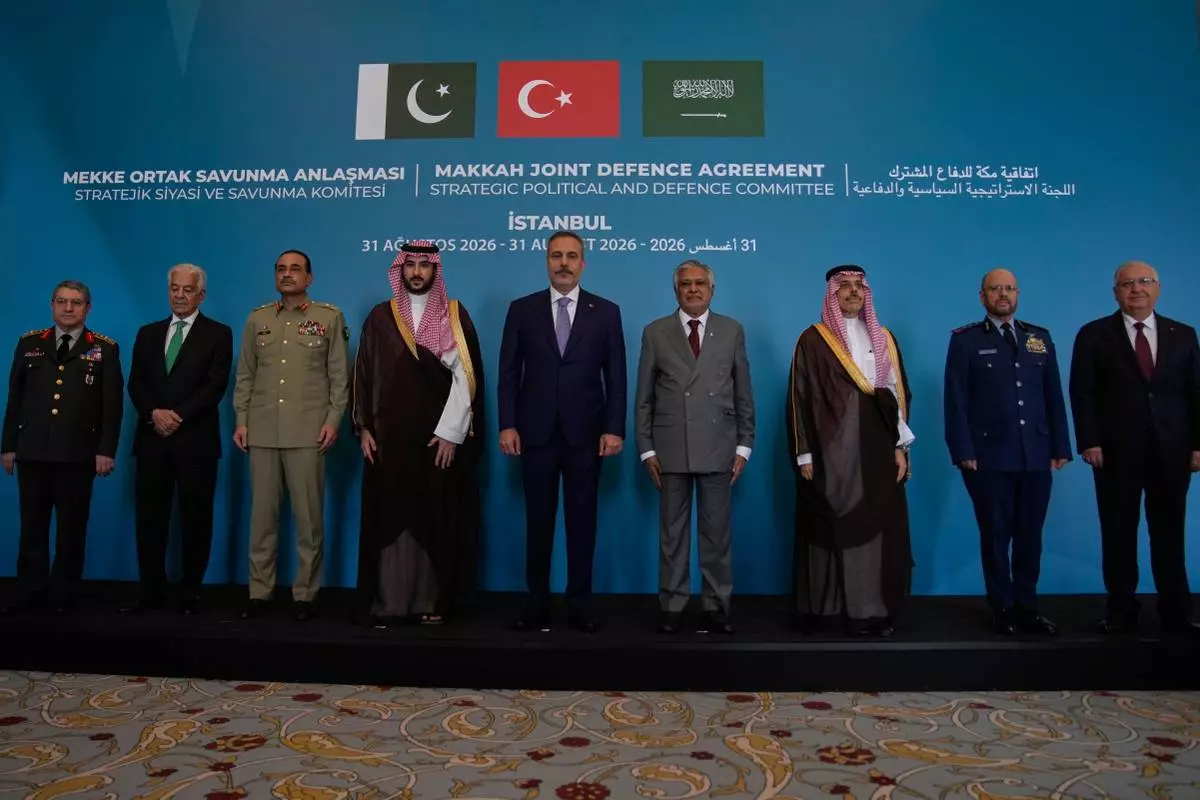
FILE - From center, Turkish Foreign Minister Hakan Fidan poses for a family photo with Pakistan's Foreign Minister Ishaq Dar, right, Saudi Foreign Minister Prince Faisal bin Farhan Al Saud, second right, and senior military and civilian officials from Turkey, Pakistan and Saudi Arabia at the first meeting of the Strategic Political and Defense Committee established under the Makkah Joint Defence Agreement in Istanbul, Turkey, Aug. 31, 2026. (AP Photo/Khalil Hamra, File)