"...accepting that I am meant to be here just like you, and we were all created to be imperfectly perfect." the curvy model said.
English curvy model Iskra Lawrence who was skinny has posted a comparison of herself 10 years ago and now on Instagram.

Photo via Instagram

Photo via Instagram
The 27-year-old looks confident with her body even better than before. In the photo captions, she wrote, "I remember being proud of how skinny I looked during this shoot. And how now people call me fat when I’m just happy to be alive and grateful for this body I call my home."

Photo via Instagram
Iskra said she struggled a lot to be perfect to seek approval from the industry and make herself a "standard" model.
"I thought if I looked like "her" (an unrealistic beauty ideal), I’d be happy, successful and loved," she recalled.

Photo via Instagram
But then she found that was a failure, emptiness, and unhappiness inside her because she put all her energy and effort to ruin her self-dignity.

Photo via Instagram
She found the best thing she has ever done was to focus on looking after herself and being the best her she could be.
"Trying to give, instead of focusing on myself, my image and needing approval from others. And accepting that I am meant to be here just like you, and we were all created to be imperfectly perfect," she said.

Photo via Instagram

Photo via Instagram
Iskra is now a spokesperson the National Eating Disorders Association and tries to promote the body positivity.
She has launched her new health and fitness program in order to create a safe place for adults to "go on a positive journey of self-love."

Photo via Instagram

Photo via Instagram
"I don’t have all the answers and I’m not even trying to change anyone or tell people to do this and that etc. But I felt the need to create this as I wish I could have had this when I was struggling and if I’m able to use that to help even one person even better," she said in her post.
TUCSON, Ariz. (AP) — Shallow dishes crowded with tiny, drought-resistant plants in shades of green, red and purple are pretty much all most people know about indoor succulents gardening.
But there’s another way to bring the warmth of the desert into your home when it’s too cold to garden outside.
Go big and bold with indoor succulent gardens, suggests Marylee Pangman, a Tucson-based educator and writer who specializes in desert container gardening.
“Pick just one statement plant and see how you do before expanding the collection,” recommended Pangman, who has designed, built and maintained gardens for hundreds of clients in southern Arizona. “Success builds confidence.”
You could grow an architectural succulent in a huge ceramic floor pot, such as a green and yellow snake plant with tongue-like leaves stretching toward the ceiling, Pangman offered. Or try an African milk tree, which grows upright with many arms and can reach 6 feet (1.8 meters) tall indoors.
Succulents, including the subspecies of cactuses, are plants with fleshy tissues that conserve moisture. They come in many shapes and sizes, and the larger structural varieties especially command attention.
Pangman said succulents are perfect for busy people or retirees who want gardens that are enjoyable and not a chore. Far easier to care for than thirstier plants, succulents usually require less light and water, sometimes just once every two to four weeks.
“Anyone can grow succulents,” Pangman said. “They are especially great if you travel a lot.”
Pangman had no gardening experience when she moved to Tucson in 1996 to escape upstate New York winters. Within two years, she had studied to be a master gardener and launched The Contained Gardener, her potted-landscape design business.
Pangman later sold the business and now shares her knowledge through her writing, including the book “Getting Potted in the Desert” and her website and Substack platform. She also teaches online classes on her own platform and through the Tucson Botanical Garden.
These are her recommendations for growing large succulents indoors.
Consider your home’s indoor lighting and avoid plants that are fast-growing or can grow abnormally large.
For high light or south-facing areas: Consider more vertical-shaped architectural and medicinal aloe vera plants that can grow 2 to 3 feet (0.6 to 0.9 meters) high. Several agaves also do well with south-facing areas, including the fox tail (agave attenuata), a sculptural plant that forms rosettes and can spread 3 to 4 feet (0.9 to 1 meter) wide. In a smaller home, consider the striking Queen Victoria agave or the Blue Elf aloe hybrid.
For medium light, or east- and west-facing areas: The dramatic African milk tree (Euphorbia trigona), the classic jade plant (Crassula ovata), the velvety-leaved felt bush (Kalanchoe beharensis) and the tree-like Aeonium arboreum, which forms rosette clusters on woody stems.
For lower light, north-facing areas: The sturdy snake plant (Sansevieria trifasciata) is a winner, as are the shade-tolerant gasteria varieties with their dagger-shaped leaves. The somewhat smaller zebra plant (Haworthia fasciata) makes a statement when planted in a group. And while it isn’t technically a succulent, Pangman likes the ZZ plant, or zamiifolia, which has glossy leaves and stems and can live in very low light with infrequent watering.
Containers for the larger plants should be especially big, with a diameter of at least 18 to 22 inches (46 to 56 centimeters) and a depth of 16 to 18 inches (41 to 46 centimeters). Don’t buy plastic pots. Choose breathable terracotta, glazed ceramic or lightweight resin containers with drainage holes. Wheeled plant stands can protect floors from heavy pots, enable rotation of plants to expose all sides to light and allow plants to be easily moved outdoors in the spring.
Use gritty, well-draining soil. Ask your local nursery or big box home improvement store about a commercial cactus and succulent mix. A top dressing like colored recycled glass, gravel or smooth river stones can be scattered above the soil to control moisture and create an attractive focal point.
Place plants away from windows, ideally 3 to 5 feet (0.9 to 1.5 meters). Rotating pots is especially helpful for east- and west-facing windows to ensure all sides get light. Pale color and signs of stretching result from insufficient light. Too much light can cause sunburn and brown or white patches.
The easiest way to kill your succulents is by overwatering. Generally, they don’t need to be watered more than once every two to four weeks. Large pots in particular dry slowly, so always use a moisture meter to test the soil down 2 to 3 inches (5 to 8 centimeters). If it is dry, water the plant until it drains from the bottom.
Along with Pangman’s online resources, you can consult with your community’s big box home improvement stores and nurseries. A nearby community college or agricultural extension office connected to a public university or the county government also may have educational resources to share.
For more AP gardening stories, go to https://apnews.com/hub/gardening.
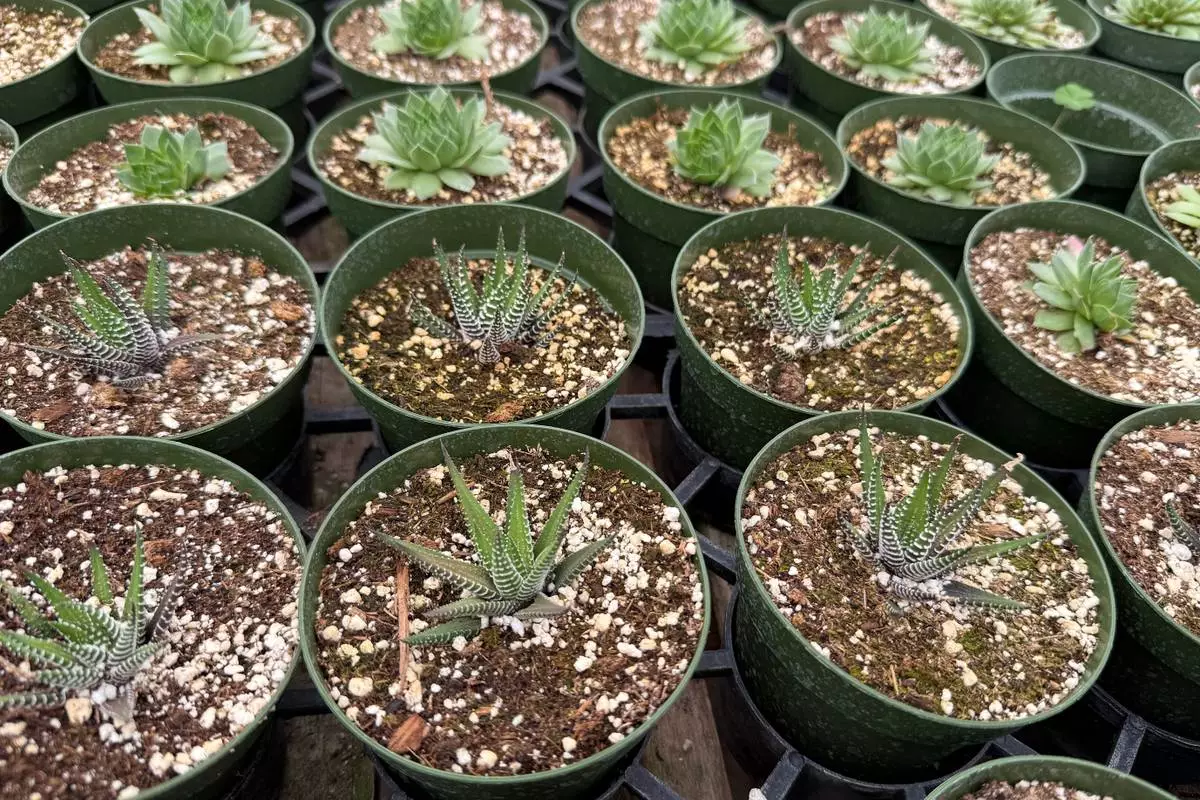
Tiny striped succulents known as zebra plants appear in Tucson, Ariz., on Nov. 9, 2025. (Anita Snow via AP)
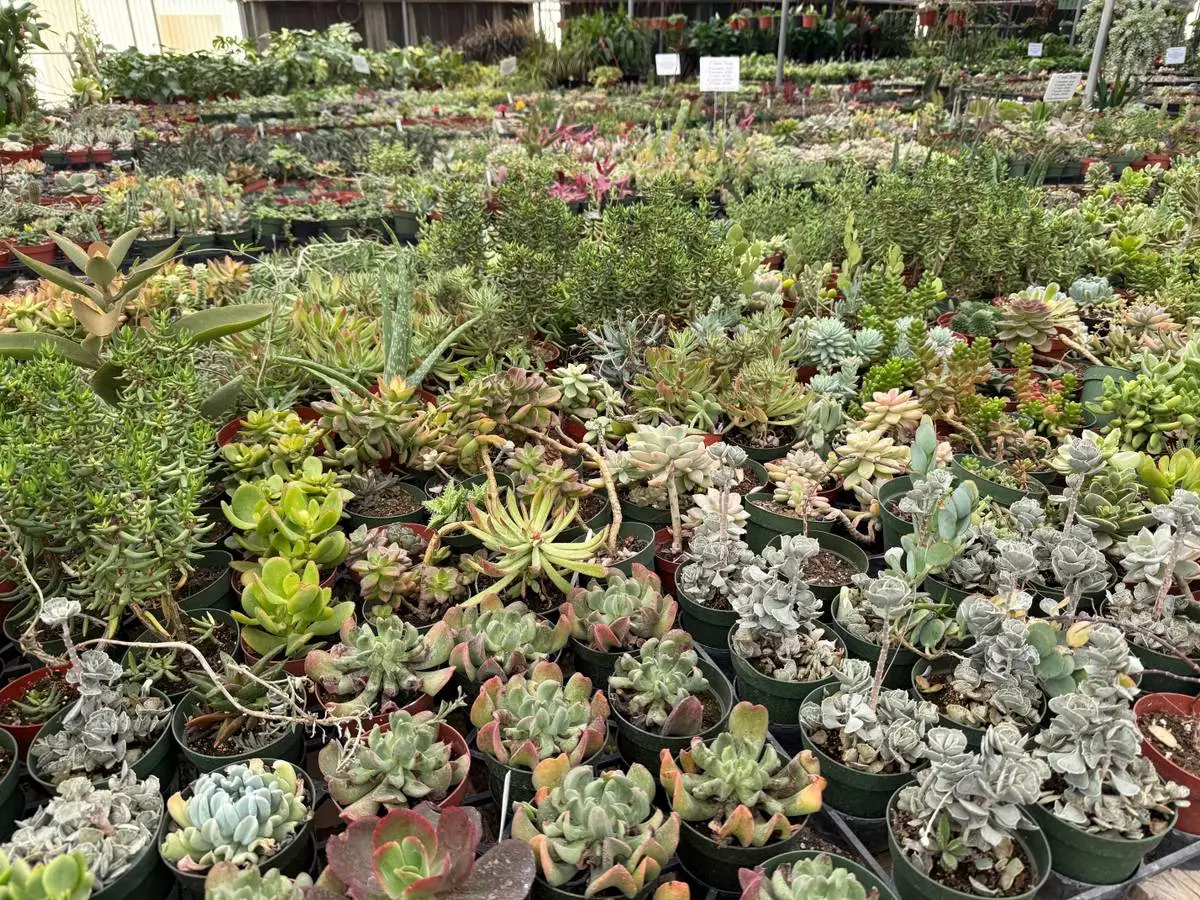
A variety of succulents are displayed at a nursery in Tucson, Ariz., on Nov. 9, 2025. (Anita Snow via AP)
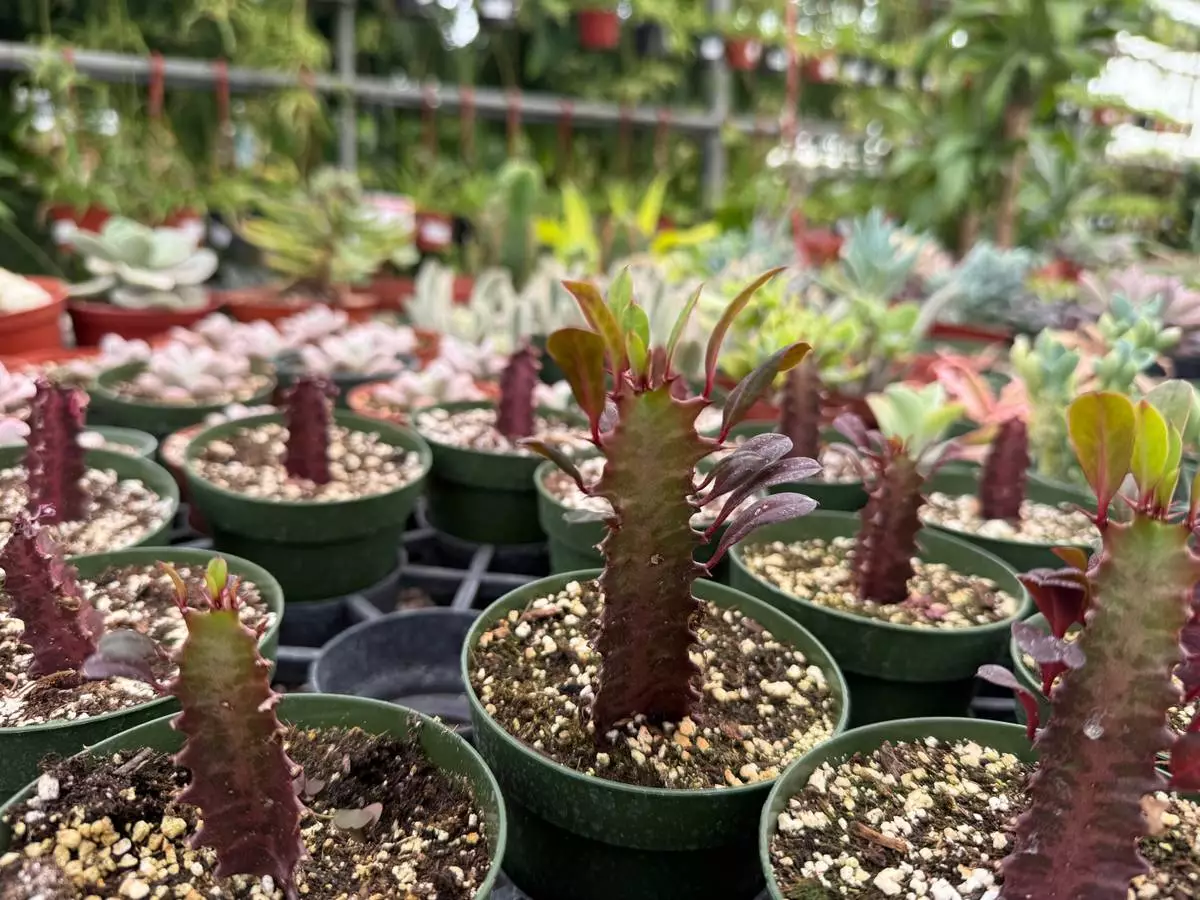
Tiny red African milk trees appear in Tucson, Ariz., on Nov. 8, 2025. (Anita Snow via AP)
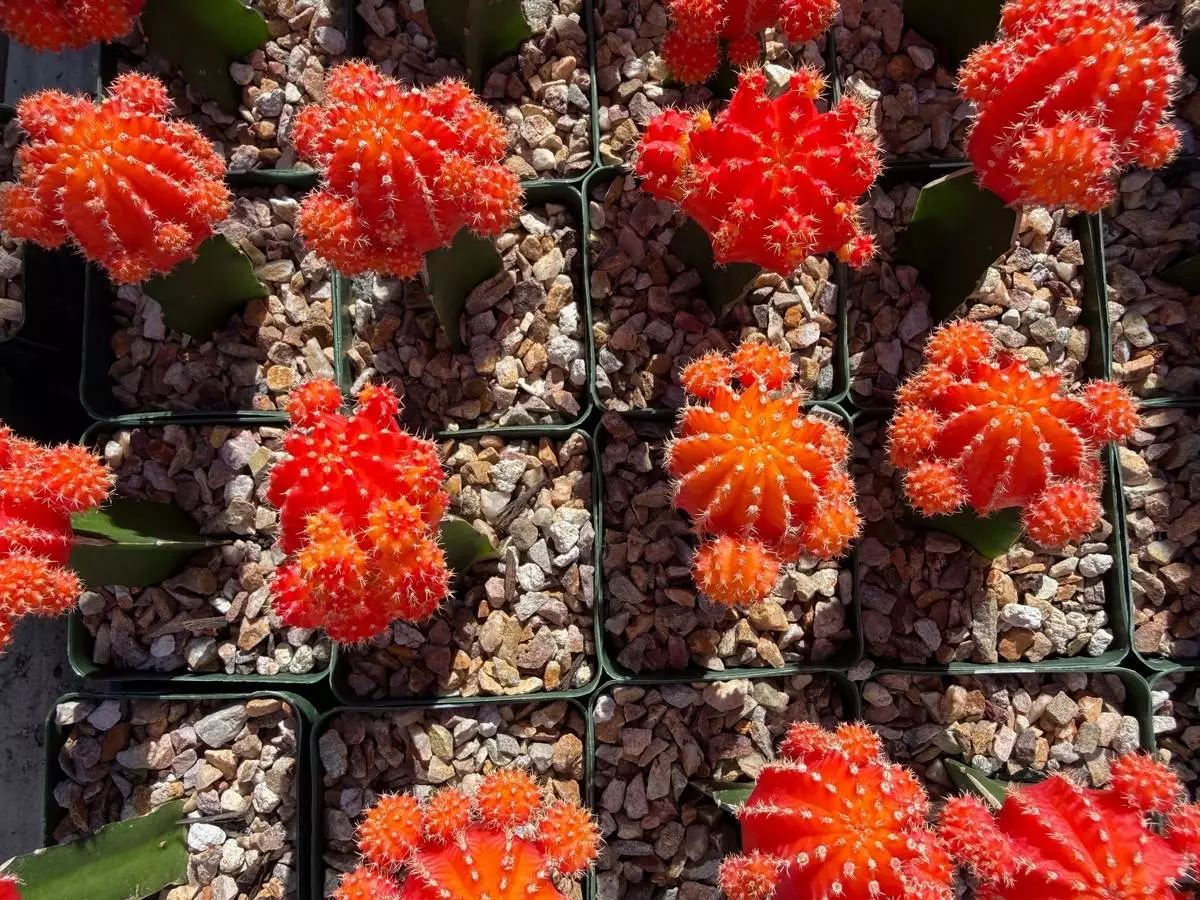
Bright orange tops of the Moon Cactus appear in Tucson, Ariz., on Nov. 8, 2025. (Anita Snow via AP)
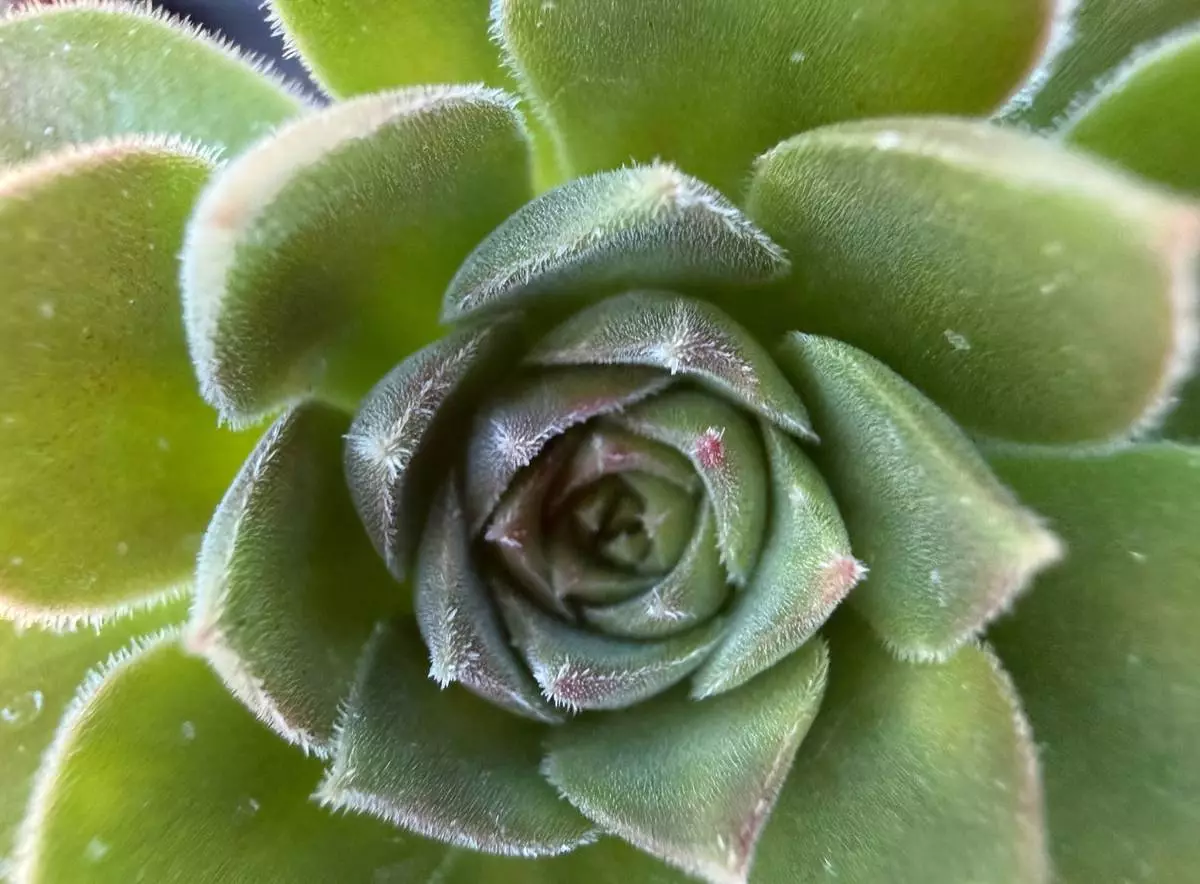
A succulent rosette is displayed in Tucson, Ariz., on Nov. 8, 2025. (Anita Snow via AP)