For $1,000, the premium Galaxy Note 9 is a superb phone that showcases the best Samsung has to offer.
It's also the phone most of you won't need. That's because you can get many of the same features in Samsung's Galaxy S9 for a few hundred dollars less.
Click to Gallery
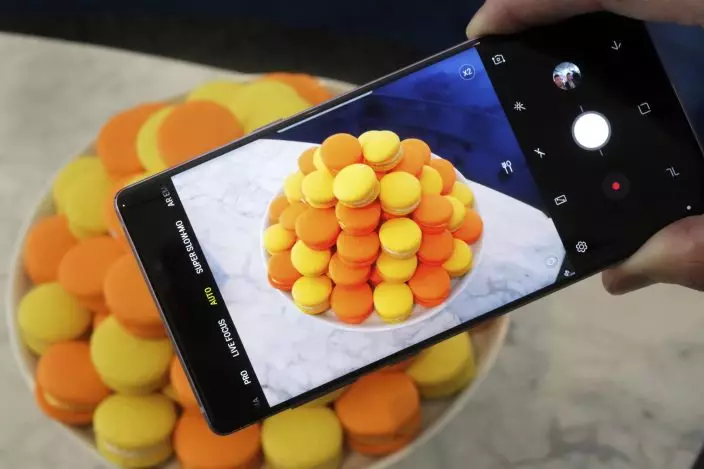
FILE- In this Aug. 7, 2018, file photo, the Samsung Galaxy Note 9 is shown in New York. For $1,000, the Galaxy Note 9 is a superb phone that’s the best Samsung has to offer. But for a few hundred dollars less, the Galaxy S9 offers many of the features the Note 9 is now getting, including zippy speeds and camera improvements. (AP PhotoRichard Drew, File)

This combo shows photos of Central Park in New York on Sunday, Aug 19, 2018. Starting at the top left and going clockwise, the phones used are Samsung’s Galaxy Note 9, Samsung’s Galaxy S9, Google’s Pixel 2 XL and Apple’s iPhone X. (AP PhotoNick Jesdanun)
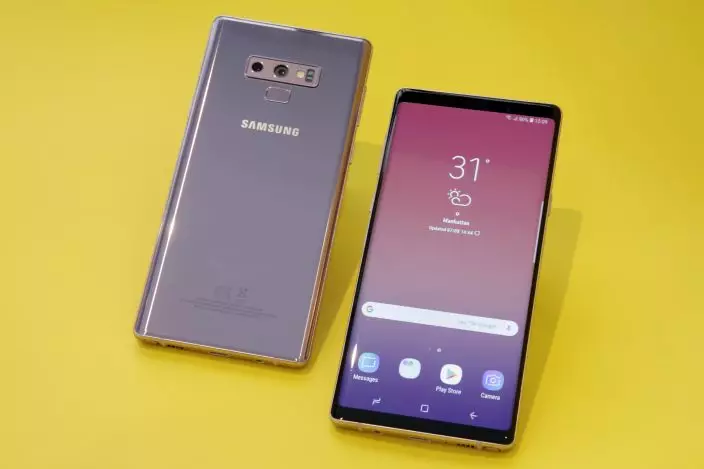
FILE- In this Aug. 7, 2018, file photo the Samsung Galaxy Note 9 is shown in New York. For $1,000, the Galaxy Note 9 is a superb phone that’s the best Samsung has to offer. (AP PhotoRichard Drew, File)
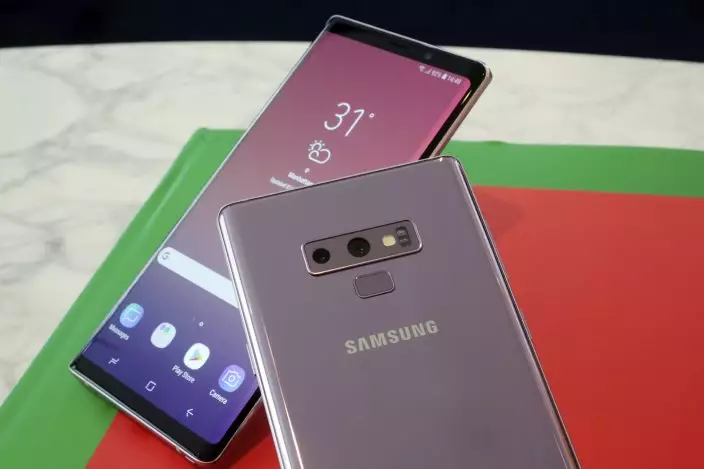
FILE- In this Aug. 7, 2018, file photo the Samsung Galaxy Note 9 is shown in New York. For $1,000, the Galaxy Note 9 is a superb phone that’s the best Samsung has to offer. (AP PhotoRichard Drew, File)
The Note 9, available Friday, is the Android smartphone for those who want the latest and the greatest. There's a larger battery, with a 21 percent boost over last year's Note 8 model. The Note 9 gets 128 gigabytes of storage, double what's in the S9 and Apple's iPhones. And of course, a large screen.
FILE- In this Aug. 7, 2018, file photo, the Samsung Galaxy Note 9 is shown in New York. For $1,000, the Galaxy Note 9 is a superb phone that’s the best Samsung has to offer. But for a few hundred dollars less, the Galaxy S9 offers many of the features the Note 9 is now getting, including zippy speeds and camera improvements. (AP PhotoRichard Drew, File)
But there's not much "wow" beyond that. Smartphone innovation has slowed down in recent years. It's more noticeable with Samsung because the company spreads out those innovations between two major smartphones each year. One phone inevitably plays catch up with the other every six months.
So now we find that the Note 9 is getting the zippy processor and cellular speeds the S9 phones first offered earlier this year. It's also getting the S9's dual-aperture camera for better low-light shots as well as its gimmicky, but super-fun, ability to take video with super-slow motion.
And the S9 starts at just $720 through T-Mobile, and about $800 through Verizon, AT&T and Sprint. A Plus version that's closer in size to the Note 9 costs $840 to $930.
This combo shows photos of Central Park in New York on Sunday, Aug 19, 2018. Starting at the top left and going clockwise, the phones used are Samsung’s Galaxy Note 9, Samsung’s Galaxy S9, Google’s Pixel 2 XL and Apple’s iPhone X. (AP PhotoNick Jesdanun)
True, the Note 9 offers a little more wowness. Its camera uses artificial intelligence to optimize colors and lighting for what you're trying to shoot, be it food, a sunset or flowers. Many low-light shots were even better than what the S9 produced, even though both share the second aperture designed to let in more light when needed.
Of course, you're likely to see this feature in the S10 in about six months.
That brings us to one of the Note's remaining distinctive features, its stylus. It's useful for handwriting notes and signing documents on the screen. Now, it can control digital slideshows and music playback, too. The new stylus gets Bluetooth to double as a remote control. Selfies won't look as awkward when you don't have to reach for the on-screen button; just press the pen to snap the shutter.
FILE- In this Aug. 7, 2018, file photo the Samsung Galaxy Note 9 is shown in New York. For $1,000, the Galaxy Note 9 is a superb phone that’s the best Samsung has to offer. (AP PhotoRichard Drew, File)
Unfortunately, there isn't a lot the remote feature can do yet. It's a promising feature — but could remain mostly a promise if app developers don't take advantage of it.
Many past Samsung features failed to gain traction because app developers couldn't be bothered to make the tweaks needed. For instance, Air View was supposed to offer pop-up previews just by pointing to an email and calendar entry, but it mostly worked only with Samsung's home-grown apps.
More recently, there's Bixby, Samsung's own digital assistant. While Samsung has worked directly with some services, including Uber and Spotify, on integrations, developers have largely prioritized Amazon's Alexa and the Google Assistant. It comes down to a chicken-or-egg problem: People need to see compelling capabilities to use a feature; developers need to see a strong base of users to spend the time developing compelling capabilities.
FILE- In this Aug. 7, 2018, file photo the Samsung Galaxy Note 9 is shown in New York. For $1,000, the Galaxy Note 9 is a superb phone that’s the best Samsung has to offer. (AP PhotoRichard Drew, File)
The stylus remains the Note's signature feature, with or without extensive remote capabilities. No doubt the new edition will appeal to die-hard Samsung fans, hard-core gamers and on-the-go executives who are on their phones constantly and need the battery and storage boost. Though the Note 9 uses the same processor as the S9, it has a new cooling system designed to let you use those faster speeds longer.
But if you're not someone who needs all that power, you ought to take a second look at the cheaper, six-month-old S9.