MANILA, Philippines (AP) — A series of mild eruptions at the most active volcano in the Philippines has prompted the evacuation of nearly 3,000 villagers from a danger zone on its foothills, officials said Wednesday.
Authorities raised the 5-step alert around Mayon Volcano in the northeastern province of Albay to level 3 on Tuesday after detecting intermittent rockfalls, some as big as cars, from its peak crater in recent days along with deadly pyroclastic flows — a fast-moving avalanche of super-hot rock fragments, ash and gas.
Alert level 5 would indicate that a major explosive eruption, often with violent ejections of ash and debris and widespread ashfall, is underway.
“This is already an eruption, a quiet one, with lava accumulating up the peak and swelling the dome, which cracked in some parts and resulted in rockfalls, some as big as cars,” Teresito Bacolcol, the country's chief volcanologist, told The Associated Press.
He said it is too early to tell if Mayon’s restiveness would worsen and lead to a major and violent eruption given the absence of other key signs of unrest, like a spike in volcanic earthquakes and high levels of sulfur dioxide emissions.
Troops, police and disaster-mitigation personnel helped evacuate more than 2,800 villagers from 729 households inside a 6-kilometer (3.7-mile) radius from the volcano’s crater that officials have long designated a permanent danger zone, demarcated by concrete warning signs, Albay provincial officials said.
Another 600 villagers living outside the permanent danger zone have evacuated voluntarily to government-run emergency shelters to be safely away from the volcano, Claudio Yucot, regional director of the Office of Civil Defense, said.
Entry to the permanent danger zone in the volcano’s foothills is prohibited, but thousands of villagers have flouted the restrictions and made it their home or maintained farms on and off for generations. Lucrative businesses, such as sand and gravel quarrying and sightseeing tours, have also thrived openly despite the ban and the mountain’s frequent eruptions — now 54 times since records began in 1616.
The 2,462-meter (8,007-foot) volcano is one of the Philippines’ top tourism draws because of its near-perfect cone shape. But it’s also the most active of the country’s 24 restive volcanoes.
A terrifying symbol of Mayon’s deadly fury is the belfry of a 16th-century Franciscan stone church which protrudes from the ground in Albay. It’s all that’s left of a baroque church that was buried by volcanic mudflow along with the town of Cagsawa in an 1814 eruption which killed about 1,200 people, including many who sought refuge in the church, about 13 kilometers (8 miles) from the volcano.
The thousands of people who live within Mayon’s danger zone reflect the plight of many impoverished Filipinos who are forced to live in dangerous places across the archipelago — near active volcanoes like Mayon, on landslide-prone mountainsides, along vulnerable coastlines, atop earthquake fault lines, and in low-lying villages often engulfed by flash floods.
Each year, about 20 typhoons and storms batter the Philippines, which lies along the Pacific “Ring of Fire,” an arc of fault lines along the Pacific Ocean basin often hit by volcanic eruptions and earthquakes.

In this photo provided by the Philippine Institute of Volcanology and Seismology, lava flows from the crater of the Mayon volcano as alert level 3 remains raised in Albay province, north eastern Philippines on Wednesday Jan. 7, 2026. (Philippine Institute of Volcanology and Seismology via AP)
President Donald Trump said Thursday Pam Bondi is out as his attorney general.
Trump in a social media post named Deputy Attorney General Todd Blanche as the acting attorney general, though three people familiar with the matter have said he has privately discussed Lee Zeldin, the head of the Environmental Protection Agency, as a permanent pick.
It marks the end of a contentious tenure of a loyalist who upended the Justice Department’s culture of independence from the White House, oversaw large-scale firings of career employees and moved aggressively to investigate the Republican president’s perceived enemies.
Here is the latest:
Bondi struggled to overcome early stumbles over the Epstein files that angered conservatives eager for government bombshells about the case.
She also had fed the conspiracy theory machine with a suggestion in a 2025 Fox News Channel interview that Epstein’s “client list” was sitting on her desk for review. The department later acknowledged that no such document exists.
Bondi was ridiculed over a move to hand out binders of Epstein files to conservative influencers at the White House only for it to be later revealed that the documents included no new revelations. Despite promises that more files were going to become public, the Justice Department in July said no more would be released, prompting Congress to pass a bill to force the agency to do so.
The Justice Department’s release of millions of pages of Epstein files did little to tamp down criticism, prompting a House committee to subpoena Bondi to answer questions under oath.
“This is not about a single person; it is about a government and judicial system that has repeatedly failed Epstein survivors,” one of Epstein’s earliest accusers, Annie Farmer, said in a statement.
“Regardless of who holds power, survivors deserve accountability, transparency, protection from retaliation, and assurance that those who enabled Epstein, Maxwell, and others will be investigated and, if appropriate, prosecuted,” Farmer said.
Robert Glassman, an attorney for a woman who testified as “Jane” in the 2021 criminal trial of Epstein confidante Ghislaine Maxwell, noted that leaders of government agencies change.
“But for victims of sexual abuse, what matters is whether the institutions meant to protect them actually do their job,” Glassman said by email.
Gloria Allred, an attorney for numerous Epstein victims, called Bondi’s departure “long overdue,” saying the now-departing attorney general betrayed them by failing to protect personal information in the files.
“She has destroyed the trust in the DOJ that victims had a right to expect, and her termination may be the only type of justice that survivors will receive from the DOJ,” Allred said by email.
Jess Michaels, an Epstein survivor who traveled to the Capitol last year to press for the files’ release, wanted Bondi gone, but she wasn’t optimistic about what comes next at DOJ.
“I’m happy that she is not in charge of this investigation anymore because she obviously failed. Do I think that the next person put in charge, Todd Blanche, is going to do any better? We can only hope. But given that they worked together, I don’t have great expectations,” Michaels said.
When Bondi became attorney general and pledged transparency, Michaels thought, “Well, maybe a woman stepping into this role will finally finally get the truth,” she recalled.
But once Bondi distributed now-infamous binders that proved to be largely rehashes of already public material, Michaels lost faith. Her mistrust was amplified by the DOJ’s problematic handling of the eventual release of a trove of documents.
“I think she had this opportunity to be a hero and to really do right by survivors of sexual violence and trafficking, and she chose not to,” Michaels said by phone. “It is outrageous, the volume of miscalculation she has made.”
Trump picked Deputy Attorney General Todd Blanche to be acting attorney general, but three people familiar with the matter have said he has privately discussed Zeldin as Bondi’s permanent replacement.
Zeldin, before Trump tapped him to lead the environmental agency, was a Republican congressman from New York. A staunch ally of the president, he worked on Trump’s defense team during his first impeachment and voted against certifying Trump’s 2020 election loss to President Joe Biden.
Under his leadership, the EPA has rolled back climate change regulations and proposed including microplastics and pharmaceuticals on the list of drinking water contaminates.
Fields said Pam Bondi’s firing was “deeply troubling — not because of who is leaving, but because of why.”
Fields said in a statement that he has been critical of Bondi’s handling of the Jeffrey Epstein files but “here is what should alarm every American: reports indicate that Trump’s frustration stemmed not from Bondi’s failure to uphold the law — but from his belief that she didn’t weaponize the Justice Department aggressively enough against his political enemies.”
He said politically motivated cases against former FBI-Director James Comey and New York Attorney General Letitia James had been thrown out.
“The Justice Department is not the President’s personal law firm and shouldn’t be used as a tool for retribution.” Fields said the issues of the files and the independence of the department should be addressed before anyone else is confirmed.
The Kentucky Republican previously broke with his party to push legislation forcing the release of the Epstein files, and accused Bondi on X in January of making “illegal redactions and withholding key documents.”
On Thursday, Massie said on X that he supported Trump’s decision, adding that “I hope the next AG will release all the Epstein files according to the law and follow up with investigations, prosecutions, and arrests.”
Bondi released a statement Thursday, which read:
“Over the next month I will be working tirelessly to transition the office of Attorney General to the amazing Todd Blanche before moving to an important private sector role I am thrilled about, and where I will continue fighting for President Trump and this Administration.
Leading President Trump’s historic and highly successful efforts to make America safer and more secure has been the honor of a lifetime, and easily the most consequential first year of the Department of Justice in American history.
Since February 2025, we have secured the lowest murder rate in 125 years, secured first-ever terrorism convictions against members of Antifa, shattered domestic and transnational gangs across the country, taken custody of more than 90 key cartel figures, and won 24 favorable rulings at the Supreme Court.
I remain eternally grateful for the trust that President Trump placed in me to Make America Safe Again.”
Democrats in Congress were celebrating the firing of the attorney general, whose appearance on Capitol Hill often featured bitter exchanges with Democratic lawmakers. But they also said that new leadership alone would not be enough to halt the Trump administration’s efforts to remake the Department of Justice to do his bidding.
House Democratic leader Hakeem Jeffries said in a statement that under Bondi’s leadership, the Justice Department “has lost centuries of professional experience, willfully violated federal law and judicial orders alike” and added that her firing is “not enough to restore the credibility of the Justice Department.”
Sen. Dick Durbin, the top Democrat on the Senate Judiciary Committee, said that Bondi’s “legacy will be the weaponization of the world’s preeminent law enforcement agency for Donald Trump’s personal benefit, but apparently even she didn’t go far enough to appease him.”
The Republican had only nice things to say about Bondi in an emailed statement, noting a drop in violent crime during her tenure and her Justice Department’s responsiveness to congressional oversight requests.
“The Judiciary Committee stands ready to advance President Trump’s next Attorney General nominee,” Grassley said.
The attorney general was facing a subpoena to appear before the House Oversight Committee on April 14 as lawmakers look into how the Department of Justice handled the release of the case files on Jeffrey Epstein.
The chair of the committee, Rep. James Comer, said in a statement that he would survey Republicans on the committee on whether they still wanted to enforce the subpoena.
Democrats quickly called on the committee to follow through on the subpoena. Rep. Robert Garcia, the top Democrat on the committee, said in a statement that Bondi “will not escape accountability and remains legally obligated to appear before our Committee under oath.”
Bondi was subpoenaed last month to appear before the Republican-led Committee on Oversight and Government Reform and face questions over the Justice Department’s sex trafficking investigation into Jeffrey Epstein and release of the related files.
Mace, who sits on the committee, said in a statement Thursday that Bondi “will be appearing” in two weeks because the “DOJ still hasn’t complied with the Epstein Files Transparency Act.”
Past attorney generals generally took pains to maintain an arm’s-length distance from the White House to protect the impartiality of investigations and prosecutions.
But Bondi postured herself as Trump’s chief supporter and protector, praising and defending him in congressional hearings and placing a banner with his face on the exterior of Justice Department headquarters.
She called for an end to the “weaponization” of law enforcement that she said occurred under the Biden administration, though her critics said she was the one who had politicized the agency to do the president’s bidding.
The Justice Department’s review and release of Epstein files frustrated members of Congress, who accused the department of hiding certain documents, over-redacting files and, in other cases, failing to redact sensitive information about the victims.
The department denied that it redacted documents in order to protect people and that it improperly withheld certain material. Still, it caused a series of headaches for the Trump administration.
“Thank you to President Trump for the trust and the opportunity to serve as Acting Attorney General,” Blanche wrote in a post on X, after saying that Bondi led the department with “strength and conviction.”
“We will continue backing the blue, enforcing the law, and doing everything in our power to keep America safe,” Blanche said.
Blanche is a former federal prosecutor who worked as Trump’s criminal defense attorney in two cases brought by the department under President Joe Biden’s administration.
He was also a key figure on the president’s defense team in the hush money case against Trump in New York.
Blanche became second in command behind Bondi at the Justice Department last year.
“We love Pam, and she will be transitioning to a much needed and important new job in the private sector,” Trump said in a post on Truth Social, after saying she’s been a “loyal friend.”
Trump said Deputy Attorney General Todd Blanche will serve as acting attorney general.
Republican Rep. Nancy Mace, in response to earlier reports that President Donald Trump was considering ousting Attorney General Pam Bondi, said in a statement Thursday: “I welcome it.”
“Bondi handled the Epstein Files in a terrible manner and seriously undermined President Trump,” said Mace in the statement, whose long been critical of the justice department over the release and review of the Jefferey Epstein files.
President Donald Trump said Thursday that Pam Bondi is out as his attorney general, ending the contentious tenure of a loyalist who upended the Justice Department’s culture of independence from the White House, oversaw large-scale firings of career employees and moved aggressively to investigate the Republican president’s perceived enemies.
The announcement follows months of scrutiny over the Justice Department’s handling of files related to Jeffrey Epstein’s sex trafficking investigation that made Bondi the target of angry conservatives even with her close relationship with Trump. She also struggled to satisfy Trump’s demands to prosecute his political rivals, with multiple investigations rejected by judges or grand juries.
The former Florida attorney general came into office last year pledging that she would not play politics with the Justice Department, but she quickly started investigations of Trump foes, sparking an outcry that the law enforcement agency was being wielded as a tool of revenge to advance the president’s political and personal agenda.
▶ Read more
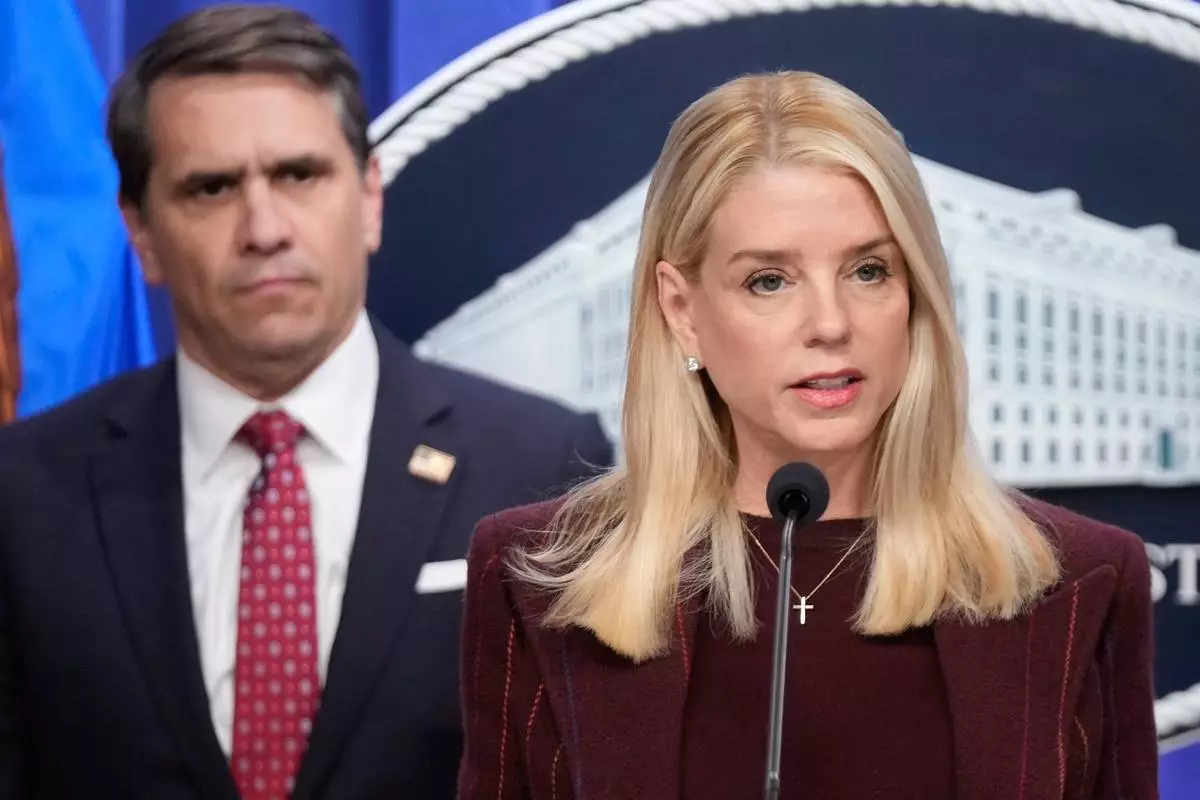
FILE - Attorney General Pam Bondi speaks with reporters during a news conference at the Department of Justice, Nov. 19, 2025, in Washington, as Deputy Attorney General Todd Blanche, listens. (AP Photo/Mark Schiefelbein, file)
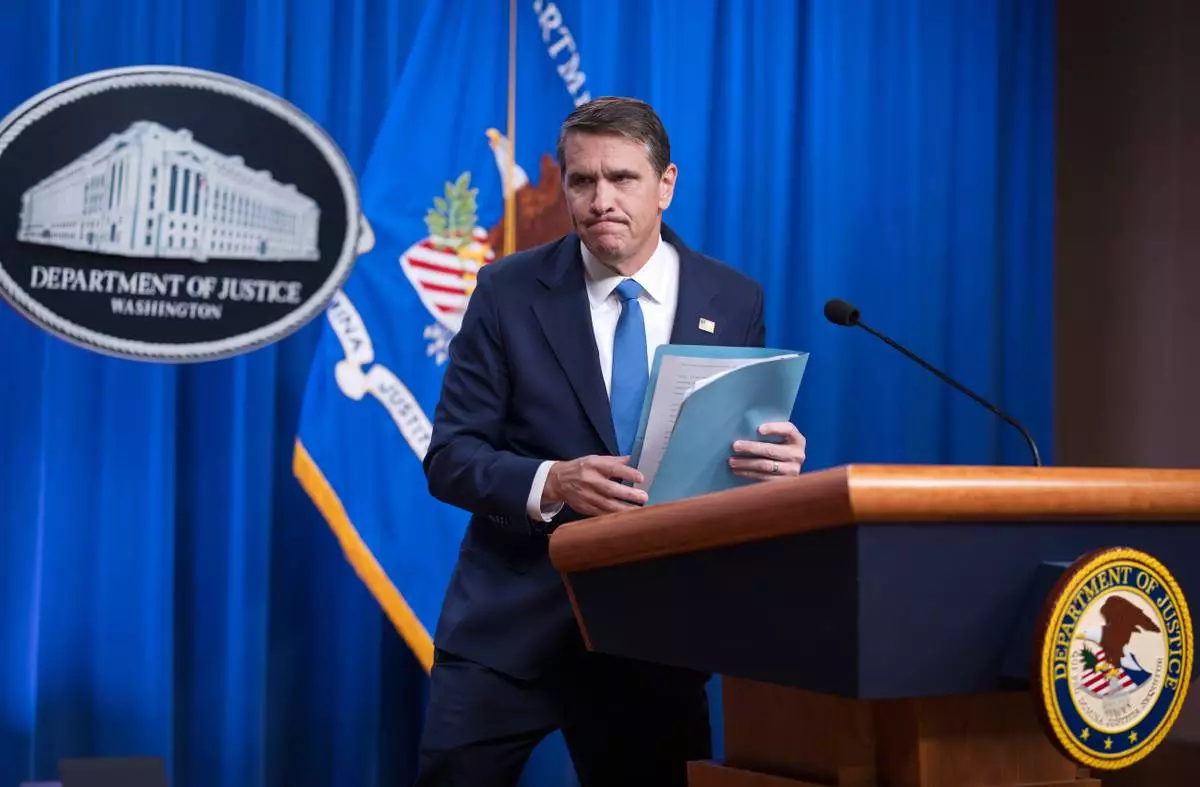
FILE - Deputy Attorney General Todd Blanche meets with reporters in Washington, Jan. 30, 2026. (AP Photo/J. Scott Applewhite, file)
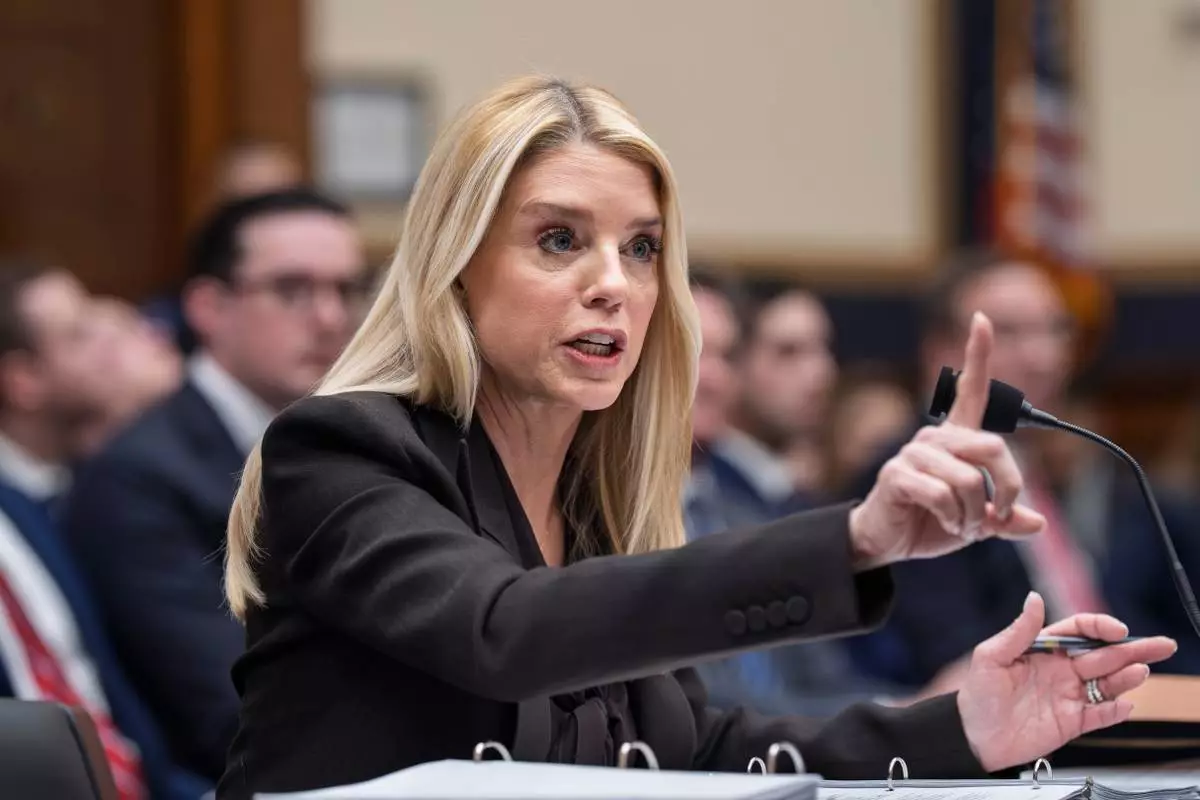
FILE - Attorney General Pam Bondi testifies before a House Judiciary Committee oversight hearing on Capitol Hill in Washington, Feb. 11, 2026, in Washington. (AP Photo/J. Scott Applewhite, File)