Skip to Content Facebook Feature Image

Man dubs himself ‘fittest dwarf on earth’ – revealing how he can lift four times his own weight

News

Man dubs himself ‘fittest dwarf on earth’ – revealing how he can lift four times his own weight
News

News

Man dubs himself ‘fittest dwarf on earth’ – revealing how he can lift four times his own weight

2018-08-24 18:07 Last Updated At:18:08

Refusing to let his disability hold him back, 4ft 5in Mikey Witous has earned a blackbelt in taekwondo and hits the gym seven days a week.

A 4ft 5in gym fanatic who can lift four times his own weight has dubbed himself ‘the fittest dwarf on earth’.

More Images
Mikey works out seven days a week (PA Real Life/Collect)

Mikey works out seven days a week (PA Real Life/Collect)

Mikey has earned a blackbelt in taekwondo (PA Real Life/Collect)

Mikey has earned a blackbelt in taekwondo (PA Real Life/Collect)

Mikey and his wife Jessica both have achondroplasia (PA Real Life/Collect)

Mikey and his wife Jessica both have achondroplasia (PA Real Life/Collect)

Mikey in his wrestling days (PA Real Life/Collect)

Mikey in his wrestling days (PA Real Life/Collect)

Mikey training (PA Real Life/Collect)

Mikey training (PA Real Life/Collect)

Mikey and his Jessica (PA Real Life/Collect)

Mikey and his Jessica (PA Real Life/Collect)

Mikey and Jessica (PA Real Life/Collect)
Mikey and Jessica (PA Real Life/Collect)

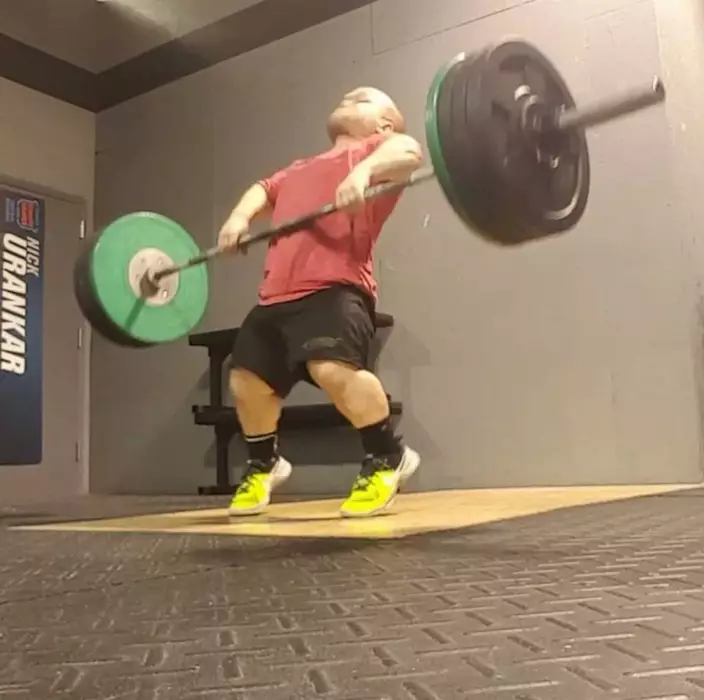
Mikey can lift four times his own weight (PA Real Life/Collect)

Mikey can lift four times his own weight (PA Real Life/Collect)

Mikey Witous, 26, was born with dwarfism – but, working out seven days a week and earning a blackbelt in taekwondo, he refuses to let his disability hold him back.

Though he weighs just 9st 6lb, he can squat lift 34st, deadlift 22st 8lb and bench 20st 3lb.

Posting videos and photos of his exercise sessions online, the small strongman from South Bend, Indiana, USA, has earned a legion of fans, racking up over 23,000 Instagram followers.

Explaining how they flock to leave encouraging comments on his posts, Mikey, whose baby son also has dwarfism, said: “It’s great to see all this positivity in the way the world looks at little people now.

“It’s good to know for the next generation – and I try to be someone that shows them we can achieve anything we put our minds to. People shouldn’t second guess us.”

Mikey works out seven days a week (PA Real Life/Collect)

Mikey works out seven days a week (PA Real Life/Collect)

While Mikey was still in the womb, doctors noticed his limbs had stopped growing, and he was born with achondroplasia.

Achondroplasia is one of the most common forms of dwarfism, according to the Restricted Growth Association UK, and occurs as a result of a genetic mutation.

Now Mikey and his wife Jessica, 30, who also has achondroplasia, have just had their first baby, Michael.

Mikey has earned a blackbelt in taekwondo (PA Real Life/Collect)

Mikey has earned a blackbelt in taekwondo (PA Real Life/Collect)

Born in February 2018, he, too, has the same form of dwarfism.

“I hope I can encourage him through what I do, and show him he can be comfortable doing whatever he wants in life,” said the proud father.

From very early on, Mikey learned to manage his condition.

Mikey and his wife Jessica both have achondroplasia (PA Real Life/Collect)

Mikey and his wife Jessica both have achondroplasia (PA Real Life/Collect)

“My parents always taught me to be forward-thinking,” he said. “I knew the world wasn’t going to adapt to me – I had to adapt to the world.

“It’s important to ask for help too, which can be hard. It’s something I still struggle with as I like to try and do everything myself, but I know it’s not the worst thing in the world to need some assistance.”

Throughout school, Mikey enjoyed fitness, playing American football, wrestling and practising taekwondo.

Mikey in his wrestling days (PA Real Life/Collect)

Mikey in his wrestling days (PA Real Life/Collect)

He continued: “I’d be competing against average-sized people, so I’d be facing difficulties others didn’t, but I like to test myself.

“I thrive off the challenge of competing. I chose those particular sports as I’ve never wanted to pick the easy option. You wouldn’t think a dwarf would want to do contact sports, but I excel when I’m pushed.

“I worked hard to ensure I wasn’t injured, and I was younger back then so nobody was big enough to really hurt anybody else.”

Quickly excelling, Mikey earned a blackbelt in taekwondo and was even recruited for college wrestling teams – until wear and tear to his back over time meant had to quit the sport.

But while most people were accepting of his disability, he still found himself the target of thoughtless comments.

“A few kids made fun of me, but kids will make fun of anything. You can get teased for having the wrong-coloured shoes,” he said. “I’d get occasional ignorance and people reacting poorly to my disability, but most people were very accepting.”

Mikey training (PA Real Life/Collect)

Mikey training (PA Real Life/Collect)

He continued: “Through sport, I gained exposure so people knew who I was anyway, and I also had a great group of friends who had my back.

“Because I’m competitive, if anybody did underestimate me, I’d be motivated to prove them wrong and show them I’m capable of far more than they think.”

After being forced to quit wrestling, Mikey was searching for new ways to exercise. He discovered CrossFit – a high intensity regime that, among other sports, incorporates elements of weightlifting and gymnastics – around three years ago.

Mikey and his Jessica (PA Real Life/Collect)

Mikey and his Jessica (PA Real Life/Collect)

From his first class, he was hooked.

Now, he works out every single day, hitting the gym in the evenings after he finishes his job at a technology company.

For at least an hour, he’ll squat, deadlift and bench heavy weights.

Mikey and Jessica (PA Real Life/Collect)

Mikey and Jessica (PA Real Life/Collect)

He has even set up a dedicated Instagram account, where he posts under the hashtag #thefittestdwarfonearth.

“It started out as a joke, playing off the idea of strongman competitions, but people really liked it,” he laughed. “I also use the hashtag #tyrionaintgotsh*tonme which is a joke about a character from Game of Thrones.”

Now training for an event in Miami, where scores of adaptive athletes will gather to compete, Mikey hopes that by sharing his story he can help inspire others.

Mikey can lift four times his own weight (PA Real Life/Collect)

Mikey can lift four times his own weight (PA Real Life/Collect)

He continued: “My message to other little people out there struggling or experiencing negativity is this – prove them wrong.

“Through whatever outlet you have, whether that’s fitness or education or anything else, shove in their face that you can achieve whatever you want to.

“Ignore that negativity and focus on showing them what you can do.”
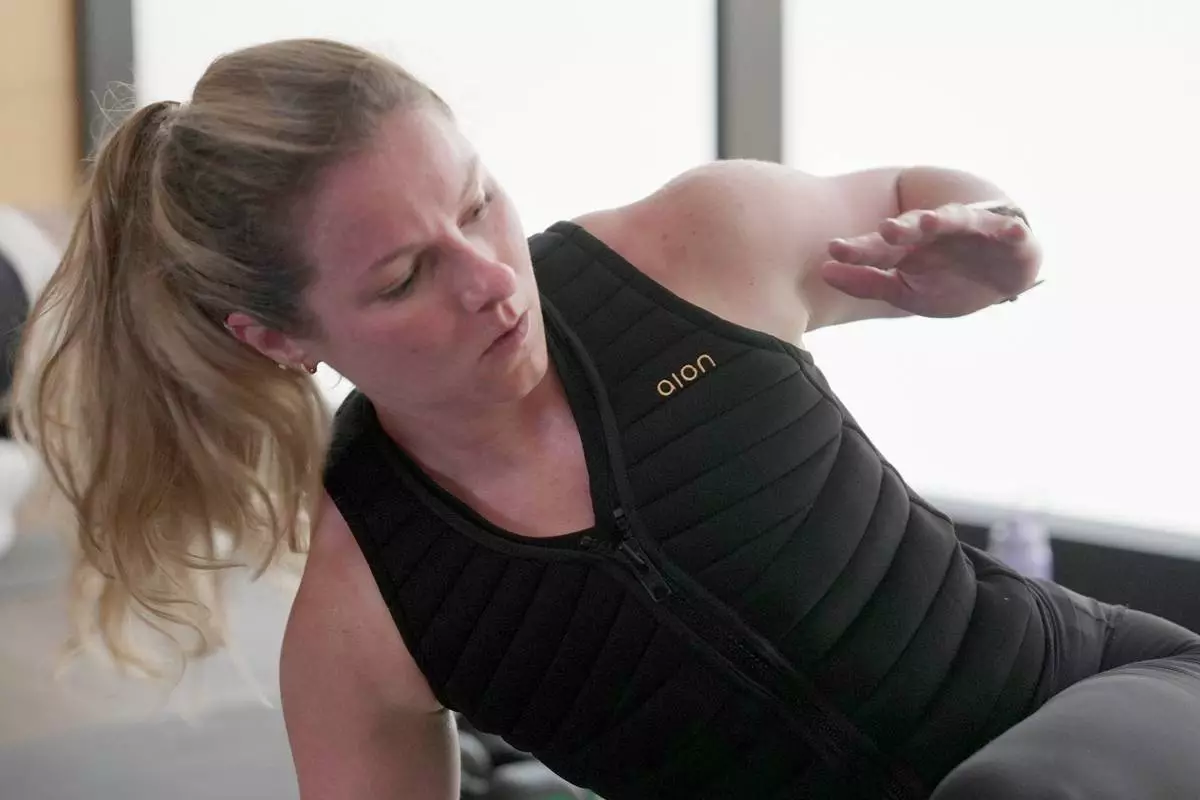
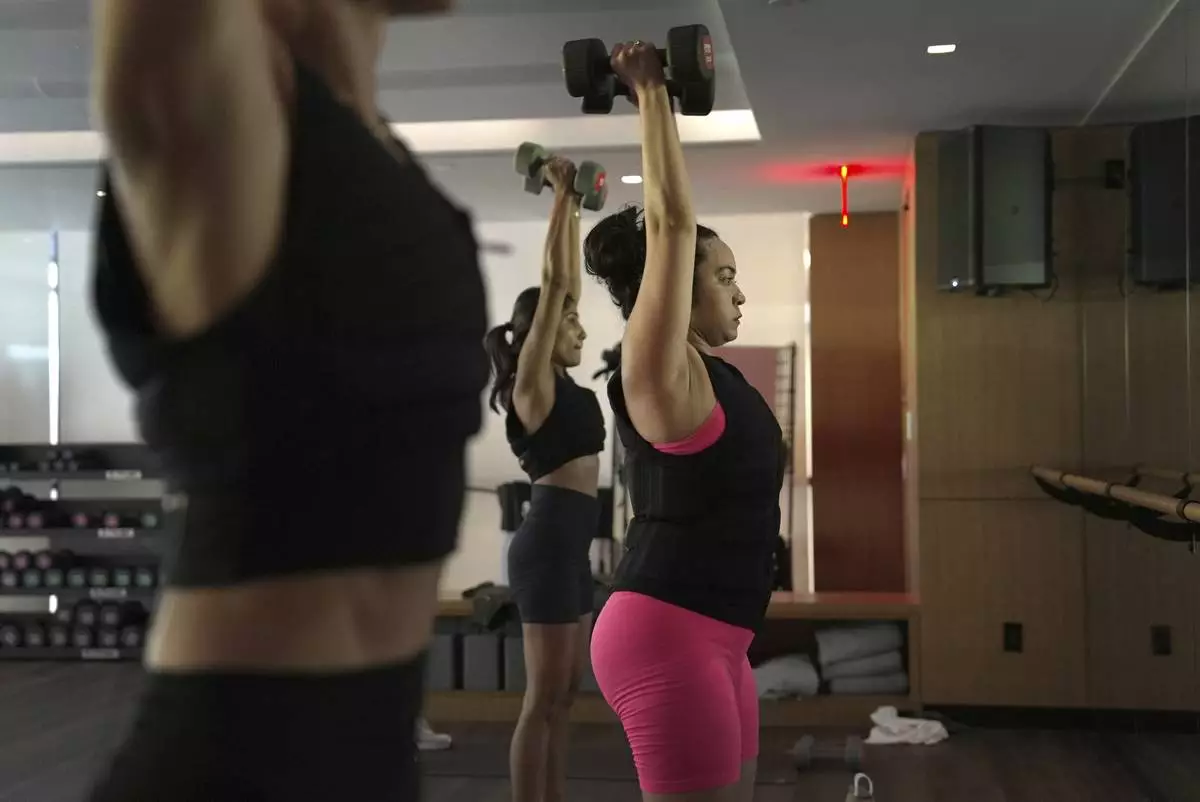
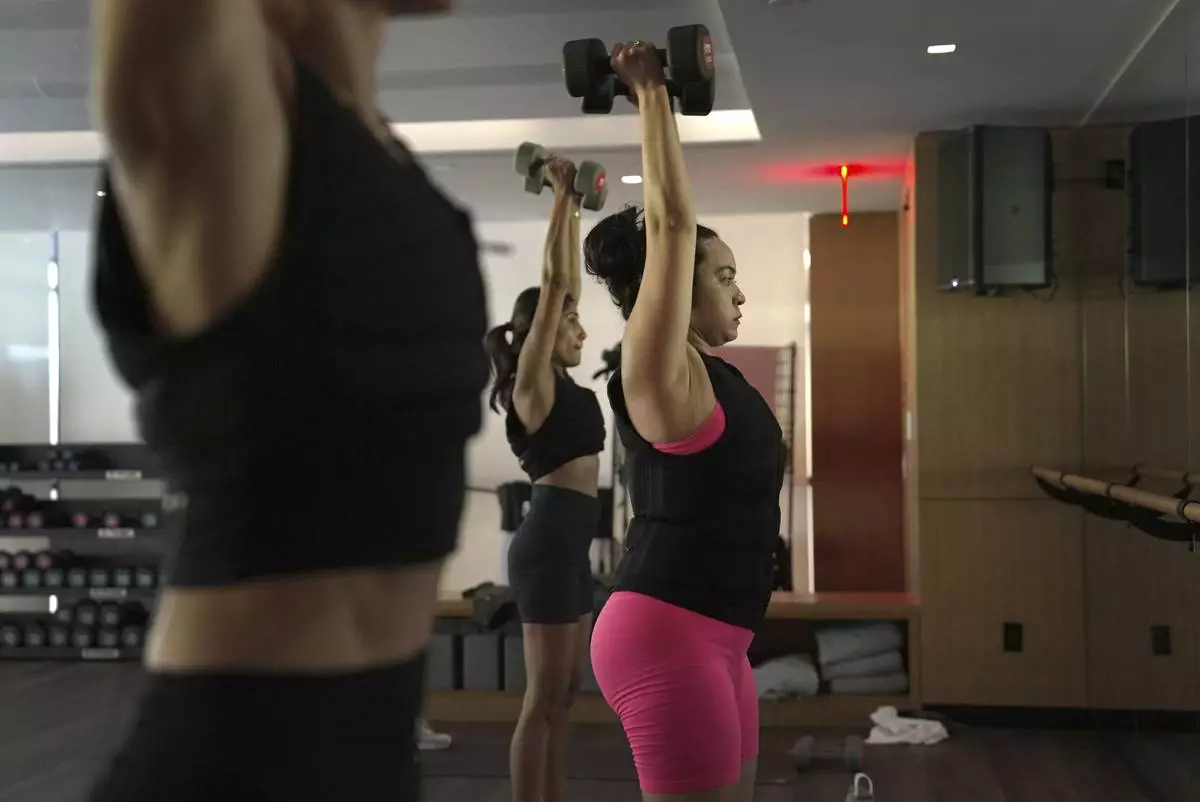
In the fitness class Jessie Syfko created for a nationwide gym chain, exercisers wear weighted vests that add a challenge to their workouts.

“People start to realize how good it feels to work just a little bit harder and a little bit smarter” without actually changing what they’re doing, said Syfko, senior vice president for Life Time gyms.

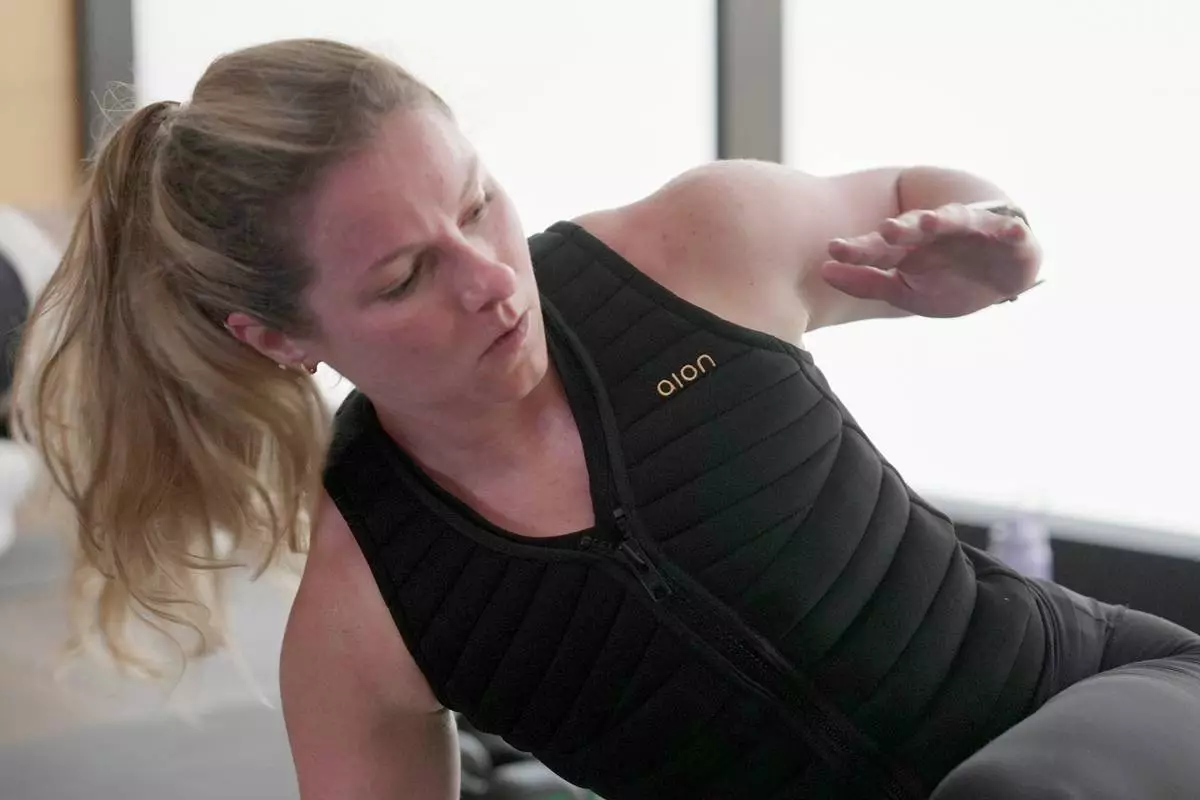
Weighted vests are increasingly showing up in fitness classes and on jogging tracks, touted by social media influencers as a way to keep bones healthy, improve performance and even accelerate weight loss. They are exactly what they sound like – vests that add resistance to the torso through pockets with removable weights.

But there's a lack of robust research on their benefits, experts say, so it's unclear how much of the hype is justified. And some people, such as seniors or those who are pregnant, should be cautious about using them.

When you think about how exercise works, the idea that a weighted vest will help you meet fitness goals like weight loss, muscle growth or preventing bone loss might make sense on the surface. Adding weight to the vest adds resistance to your everyday activities without changing up your patterns.

The vests may, in fact, offer benefits for healthy adults, experts say – although no one should expect transformative or instant results. Jeff Monaco, a certified strength coach who teaches medical fitness at the University of Texas at Austin, said while you may not lose a lot more calories during a weighted vest exercise, resistance from the vest may result in better sports performance over time.

“There are a lot of studies looking at (the weighted vest) from a speed perspective in different athletics, like soccer, with changing direction, agility and speed and so forth,” he said.

You’ll start to see those benefits by adding about 10% of your body weight to the vest, he said. If you weigh 150 pounds, for example, that would mean adding a total of 15 pounds to the vest.

But the research outside of sports isn’t as clear.

One 2020 study from Wake Forest University School of Medicine in North Carolina found that adults between 60 and 85 years old who wore weighted vests at times during the day when they were most active lost about the same amount of weight as those who didn’t wear them. They also lost the same amount of bone density, which happens as we age but can be slowed by building muscle.

Experts urge people to use weighted vests safely.

It’s best to start out by adding between five to 10 percent of your body weight. Wearing a vest that’s too heavy can put unnecessary strain on your joints, back and hips. That extra load can throw off your posture, lead to poor form or even result in stress fractures over time.

Some people should consult with a doctor before they throw on a vest, said Dr. Elizabeth Gardner, a team physician for athletes at Yale University. They include people who are pregnant, suffer from heart and breathing conditions or have back or neck injuries.

You'll have to use the muscles in your abdomen to use a weighted vest effectively, Gardner said, and this can be tougher for those already managing back pain.

Before starting to use a vest, Monaco said it's always helpful to get guidance from someone who has experience with them, “just to make sure that your movements are good, your form is good, that you have enough muscular upper body, muscular strength and endurance to support that during your movements.”

But as long as you use it correctly, he said, a weighted vest can be “a good tool to have in your toolbox.”

The Associated Press Health and Science Department receives support from the Howard Hughes Medical Institute’s Department of Science Education and the Robert Wood Johnson Foundation. The AP is solely responsible for all content.

CORRECTS YEAR TO 2025, NOT 2024 - Nora Capocci wears a weighted vest during an MB360 workout class at the Life Time health club in New York on Wednesday, Aug. 13, 2025. (AP Photo/Shelby Lum)

CORRECTS YEAR TO 2025, NOT 2024 - Nora Capocci wears a weighted vest during an MB360 workout class at the Life Time health club in New York on Wednesday, Aug. 13, 2025. (AP Photo/Shelby Lum)

CORRECTS YEAR TO 2025, NOT 2024 - Jannelliz Barragan, center, wears a weighted vest during an MB360 workout class at the Life Time health club in New York on Wednesday, Aug. 13, 2025. (AP Photo/Shelby Lum)

CORRECTS YEAR TO 2025, NOT 2024 - Jannelliz Barragan, center, wears a weighted vest during an MB360 workout class at the Life Time health club in New York on Wednesday, Aug. 13, 2025. (AP Photo/Shelby Lum)

Nora Capocci wears a weighted vest during an MB360 workout class at the Life Time health club in New York on Wednesday, Aug. 13, 2024. (AP Photo/Shelby Lum)

Nora Capocci wears a weighted vest during an MB360 workout class at the Life Time health club in New York on Wednesday, Aug. 13, 2024. (AP Photo/Shelby Lum)

Jannelliz Barragan, center, wears a weighted vest during an MB360 workout class at the Life Time health club in New York on Wednesday, Aug. 13, 2024. (AP Photo/Shelby Lum)

Jannelliz Barragan, center, wears a weighted vest during an MB360 workout class at the Life Time health club in New York on Wednesday, Aug. 13, 2024. (AP Photo/Shelby Lum)

Recommended Articles