Twitter permanently banned right-wing conspiracy theorist Alex Jones and his Infowars show for abusive behavior — a day after CEO Jack Dorsey testified before Congress about alleged "conservative bias" on the platform.
The company said Jones won't be able to create new accounts on Twitter or take over any existing ones. In a tweet, it said it would continue to monitor reports about other accounts potentially associated with Jones or Infowars, and will "take action" if it finds any attempts to circumvent the ban.
Twitter said Jones posted a video on Wednesday that violates the company's policy against "abusive behavior." That video showed Jones berating CNN journalist Oliver Darcy for some 10 minutes in between two congressional hearings on social media. Dorsey testified at both hearings, but did not appear to witness the confrontation.
Jones had about 900,000 followers on Twitter. Infowars had about 430,000. Jones did not immediately respond to a request for comment.
Twitter had previously suspended Jones for a week. But until now it had resisted muzzling Jones further. Other tech companies have limited Jones by suspending him for longer periods, as Facebook did, and by taking down his pages and radio stations.
Jones heckled Darcy in a Capitol Hill hallway where reporters were waiting to enter the House committee room. He criticized the journalist's reporting and appearance, referencing his "skinny jeans" and repeatedly saying, "just look at this guy's eyes" and "look at that smile."
At one point, he said Darcy was "smiling like a possum that crawled out of the rear end of a dead cow. That's what you look like. You look like a possum that got caught doing some really nasty stuff — in my view. You're a public figure too."
Darcy has aggressively questioned social media companies about the forbearance they showed Jones, asking why they have allowed him to remain on their platforms for as long as they have.
Jones is currently active on Facebook; his personal suspension there recently expired. Apple, YouTube and Spotify also permanently removed material Jones had published. Facebook did not immediately respond to a message asking whether it would also ban Jones.
Dorsey originally defended his company's decision not to ban Jones, tweeting that Jones "hasn't violated our rules" but if he does "we'll enforce."
"We're going to hold Jones to the same standard we hold to every account, not taking one-off actions to make us feel good in the short term, and adding fuel to new conspiracy theories," Dorsey tweeted on Aug. 7 , after the other companies took action against Jones.
But a week later Twitter joined the other tech companies in muzzling Jones, even if it was only for a week. It was a significant move for a company one of its executives once called the "free speech wing of the free speech party."
But critics warn there is another side to high-profile cases such as this one.
"We should be extremely careful before rushing to embrace an internet that is moderated by private companies by default," said David Greene, civil liberties director at the Electronic Frontier Foundation in an email last month. While high-profile cases of highly offensive content being taken down gets a lot of attention, he added, content moderation "continues to silence" the voices of people around the world struggling to be heard.
Associated Press writer Mary Clare Jalonick contributed to this story from Washington; AP technology writer Ryan Nakashima contributed from San Francisco.
LAS VEGAS (AP) — With the start of the New Year squarely behind us, it's once again time for the annual CES trade show to shine a spotlight on the latest tech companies plan on offering in 2026.
The multi-day event, organized by the Consumer Technology Association, kicks off this week in Las Vegas, where advances across industries like robotics, healthcare, vehicles, wearables, gaming and more are set to be on display.
Artificial intelligence will be anchored in nearly everything, again, as the tech industry explores offerings consumers will want to buy. AI industry heavyweight Jensen Huang will be taking the stage to showcase Nvidia's latest productivity solutions, and AMD CEO Lisa Su will keynote to “share her vision for delivering future AI solutions.” Expect AI to come up in other keynotes, like from Lenovo's CEO, Yuanqing Yang.
The AI industry is out in full force tackling issues in healthcare, with a particular emphasis on changing individual health habits to treat conditions — such as Beyond Medicine's prescription app focused on a particular jaw disorder — or addressing data shortages in subjects such as breast milk production.
Expect more unveils around domestic robots too. Korean tech giant LG already has announced it will show off a helper bot named “ CLOiD,” which allegedly will handle a range of household tasks. Hyundai also is announcing a major push on robotics and manufacturing advancements. Extended reality, basically a virtual training ground for robots and other physical AI, is also in the buzz around CES.
In 2025, more than 141,000 attendees from over 150 countries, regions, and territories attended the CES. Organizers expect around the same numbers for this year’s show, with more than 3,500 exhibitors across the floor space this week.
The AP spoke with CTA Executive Chair and CEO Gary Shapiro about what to expect for CES 2026. The conversation has been edited for clarity and length.
Well, we have a lot at this year's show.
Obviously, using AI in a way that makes sense for people. We’re seeing a lot in robotics. More robots and humanoid-looking robots than we’ve ever had before.
We also see longevity in health, there’s a lot of focus on that. All sorts of wearable devices for almost every part of the body. Technology is answering healthcare’s gaps very quickly and that’s great for everyone.
Mobility is big with not only self-driving vehicles but also with boats and drones and all sorts of other ways of getting around. That’s very important.
And of course, content creation is always very big.
You are seeing humanoid robots right now. It sometimes works, sometimes doesn’t.
But yes, there are more and more humanoid robots. And when we talk about CES 5, 10, 15, 20 years now, we’re going to see an even larger range of humanoid robots.
Obviously, last year we saw a great interest in them. The number one product of the show was a little robotic dog that seems so life-like and fun, and affectionate for people that need that type of affection.
But of course, the humanoid robots are just one aspect of that industry. There’s a lot of specialization in robot creation, depending on what you want the robot to do. And robots can do many things that humans can’t.
AI is the future of creativity.
Certainly AI itself may be arguably creative, but the human mind is so unique that you definitely get new ideas that way. So I think the future is more of a hybrid approach, where content creators are working with AI to craft variations on a theme or to better monetize what they have to a broader audience.
We’re seeing all sorts of different devices that are implementing AI. But we have a special focus at this show, for the first time, on the disability community. Verizon set this whole stage up where we have all different ways of taking this technology and having it help people with disabilities and older people.
Well, there’s definitely no bubble when it comes to what AI can do. And what AI can do is perform miracles and solve fundamental human problems in food production and clean air and clean water. Obviously in healthcare, it’s gonna be overwhelming.
But this was like the internet itself. There was a lot of talk about a bubble, and there actually was a bubble. The difference is that in late 1990s there were basically were no revenue models. Companies were raising a lot of money with no plans for revenue.
These AI companies have significant revenues today, and companies are investing in it.
What I’m more concerned about, honestly, is not Wall Street and a bubble. Others can be concerned about that. I’m concerned about getting enough energy to process all that AI. And at this show, for the first time, we have a Korean company showing the first ever small-scale nuclear-powered energy creation device. We expect more and more of these people rushing to fill this gap because we need the energy, we need it clean and we need a kind of all-of-the-above solution.
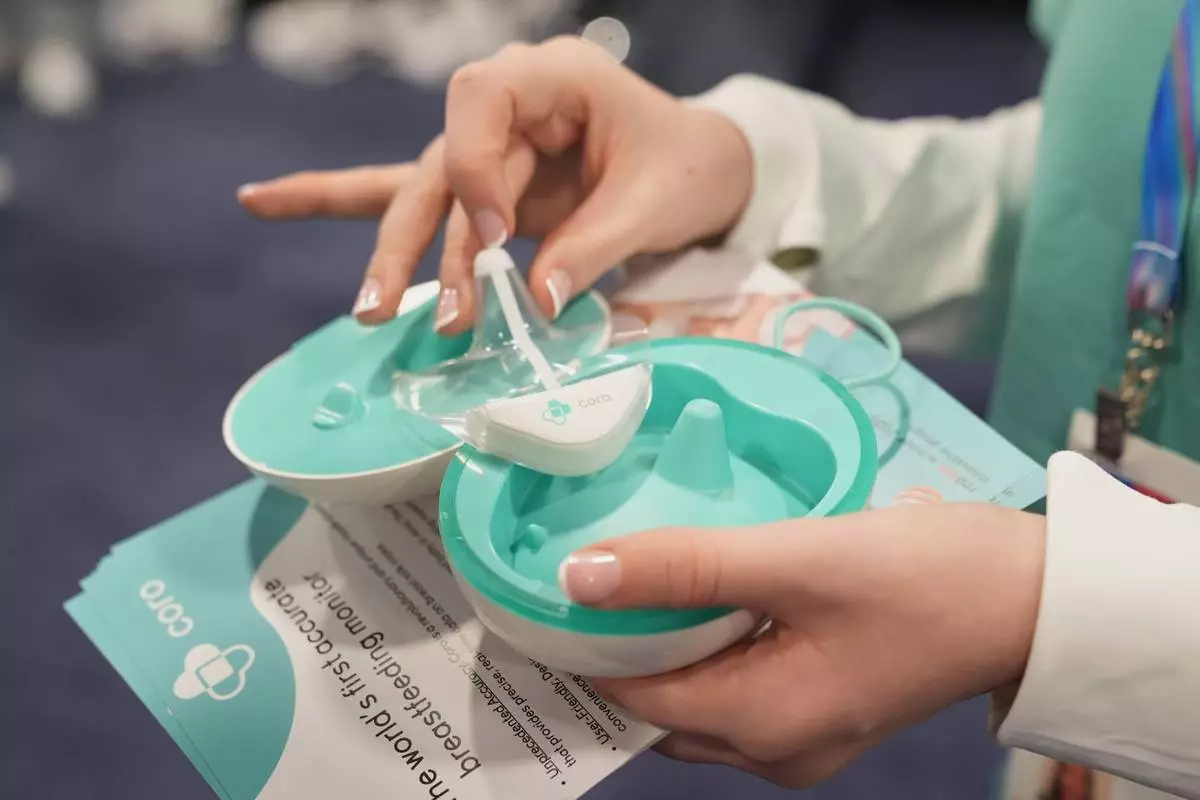
A Coro breastfeeding monitor is pictured at a Coroflo booth during the CES Unveiled tech show Sunday, Jan. 4, 2026, in Las Vegas. (AP Photo/Abbie Parr)
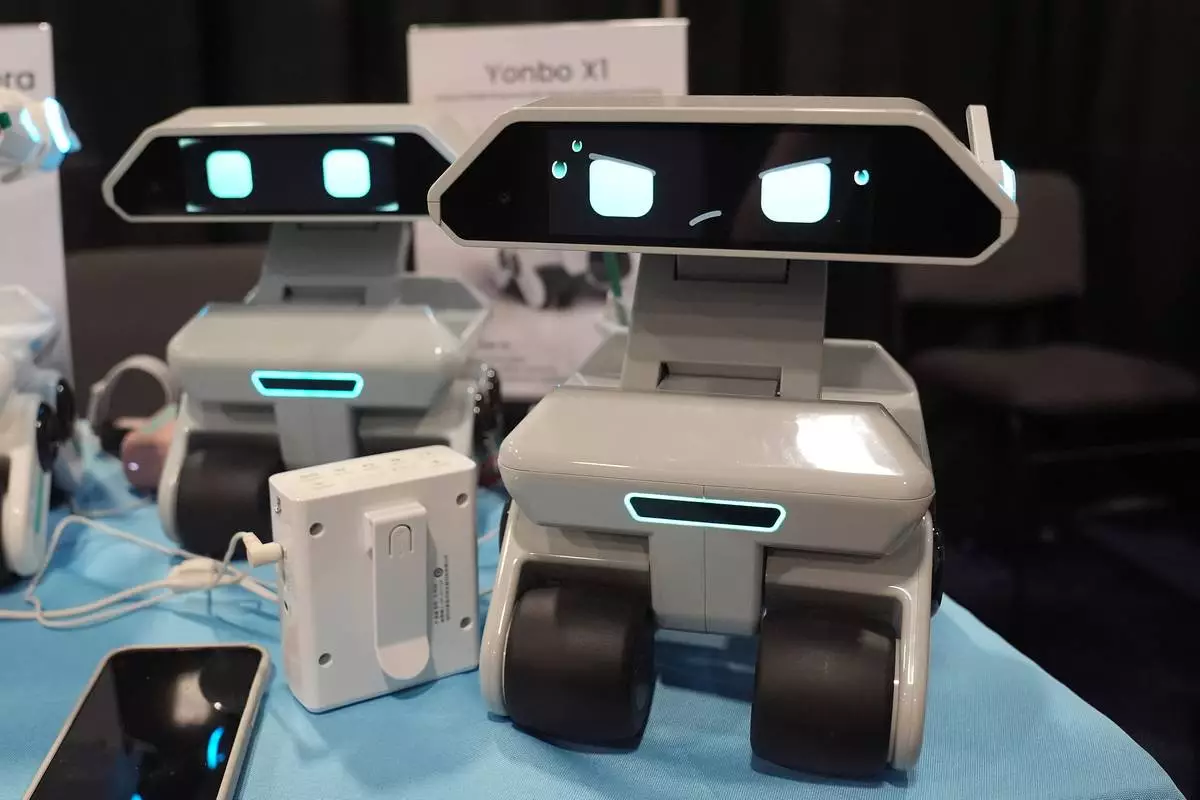
Yonbo X1 robots are pictured at the X-Orgin booth during the CES Unveiled tech show Sunday, Jan. 4, 2026, in Las Vegas. (AP Photo/Abbie Parr)

A Tombot robotic puppy is pictured at a Tombot booth during the CES Unveiled tech show Sunday, Jan. 4, 2026, in Las Vegas. (AP Photo/Abbie Parr)

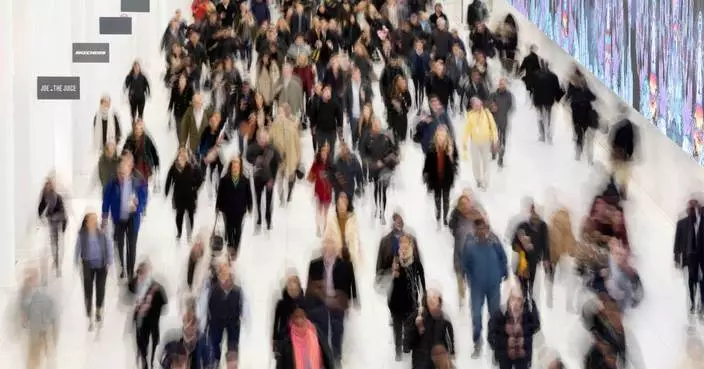
People arrive at the CES Unveiled tech show Sunday, Jan. 4, 2026, in Las Vegas. (AP Photo/Abbie Parr)