Skip to Content Facebook Feature Image

The latest developments in Trump-related investigations

News

The latest developments in Trump-related investigations
News

News

The latest developments in Trump-related investigations

2018-12-11 06:33 Last Updated At:06:40

President Donald Trump is facing escalating criminal investigations in Washington and New York that are examining not only whether his campaign coordinated with the Kremlin but also whether he illegally bought the silence of two women who say they had sex with him.

A look at the nearly three dozen people charged by special counsel Robert Mueller and unanswered questions about what may lie ahead for the president — labeled "Individual 1" in court papers — and his administration:

WHAT'S THE LATEST?
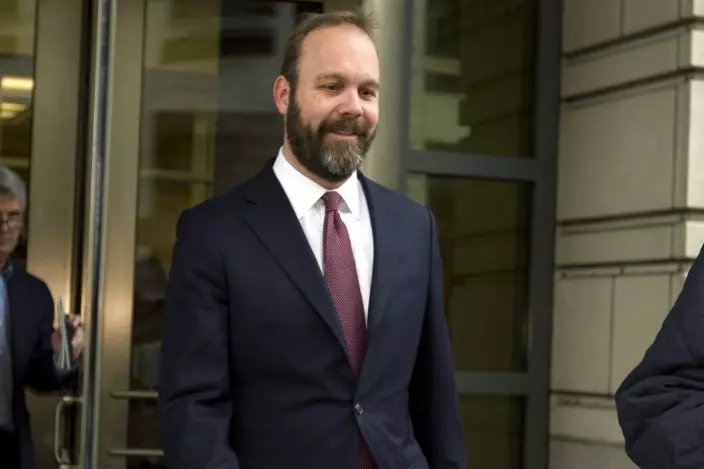
FILE - In this Feb. 23, 2018 file photo, Rick Gates leaves federal court in Washington. (AP PhotoJose Luis Magana)

FILE - In this Feb. 23, 2018 file photo, Rick Gates leaves federal court in Washington. (AP PhotoJose Luis Magana)

Federal prosecutors in Manhattan for the first time connected the president to a federal crime, accusing him of orchestrating hush-money payments during the campaign by his longtime lawyer and fixer, Michael Cohen, to a porn star and a former Playboy model. Cohen is due to be sentenced this week.

Mueller's office, meanwhile, detailed lies they say former Trump campaign chairman Paul Manafort told them even after he agreed to plead guilty and cooperate.

And prosecutors are preparing for the sentencing hearing next week of former national security adviser Michael Flynn, who lied to the FBI about his Russian contacts.
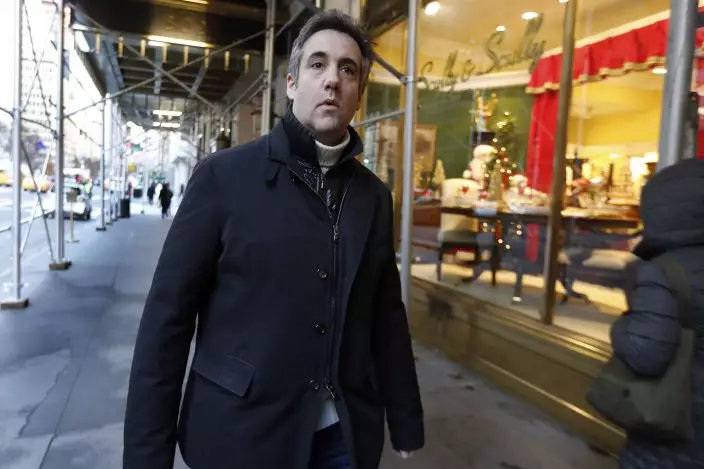
FILE - In this Dec. 7, 2018 file photo, Michael Cohen, former lawyer to President Donald Trump, leaves his apartment building on New York's Park Avenue. (AP PhotoRichard Drew)

FILE - In this Dec. 7, 2018 file photo, Michael Cohen, former lawyer to President Donald Trump, leaves his apartment building on New York's Park Avenue. (AP PhotoRichard Drew)

UNANSWERED QUESTIONS

— Did the Trump campaign collude with Russia?

That remains unclear, though there is mounting evidence of direct contact throughout the campaign between Trump associates and Moscow and evidence that individuals in Trump's orbit were discussing a possible email dump from WikiLeaks before it occurred.

American intelligence agencies and Mueller have said Russia was the source of hacked material released by WikiLeaks during the campaign that damaged Democrat Hillary Clinton's presidential effort.

Additional ties between Russians and Trump aides were alleged within the last week. Prosecutors revealed that a Russian contacted Cohen in 2015 and offered "political synergy" between Russia and the Republican campaign. A person familiar with the matter confirmed that that person is a former Russian Olympic athlete named Dmitry Klokov.

Trump and his lawyers have returned a list of written answers on the collusion question to Mueller, but it's unclear whether investigators will return with more questions.

— Did the president obstruct the investigation?

That is another unresolved question that Mueller is pursuing. Investigators have examined key episodes such as Trump's firing of former FBI Director James Comey and his fury over the recusal from the investigation of former Attorney General Jeff Sessions.

THE AMERICAN DEFENDANTS

— Paul Manafort: He has been convicted in Washington and Virginia of crimes related to years of Ukrainian political consulting work, including allegations he concealed his foreign government work from the United States and failed to pay taxes on it. Although the charges don't directly touch Trump, he's nonetheless remained a figure of considerable intrigue and enjoys the continued sympathy of the president, who has left open the door for a pardon.

— Rick Gates: The longtime associate of Manafort and key Trump campaign aide was indicted last year alongside his mentor but months later split from him by pleading guilty to unregistered foreign lobbying work and agreeing to cooperate with Mueller. No sentencing date has been scheduled for Gates, indicating that his cooperation with investigators is continuing.

— Michael Flynn: He has admitted lying to the FBI just days after Trump took office by telling agents that he had never discussed sanctions with the-then Russian ambassador to the United States. The White House said Flynn had misled administration officials, including Vice President Mike Pence, about the conversation and ousted him weeks later. He's since become a vital cooperator for Mueller, having met 19 times with investigators. Prosecutors aren't recommending any prison time when he's sentenced next week.

— Michael Cohen: He's at the center of not only Mueller's investigation but also a separate investigation into hush-money payments. In Mueller's investigation, Cohen has admitted lying to Congress about a proposed real estate development in Moscow. He told lawmakers the negotiations were done in January 2016 when in fact they stretched deep into the campaign. He also pleaded guilty in New York to campaign finance violations stemming from the payments, with prosecutors saying last week that he "acted in coordination and at the direction of Individual 1" — Trump.

— George Papadopoulos: The former foreign policy adviser recently finished a 14-day prison sentence after admitting lying to the FBI about a 2016 conversation with a Maltese professor who told him that Russia had "dirt" on Clinton in the form of stolen emails.

25 RUSSIANS

— Twelve military intelligence officers were charged in July with hacking the email accounts of Clinton's presidential campaign and the Democratic Party and then facilitating the release of tens of thousands of private communications. It remains perhaps the most direct example of what American intelligence officials say was a broad conspiracy by the Kremlin to meddle in the 2016 election on Trump's behalf.

That indictment did not accuse any Americans of participating in the conspiracy, though it did include an eye-catching detail: The Russian hackers, prosecutors say, made an attempt to break into Clinton's network just hours after Trump appeared to invite them to do so. In a July 27, 2016, speech, Trump urged Russia to look for emails that Clinton said she had deleted from her tenure as secretary of state.

"Russia, if you're listening," Trump said, "I hope you're able to find the 30,000 emails that are missing."

— A separate indictment charges 13 Russians with funding a covert social media propaganda campaign to sow discord among Americans in the run-up to the 2016 presidential election. Prosecutors say the scheme was run by a Russia-based troll farm that used bogus social media postings and advertisements fraudulently purchased in the name of Americans to try to influence the election.

OTHER DEFENDANTS

— Konstantin Kilimnik: The Ukrainian native, who U.S. authorities say has ties to Russian intelligence, was indicted on witness tampering charges involving Manafort. The men are accused of trying to persuade two witnesses to lie about the nature of political consulting and lobbying work they carried out for Ukrainian interests.

— Richard Pinedo: The California man was sentenced in October to six months in prison for unwittingly aiding the Russian troll farm by selling stolen identifications and bank account numbers that were used by Russians to establish PayPal accounts and purchase advertisements on Facebook.

— Alex van der Zwaan: The Dutch attorney became the first person punished with prison in the Mueller investigation when he was given a monthlong sentence for lying to investigators about his contacts with Gates and Kilimnik and about a report written by a law firm on the trial of a former Ukrainian prime minister.

OTHER NAMES YOU MAY HAVE HEARD

— Roger Stone: The longtime Trump confidant and self-proclaimed "dirty trickster" of Republican politics has been under investigation for months as prosecutors try to establish what knowledge he may have had about plans by WikiLeaks to release the stolen Democratic emails in the weeks before the election. Although a 2016 Stone tweet — "Trust me, it will soon the Podesta's time in the barrel" — appeared to presage the disclosure of hacked emails, Stone has said he had no inside knowledge about the content, source or timing of WikiLeaks' disclosure.

— Jerome Corsi: A conspiracy theorist and Stone friend, he's been under intense pressure from Mueller and even turned down a plea offer that would have required him to admit intentionally lying about a 2016 conversation he had with Stone about WikiLeaks. It is unclear when or if he will be indicted, but based on draft documents Corsi has released, prosecutors appear to believe that he misled them about email exchanges involving Assange and the hacked emails.

— Julian Assange: Prosecutors in the Eastern District of Virginia inadvertently disclosed the existence of a sealed criminal complaint against the WikiLeaks founder, though no details have been publicly announced. Assange, under Justice Department scrutiny for years for WikiLeaks' role in publishing government secrets, has been an important figure in the Mueller probe as investigators examine how WikiLeaks obtained the stolen emails and whether any Americans were involved in coordinating that effort.

— Donald Trump Jr.: The president's eldest son has attracted scrutiny for his role in arranging a Trump Tower meeting in June 2016 — also attended by Manafort and Trump son-in-law Jared Kushner — at which he expected to receive damaging information on Clinton. He has said the meeting was a waste of time because he didn't receive anything interesting from the attorney, Natalia Veselnitskaya. Both he and his father have suggested that anyone in that position would have taken the meeting in hopes of getting dirt on a political opponent. The meeting has been of interest to investigators, who have called multiple participants before the grand jury.

Associated Press writer Mary Clare Jalonick contributed to this report.
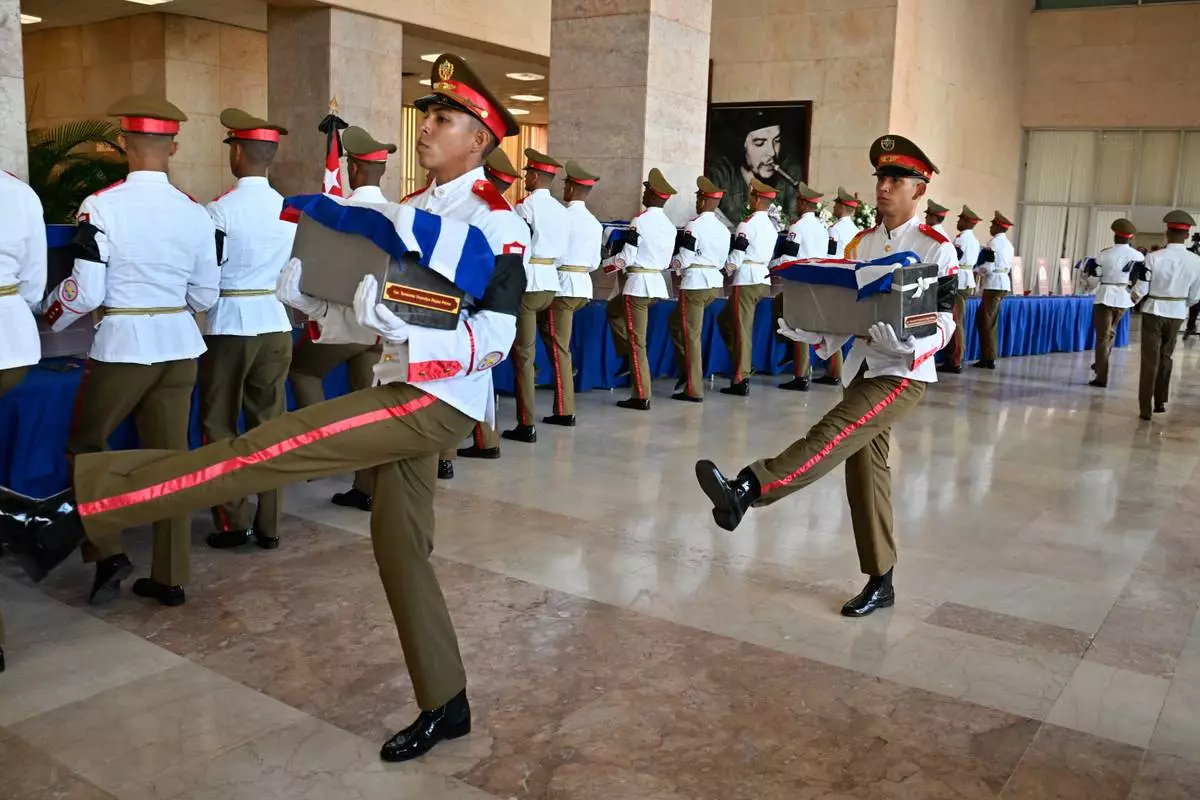
HAVANA (AP) — Trumpets and drums played solemnly at Havana's airport Thursday as white-gloved Cuban soldiers marched out of a plane carrying urns with remains of the 32 Cuban officers killed during a stunning U.S. attack on Venezuela.

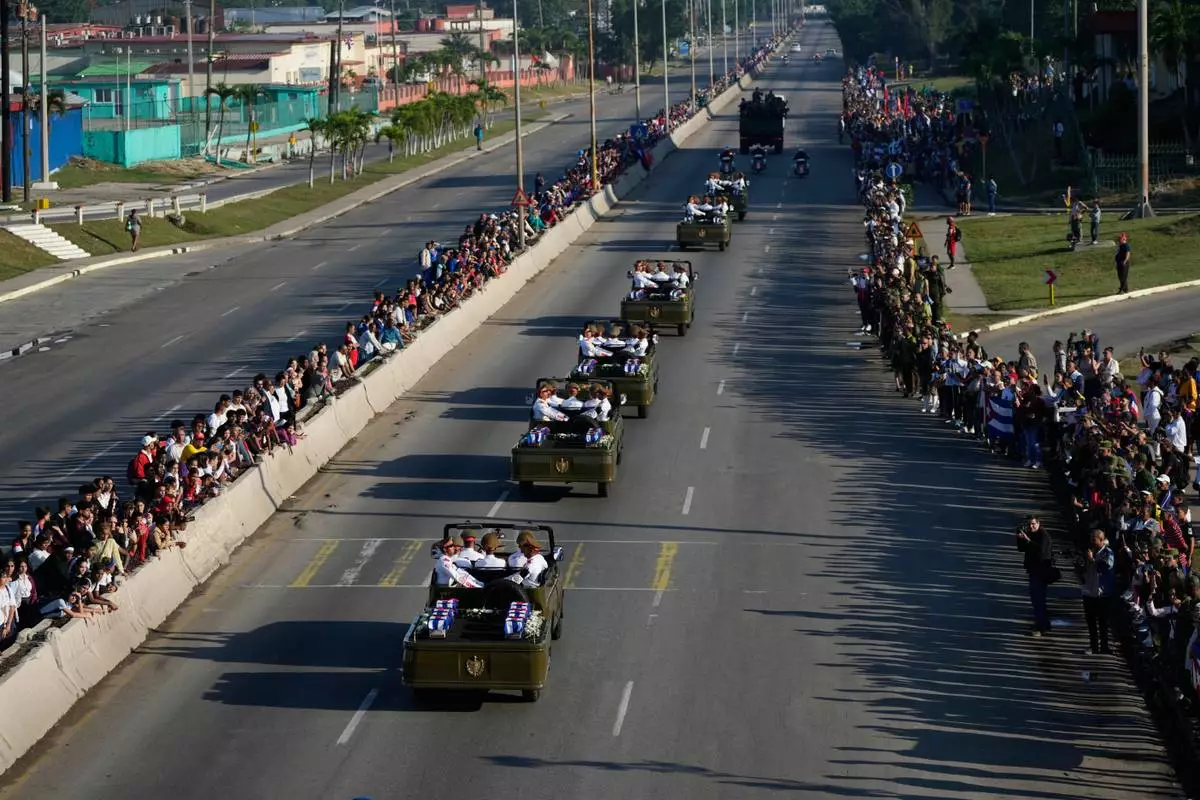
Nearby, thousands of Cubans lined one of Havana’s most iconic streets to await the bodies as the island remained under threat by the administration of U.S. President Donald Trump.

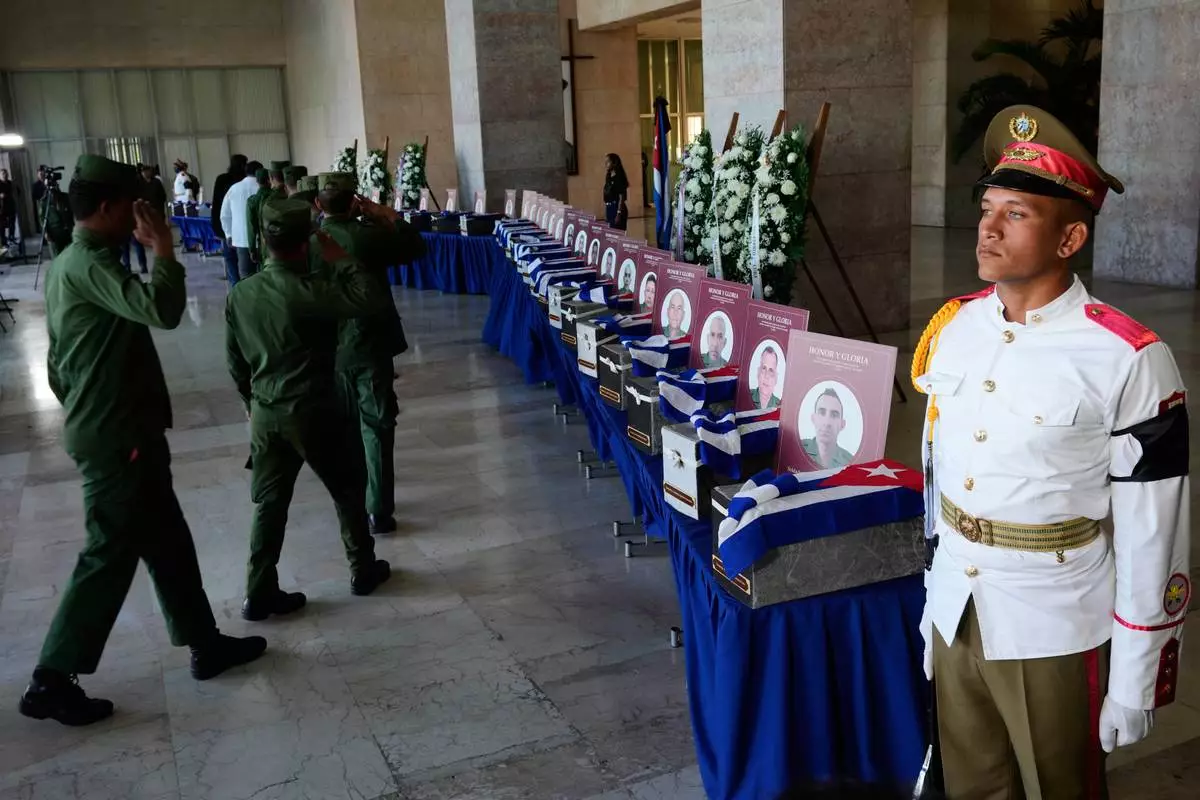
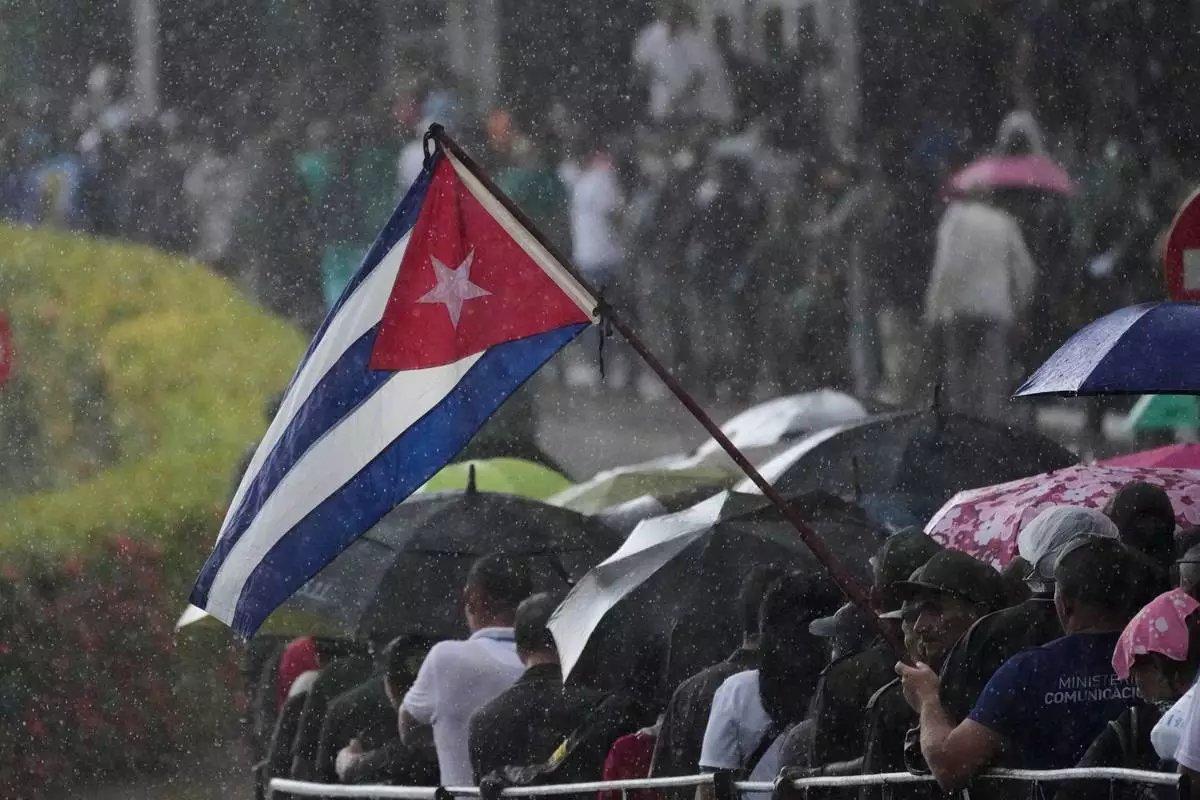
The soldiers' shoes clacked as they marched stiff-legged into the headquarters of the Ministry of the Armed Forces and placed the urns on a long table next to the pictures of those killed. Tens of thousands of people paid their respects, saluting the urns or holding their hand over their heart, many of them drenched from standing outside in a heavy downpour.

Thursday’s mass funeral was only one of a handful that the Cuban government has organized over the past half-century.

The soldiers were part of the security detail of Venezuelan President Nicolás Maduro during the Jan. 3 raid on his residence to seize the former leader and bring him to the U.S. to face drug trafficking charges.

State television also showed images of what it said were more than a dozen wounded combatants from the raid, accompanied by Cuban Foreign Minister Bruno Rodríguez after arriving Wednesday night from Venezuela. A man identified in state media as Col. Pedro Yadín Domínguez attended Thursday's ceremony in a wheelchair.

He said it was a “disproportionate attack” that killed 11 colleagues around him as they slept. Yadín said he was committed to doing “whatever it takes to defend this people and to remain united in the face of threats from the United States.”

Tensions between Cuba and the U.S. have spiked, with Trump recently demanding that the Caribbean country make a deal with him before it is “too late.” He did not explain what kind of deal.

Trump also has said that Cuba will no longer live off Venezuela's money and oil. Experts warn that the abrupt end of oil shipments could be catastrophic for Cuba, which is already struggling with serious blackouts and a crumbling power grid.

Officials unfurled a massive flag at Havana's airport as President Miguel Díaz-Canel, clad in military garb, stood silent next to former President Raúl Castro, with what appeared to be the relatives of those killed looking on nearby.

Cuban Interior Minister Lázaro Alberto Álvarez Casas called the slain soldiers “heroes” of an anti-imperialist struggle spanning both Cuba and Venezuela. In an apparent reference to the U.S., he said the “enemy” speaks of “high-precision operations, of troops, of elites, of supremacy.

“We, on the other hand, speak of faces, of families who have lost a father, a son, a husband, a brother,” Álvarez said.

The events demonstrate that “imperialism may possess more sophisticated weapons; it may have immense material wealth; it may buy the minds of the wavering; but there is one thing it will never be able to buy: the dignity of the Cuban people,” he said.

Carmen Gómez, a 58-year-old industrial designer, was among the thousands of Cubans who lined a street where motorcycles and military vehicles thundered by with the remains of those killed.

“They are people willing to defend their principles and values, and we must pay tribute to them,” Gómez said. “It’s because of the sense of patriotism that Cubans have, and that will always unite us.”

The 32 military personnel ranged in age from 26 to 60 and were part of protection agreements between the two countries.

Officials in Cuba have said they expect a massive demonstration Friday across from the U.S. Embassy to protest the deaths.

“People are upset and hurt ... many do believe that the dead are martyrs” of a historic struggle against the United States, analyst and former diplomat Carlos Alzugaray told The Associated Press.

In October 1976, then-President Fidel Castro led a massive demonstration to bid farewell to the 73 people killed in the bombing of a civilian flight financed by anti-revolutionary leaders in the U.S. Most of the victims were Cuban athletes.

In December 1989, officials organized a ceremony to honor the more than 2,000 Cuban combatants who died in Angola during Cuba’s participation in a war that defeated the South African army.

In October 1997, memorial services were held following the arrival of the remains of guerrilla commander Ernesto “Che” Guevara and six of his comrades, who died in 1967.

The latest mass burial is critical to honor those slain, said José Luis Piñeiro, a 60-year-old doctor who lived for four years in Venezuela.

“I don’t think Trump is crazy enough to come and enter a country like this, ours, and if he does, he’s going to have to take an aspirin or some painkiller to avoid the headache he’s going to get,” Piñeiro said. “These were 32 heroes who fought him. Can you imagine an entire nation? He’s going to lose.”

The remains arrived a day after the U.S. announced $3 million in additional aid to help the island recover from the catastrophic Hurricane Melissa. The first flight took off on Wednesday, and a second flight was scheduled for Friday. A commercial vessel also will deliver food and other supplies.

Cuba had said on Wednesday that any contributions will be channeled through the government.

But U.S. State Department foreign assistance official Jeremy Lewin said Thursday that the U.S. was working with Cuba’s Catholic Church to distribute aid, as part of Washington's efforts to give assistance directly to the Cuban people.

“There’s nothing political about cans of tuna and rice and beans and pasta,” he said Thursday, warning that the Cuban government should not intervene or divert supplies. “We will be watching, and we will hold them accountable.”

Lewin said the Cuban government has a choice to: “Step down or better provide towards people.” Lewin added that “if there was no regime,” the U.S. would provide “billions and billions of dollars” in assistance, as well as investment and development: “That’s what lies on the other side of the regime for the Cuban people.”

Rodríguez, the Cuban foreign minister, said the U.S. government was “exploiting what appears to be a humanitarian gesture for opportunistic and politically manipulative purposes.”

Coto contributed from San Juan, Puerto Rico.

Follow AP’s coverage of Latin America and the Caribbean at https://apnews.com/hub/latin-america

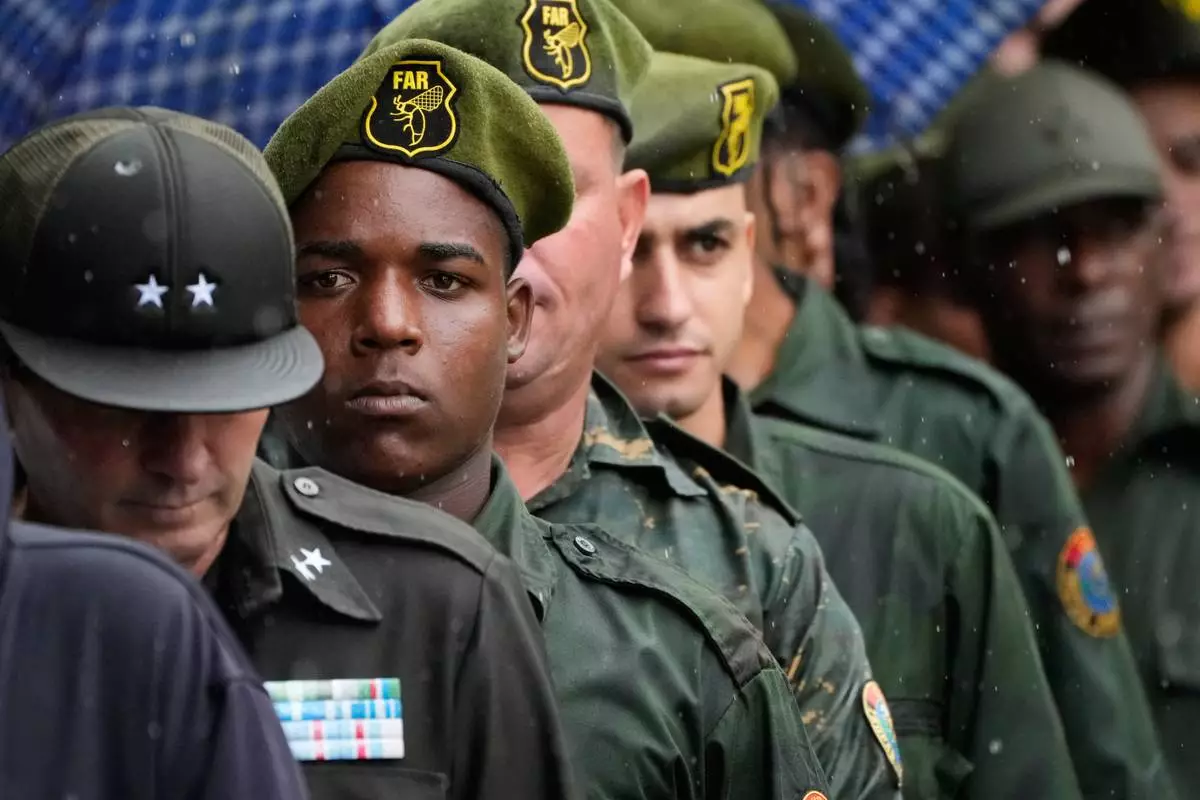
People line up outside the Ministry of the Revolutionary Armed Forces where the remains are on display of the Cuban officers who were killed during the U.S. operation in Venezuela that captured President Nicolas Maduro, as it sprinkles rain in Havana, Cuba, Thursday, Jan. 15, 2026. (AP Photo/Ramon Espinosa)

People line up outside the Ministry of the Revolutionary Armed Forces where the remains are on display of the Cuban officers who were killed during the U.S. operation in Venezuela that captured President Nicolas Maduro, as it sprinkles rain in Havana, Cuba, Thursday, Jan. 15, 2026. (AP Photo/Ramon Espinosa)

Military members line up outside the Ministry of the Revolutionary Armed Forces where the urns containing the remains of Cuban officers, killed during the U.S. operation in Venezuela that captured President Nicolas Maduro, are on display in Havana, Cuba, Thursday, Jan. 15, 2026. (AP Photo/Ramon Espinosa)

Military members line up outside the Ministry of the Revolutionary Armed Forces where the urns containing the remains of Cuban officers, killed during the U.S. operation in Venezuela that captured President Nicolas Maduro, are on display in Havana, Cuba, Thursday, Jan. 15, 2026. (AP Photo/Ramon Espinosa)

Military members pay their last respects to Cuban officers who were killed during the U.S. operation in Venezuela that captured Venezuelan President Nicolas Maduro, at the Ministry of the Revolutionary Armed Forces where the urns containing the remains are displayed during a ceremony in Havana, Cuba, Thursday, Jan. 15, 2026. (AP Photo/Ramon Espinosa)

Military members pay their last respects to Cuban officers who were killed during the U.S. operation in Venezuela that captured Venezuelan President Nicolas Maduro, at the Ministry of the Revolutionary Armed Forces where the urns containing the remains are displayed during a ceremony in Havana, Cuba, Thursday, Jan. 15, 2026. (AP Photo/Ramon Espinosa)

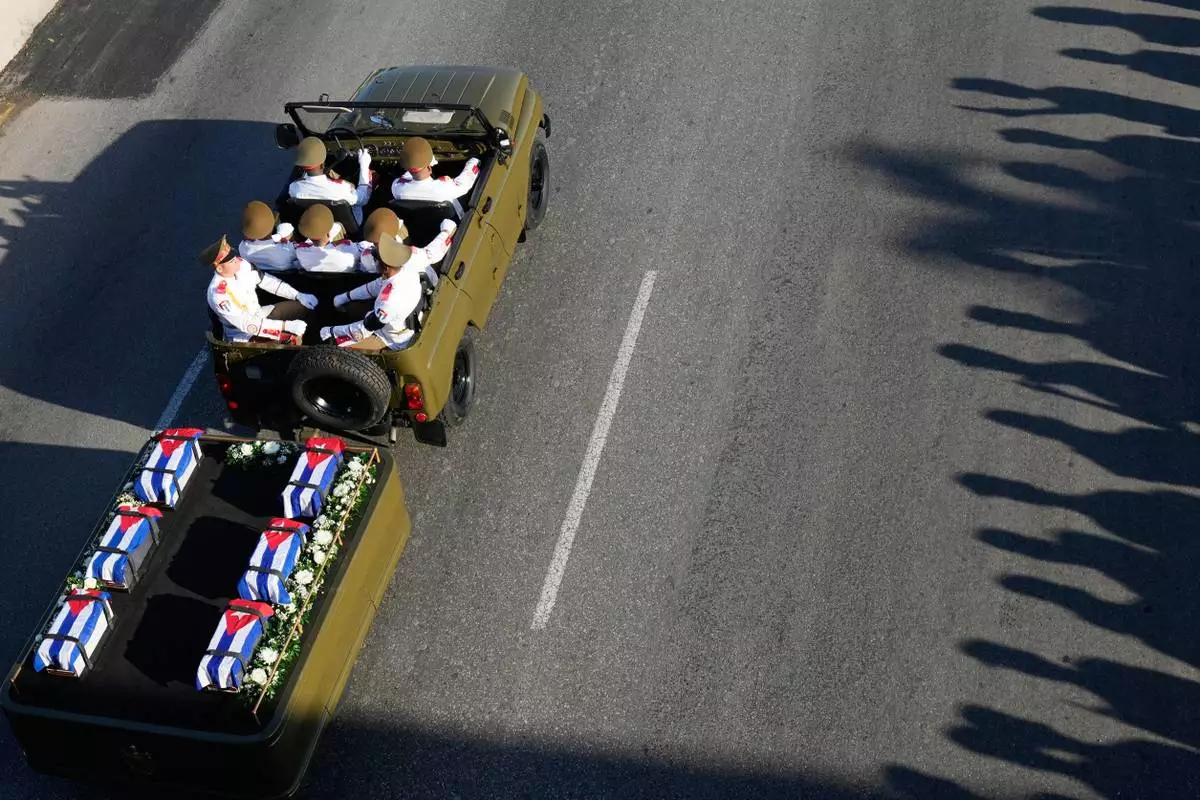
A motorcade transports urns containing the remains of Cuban officers, who were killed during the U.S. operation in Venezuela that captured Venezuelan President Nicolas Maduro, through Havana, Cuba, Thursday, Jan. 15, 2026. (AP Photo/Ramon Espinosa)

A motorcade transports urns containing the remains of Cuban officers, who were killed during the U.S. operation in Venezuela that captured Venezuelan President Nicolas Maduro, through Havana, Cuba, Thursday, Jan. 15, 2026. (AP Photo/Ramon Espinosa)

Soldiers carry urns containing the remains of Cuban officers, who were killed during the U.S. operation in Venezuela that captured Venezuelan President Nicolas Maduro, at the Ministry of the Revolutionary Armed Forces in Havana, Cuba, Thursday, Jan. 15, 2026. (Adalberto Roque /Pool Photo via AP)

Soldiers carry urns containing the remains of Cuban officers, who were killed during the U.S. operation in Venezuela that captured Venezuelan President Nicolas Maduro, at the Ministry of the Revolutionary Armed Forces in Havana, Cuba, Thursday, Jan. 15, 2026. (Adalberto Roque /Pool Photo via AP)

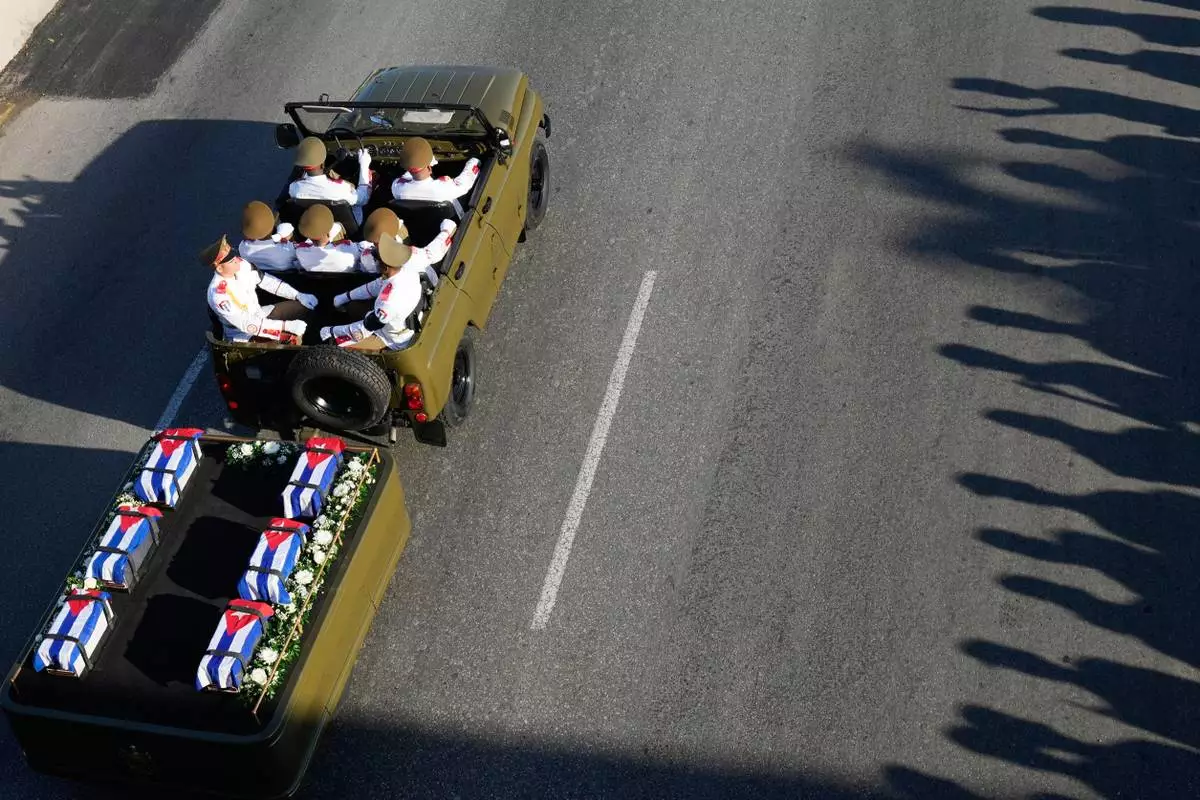
A motorcade transports urns containing the remains of Cuban officers, who were killed during the U.S. operation in Venezuela that captured Venezuelan President Nicolas Maduro, through Havana, Cuba, Thursday, Jan. 15, 2026. (AP Photo/Ramon Espinosa)

A motorcade transports urns containing the remains of Cuban officers, who were killed during the U.S. operation in Venezuela that captured Venezuelan President Nicolas Maduro, through Havana, Cuba, Thursday, Jan. 15, 2026. (AP Photo/Ramon Espinosa)

A motorcade transports urns containing the remains of Cuban officers, who were killed during the U.S. operation in Venezuela that captured Venezuelan President Nicolas Maduro, through Havana, Cuba, Thursday, Jan. 15, 2026. (AP Photo/Ramon Espinosa)

A motorcade transports urns containing the remains of Cuban officers, who were killed during the U.S. operation in Venezuela that captured Venezuelan President Nicolas Maduro, through Havana, Cuba, Thursday, Jan. 15, 2026. (AP Photo/Ramon Espinosa)

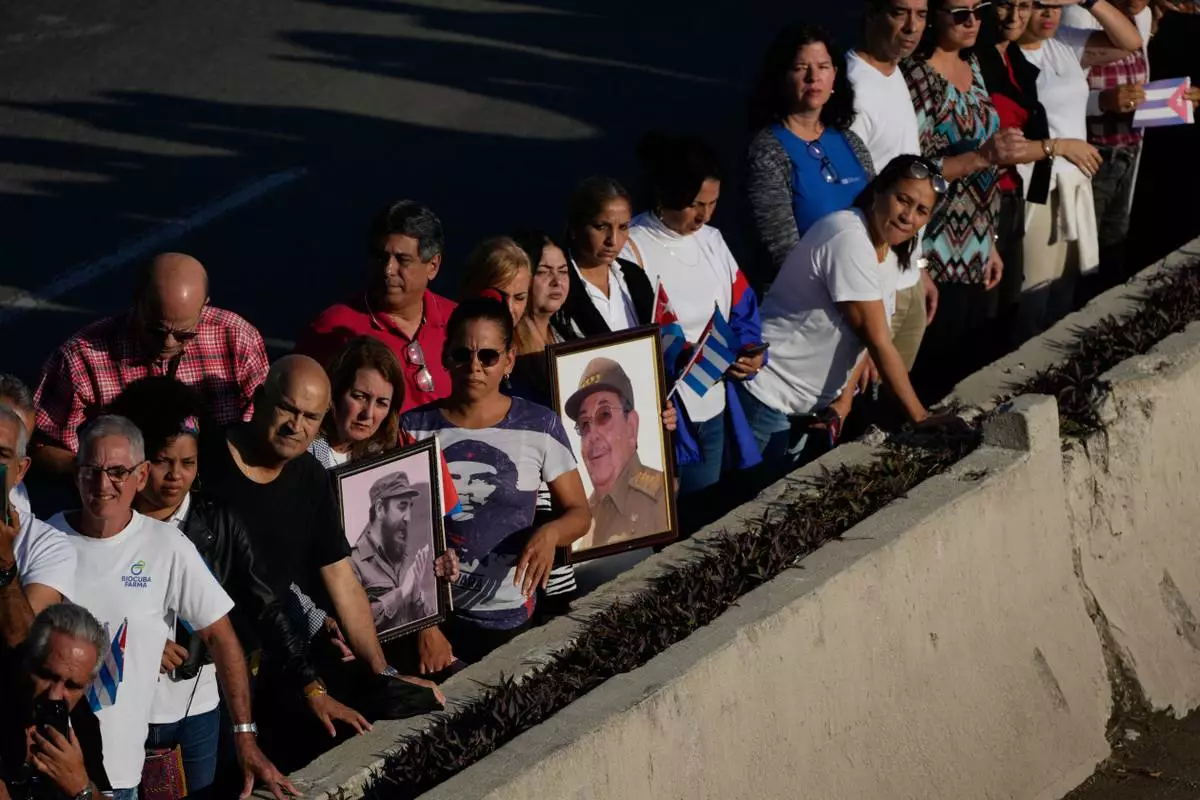
People line the streets of Havana, Cuba, Thursday, Jan. 15, 2026, to watch the motorcade carrying urns containing the remains of Cuban officers killed during the U.S. operation in Venezuela that captured Venezuelan President Nicolas Maduro. (AP Photo/Ramon Espinosa)

People line the streets of Havana, Cuba, Thursday, Jan. 15, 2026, to watch the motorcade carrying urns containing the remains of Cuban officers killed during the U.S. operation in Venezuela that captured Venezuelan President Nicolas Maduro. (AP Photo/Ramon Espinosa)

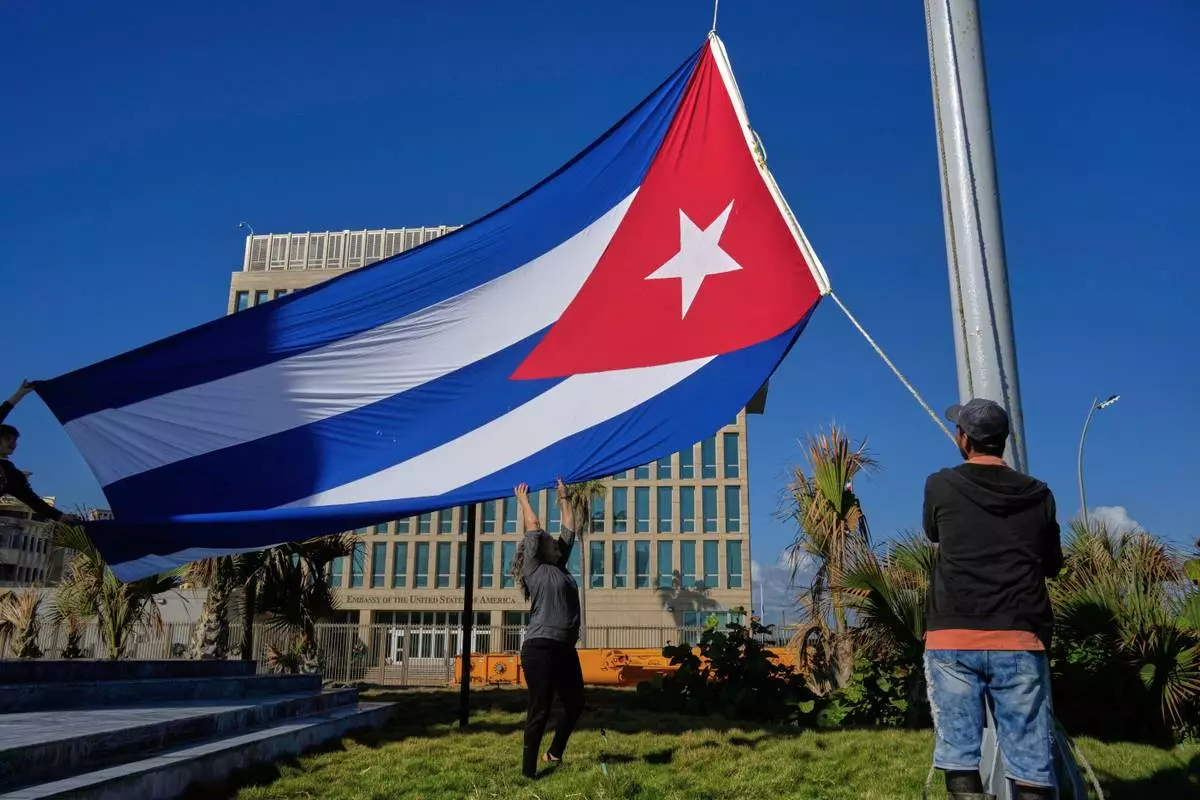
Workers fly the Cuban flag at half-staff at the Anti-Imperialist Tribune near the U.S. Embassy in Havana, Cuba, Monday, Jan. 5, 2026, in memory of Cubans who died two days before in Caracas, Venezuela during the capture of Venezuelan President Nicolas Maduro by U.S. forces. (AP Photo/Ramon Espinosa)

Workers fly the Cuban flag at half-staff at the Anti-Imperialist Tribune near the U.S. Embassy in Havana, Cuba, Monday, Jan. 5, 2026, in memory of Cubans who died two days before in Caracas, Venezuela during the capture of Venezuelan President Nicolas Maduro by U.S. forces. (AP Photo/Ramon Espinosa)

Recommended Articles